
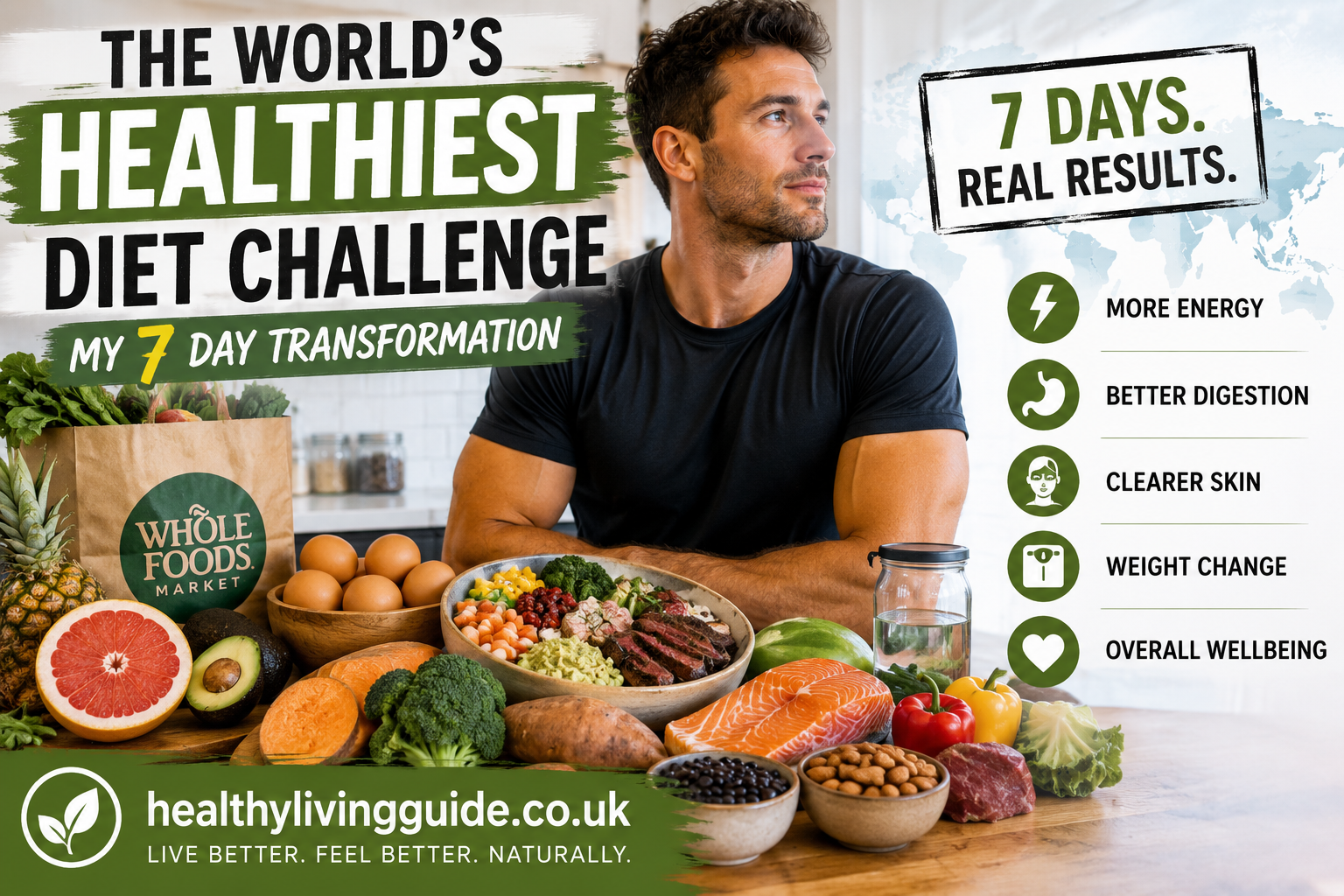
Modern life has made processed food almost impossible to avoid. Walk through any supermarket and you are surrounded by brightly coloured packages promising better health, more energy and faster weight loss. Yet many of these products contain ingredients that our grandparents would barely recognise.
At the same time, researchers continue to study communities around the world where people regularly live into their nineties and beyond. These regions, often called Blue Zones, are home to some of the healthiest and longest-living populations on Earth. People there tend to eat simple, natural foods and maintain active lifestyles well into old age.
This inspired a fascinating experiment. What would happen if an ordinary person abandoned processed foods and followed a strictly natural diet for an entire week?
The challenge was simple. Every food had to come from nature and contain minimal processing. No artificial sweeteners, no protein bars, no energy drinks, no processed snacks and no convenience foods. The goal was not only to lose weight but also to observe changes in energy, mood, digestion, sleep and skin health.
The results were eye opening.
Why The World’s Healthiest Populations Eat Differently

When researchers examine the diets of people living in Blue Zones, a few patterns consistently emerge.
Their meals are based on whole foods rather than packaged products. Vegetables, fruits, beans, legumes, nuts, fish and naturally raised meats form the foundation of their diets. Meals are simple, nutrient dense and free from the long ingredient lists commonly found in modern processed foods.
In places such as Okinawa in Japan, Sardinia in Italy and Nicoya in Costa Rica, eating is viewed as nourishment rather than entertainment. Meals are often prepared at home using fresh ingredients.
One of the most interesting principles comes from Okinawa. Residents follow a concept known as “Hara Hachi Bu,” which means eating until you are about 80 percent full rather than completely stuffed.
This simple habit may help reduce calorie intake without requiring strict dieting.
In contrast, many people today eat highly processed foods that are designed to be hyper-palatable. These foods encourage overeating and often contain added sugars, refined carbohydrates, preservatives and artificial ingredients.
The experiment aimed to move away from this modern approach and adopt a more traditional way of eating.
Breakfasts consisted of eggs, sweet potatoes and vegetables. Lunches focused on lean proteins, beans and vegetables. Dinners included meals built around whole ingredients with no processed sauces or additives.
It sounds simple. Yet for many people, this way of eating is surprisingly difficult.
The Shock Of Shopping For Truly Natural Food
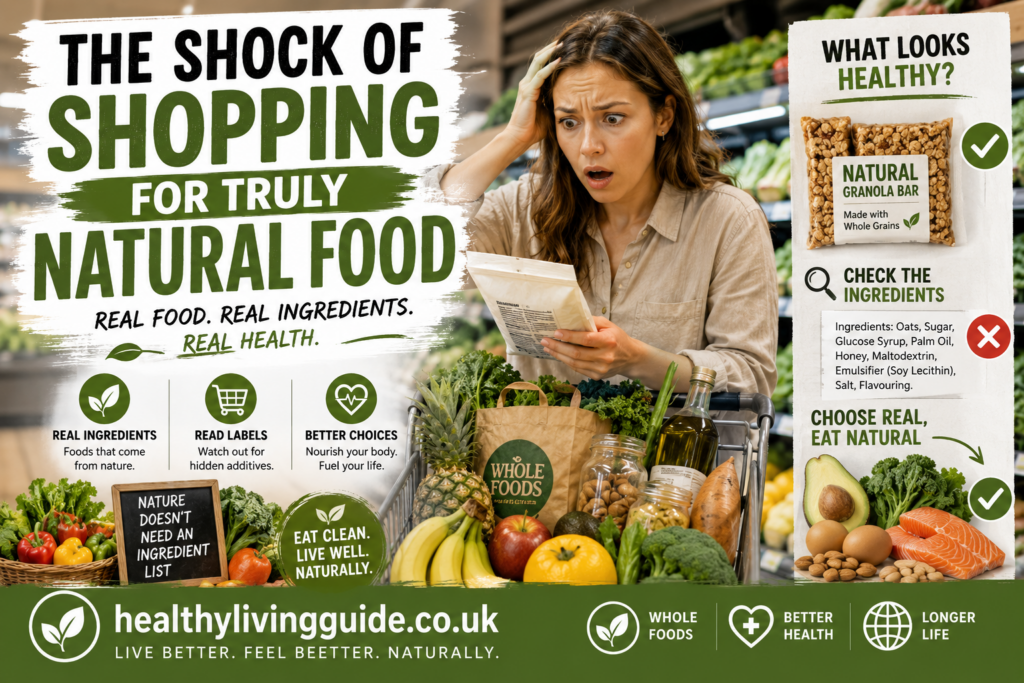
The challenge began at the supermarket.
At first glance, many foods appear healthy. Packaging often features pictures of farms, mountains and smiling families. Words such as natural, wholesome and healthy are everywhere.
However, reading ingredient labels tells a different story.
Many products marketed as healthy contain additives, flavourings, preservatives and ingredients that are far removed from anything found in nature.
Even supposedly healthy snack foods frequently contain multiple additives.
Finding genuinely natural foods quickly became a challenge.
The shopping trolley soon filled with:
- Eggs
- Salmon
- Chicken breast
- Lean beef
- Sweet potatoes
- Beans
- Vegetables
- Fruits
- Nuts
- Avocados
What became obvious almost immediately was the cost.
Whole foods often seem more expensive than highly processed alternatives. Premium quality meats, fresh fish and organic produce can quickly increase grocery bills.
However, it is worth considering that these foods are providing genuine nutrition rather than empty calories.
One surprising discovery was how difficult it was to find snacks.
Modern supermarkets dedicate entire aisles to snack foods, yet very few fit the strict definition of natural eating.
This highlighted an important reality.
Many people rely heavily on snacks throughout the day. Remove processed snack foods and suddenly eating habits change dramatically.
The challenge had barely begun, yet it was already exposing how dependent modern lifestyles have become on convenience foods.
How Eating Natural Foods Changed Hunger And Appetite
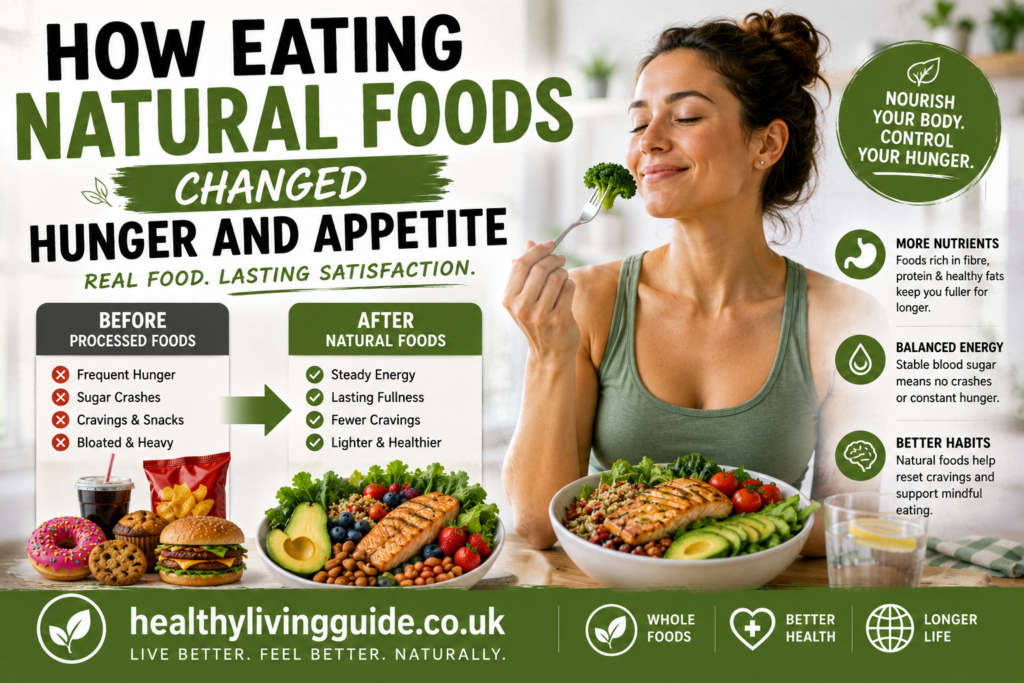
One of the most unexpected changes occurred within the first couple of days.
Hunger patterns changed significantly.
Normally, many people experience frequent cravings throughout the day. Processed foods often create rapid spikes and crashes in blood sugar levels, leading to repeated feelings of hunger.
After switching to natural foods, appetite became much more stable.
Meals rich in protein, fibre and healthy fats provided lasting satiety.
Breakfasts featuring eggs, salmon and sweet potatoes kept hunger away for hours.
Instead of constantly thinking about food, there was a feeling of steady satisfaction.
This may be explained by the nutrient density of whole foods.
Natural foods contain:
- More fibre
- More protein
- More vitamins
- More minerals
- More healthy fats
These nutrients help regulate appetite hormones and slow digestion.
Another major factor was abandoning the habit of eating until completely full.
Following the Blue Zone principle of eating until about 80 percent full created a noticeable difference.
Meals no longer ended with feelings of sluggishness or discomfort.
Instead, there was a sense of lightness and sustained energy.
Interestingly, some meals contained more calories than expected. Natural snacks such as almond butter banana boats and avocado pudding were surprisingly calorie dense.
This serves as a useful reminder that natural does not automatically mean low calorie.
However, despite consuming energy-dense foods, overall hunger remained lower than usual.
This suggests that food quality may be just as important as calorie quantity when it comes to appetite control.
The Effects On Energy Levels Digestion And Daily Performance
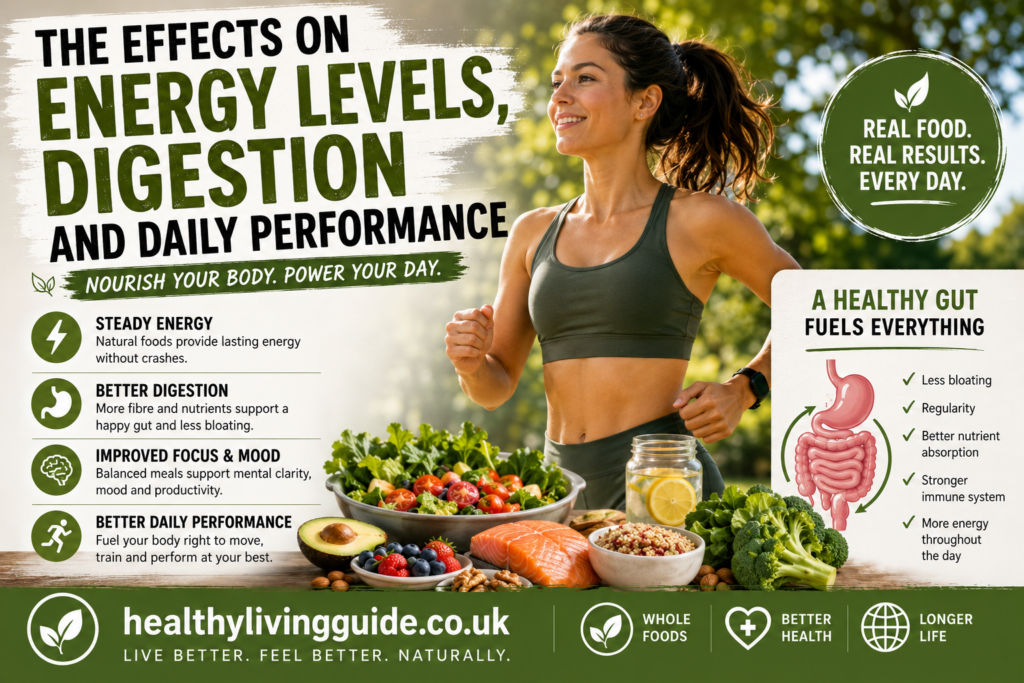
One of the biggest reasons people seek healthier diets is improved energy.
Many people rely on caffeine, energy drinks and sugary snacks to get through the day.
This experiment removed nearly all of those supports.
The first few days were challenging.
Headaches appeared.
Mood fluctuations occurred.
There was irritability and occasional frustration.
These symptoms were likely linked to withdrawal from artificial sweeteners, processed foods and high caffeine intake.
However, by the middle of the week, something changed.
Energy became remarkably stable.
Instead of experiencing afternoon crashes or brain fog, there was a steady feeling of alertness throughout the day.
Workouts also felt different.
Training sessions felt lighter and more focused.
Without overeating, digestion was less demanding, leaving more energy available for physical activity.
Another major improvement occurred in digestive health.
Digestive benefits included:
- Less bloating
- Improved bowel movements
- Reduced gas
- Greater comfort after meals
Many people underestimate how much digestive discomfort they experience until it disappears.
The high fibre content of vegetables, fruits and legumes likely played a major role.
The body seemed to function more efficiently when fed foods closer to their natural state.
For many people, these digestive improvements alone would justify adopting more whole foods.
What Happened To Weight Loss And Body Composition
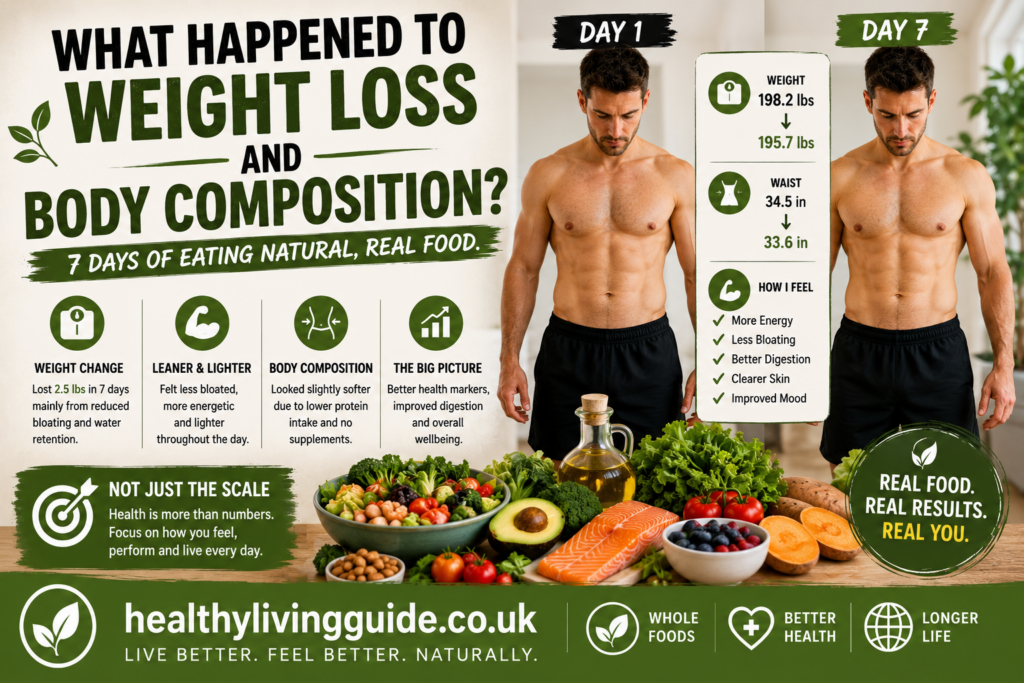
Weight loss was not the primary goal of the challenge, but changes occurred nonetheless.
After seven days, approximately two and a half pounds were lost.
While this may not sound dramatic, it is important to understand what likely contributed to the change.
Most short-term weight loss comes from:
- Reduced water retention
- Lower inflammation
- Improved digestion
- Reduced bloating
Processed foods often contain significant amounts of sodium and additives that encourage water retention.
Removing these foods can lead to rapid reductions in bloating and excess fluid.
The body felt noticeably lighter.
Clothes fit slightly better.
The stomach appeared flatter.
However, there were also some interesting observations.
Despite feeling healthier overall, there was a perception of looking slightly softer physically.
This may have been related to several factors:
- Reduced protein intake
- Absence of supplements
- Lower creatine consumption
- Lack of calorie tracking
For individuals focused heavily on muscle building and physique goals, an extremely strict natural diet may require additional planning to ensure adequate protein intake.
The experiment demonstrated that health and aesthetics do not always move perfectly together in the short term.
A diet can improve overall wellbeing while temporarily affecting certain performance or physique markers.
The key lesson was balance.
Natural eating can support both health and body composition, but nutritional needs should still be carefully considered.
The Surprising Improvements In Skin Health And Overall Wellbeing
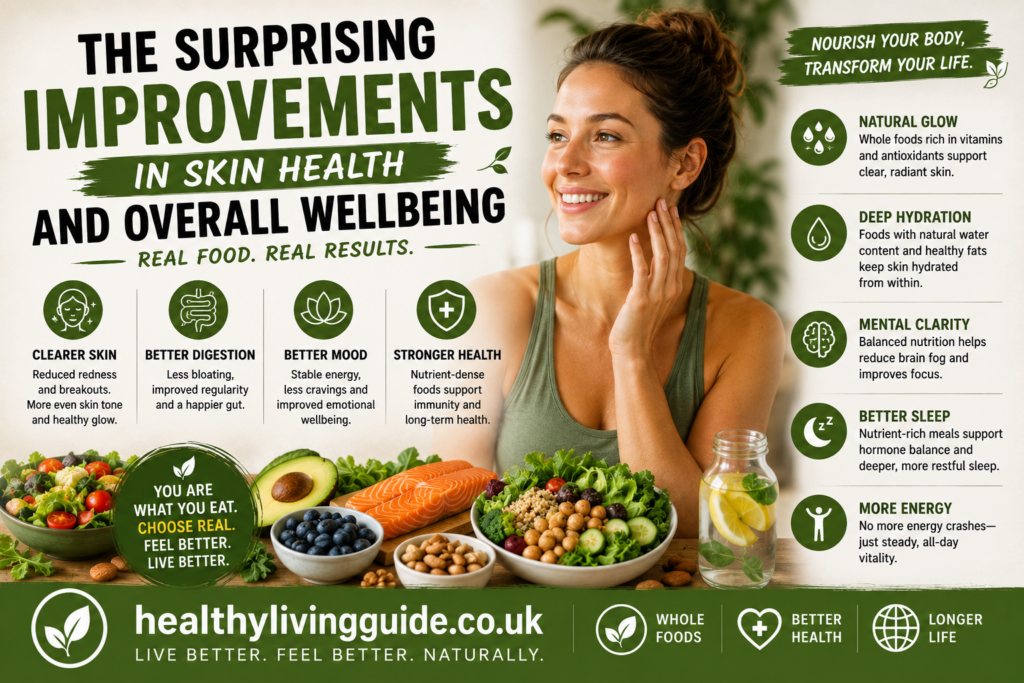
Perhaps the most unexpected result involved skin health.
Within days, noticeable changes began to appear.
Skin tone became more even.
Redness decreased.
Minor breakouts began to improve.
The complexion looked healthier overall.
While one week is a relatively short period, dietary changes can influence skin surprisingly quickly.
Several factors may have contributed:
Lower sugar intake can reduce inflammation.
Higher consumption of healthy fats supports skin barrier function.
Improved hydration supports healthy skin appearance.
Greater intake of vitamins and antioxidants helps protect skin cells.
Many processed foods contain ingredients that may contribute to inflammation in susceptible individuals.
By removing these foods, the skin may have been able to recover more effectively.
Mood also improved.
After the initial adjustment period, there was a greater sense of wellbeing and emotional stability.
Cravings largely disappeared.
The constant desire for sweet foods diminished significantly.
This highlights an important truth about food addiction and cravings.
Many cravings are not caused by genuine hunger.
Instead, they are often driven by habit, blood sugar fluctuations and the addictive nature of highly processed foods.
Once those foods are removed, cravings often become much easier to manage.
The Challenges Of Maintaining An All Natural Lifestyle
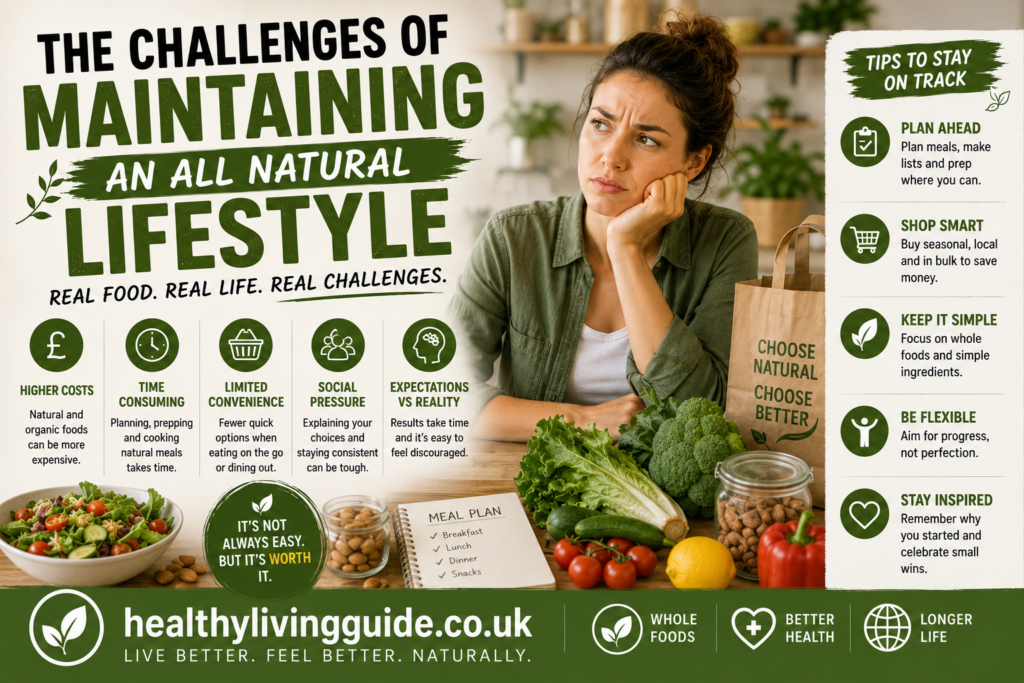
Despite the many benefits, the challenge was not without difficulties.
Perhaps the biggest issue was convenience.
Modern life is built around processed foods.
Need a quick snack?
Processed foods are everywhere.
Need something while travelling?
Options become limited.
Need food at a petrol station?
Good luck finding truly natural choices.
The strict version of this diet required planning ahead.
Meals had to be prepared.
Snacks needed to be made from scratch.
Eating out became complicated.
Many restaurant meals contain hidden ingredients, sauces and processed components.
Social situations also become more challenging.
The average person is unlikely to maintain such an extreme version of natural eating permanently.
And that is perfectly fine.
The goal does not need to be perfection.
Instead, the real lesson is awareness.
Many people would benefit greatly from:
- Eating more whole foods
- Reducing processed snacks
- Increasing fruit and vegetable intake
- Choosing quality protein sources
- Drinking more water
- Limiting artificial sweeteners
Even modest improvements can produce meaningful health benefits.
The challenge demonstrated that moving closer to nature often moves us closer to better health.
Why This Experiment Changed The Way Food Is Viewed Forever
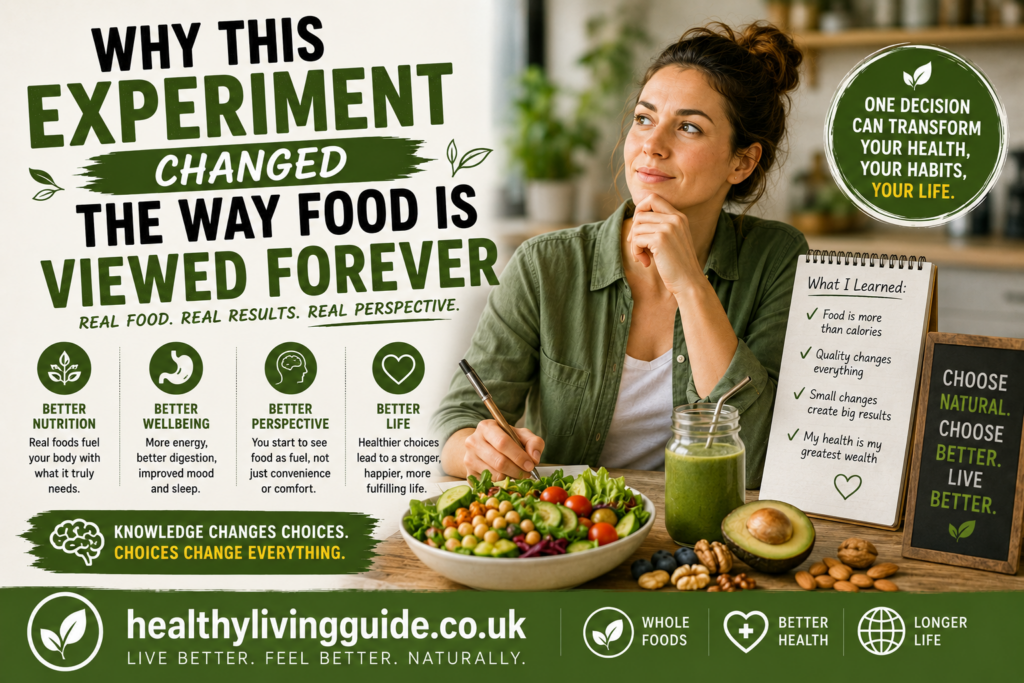
After seven days, the verdict was clear.
A fully natural diet may not be practical for everyone long term, but the experience revealed several powerful lessons.
The biggest takeaway was not the weight loss.
It was not the improved digestion.
It was not even the clearer skin.
The most important lesson was understanding how much modern food influences daily life.
Many foods marketed as healthy are still heavily processed.
Many convenience foods leave people hungry despite providing plenty of calories.
Many eating habits are driven by cravings rather than true nutritional needs.
By returning to simple foods from nature, the body responded positively in multiple ways.
Energy improved.
Digestion improved.
Skin improved.
Cravings decreased.
Overall wellbeing improved.
The experiment also highlighted something that Blue Zone populations have known for generations.
Health is not built through shortcuts.
It is built through consistent daily habits.
Whole foods, moderate portions, regular movement and simple living continue to outperform many modern health trends.
You do not need to copy this diet perfectly.
You do not need to eliminate every processed food.
But if this challenge teaches us anything, it is that reducing processed foods and increasing natural foods may be one of the simplest and most effective ways to improve your health.
Sometimes the healthiest diet is not a complicated diet at all.
It is simply eating food that your great-grandparents would recognise.
Disclaimer
The information provided in this article is for educational and informational purposes only. While every effort has been made to ensure accuracy, the content is not intended to replace professional medical, nutritional, fitness, or healthcare advice.
The views and concepts discussed are based on publicly available information, scientific research, expert opinions, and interpretations of the topics covered. Individual health needs, dietary requirements, and fitness goals vary from person to person, and results may differ.
Before making significant changes to your diet, exercise routine, supplementation, or lifestyle habits, you should consult with a qualified healthcare professional, registered dietitian, physician, or other appropriate medical expert.
The author and publisher assume no responsibility for any loss, injury, or damage resulting from the use of information contained in this article. Readers are encouraged to conduct their own research and make informed decisions based on their individual circumstances.
By reading this article, you acknowledge that any actions you take based on the information provided are done at your own discretion and risk.ented in this article.