

When people first meet Brian Mataya, they often assume he is in his forties. His posture is upright, his energy is high, his physique is lean, and he moves with the confidence and vitality that many younger people struggle to maintain.
Then comes the surprise.
Brian is 60 years old.
In a world obsessed with anti-aging creams, miracle supplements, cosmetic procedures, and quick fixes, Brian represents something refreshing. He has not discovered a secret fountain of youth. He does not rely on expensive treatments or extreme fitness routines. Instead, he follows a collection of simple daily habits that have helped him maintain his strength, health, and youthful appearance for decades.
His story challenges many of the assumptions people have about aging. Most people believe physical decline is inevitable after a certain age. They assume low energy, weight gain, poor mobility, and chronic health problems are simply part of growing older.
Brian proves otherwise.
His lifestyle demonstrates that aging well is not about fighting time. It is about working with your body and giving it what it needs to remain resilient.
The lessons from his daily routine can benefit people of all ages. Whether you are 30, 40, 50, or beyond, these principles can help improve your health, energy, and quality of life.
Let’s explore the habits that keep Brian looking and feeling decades younger than his age.
Movement Is A Daily Priority Not An Occasional Event
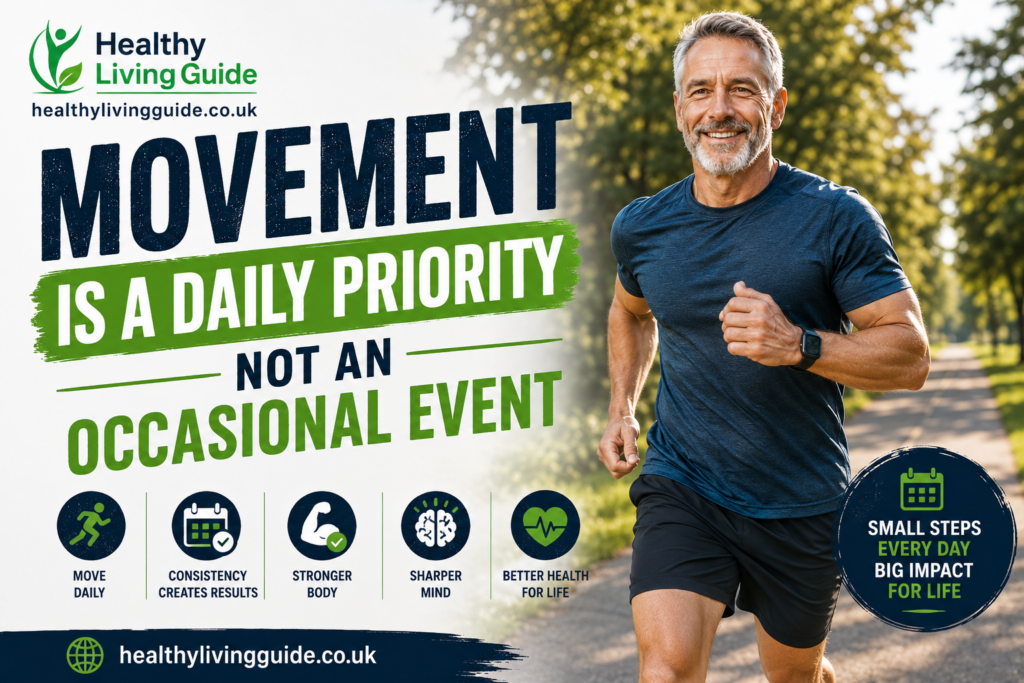
One of the most important pillars of Brian’s lifestyle is movement.
Many people think exercise means pushing themselves to exhaustion. They imagine intense workouts, endless cardio sessions, and training until every muscle aches.
Brian takes a completely different approach.
He understands that consistency matters far more than intensity.
Rather than trying to destroy himself in the gym, he focuses on moving regularly. His goal is not to survive brutal workouts. His goal is to stay active for life.
This mindset changes everything.
When people begin exercising, they often make one of two mistakes. Either they do nothing at all, or they become overly enthusiastic and push themselves too hard.
The result is predictable.
Their joints become sore. Their motivation disappears. Injuries occur. Eventually they quit.
Brian avoids this cycle by making movement sustainable.
He trains consistently without becoming obsessive. He exercises because it makes him feel good, not because he wants to punish himself.
Research repeatedly shows that regular physical activity helps maintain muscle mass, preserve bone density, improve cardiovascular health, and support healthy aging.
Muscle loss naturally accelerates as people age. Without resistance training, adults can lose significant amounts of muscle over time.
Brian combats this process by keeping his body active throughout the year.
His workouts are not extreme, but they are consistent.
This simple principle is one of the most powerful anti-aging strategies available.
Not because it produces immediate dramatic results, but because it works year after year.
The body responds remarkably well to regular movement.
Every workout sends a signal to the body that strength is still required.
Every walk reinforces mobility.
Every session encourages better circulation.
These small signals accumulate over time and help maintain physical capabilities that many people lose unnecessarily.
The secret is not perfection.
The secret is showing up consistently.
Why Variety Keeps Both The Body And Brain Young
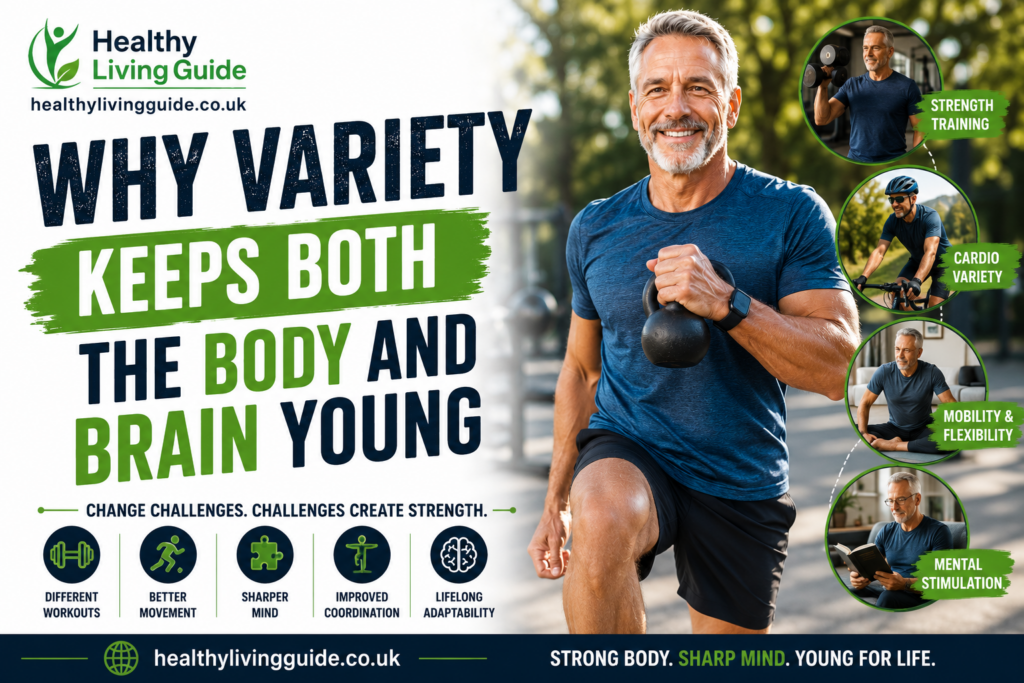
Another fascinating aspect of Brian’s routine is his commitment to variety.
Many people perform the same exercises for years.
While consistency is valuable, doing exactly the same movements repeatedly can eventually limit progress.
Brian regularly changes exercises and challenges his body in different ways.
This benefits far more than muscles.
It also stimulates the brain.
The nervous system thrives on learning new movement patterns.
When you perform unfamiliar exercises, your brain must coordinate muscles differently. Balance, coordination, reaction time, and body awareness all improve.
These mental benefits are often overlooked.
Most people associate exercise solely with physical fitness. However, movement is deeply connected to brain health.
Studies suggest that learning new physical skills can support cognitive function and neural plasticity.
This means your brain continues developing and adapting throughout life.
Brian’s approach helps maintain this adaptability.
Whether he changes exercise angles, tries different activities, or introduces new movement patterns, he constantly gives both body and brain fresh challenges.
This prevents boredom.
It keeps training interesting.
Most importantly, it keeps his nervous system engaged.
Many older adults experience a gradual decline in balance and coordination.
Often this is not simply due to aging itself.
Instead, it results from a lack of movement diversity.
When people stop challenging their bodies in different ways, their physical abilities become narrower.
Brian avoids this trap.
His philosophy is simple.
Keep learning.
Keep moving.
Keep adapting.
That approach helps preserve youthfulness far beyond what many people believe is possible.
The Hidden Longevity Power Of Spending Time Outdoors

One habit that stands out in Brian’s lifestyle is the amount of time he spends outdoors.
This might seem insignificant compared to exercise and nutrition, but it may be one of the most powerful habits of all.
Modern life keeps many people trapped indoors.
People wake up inside.
Work inside.
Drive inside.
Relax inside.
Then wonder why they feel tired and disconnected.
Brian deliberately spends time outside every day.
This provides several important benefits.
Fresh air improves wellbeing.
Natural light helps regulate circadian rhythms.
Exposure to sunlight supports vitamin D production.
Walking outdoors increases daily movement without feeling like exercise.
Perhaps most importantly, outdoor activity helps reduce chronic inflammation.
Scientists increasingly recognize chronic inflammation as one of the major drivers of aging and disease.
Low-grade inflammation has been linked to heart disease, diabetes, obesity, cognitive decline, and numerous other health conditions.
Physical activity in natural environments appears to help reduce this inflammatory burden.
Time outdoors also provides psychological benefits.
Stress levels often decrease.
Mood improves.
Mental clarity increases.
People feel more connected to the world around them.
These effects may seem subtle on a daily basis.
However, like many healthy habits, they compound over time.
Brian understands that the body was designed to move through natural environments.
Walking outdoors allows him to combine physical activity, sunlight, stress reduction, and mental refreshment all at once.
It is one of the simplest health strategies available.
It costs nothing.
Requires no equipment.
And can be practiced at almost any age.
Many people search for complicated longevity solutions while ignoring one of the most powerful tools sitting right outside their front door.
Recovery Is Where Real Anti Aging Happens
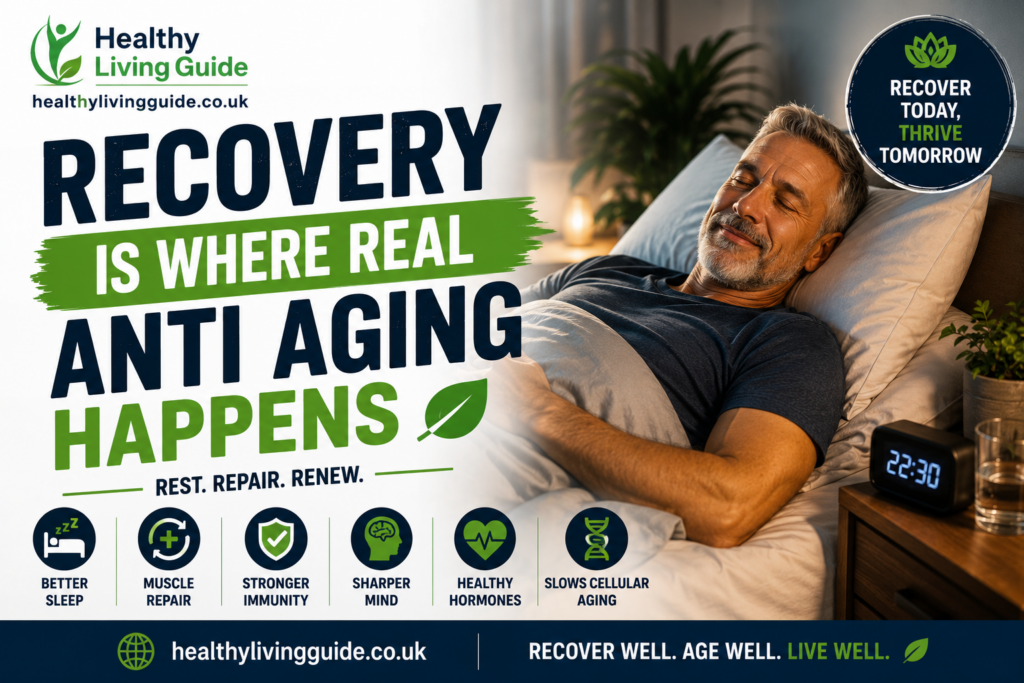
Perhaps the biggest misconception in health and fitness is the belief that more is always better.
More workouts.
More cardio.
More effort.
More intensity.
Brian understands something many people miss.
The body does not improve during exercise.
It improves during recovery.
Exercise creates stress.
Recovery allows adaptation.
Without sufficient recovery, the body simply accumulates damage.
This is where many people unknowingly accelerate aging.
Chronic sleep deprivation, constant stress, and inadequate recovery place the body in a prolonged state of strain.
One major consequence is elevated cortisol levels.
Cortisol is often called the stress hormone.
While useful in short bursts, chronically high cortisol can create numerous problems.
Skin quality may decline.
Abdominal fat often increases.
Testosterone levels can decrease.
Blood pressure may rise.
Inflammation can worsen.
Recovery processes become impaired.
Over time, these effects contribute to accelerated aging.
Brian prioritizes recovery as seriously as he prioritizes exercise.
He understands that sleep is not laziness.
It is biological maintenance.
During sleep, the body repairs tissues, regulates hormones, strengthens immune function, and consolidates memories.
The quality of recovery often determines the quality of aging.
Unfortunately, many people sacrifice sleep while chasing productivity.
They wear exhaustion like a badge of honor.
Brian takes the opposite approach.
He respects recovery.
He understands that sustainable health requires periods of restoration.
This mindset helps explain why he continues thriving at 60 while others feel worn out decades earlier.
The Mindset Difference That Separates Healthy Agers From Everyone Else
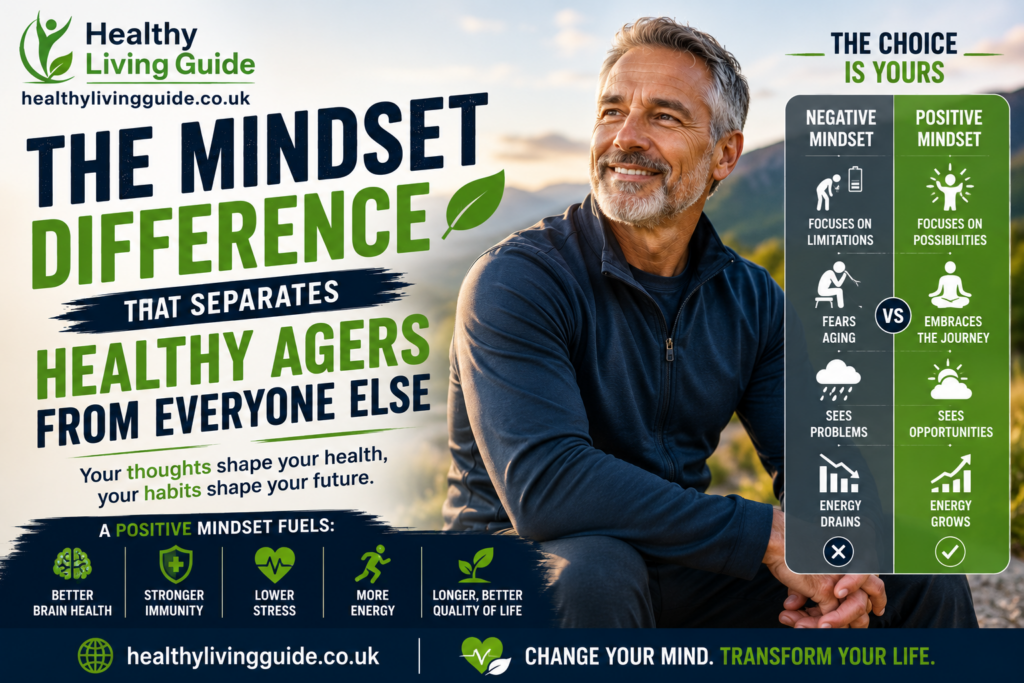
One of Brian’s most powerful habits has nothing to do with exercise or nutrition.
It involves how he thinks about aging.
Many people develop an unhealthy relationship with age.
Some surrender completely.
They assume decline is inevitable and stop trying.
Others become obsessed with appearing young.
They desperately attempt to prove they are still twenty years old.
Both approaches create problems.
Brian chooses a healthier path.
He accepts his age without allowing it to define him.
This distinction is incredibly important.
He does not deny reality.
He simply refuses to let a number determine his lifestyle.
This mindset conserves enormous amounts of mental energy.
Instead of fighting age, he works with his body.
Instead of comparing himself to younger people, he focuses on becoming the healthiest version of himself.
Positive thinking is often misunderstood.
It is not pretending problems do not exist.
It is not blind optimism.
True positive thinking means maintaining a constructive outlook while facing reality honestly.
This has real biological effects.
Chronic negativity activates the body’s stress response.
Over time, persistent stress influences hormone production, immune function, inflammation, and cellular repair.
People who constantly expect the worst often live in a permanent state of psychological tension.
Brian demonstrates a healthier alternative.
He focuses on possibilities rather than limitations.
He remains curious about life.
He continues learning.
He stays engaged with the future.
This mental flexibility may be one of the most overlooked aspects of healthy aging.
A youthful mindset often produces youthful behaviors.
Those behaviors eventually create youthful outcomes.
Small Lifestyle Details Create Big Long Term Results

One surprising aspect of Brian’s routine is his attention to comfort.
For example, he trains in breathable clothing designed to support movement and temperature regulation.
At first glance, this seems trivial.
However, it reveals an important principle.
Sustainability matters.
When exercise feels uncomfortable, people are less likely to continue.
When the body overheats, training quality decreases.
When workouts become unpleasant, consistency suffers.
Brian removes unnecessary barriers.
His clothing supports comfort.
His routines fit his lifestyle.
His habits are realistic.
This approach allows him to remain consistent year after year.
Many people fail because they design health plans that require superhuman discipline.
They attempt extreme diets.
Unrealistic workout schedules.
Rigid routines.
Eventually the system collapses.
Brian’s approach is different.
His lifestyle works because it is practical.
Every habit fits naturally into daily life.
This creates long-term adherence.
And long-term adherence creates long-term results.
One of the most valuable lessons from Brian’s story is that health does not require suffering.
Many fitness messages promote hardship as a badge of honor.
But sustainable health usually comes from intelligent choices repeated consistently.
The goal is not to make healthy living harder.
The goal is to make it easier to maintain.
Small improvements performed daily often outperform dramatic efforts that last only a few weeks.
This is where real transformation occurs.
Not through heroic bursts of effort.
But through sustainable habits practiced for decades.
Why Aging Is More About Lifestyle Than Chronological Age
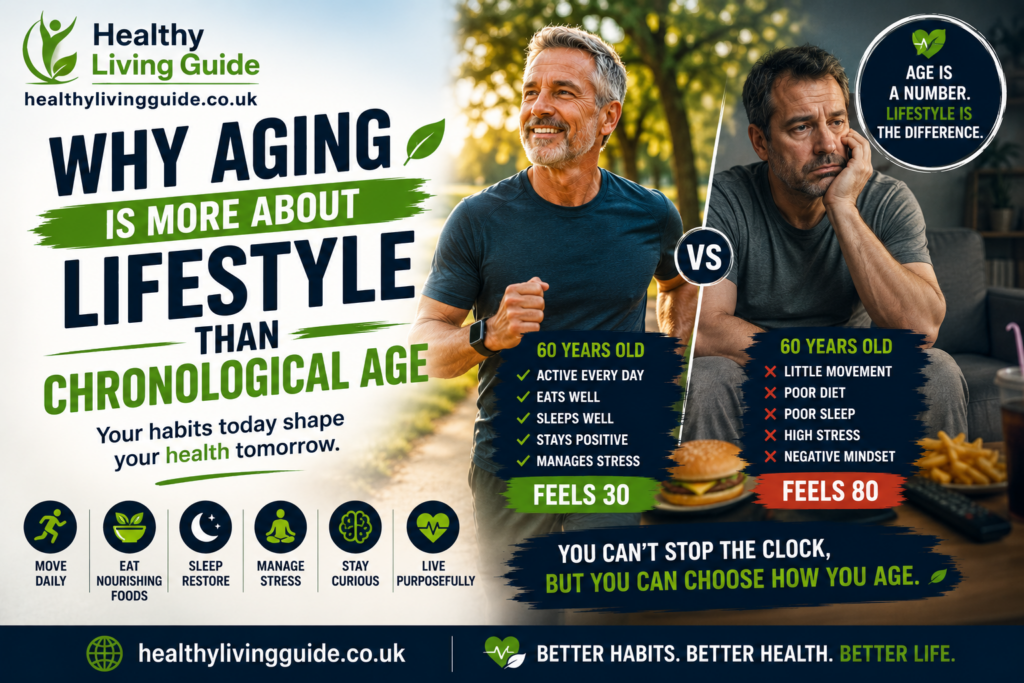
Perhaps the most important lesson from Brian Mataya’s story is that aging is influenced heavily by lifestyle.
Chronological age is simply the number of years you have been alive.
Biological age reflects how well your body is functioning.
The two are not always the same.
Some people appear old at 40.
Others remain vibrant at 70.
The difference often comes down to daily habits.
Brian demonstrates that youthfulness is not the absence of age.
Youthfulness is the ability to adapt.
A youthful body recovers effectively.
Maintains strength.
Moves efficiently.
Remains curious.
Stays engaged with life.
These qualities can persist much longer than many people realize.
The body continuously responds to the signals it receives.
If you stop moving, your body adapts to inactivity.
If you remain active, your body adapts to movement.
If you stop learning, the brain becomes less challenged.
If you stay curious, the brain continues developing.
If you neglect recovery, the body struggles to repair itself.
If you prioritize restoration, the body functions more effectively.
Brian’s lifestyle destroys the myth that improvement becomes impossible after a certain age.
Research consistently shows that older adults can increase strength, improve cardiovascular fitness, enhance mobility, and support cognitive function.
The capacity for improvement never completely disappears.
The body remains remarkably adaptable throughout life.
The challenge is not age itself.
The challenge is providing the body with the right environment to thrive.
Brian’s formula is surprisingly simple:
Regular movement without obsession.
Variety that challenges both body and brain.
Daily outdoor activity.
Recovery that supports repair.
A positive mindset rooted in reality.
Comfortable habits that can be maintained for years.
None of these principles are revolutionary.
Yet together they create extraordinary results.
The reason they work is because they are sustainable.
And sustainability is often the missing ingredient in most health journeys.
The truth is that aging well is not about finding one magic solution.
It is about building a lifestyle that supports health every single day.
Brian Mataya may be 60 years old, but his story serves as a reminder that age does not automatically determine how you look, feel, or perform.
The choices you make today matter.
The habits you repeat matter.
The way you think about aging matters.
And while none of us can stop the clock, we can influence how we experience the years ahead.
Brian’s example shows that staying strong, energetic, and youthful is not reserved for a lucky few.
It is available to anyone willing to embrace simple habits, remain consistent, and work with their body rather than against it.
The best time to start is not next year.
It is today.
Disclaimer
The information provided in this article is for educational and informational purposes only. While every effort has been made to ensure accuracy, the content is not intended to replace professional medical, nutritional, fitness, or healthcare advice.
The views and concepts discussed are based on publicly available information, scientific research, expert opinions, and interpretations of the topics covered. Individual health needs, dietary requirements, and fitness goals vary from person to person, and results may differ.
Before making significant changes to your diet, exercise routine, supplementation, or lifestyle habits, you should consult with a qualified healthcare professional, registered dietitian, physician, or other appropriate medical expert.
The author and publisher assume no responsibility for any loss, injury, or damage resulting from the use of information contained in this article. Readers are encouraged to conduct their own research and make informed decisions based on their individual circumstances.
By reading this article, you acknowledge that any actions you take based on the information provided are done at your own discretion and risk.ented in this article.