
GLP-1 has quickly become one of the most talked-about hormones in health and weight management. Much of this attention has come from medicines such as semaglutide and tirzepatide, which can reduce appetite, improve blood glucose control and help some people living with obesity lose a significant amount of weight.
This has led to a growing number of online claims suggesting that certain foods can produce “Ozempic-like” effects naturally. The original material used to develop this article highlights protein, fibre, healthy fats, fermented foods and apple cider vinegar as possible ways to increase natural GLP-1 activity.
There is some genuine science behind the idea that food can stimulate your body’s own GLP-1 release. However, it is important to separate realistic nutritional benefits from exaggerated promises.
Your body naturally releases GLP-1 after you eat. Certain nutrients may produce a stronger response than others, while fibre can influence the gut environment in ways that may support hormone signalling. Meals containing protein, fibre and minimally processed foods can also keep you satisfied for longer, reduce rapid fluctuations in blood sugar and make it easier to manage your overall calorie intake.
However, no egg, lentil salad, spoonful of olive oil or glass of vinegar can reproduce the strength, duration or clinical effects of a prescription GLP-1 receptor agonist. Food can support your natural appetite-regulation system, but it cannot be presented as a direct replacement for prescribed treatment.
The most useful question is therefore not, “Which foods work like Ozempic?”
A better question is, “Which foods help me feel satisfied, protect my muscle, improve the quality of my diet and make sustainable weight management easier?”
The following five food groups provide a sensible place to start.
What GLP-1 Really Does And Why Food Cannot Replicate Ozempic
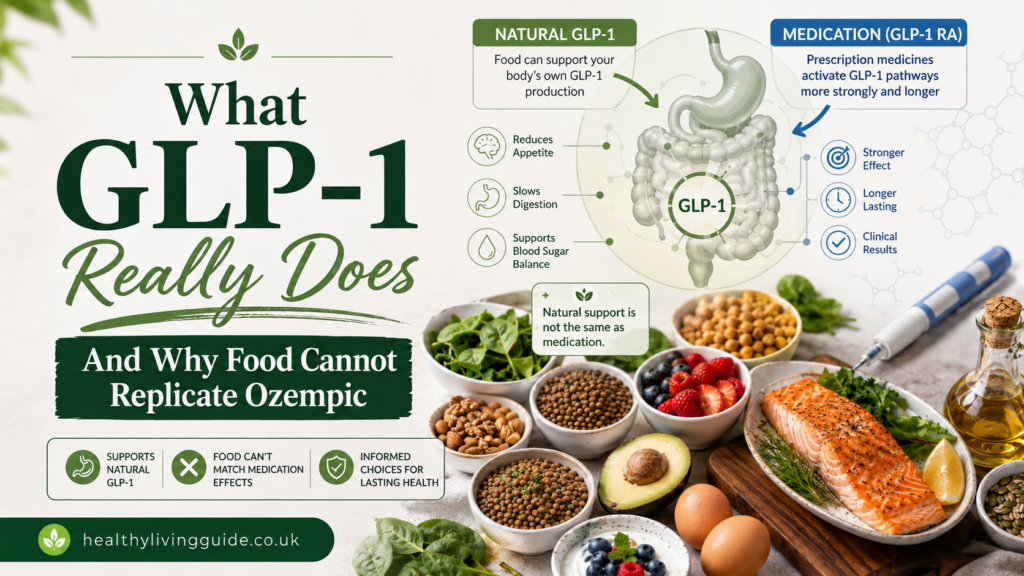
GLP-1 stands for glucagon-like peptide-1. It is an incretin hormone released mainly by specialised enteroendocrine cells known as L-cells, which are located throughout parts of the intestine.
When nutrients reach the digestive system, these cells detect what you have eaten and release GLP-1. The hormone then contributes to several important processes.
It helps stimulate insulin release when blood glucose levels rise. It can reduce glucagon secretion, slow the rate at which the stomach empties and communicate with areas of the brain involved in appetite and fullness. These combined actions help the body manage nutrients after a meal.
One important correction is that gut bacteria do not directly manufacture human GLP-1. Your intestinal L-cells produce the hormone. However, certain gut bacteria can ferment fibre and create short-chain fatty acids. These compounds may interact with receptors on intestinal cells and influence GLP-1 secretion.
The gut microbiome may therefore support the process, but saying that microbes themselves “make GLP-1” oversimplifies the physiology. Research into diet, gut bacteria and GLP-1 is promising, but responses vary depending on the person, the type of fibre, the overall meal and metabolic health.
Natural GLP-1 also has a relatively short lifespan. It is rapidly broken down by an enzyme called dipeptidyl peptidase-4, usually shortened to DPP-4. Prescription GLP-1 medicines are designed to resist this rapid breakdown or activate the same receptor for much longer.
This is one reason the effect of a balanced meal is not comparable with a weekly injection.
Semaglutide is a GLP-1 receptor agonist. In the UK, Wegovy is the semaglutide brand used to treat obesity, while Ozempic and Rybelsus are used primarily to manage type 2 diabetes. Semaglutide reduces appetite, helps people feel fuller and slows digestion. Tirzepatide, sold under the brand name Mounjaro, acts on both GLP-1 and GIP receptors rather than GLP-1 alone.
These medicines can be valuable treatments. They are not shortcuts, moral failures or evidence that someone has lacked willpower. Obesity is a complex, chronic condition influenced by biology, environment, sleep, medication, mental health, income, genetics and access to suitable food.
NICE recommends that medicines used for weight management should be provided alongside a reduced-calorie diet, increased physical activity and appropriate clinical support. Eligibility also depends on factors such as BMI, weight-related health conditions and individual circumstances. NICE advises using lower BMI thresholds for several higher-risk ethnic groups, including people from South Asian backgrounds.
It is also true that weight regain can occur after medication is stopped. Follow-up research from semaglutide and tirzepatide trials found that many participants regained a proportion of the weight they had lost after treatment withdrawal. This does not prove that the medicines “damage” natural GLP-1 production. It is more consistent with obesity behaving like a long-term condition in which the biological drivers of weight regain return when treatment ends.
Food should therefore be viewed as part of a long-term health strategy, whether or not someone uses medication. A higher-quality diet can improve nutritional intake, support muscle, reduce constipation, make meals more satisfying and help establish habits that remain valuable during and after treatment.
Eggs Greek Yoghurt And Other Protein Rich Foods Make Meals More Satisfying
Protein is one of the most useful nutrients for appetite control.
Meals containing a meaningful source of protein generally require more digestion than meals dominated by refined carbohydrate or fat. Protein also stimulates several digestive hormones involved in satiety, including GLP-1, peptide YY and cholecystokinin.
Different proteins may produce different hormonal responses, and the results of small laboratory studies should not be treated as a guarantee of weight loss. However, research consistently supports the broader idea that protein-rich meals can improve fullness and help protect lean tissue during calorie restriction. Nutrient studies also show that amino acids and digested proteins can stimulate GLP-1 release from intestinal cells.
Eggs are a practical place to begin because they are widely available, easy to cook and suitable for breakfast, lunch or dinner. They provide high-quality protein along with nutrients such as vitamin B12, selenium and choline.
However, two eggs do not automatically create a high-protein meal. Someone trying to build a more satisfying breakfast may need to combine eggs with another protein or fibre source.
For example, scrambled eggs could be served with spinach, mushrooms and wholegrain toast. An omelette could include peppers, onions and a small amount of cheese. Boiled eggs could be eaten with a lentil salad, beans or a bowl of vegetable soup.
Greek yoghurt, Skyr, cottage cheese and other higher-protein dairy products can also help. Choose versions without large amounts of added sugar and add fruit, oats, seeds or chopped nuts rather than relying on heavily sweetened granola.
A breakfast built from plain Greek yoghurt, berries, oats and seeds provides protein, fibre and texture. It will generally be more filling than a breakfast consisting mainly of juice, sweetened cereal or a pastry.
People following a plant-based diet can use tofu, tempeh, beans, lentils, chickpeas, soya yoghurt and textured vegetable protein. The goal is not to force animal protein into every meal but to ensure that meals are substantial enough to support fullness and nutrition.
Online advice sometimes recommends exactly 20, 30 or 40 grams of protein at every meal. These numbers can be useful as rough planning tools, but there is no single perfect target that applies to everyone.
Protein requirements vary according to body size, age, activity level, pregnancy, illness and health goals. Older adults and people performing resistance training may particularly benefit from distributing protein across the day. Someone with kidney disease or another condition requiring dietary restriction should obtain individual advice from a GP or registered dietitian.
Protein can support weight management, but adding unlimited quantities does not guarantee additional fat loss. Cheese, processed meat and fatty cuts of meat can provide protein while also contributing substantial saturated fat, salt or calories.
It is usually better to rotate your sources. Eggs, fish, chicken, turkey, yoghurt, tofu and pulses can all play a part.
The most valuable habit is to look at each main meal and ask whether it contains a recognisable protein source. If breakfast is only toast, add eggs, yoghurt or beans. If lunch is only salad leaves, add chicken, tuna, tofu, lentils or chickpeas. If dinner is mostly rice or pasta, include fish, lean meat, beans or a suitable plant-based alternative.
This approach improves satisfaction without requiring complicated hormone calculations.
Oily Fish Provides Protein And Healthy Fats In The Same Meal
Oily fish combines two components that can make a meal satisfying: protein and unsaturated fat.
Salmon, sardines, mackerel, herring and trout provide protein as well as long-chain omega-3 fatty acids. These fats are associated with cardiovascular benefits and are one reason UK guidance recommends eating at least two portions of fish each week, including one portion of oily fish.
Cod, haddock and pollock are nutritious sources of lean protein but are not usually classified as oily fish. They can still be excellent meal choices, particularly when grilled, baked, poached or cooked in a tomato-based sauce rather than covered in thick batter.
Both protein and fat can stimulate digestive hormone release. However, this does not mean that more dietary fat always produces better appetite control.
Fat contains more energy per gram than either protein or carbohydrate. Large portions of oily dressings, butter, mayonnaise or fried food can therefore increase the calorie content of a meal very quickly.
The aim is to use enough healthy fat to make food enjoyable and satisfying, not to pour several tablespoons of oil over every meal in an attempt to manipulate hormones.
A balanced salmon meal might include a palm-sized piece of fish, roasted vegetables and new potatoes. Sardines can be served on wholegrain toast with tomatoes and cucumber. Mackerel can be added to a salad containing beans, leafy vegetables and a lemon dressing.
These meals combine protein, fibre, water-rich vegetables and fat. That combination is more important than any one ingredient.
Oily fish can be particularly useful for people who struggle to include protein at lunch. Tinned sardines, mackerel and salmon can be stored in the cupboard and used when there is little time to cook. Check labels when possible, as some flavoured products contain significant salt, oil or sugar.
People who do not eat fish can obtain unsaturated fats from walnuts, chia seeds, ground linseed, rapeseed oil and other plant foods. Plant omega-3 sources contain alpha-linolenic acid, which the body can convert into the longer-chain forms found in fish, although the conversion is limited.
An algae-based omega-3 supplement may be appropriate for some people, but supplements are not automatically necessary and can interact with medicines or provide unsuitable doses. A pharmacist, GP or dietitian can help when supplementation is being considered for a specific health reason.
It is also important not to make exaggerated claims about omega-6 fats.
The idea that everyone must achieve a precise one-to-one omega-6 to omega-3 ratio is not a standard UK public health recommendation. Omega-6 fats are not inherently harmful and are essential nutrients. The more practical approach is to reduce foods high in saturated fat and excessive ultra-processed food while regularly including oily fish, nuts, seeds and appropriate plant oils.
Oily fish will not switch off belly-fat storage. It will not target visceral fat directly, and it cannot cause weight loss unless the overall eating pattern supports an appropriate energy balance.
Its value comes from helping you build a nutrient-dense, satisfying meal that supports heart health and provides high-quality protein.
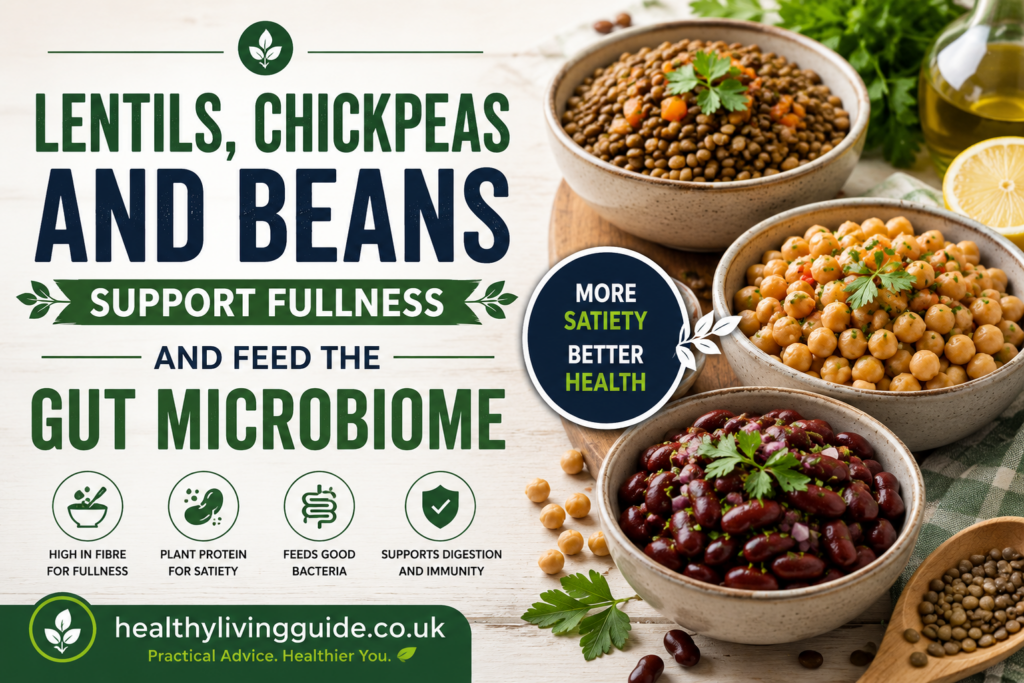
Lentils Chickpeas And Beans Support Fullness And Feed The Gut Microbiome
Pulses may be the most underrated foods in a weight-management diet.
Lentils, chickpeas, black beans, kidney beans, butter beans and peas provide a valuable mixture of plant protein, carbohydrate, fibre and resistant starch. They are inexpensive, widely available and suitable for soups, curries, stews, salads and pasta sauces.
Their combination of protein and fibre makes them particularly useful for appetite control. Fibre adds bulk to food, while the protein and starch take time to digest. This can make pulse-based meals more satisfying than meals built mainly around white bread, refined cereal or snack foods.
Some of the fermentable fibres and resistant starches found in pulses reach the large intestine, where gut bacteria can use them as fuel. This fermentation produces compounds including short-chain fatty acids.
Laboratory and human research suggests that these compounds may interact with receptors involved in the release of GLP-1 and other gut hormones. However, the effect varies, and it would be misleading to claim that one bowl of lentils will create a drug-like appetite reduction.
The health benefits of pulses extend beyond GLP-1. Replacing part of the meat in a chilli, curry or casserole with beans can increase fibre while reducing the cost of the meal. Beans and pulses also count towards the UK’s Five A Day recommendation, although they count as a maximum of one portion regardless of the quantity eaten because their nutrient profile differs from other vegetables.
Lentils are among the easiest pulses to cook. Red lentils break down into soups, dhal and sauces. Green or brown lentils retain more texture and work well in salads or as an alternative to part of the mince in shepherd’s pie.
Chickpeas can be roasted, added to curry or blended into hummus. Black beans and kidney beans work well in chilli, burrito bowls and tomato-based stews. Butter beans can be added to soups or mashed with garlic, lemon and herbs.
For a satisfying meal, combine pulses with vegetables, a moderate portion of wholegrain carbohydrate and, where appropriate, another protein source.
A chicken and chickpea curry, for example, may provide more fibre and volume than a curry made only with chicken and sauce. A lentil Bolognese can be served with wholewheat pasta and vegetables. A bean salad can include tomatoes, cucumber, peppers, herbs and a small olive-oil dressing.
People who rarely eat pulses may experience wind or bloating when they suddenly increase their intake. Increase portions gradually, drink enough fluid and rinse canned beans before using them.
Those with irritable bowel syndrome may find that certain pulses aggravate symptoms because they contain fermentable carbohydrates. Small portions of well-rinsed canned pulses are sometimes tolerated better, but individual responses vary. A registered dietitian can help someone with persistent symptoms avoid unnecessarily restrictive eating.
Sprouting lentils or beans changes their texture and may influence digestibility, but sprouted products are not essential. Ordinary dried, frozen or canned pulses remain valuable.
Canned beans can be just as useful as dried ones and save considerable preparation time. Look for options without excessive added salt or rinse them under running water.
A simple goal is to include pulses several times each week. They do not need to replace all animal protein. Even adding half a tin of beans to an existing family meal can improve fibre, extend portions and make the meal more satisfying.
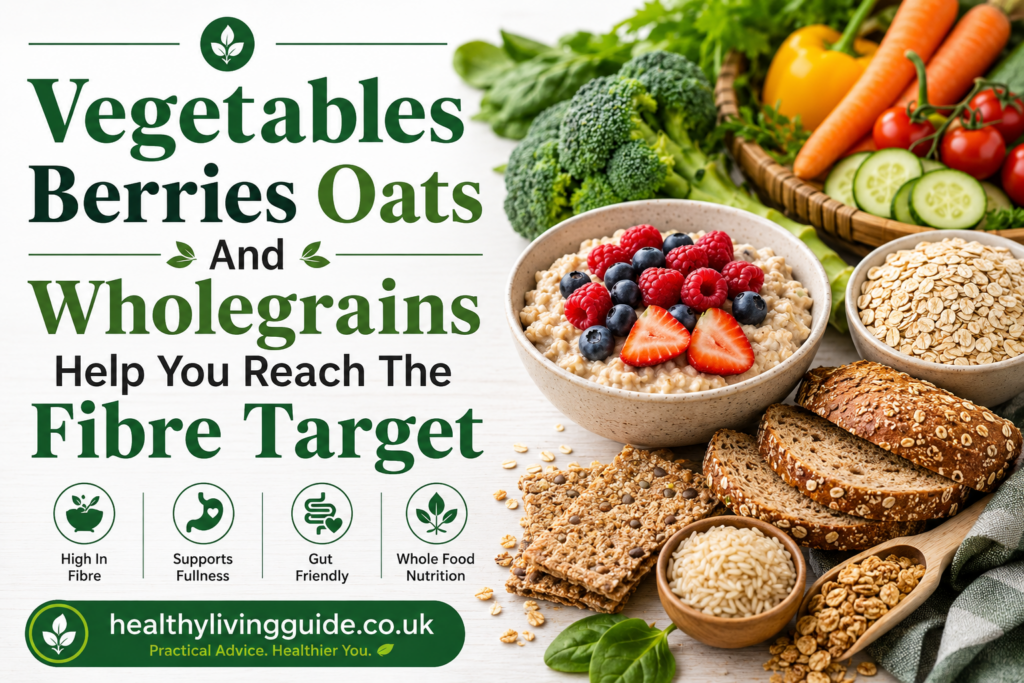
Vegetables Berries Oats And Wholegrains Help You Reach The Fibre Target
Protein receives enormous attention in weight-loss discussions, but fibre is often neglected.
UK adults are advised to consume around 30 grams of fibre per day. Yet the National Diet and Nutrition Survey covering 2019 to 2023 reported that approximately 96% of adults and young people aged 11 to 18 did not meet the relevant fibre recommendation.
Fibre is found in plant foods, including vegetables, fruit, beans, lentils, oats, barley, wholegrain bread, brown rice, wholewheat pasta, nuts and seeds.
Different fibres perform different roles.
Some absorb water and form a gel-like substance in the digestive system. Some add bulk to stools. Others are fermented by gut bacteria. A varied diet is therefore more useful than relying on one fibre supplement.
High-fibre foods can support fullness because they often require more chewing, add volume to meals and reduce the energy density of the plate. Oats and pulses contain soluble fibre, while wholegrain bread, cereals and many vegetables provide other forms of fibre that support normal bowel function.
Vegetables are particularly helpful because they combine fibre, water and volume. A plate containing a generous portion of vegetables will usually take longer to eat and look more substantial than the same number of calories supplied by biscuits, crisps or sweets.
Leafy greens, broccoli, cauliflower, peppers, tomatoes, courgettes, carrots, mushrooms and cabbage can all contribute. Frozen vegetables are nutritionally useful and may be cheaper, easier to store and less likely to be wasted than fresh produce.
Berries are frequently promoted as special “GLP-1 foods”. They are not hormonal medicines, but they can be a useful lower-energy fruit choice that contributes fibre, vitamins and polyphenols.
Frozen berries can be added to yoghurt or porridge without the cost of buying fresh berries throughout the year. Apples, pears, oranges and plums are equally valuable choices. Eating the whole fruit generally provides more fibre than drinking juice.
Oats are another practical addition. Porridge can be combined with yoghurt, milk, berries and seeds to create a more balanced breakfast. Oats can also be added to homemade burgers, crumble toppings or overnight-oat recipes.
Wholegrain bread, brown rice, wholewheat pasta and higher-fibre breakfast cereals can help increase daily fibre without requiring a complete diet overhaul.
Changes should be gradual. Moving immediately from a low-fibre diet to very large portions of bran, beans and raw vegetables can cause bloating, discomfort and constipation if fluid intake is inadequate.
Begin by changing one or two foods.
Replace white bread with wholemeal bread. Add vegetables to lunch. Include fruit with breakfast. Mix lentils into a meat sauce. Choose porridge instead of a sugary cereal. Add beans to soup.
These small decisions accumulate across the day.
A realistic high-fibre day might include porridge and berries for breakfast, wholemeal bread and vegetable soup for lunch, fruit as a snack and a bean or lentil-based dinner with vegetables.
Fibre is not suitable in the same quantity for everyone. People with bowel strictures, active inflammatory bowel disease, a stoma, severe gastroparesis or certain post-surgical conditions may need modified advice. Someone who has been told to follow a low-fibre diet should not increase fibre without speaking to their clinical team.
For most healthy adults, however, consuming a greater variety of minimally processed plant foods is one of the most reliable improvements they can make.
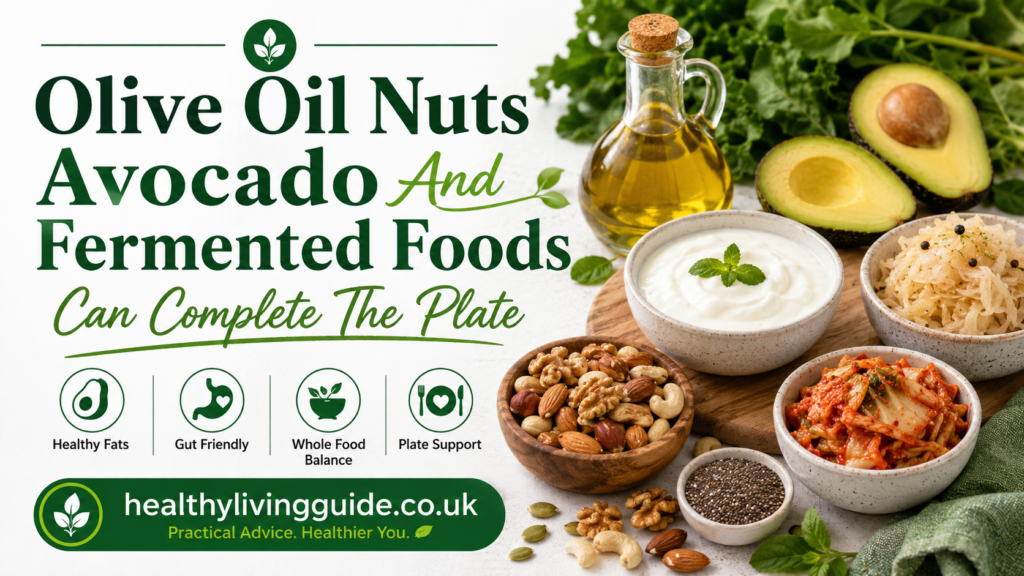
Olive Oil Nuts Avocado And Fermented Foods Can Complete The Plate
Healthy fats can make meals more enjoyable and satisfying, but the dose matters.
Olive oil, rapeseed oil, avocado, nuts and seeds provide mainly unsaturated fats. The NHS identifies olive oil, rapeseed oil, avocados and several types of nuts as sources of monounsaturated fat. Replacing some saturated fat with unsaturated fat can support a healthier cardiovascular pattern.
Fat in the intestine can stimulate several digestive signals, including GLP-1. However, this does not mean that adding large quantities of oil will automatically reduce appetite enough to compensate for the added calories.
Two to four tablespoons of oil can contribute a substantial amount of energy. For someone trying to lose weight, pouring this amount over meals without accounting for it may slow progress.
Use olive oil as an ingredient rather than a medicine.
A small amount can dress a salad, roast vegetables or help cook fish. Nuts can be sprinkled over yoghurt or porridge. Avocado can be used on wholegrain toast or added to a bean salad.
Portion awareness is especially important with nuts. They contain fibre, protein, minerals and unsaturated fat, but they are also energy dense. A small handful is different from eating continuously from a large packet.
Raw nuts are not automatically superior to all roasted nuts. Dry-roasted or lightly roasted unsalted nuts can remain nutritious. The bigger issue is whether the product has been coated with large amounts of salt, sugar, oil or flavouring.
Fermented foods are another area where claims can run ahead of the evidence.
Live yoghurt, kefir, kimchi and sauerkraut may introduce live microorganisms or fermentation products into the diet. Some research suggests fermented foods can influence the gut microbiome, but the strains and amounts vary significantly between products.
There is not enough evidence to promise that fermented food will reliably raise GLP-1, burn belly fat or produce medication-like appetite suppression. The NHS also notes that although probiotics may help in specific situations, evidence remains limited for many of the broad health claims made about them.
Fermented foods can still be enjoyable additions. Plain live yoghurt provides protein and calcium. Kefir can be used with oats or fruit. Kimchi and sauerkraut can add flavour and vegetables to a meal, although some products are high in salt.
Apple cider vinegar deserves particular caution.
Some trials and systematic reviews have reported small improvements in blood glucose, body weight or other metabolic measurements, but studies are generally small, varied and not sufficient to treat vinegar as a proven weight-loss therapy.
It has not been established that drinking apple cider vinegar before meals creates a clinically meaningful GLP-1 effect.
Vinegar is also highly acidic. Frequent exposure can contribute to dental erosion, and it may aggravate reflux, nausea or digestive irritation. NHS dental information identifies vinegar as one of the acidic foods capable of worsening tooth erosion.
There is no requirement to drink vinegar to lose weight.
Using a small amount in salad dressing is a safer and more pleasant option for many people. Anyone who chooses to drink it should dilute it thoroughly, avoid holding it in the mouth and speak to a clinician or pharmacist if they have reflux, gastroparesis, diabetes or take medicines that may be affected.
The central lesson is that healthy fats and fermented foods should complete a nutritious plate. They should not become supplements that are consumed in excessive quantities because of hormonal promises.
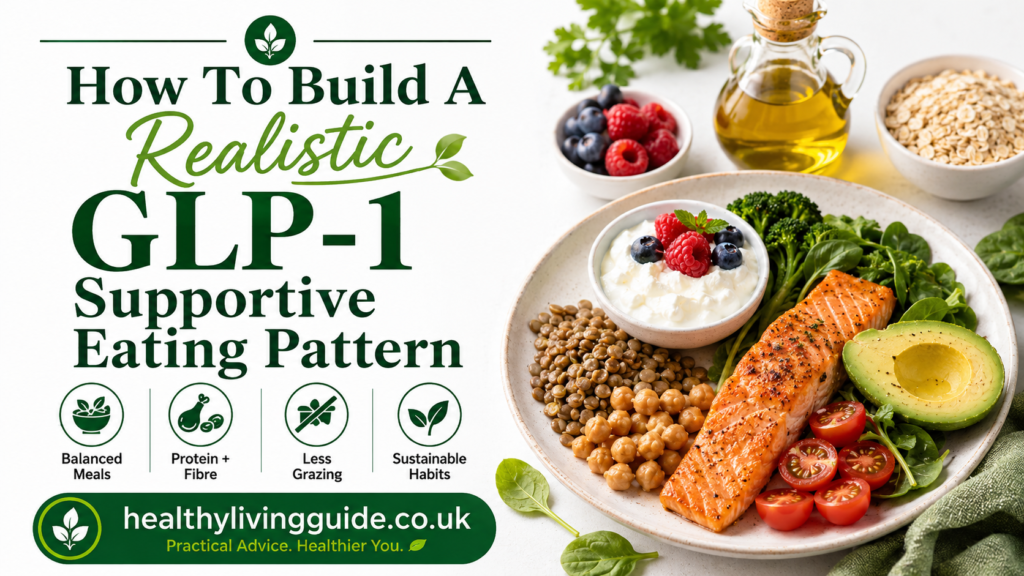
How To Build A Realistic GLP-1 Supportive Eating Pattern
A supportive eating pattern does not require perfection, expensive products or a rigid fasting schedule.
It begins with meals that contain enough protein, fibre and minimally processed food to keep you satisfied.
A simple plate might include a protein source, a generous portion of vegetables, a higher-fibre carbohydrate and a modest amount of healthy fat.
For example, grilled salmon could be served with roasted vegetables and new potatoes. A lentil curry could include spinach and be served with brown basmati rice. Eggs could be combined with mushrooms, tomatoes and wholegrain toast. Greek yoghurt could be served with oats, berries and seeds.
These meals do not work because they “hack” one hormone. They work because they deliver volume, protein, fibre, micronutrients and enjoyable flavours in a form that supports appetite regulation.
Start the day according to your appetite and routine.
Some people feel better after a protein-rich breakfast. Others naturally prefer their first meal later. Breakfast is not compulsory, and skipping it is not automatically beneficial.
A person who works nights, takes medication with food, has diabetes or performs physically demanding work may need a different meal pattern from someone working standard office hours.
Eat slowly enough to notice fullness.
Fullness is not an instant signal. Digestion, stomach expansion and communication between the gut and brain take time.
Eating away from a screen, pausing during the meal and chewing properly can make it easier to recognise when you have had enough. This is more practical than attempting to calculate exactly when GLP-1 reaches the brain.
Reduce constant grazing where it is unhelpful.
Some people feel better eating three defined meals rather than continuously snacking. Planned meals can also make it easier to include adequate protein and vegetables.
However, snacks are not inherently harmful. A person with high energy requirements, diabetes, pregnancy-related needs or a long gap between meals may benefit from a planned snack.
A useful snack contains something more substantial than refined carbohydrate alone. Fruit with yoghurt, vegetables with hummus, or an apple with a small handful of nuts will generally provide better nutrition than sweets or biscuits.
Treat fasting as optional rather than essential.
Time-restricted eating can help some people reduce their calorie intake or create a clearer routine. However, research does not show that everyone needs to fast for 16 hours to improve GLP-1 or lose weight.
Some trials report benefits, while others find that time restriction provides little extra advantage when calorie intake is similar. Reviews conclude that results are mixed and the approach is not universally superior to other sustainable dietary patterns.
Long fasting periods may be unsuitable for people who are pregnant, breastfeeding, underweight, taking certain diabetes medicines, recovering from an eating disorder or managing particular medical conditions.
Reduce ultra-processed foods without creating fear.
Ultra-processed food is a broad category. Not every packaged food is nutritionally poor, and a healthy diet does not require cooking every ingredient from scratch.
Nevertheless, a controlled inpatient trial found that participants consumed more calories and gained weight when offered an ultra-processed diet compared with a minimally processed diet, even though the diets had been designed to match several listed nutrients.
Many ultra-processed products are easy to eat quickly and combine refined starch, fat, sugar, salt and intense flavour in ways that make portion control difficult.
Begin by replacing the products you eat most frequently. Swap sugary cereal for porridge. Replace some biscuits with fruit and yoghurt. Cook an extra portion of dinner for lunch. Keep frozen vegetables and tinned beans available for busy days.
There is no need to eliminate every convenience food at once.
Do not undereat in pursuit of faster results.
Very low calorie intake can lead to tiredness, poor concentration, constipation, nutritional deficiencies and loss of muscle. It may be particularly risky when combined with appetite-suppressing medication.
People taking semaglutide or tirzepatide can sometimes find it difficult to eat enough because nausea and reduced appetite are common side effects. The NHS lists nausea, vomiting, constipation, diarrhoea and tiredness among the possible effects of these medicines.
Someone using weight-management medication should prioritise adequate fluid, protein and nutrient-rich foods and speak to their prescriber if symptoms are severe, persistent or prevent normal eating.
Severe, persistent abdominal pain, particularly if it extends to the back or occurs with vomiting, requires urgent medical advice because it may indicate pancreatitis.
Protect muscle while losing weight.
Weight loss should not focus only on the number displayed by the scales. A sustainable plan should also protect strength, mobility and lean tissue.
Regular protein intake helps, but resistance exercise is equally important. This can include gym-based strength training, resistance bands, machines or suitable body-weight exercises.
Walking supports cardiovascular health and daily energy expenditure, while resistance exercise gives the muscles a reason to remain strong during weight loss.
Use medication and lifestyle together when appropriate.
A nutritious diet does not prove that someone should avoid medicine. Equally, taking medicine does not remove the need for good nutrition.
GLP-1 and dual GIP/GLP-1 medicines should be prescribed and monitored by qualified professionals. They can have important benefits, but also limitations, costs, contraindications and side effects.
Do not buy injections from social-media sellers, beauty salons or unregistered websites. The NHS warns that fake weight-loss medicines are sold online and advises obtaining private prescriptions only through registered pharmacies.
The goal should not be to choose between “natural” and “medical” camps. The goal should be to find the safest, most effective and most sustainable approach for the individual.
Eggs, fish, lentils, vegetables, wholegrains, olive oil, nuts, yoghurt and other minimally processed foods can support that approach. They may stimulate natural digestive hormones, but their greatest advantage is simpler: they make it easier to eat satisfying, nutritious meals.
That is not as dramatic as promising Ozempic-like results from five foods.
It is also much more honest.
Disclaimer
This article is for general informational and educational purposes only and is not intended to provide medical advice, diagnosis or treatment. It should not be used as a substitute for advice from a qualified healthcare professional. Always speak to your GP, pharmacist or registered dietitian before making significant changes to your diet, starting a fasting plan, using supplements or changing any prescribed medication. Results vary between individuals, and no food or dietary approach can replicate the effects of prescription GLP-1 medicines. Never stop or adjust medication without consulting your healthcare provider.