
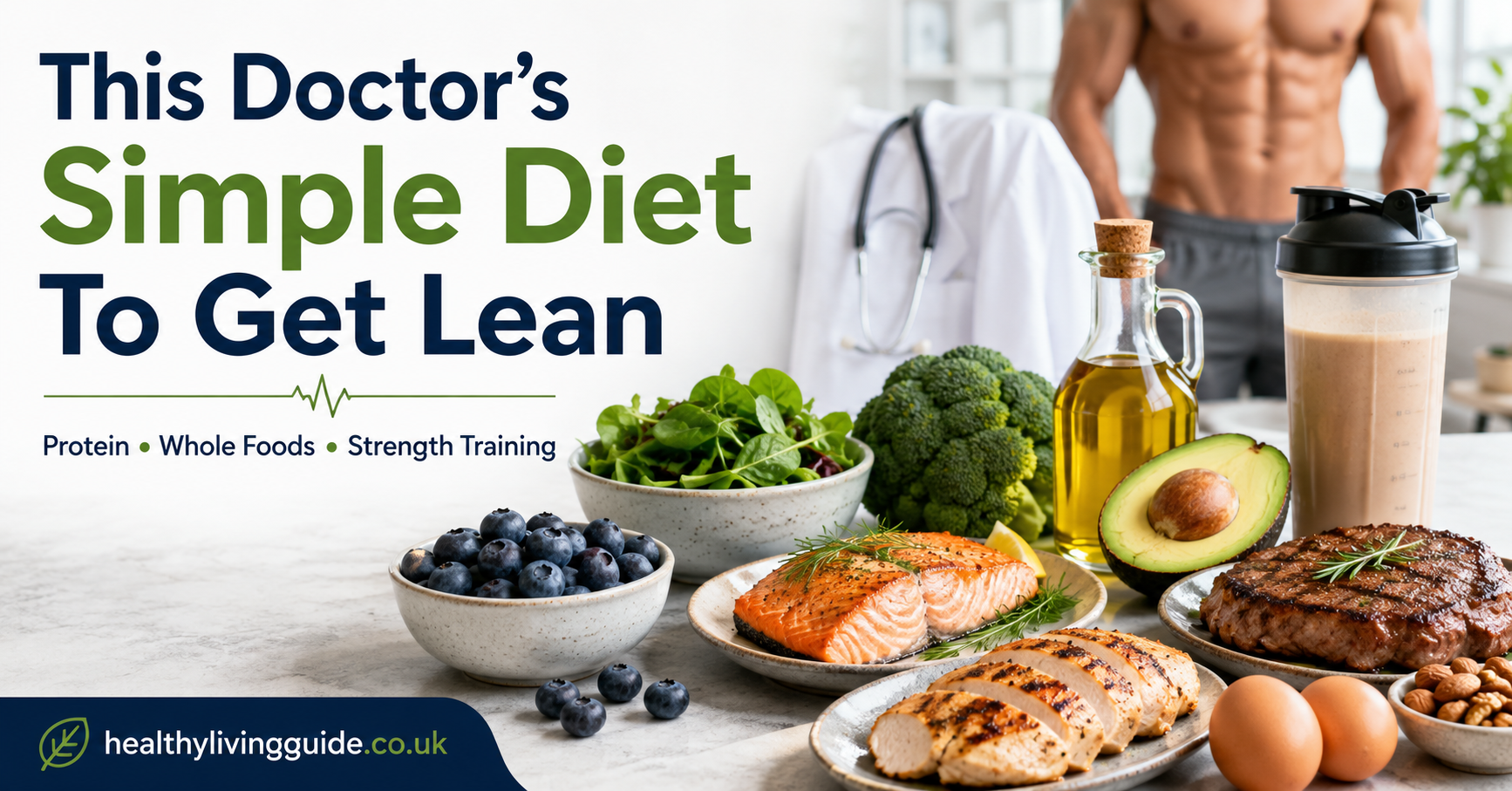
Getting lean is often made to sound far more complicated than it needs to be. One person says you must cut out all carbohydrates. Another says breakfast is essential. Someone else says fasting is dangerous, while another person insists fasting is the secret to fat loss. Then there are supplements, calorie apps, fitness trackers, protein powders, fat burners, meal timing rules, cheat meals, refeed days and endless online debates about the “perfect” diet.
The truth is much simpler.
A lean body is usually built through a few repeatable habits: eating enough protein, reducing ultra-processed foods, strength training, controlling total calorie intake, walking more, sleeping better and choosing meals that keep hunger under control. That may not sound as exciting as a miracle diet, but it is what most sustainable transformations come back to.
The discussion that inspired this article focused on a very lean doctor who described his diet as mostly high-protein, Mediterranean-style, simple, whole-food based and flexible rather than extreme. He mentioned foods such as eggs, whey protein, blueberries, avocado, steak, salmon, chicken, vegetables, quinoa and coffee, while also explaining that he feels better with fewer carbohydrates earlier in the day and avoids keeping sweets and snacks in the house because he knows he will overeat them.
That is a powerful lesson. Many people do not fail at fat loss because they lack knowledge. They fail because their plan is too complicated, too restrictive, too hungry, too boring or too disconnected from real life.
This article breaks down the principles behind that simple doctor-style diet and shows how an everyday person in the UK can use the same ideas safely, realistically and sustainably.
A Lean Diet Starts With Simplicity, Not Perfection
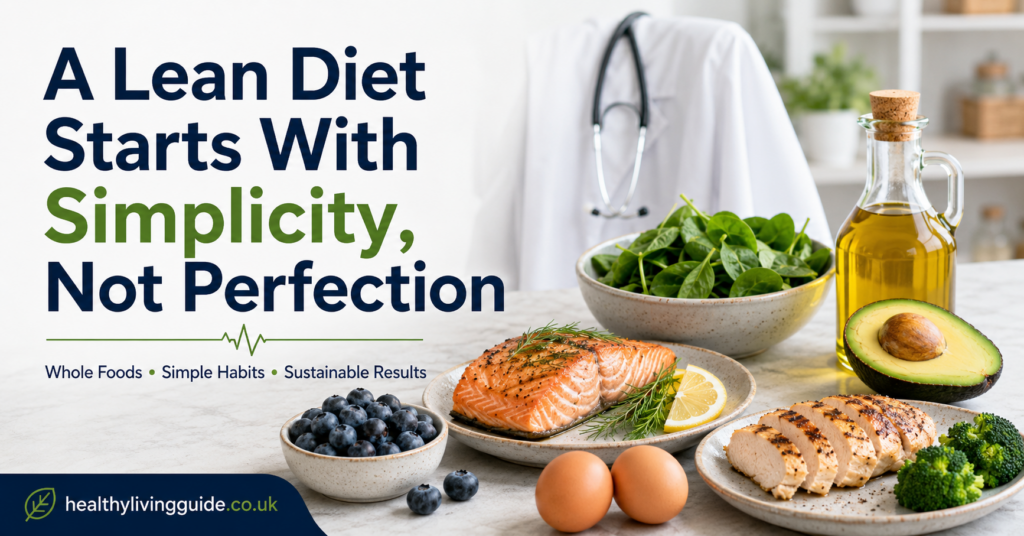
The first lesson is that a lean diet does not need to be exotic. It does not need to include rare superfoods, expensive supplements or complicated meal plans. In fact, the more complicated a diet becomes, the harder it usually is to follow for more than a few weeks.
The doctor in the transcript described his usual approach as a high-protein Mediterranean-style diet built around whole, one-ingredient foods. That means foods that are close to their natural state: eggs, fish, meat, vegetables, berries, avocado, olive oil, Greek yoghurt, beans, pulses, nuts, seeds and simple carbohydrate sources such as potatoes, oats, rice or quinoa when they suit the person’s goals.
This approach fits well with the general UK guidance around eating a balanced diet. The NHS Eatwell Guide explains that a healthy diet should include a variety of food groups across the day or week, including fruit and vegetables, protein foods, starchy carbohydrates, dairy or alternatives, and small amounts of healthier fats.
The key point is not to copy anyone’s diet exactly. A professional athlete, doctor, bodybuilder or fitness influencer may have different energy needs, different genetics, different training volume and a different level of discipline from the average person working long shifts, raising a family or trying to lose weight after years of inconsistent habits.
The better question is: what can you simplify?
For many people, the answer is clear. Stop building meals around processed snacks, sugary drinks, takeaway foods, pastries, crisps and random grazing. Start building meals around protein, vegetables, healthy fats and sensible portions of carbohydrates.
Instead of asking, “What supplement should I add?” ask, “What can I remove that is making fat loss harder?”
For example, removing biscuits from the kitchen may be more powerful than buying a fat burner. Preparing leftover chicken and vegetables for lunch may be more useful than buying a detox tea. Drinking black coffee or tea without sugar may help more than arguing online about whether breakfast is good or bad.
This is where fat loss becomes practical. The doctor admitted that if sweets and snacks are in the house, he will eat them. That is not weakness. That is self-awareness. Many people pretend they can rely on willpower forever, but a smarter approach is to design your environment so you do not need heroic discipline every evening.
If crisps are not in the cupboard, you cannot eat them at midnight. If you have boiled eggs, Greek yoghurt, fruit, cooked chicken or leftover salmon ready in the fridge, you are less likely to order fast food when you are tired. If your breakfast keeps you full, you are less likely to snack all morning.
Simplicity also makes tracking easier. You do not necessarily need to count every calorie forever, but it helps to understand your usual meals. A breakfast of eggs, avocado and coffee is easier to control than a random café breakfast with pastries, juice and a sugary latte. A lunch bowl with chicken, vegetables and rice is easier to manage than grabbing a meal deal with crisps, chocolate and a fizzy drink.
The leanest people often do not eat perfectly. They repeat simple meals often. They know what works for them. They reduce decision fatigue. They have a few reliable breakfasts, lunches and dinners that keep them full, help them hit protein, and do not trigger overeating.
That is the first foundation: make the diet boring enough to follow, but tasty enough to enjoy.
Protein Is The Anchor Of Fat Loss And Muscle Preservation
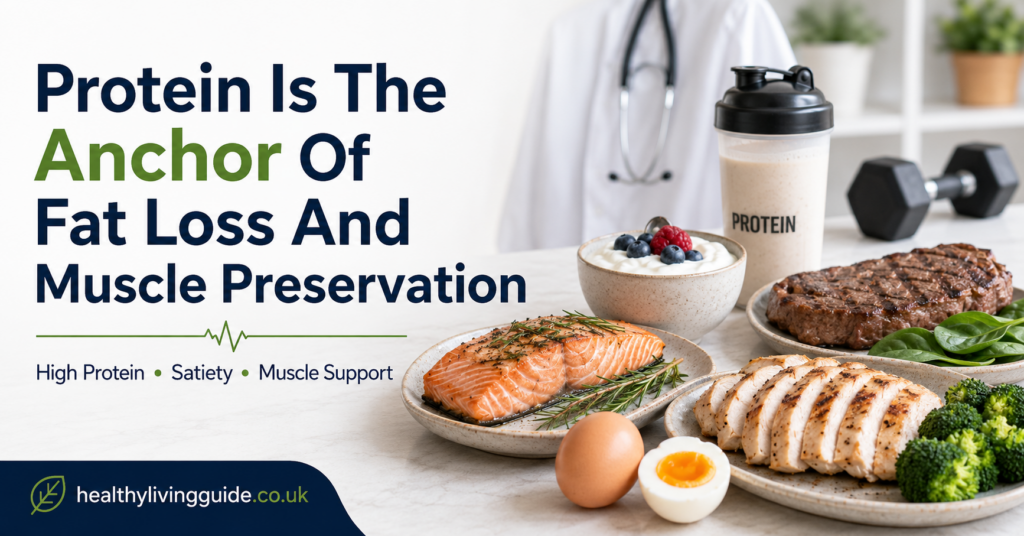
If there is one nutrient that deserves special attention during fat loss, it is protein.
Protein helps repair and build muscle, supports recovery from exercise, keeps meals more satisfying and makes it easier to maintain a leaner body composition. When people lose weight without enough protein or strength training, they may lose not only body fat but also muscle. That matters because muscle is important for strength, metabolism, glucose control, healthy ageing and daily function.
The doctor in the transcript said he aims for roughly 160 grams of protein per day at a body weight of around 182 pounds. That is close to the common fitness guideline of around one gram per pound of body weight, although not everyone needs that much. The British Dietetic Association notes that people doing strength and endurance sports often need more protein than inactive people, roughly around 1.4 to 2.0 grams per kilogram of body weight per day.
For a normal person trying to lose fat, the exact number depends on body weight, training, age, appetite, medical conditions and goals. A practical approach is to include a palm-sized portion of protein at most meals. Good options include:
Chicken breast or thighs
Turkey
Lean beef or steak
Eggs
Salmon, sardines, mackerel or tuna
Greek yoghurt or cottage cheese
Whey protein
Tofu, tempeh or edamame
Lentils, chickpeas and beans
Protein is not magic, but it changes the feel of a diet. A breakfast of toast and jam may taste nice but leave you hungry soon after. A breakfast of eggs, Greek yoghurt or a protein shake with berries is more likely to keep you satisfied. A lunch of crisps, a sandwich and chocolate may be easy, but a bowl with chicken, vegetables, olive oil and potatoes is usually more filling and nutrient-dense.
This matters because hunger is one of the biggest reasons diets fail. People can tolerate hunger for a few days, but not forever. Eventually, the body pushes back. Cravings increase, energy drops, mood suffers and the person returns to old habits.
A higher-protein diet can make the process easier because it gives the body what it needs while reducing the desire to constantly snack. It also supports muscle retention when combined with resistance training.
This is especially important after the age of 40 and 50. As people get older, maintaining muscle becomes more important, not less. A lighter body is not always a healthier body if the weight loss comes with weakness, fatigue and loss of muscle. The goal should be fat loss with strength, not just a lower number on the scales.
A simple way to structure the day is to aim for protein at every meal:
Breakfast: eggs with avocado, Greek yoghurt with berries, or a whey protein smoothie.
Lunch: chicken, salmon, beef, tofu or lentils with vegetables and a controlled carbohydrate portion.
Dinner: steak, fish, chicken, eggs or beans with vegetables and healthy fats.
Snack if needed: Greek yoghurt, boiled eggs, cottage cheese, tuna, protein shake or fruit with nuts.
The exact foods can change based on preference, culture, budget and religion. Someone who eats halal can choose halal chicken, beef, eggs, fish and dairy. Someone vegetarian can use Greek yoghurt, eggs, tofu, lentils, beans and protein powder. Someone who dislikes breakfast can use intermittent fasting and simply eat protein later in the day.
The principle is what matters: protein comes first.
Carbs Are Not Evil, But Your Body’s Response Matters
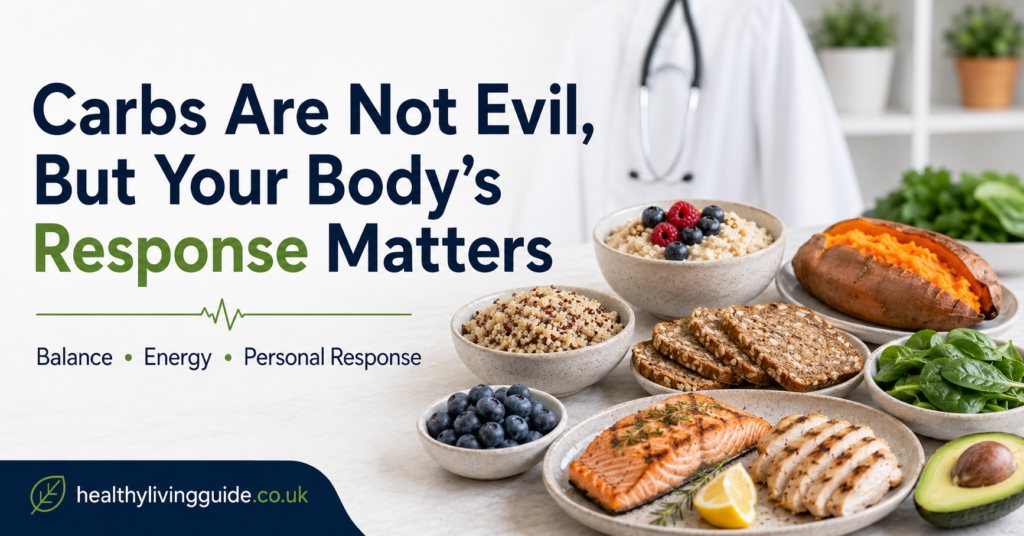
Carbohydrates are one of the most misunderstood parts of dieting. Some people treat carbs as if they are poison. Others act as if cutting carbs is unnecessary for everyone. The truth sits somewhere in the middle.
Carbohydrates are not automatically bad. The body can use them for energy, especially during hard training, long walks, sports and physically demanding work. Foods such as oats, potatoes, rice, fruit, beans and wholegrains can absolutely fit into a healthy diet.
The issue is that not all carbohydrates affect people the same way.
In the transcript, the doctor said he feels more “carb sensitive” than some people. When he eats more carbohydrates, especially earlier in the day, he notices a crash and more hunger later. He also mentioned that bread, sweets and large portions of rice or sweet potato can make him feel hungrier afterwards.
Many people can relate to this. A high-carb, low-protein breakfast may create a cycle of energy spike, energy dip and more cravings. A sugary cereal or pastry breakfast may feel good for 20 minutes, then leave someone tired and hungry by mid-morning.
This does not mean everyone must follow a ketogenic diet. It means people should pay attention to how different foods affect appetite, energy and cravings.
For some, oats with Greek yoghurt and berries works brilliantly. For others, eggs and avocado feel better. Some people train better with carbs before exercise. Others prefer training fasted. Some people can eat rice at lunch and feel fine. Others do better saving most of their carbs for dinner.
This is where personal feedback matters.
Ask yourself:
Do I feel sleepy after this meal?
Am I hungry again within an hour?
Do I crave sugar after eating this?
Does this meal help me train better?
Does this food trigger overeating?
Do I feel satisfied or restless afterwards?
The doctor’s approach was not to ban all carbs forever. He mentioned small amounts of quinoa, berries and vegetables, and the wider conversation referred to athletes using black rice and other carbohydrate sources strategically. The lesson is not “carbs are bad.” The lesson is “use carbs intelligently.”
For most people, the best carbohydrate sources are minimally processed ones: potatoes, sweet potatoes, oats, rice, quinoa, beans, lentils, fruit and vegetables. The carbohydrates that usually cause problems are ultra-processed combinations of refined starch, sugar, fat and salt: biscuits, cakes, pastries, crisps, sweets, sugary cereals, white bread snacks and fast food.
These foods are easy to overeat because they are designed to be rewarding. They often contain many calories without providing much fullness. A person may struggle to eat 800 calories of boiled potatoes and chicken, but can easily eat 800 calories of biscuits while watching television.
A practical fat-loss plate could look like this:
Half the plate: vegetables or salad.
Quarter of the plate: protein.
Quarter of the plate: potatoes, rice, beans, lentils or wholegrains.
Add: olive oil, avocado, nuts or another healthy fat in a sensible amount.
On lower-carb days, reduce the starchy portion and increase vegetables. On harder training days, increase the carbohydrate portion. This gives flexibility without chaos.
Carbs are a tool. Use them in the way that gives you the best energy, appetite control and results.
Strength Training Changes The Way Your Body Handles Food
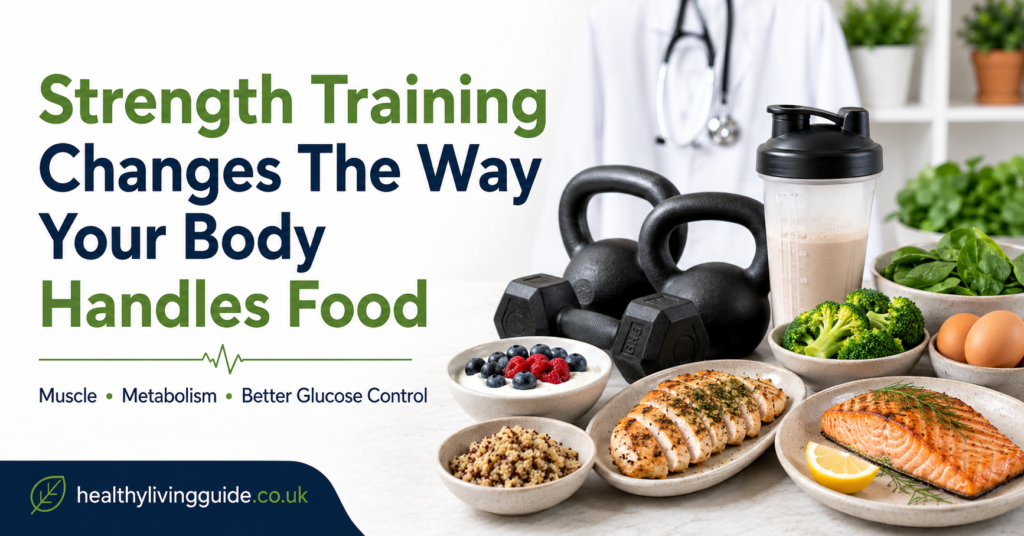
The doctor’s first fat-loss strategy was strength training. That is important because many people still think fat loss is only about eating less and doing cardio. While calorie control matters, strength training changes the body in ways dieting alone cannot.
Muscle is active tissue. It helps the body store and use glucose, supports posture, protects joints and improves the way the body looks as fat comes down. Without strength training, weight loss can leave a person smaller but softer, lighter but weaker, and more likely to regain weight.
The NHS recommends that adults do strengthening activities that work all major muscle groups on at least two days per week, alongside regular moderate or vigorous physical activity.
This does not mean everyone needs to become a bodybuilder. Strength training can be simple. It can include:
Squats
Lunges
Press-ups
Rows
Deadlifts
Bench press
Shoulder press
Resistance bands
Kettlebells
Dumbbells
Machines at the gym
Bodyweight exercises at home
For beginners, two or three sessions per week is enough to start. The aim is to gradually become stronger over time. That could mean lifting slightly heavier weights, doing more repetitions, improving form or increasing control.
Strength training also makes fat loss more forgiving. If you have more muscle, your body has a better place to send some of the energy you eat. This does not mean muscle allows unlimited junk food, but it does mean an active, stronger body usually handles food better than a sedentary, under-muscled one.
This is especially relevant for people using weight-loss injections or very low-calorie diets. The transcript raised concern that people can lose muscle if they dramatically reduce food intake without training or prioritising protein. NICE guidance covers medicines such as semaglutide and tirzepatide for obesity management in specific circumstances, but these treatments should be understood as medical tools within wider weight-management care, not as replacements for nutrition, movement and long-term behaviour change.
The phrase “weight loss” can be misleading. What most people actually want is fat loss. They want a smaller waist, better health markers, more energy, improved confidence and easier movement. Losing muscle does not support that goal.
That is why the best fat-loss plan should include three things:
Enough protein.
Regular strength training.
A calorie intake that creates gradual fat loss without extreme starvation.
Walking also matters. Many people underestimate walking because it does not feel intense. But walking increases daily energy expenditure, improves mood, helps digestion and is easier to recover from than punishing cardio. A person who strength trains three times a week and walks daily is already building a powerful foundation.
A simple weekly plan could be:
Monday: Full-body strength training
Tuesday: 30-45 minute walk
Wednesday: Full-body strength training
Thursday: 30-45 minute walk
Friday: Full-body strength training
Saturday: Longer walk or active hobby
Sunday: Rest, stretching or light walking
The exact plan can change, but the principle stays the same: build muscle, move often and avoid relying on starvation.
Fasting Can Help, But It Is Not A Free Pass
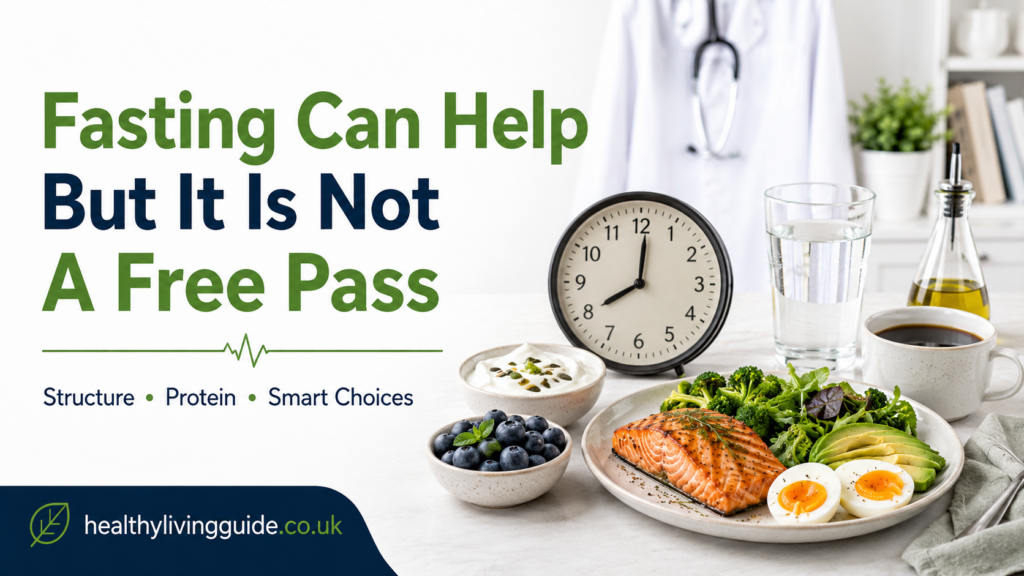
Intermittent fasting came up in the transcript as something the doctor sometimes uses for a month or two depending on how he feels. He also said he often trains better in a fasted state, although he recognised that not everyone performs well that way.
This is the right attitude. Fasting is a tool, not a religion.
Intermittent fasting can help some people lose fat because it reduces the eating window and makes it easier to eat fewer calories. If someone skips breakfast and eats two satisfying meals instead of three meals plus snacks, they may naturally reduce their intake without counting everything.
However, fasting does not work if the person simply overeats later. A 16-hour fast followed by a huge takeaway, snacks and dessert is not a fat-loss plan. The body still responds to total intake over time.
Fasting also needs to be used carefully. It may not be suitable for everyone, especially people with a history of eating disorders, pregnant or breastfeeding women, people with certain medical conditions, people taking glucose-lowering medication, or anyone advised by a clinician to avoid fasting.
For healthy adults, a gentle fasting approach may look like this:
Finish dinner at 7pm.
Drink water, tea or black coffee in the morning.
Eat the first meal at 11am or 12pm.
Have two protein-rich meals and possibly one snack.
Stop eating after dinner.
This creates a 14-16 hour fasting window without making life too extreme.
Some people feel sharp and energetic training fasted. Others feel weak, dizzy or irritable. Neither response is morally superior. It is simply feedback. If fasted training makes you feel terrible, eat something light before training, such as Greek yoghurt, a banana, eggs or a protein shake.
The mistake is turning fasting into an excuse to ignore food quality. The doctor’s diet still focused on nutrient-dense foods. Whether he ate breakfast or fasted, the meals were built around protein, vegetables, healthy fats and simple foods.
That is what makes fasting useful: it sits on top of a good diet, rather than replacing one.
Fasting may also help people become more aware of true hunger. Many people eat from habit, boredom, stress or tiredness. A short fasting window can reveal that not every craving is an emergency. Sometimes a person is thirsty, tired, stressed or simply used to eating at a certain time.
But fasting should not become punishment. If the goal is to “make up” for overeating, burn off guilt or force rapid weight loss, the mindset can become unhealthy. A better approach is calm structure: choose an eating window that suits your life, eat proper meals, prioritise protein and stop using snacks as entertainment.
For many people, a 12-hour overnight fast is enough to begin. For example, finish eating at 8pm and eat breakfast at 8am. Once that feels easy, some may extend it to 14 or 16 hours. Others may decide fasting is not for them and still lose fat with three structured meals per day.
The body does not require one perfect schedule. It requires consistency.
The Best Fat-Loss Diet Removes The Foods That Hijack Your Appetite
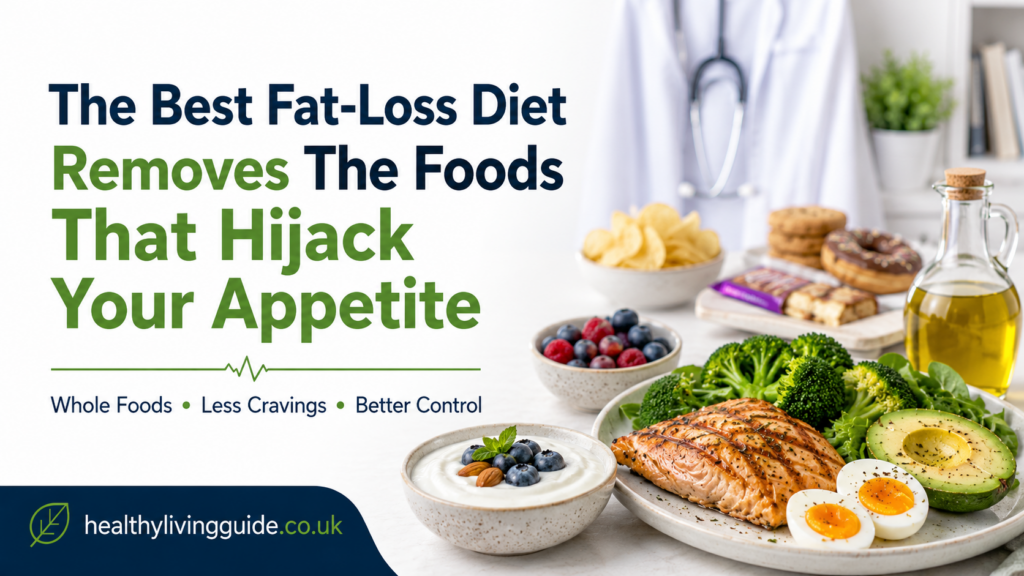
One of the strongest points in the conversation was the idea of subtraction. Many people think health is about adding more: more powders, more capsules, more hacks, more special ingredients. But fat loss often starts with removing the foods that make self-control harder.
Ultra-processed foods can be a major problem because they are easy to overeat, quick to digest, low in satiety and often engineered to be highly rewarding. They combine sugar, starch, fat, salt and flavourings in ways that encourage repeated eating.
This is why someone can feel full after a steak and vegetables but still find room for dessert. It is why a person can eat crisps even when they are not physically hungry. It is why biscuits disappear faster than boiled eggs.
The doctor admitted that if snacks are in the house, he will eat them. This is a mature approach because it recognises reality. If your environment is full of trigger foods, you are making fat loss harder than it needs to be.
A better system is to keep the home environment boring in the best possible way. Stock the kitchen with foods that support the person you want to become.
Useful foods to keep at home include:
Eggs
Greek yoghurt
Chicken
Lean beef
Salmon or sardines
Frozen vegetables
Fresh salad
Blueberries or mixed berries
Apples
Avocado
Olive oil
Potatoes
Rice or quinoa
Lentils and beans
Nuts in controlled portions
Whey protein if useful
Foods to limit at home include:
Biscuits
Cakes
Crisps
Sweets
Sugary cereals
Chocolate multipacks
Ice cream tubs
Fizzy drinks
Pastries
Processed snack bars
Ready meals that are high in calories and low in protein
This does not mean you can never eat enjoyable foods. It means you should stop pretending that keeping a cupboard full of snacks is harmless if you know you struggle with them.
A useful rule is: eat treats outside the house, not inside the house.
For example, enjoy dessert at a restaurant occasionally. Have a slice of cake at a family gathering. Buy one small chocolate bar when you truly want it. But do not keep multipacks at home and expect discipline to win every night after a stressful day.
This is not about fear. It is about design.
The same applies to takeaway food. If you regularly stop for fast food after work, create a replacement plan before hunger hits. Prepare leftovers. Keep cooked meat and vegetables ready. Have a protein shake and fruit available. Decide your dinner before the tired version of you takes over.
The doctor also spoke about paying attention to how food makes you feel. This is an underrated skill. Many people are so used to feeling tired, bloated, foggy or hungry that they do not connect those feelings to their food choices. When they remove processed foods for a few weeks, they often become more aware of what gives them steady energy and what makes them crash.
A simple experiment is to eat mostly whole foods for 14 days and write down how you feel after meals. Track energy, hunger, mood, digestion, sleep and cravings. You may discover that certain foods are not worth it for you, even if they are technically allowed.
Some people feel fine with dairy. Others feel bloated. Some people thrive on oats. Others feel sleepy. Some people handle bread well. Others find it triggers cravings. The best diet is not the one that wins an argument online. It is the one that helps you feel, perform and live better.
A Realistic 7-Day Lean Eating Plan For Everyday Life
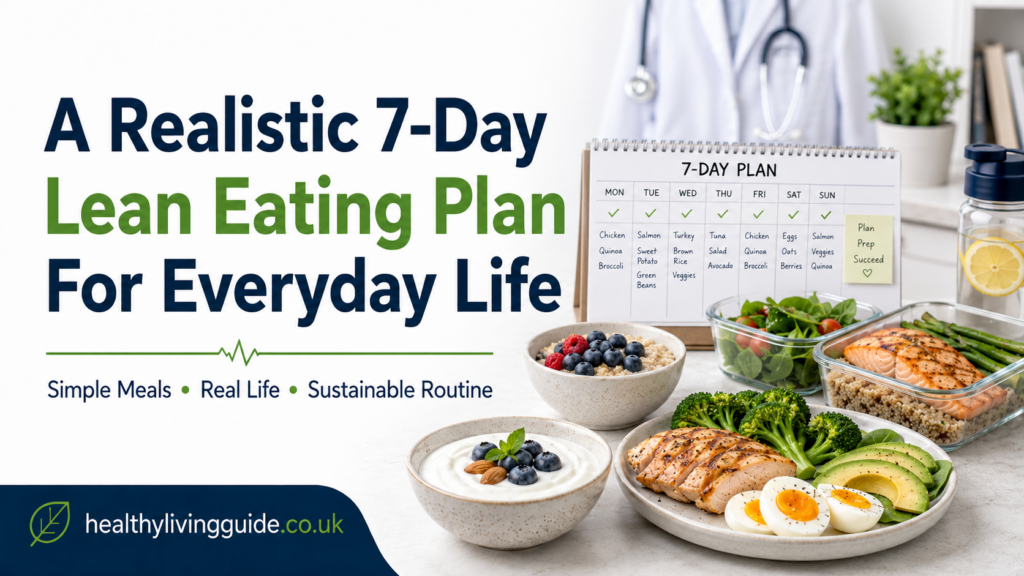
The principles are useful, but people need practical examples. Below is a simple 7-day lean eating structure inspired by the high-protein, whole-food approach from the transcript. It is not a strict prescription. It can be adjusted based on appetite, body size, training, culture, budget and medical needs.
The aim is to show how simple meals can be repeated without becoming miserable.
Day 1
Breakfast: Three eggs with avocado and black coffee or tea.
Lunch: Leftover chicken bowl with salad, olive oil and a small portion of rice.
Dinner: Salmon with broccoli, carrots and potatoes.
Snack if needed: Greek yoghurt with blueberries.
Day 2
Breakfast: Protein smoothie with whey protein, blueberries, almond milk or water, and a spoon of Greek yoghurt.
Lunch: Beef mince bowl with vegetables, quinoa and avocado.
Dinner: Chicken thighs with roasted vegetables and salad.
Snack if needed: Boiled eggs or cottage cheese.
Day 3
Breakfast: Greek yoghurt with berries and a small handful of nuts.
Lunch: Tuna salad with eggs, cucumber, tomatoes, olive oil and potatoes.
Dinner: Steak with broccoli, mushrooms and a small portion of rice.
Snack if needed: Apple with Greek yoghurt.
Day 4
Breakfast: Fasted morning if preferred, with water, black coffee or tea.
Lunch: Salmon and edamame bowl with vegetables.
Dinner: Turkey mince or lean beef with vegetables and lentils.
Snack if needed: Protein shake.
Day 5
Breakfast: Eggs with spinach and mushrooms.
Lunch: Chicken and avocado salad with olive oil dressing.
Dinner: White fish or salmon with roasted vegetables and sweet potato.
Snack if needed: Cottage cheese or Greek yoghurt.
Day 6
Breakfast: Protein smoothie with berries.
Lunch: Leftover steak or chicken bowl with salad and quinoa.
Dinner: Homemade burger patties with salad, vegetables and potatoes.
Snack if needed: Fruit and a controlled portion of nuts.
Day 7
Breakfast: Omelette with vegetables and avocado.
Lunch: Lentil and chicken soup or chickpea salad with eggs.
Dinner: Roast chicken, vegetables and potatoes.
Snack if needed: Greek yoghurt with berries.
This plan works because it repeats the same core pattern:
Protein at every meal.
Vegetables most days.
Carbs from simple sources.
Healthy fats from avocado, olive oil, eggs, nuts and oily fish.
Minimal ultra-processed food.
Leftovers used for convenience.
For someone trying to lose fat, portions still matter. Olive oil, avocado, nuts and steak are healthy foods, but they still contain calories. The goal is not unlimited eating. The goal is meals that make calorie control easier because they are satisfying.
A good starting point is to build meals like this:
One to two palms of protein.
Two fists of vegetables.
One cupped hand of carbohydrates if needed.
One thumb-sized serving of added fat.
This simple method avoids obsessive tracking while still creating structure.
If weight is not changing after three or four weeks, reduce portions slightly, increase walking, or track food for a short period to understand where extra calories are coming from. Often the issue is not the main meals but snacks, oils, drinks, weekend eating or portion creep.
For people who train hard, carbohydrates may need to be higher. For people who sit most of the day, carbs may need to be more controlled. For night-shift workers, meal timing may need to be adjusted around sleep and energy dips. The principles remain the same even when the schedule changes.
The best diet is not the most dramatic one. It is the one you can repeat on busy days.
The Real Secret Is Identity, Consistency And Knowing Yourself
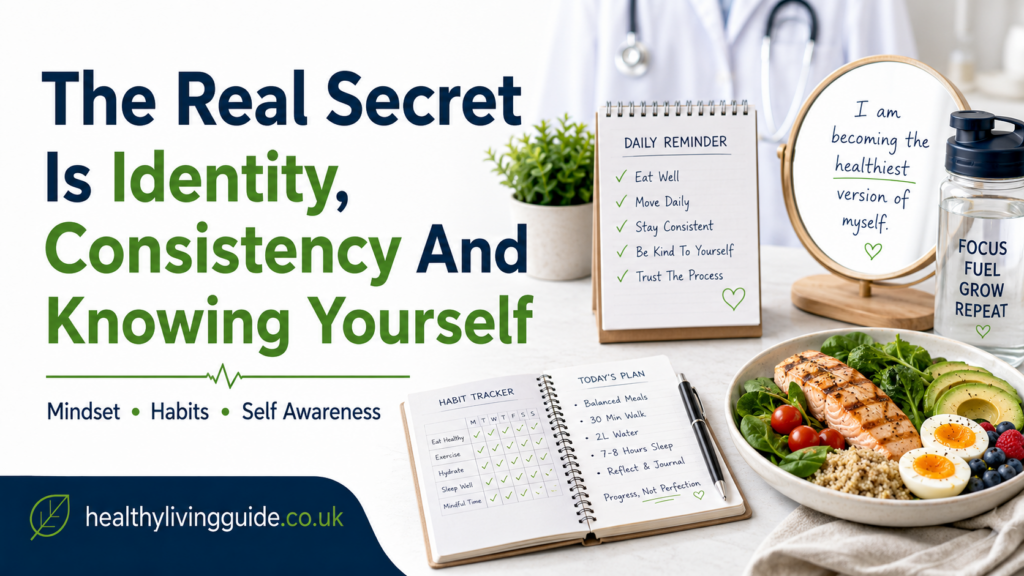
The final lesson is mindset. The transcript mentioned the idea from Atomic Habits that behaviour becomes easier when it matches your identity. Instead of saying, “I am trying to eat healthy,” you begin to think, “I am someone who takes care of my body.”
That shift matters.
When healthy eating feels like punishment, every meal becomes a battle. When it becomes part of who you are, the choices become more automatic. You stop seeing protein, vegetables and simple meals as restriction. You start seeing them as fuel, self-respect and protection for your future.
This does not happen overnight. Identity is built through repeated evidence. Every time you prepare a healthy meal, you cast a vote for that identity. Every time you go for a walk, you cast another vote. Every time you lift weights, avoid unnecessary snacks, drink water, sleep on time or choose a better lunch, you reinforce the belief that you are becoming healthier.
The doctor’s diet was not impressive because it was complicated. It was impressive because it was self-aware. He knew he performed better fasted. He knew too many carbs earlier in the day made him feel worse. He knew keeping sweets at home was a problem. He knew protein helped him stay lean. He knew strength training mattered. He knew sustainability was better than extreme restriction.
That is what most people need to develop: not a perfect diet, but an honest one.
If bread makes you crave more bread, admit it.
If skipping breakfast makes you overeat at night, admit it.
If fasting helps you control calories, use it.
If fasting makes you binge, stop using it.
If snacks in the house cause problems, remove them.
If you need planned meals to stay consistent, prepare them.
If you hate running, walk and lift weights instead.
If you are always tired, fix sleep before adding more training.
Fat loss is not just biology. It is behaviour, environment, emotion and identity.
A lean body is usually the result of hundreds of ordinary decisions repeated for long enough. It is not one heroic week. It is not one detox. It is not one supplement. It is the quiet pattern of eating protein, lifting weights, walking often, sleeping enough, reducing processed food and returning to the plan after imperfect days.
There will always be birthdays, weddings, family meals, holidays and stressful weeks. The goal is not to avoid life. The goal is to build a default routine strong enough that occasional flexibility does not ruin your progress.
A good rule is 80 percent structure, 20 percent flexibility. Most of the time, eat the foods that help you feel and look better. Sometimes, enjoy the meal, dessert or celebration without guilt. Then return to your normal routine at the next meal.
The people who succeed long term are not the people who never slip. They are the people who do not turn one slip into a whole week.
The doctor-style diet is powerful because it removes confusion. Eat mostly whole foods. Prioritise protein. Strength train. Use carbs based on your response. Avoid keeping trigger foods around. Consider fasting if it helps. Get your basic health markers checked if fat loss is unusually difficult. Build an identity around being a healthy person, not a desperate dieter.
That is simple, but not always easy.
The reward is worth it: better energy, better confidence, better strength, better appetite control and a healthier relationship with food.
You do not need to copy a doctor, athlete or influencer exactly. You need to learn from the principles and build a version that fits your life.
Start with your next meal.
Make it simple.
Make it high in protein.
Make it mostly whole food.
Make it repeatable.
That is how lean living begins.
Disclaimer
This article is for general educational purposes only and is not personal medical advice. Speak to your GP, dietitian or qualified healthcare professional before starting a new diet, fasting routine, supplement plan, weight-loss medication or exercise programme, especially if you have a medical condition, take medication, are pregnant or breastfeeding, or have a history of disordered eating.