
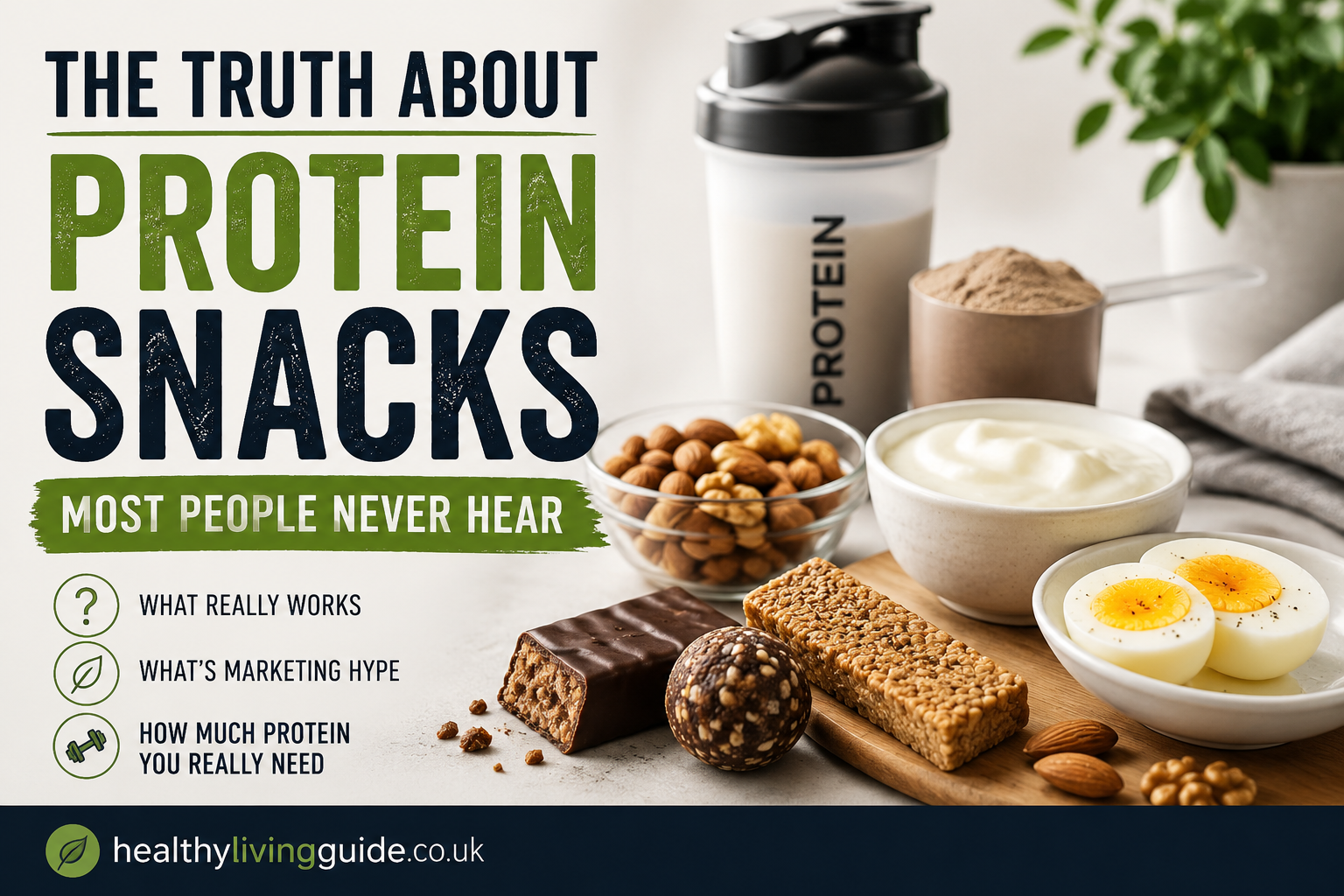
Protein has become one of the biggest health trends of modern life. Walk into almost any supermarket today and you will see it everywhere. Protein yogurts. Protein cereals. Protein bars. Protein shakes. Protein crisps. Protein bread. Protein puddings. Even drinks that never had anything to do with fitness are now being sold with the word protein stamped across the front.
For many people, this creates a powerful impression. If something says high protein, it must be healthier. If a snack has added protein, it must be better than an ordinary snack. If a cereal box shouts protein on the front, it must be a smarter breakfast choice. That is exactly what food brands want us to believe.
The truth is more complicated.
Protein is absolutely essential. Your body needs it for muscles, skin, hair, nails, hormones, enzymes, repair, growth, immunity and healthy ageing. Without enough protein, you can feel tired, weak, hungry, undernourished and less able to recover from exercise or illness. It plays a key role in keeping you fuller for longer and protecting muscle when losing weight.
But the modern protein craze has created confusion. Many people now believe they need huge amounts of protein every day, even when they do not. Others spend extra money on expensive snacks that offer very little extra protein compared with ordinary foods. Some products use the health halo of protein to disguise added sugar, sweeteners, ultra-processed ingredients and clever marketing.
This is where the hidden truth begins.
Protein is important, but not every protein product is healthy. High-protein branding does not automatically mean nutritious. A protein chocolate bar is still a chocolate bar. A protein flapjack can still be high in sugar and calories. A protein shake may be convenient, but it does not provide everything you get from whole foods.
The real question is not simply, “Am I eating enough protein?” The better question is, “Am I getting the right amount of protein from the right sources for my body, lifestyle and health goals?”
Why Protein Suddenly Became The World’s Favourite Nutrient
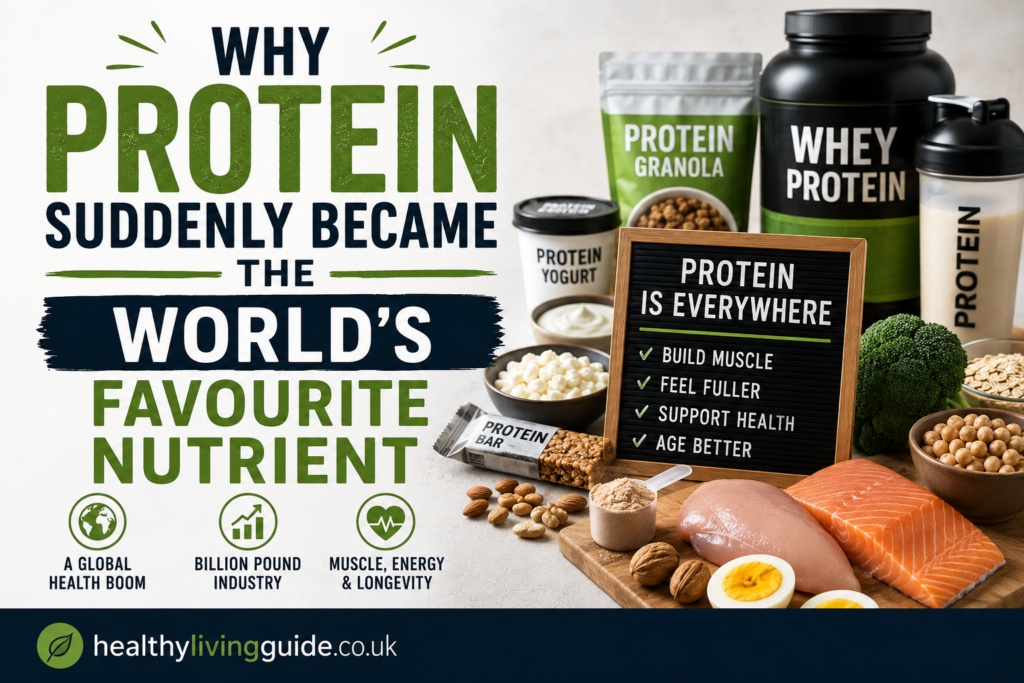
Protein has always been part of the human diet. For centuries, people got it from foods like meat, fish, eggs, milk, cheese, beans, lentils, nuts, seeds and grains. It was simply part of a balanced plate. Nobody needed a protein cookie to feel healthy.
Today, protein has become a marketing machine.
The global protein supplement industry is worth billions. Supermarkets report rising demand for high-protein products. Social media is full of fitness influencers, recipe creators and wellness accounts promoting protein hacks. Cookbook charts, newspaper articles and online videos all push protein as the answer to muscle gain, weight loss, healthy ageing and better energy.
There is a reason protein has become so attractive. It sounds scientific. It sounds healthy. It sounds practical. Unlike some diet trends, protein is genuinely important, so brands can attach real health ideas to their products.
Want to build muscle? Eat more protein.
Want to lose weight? Eat more protein.
Want to stop snacking? Eat more protein.
Want to age better? Eat more protein.
Want to recover from workouts? Eat more protein.
These claims are not completely wrong. Protein can help with all these things. But the problem is that the message has been simplified too much. It has gone from “protein is important” to “more protein is always better.” That is where confusion begins.
Most people do not need to panic about protein. Many already get enough through normal meals. Others may need more, especially if they are older, active, strength training, recovering from illness, dieting, or eating less because of weight loss medication. But individual needs vary.
The protein industry benefits from making everyone feel like they are deficient. If people believe they are not getting enough, they are more likely to buy shakes, bars, cereals and expensive snacks.
This does not mean all protein products are bad. Some can be useful. A protein powder can help someone who struggles to eat enough. A shake can be convenient after training. A bar can be better than skipping food entirely. But these products should supplement a diet, not replace proper meals.
The word protein on a packet should not stop us from asking basic questions.
What else is in this product?
How much protein does it actually contain?
Is it much better than a cheaper whole food?
Is it full of sweeteners, flavourings or processed ingredients?
Am I buying nutrition or just clever branding?
Once you start asking these questions, the protein craze looks very different.
What Protein Actually Does Inside The Body
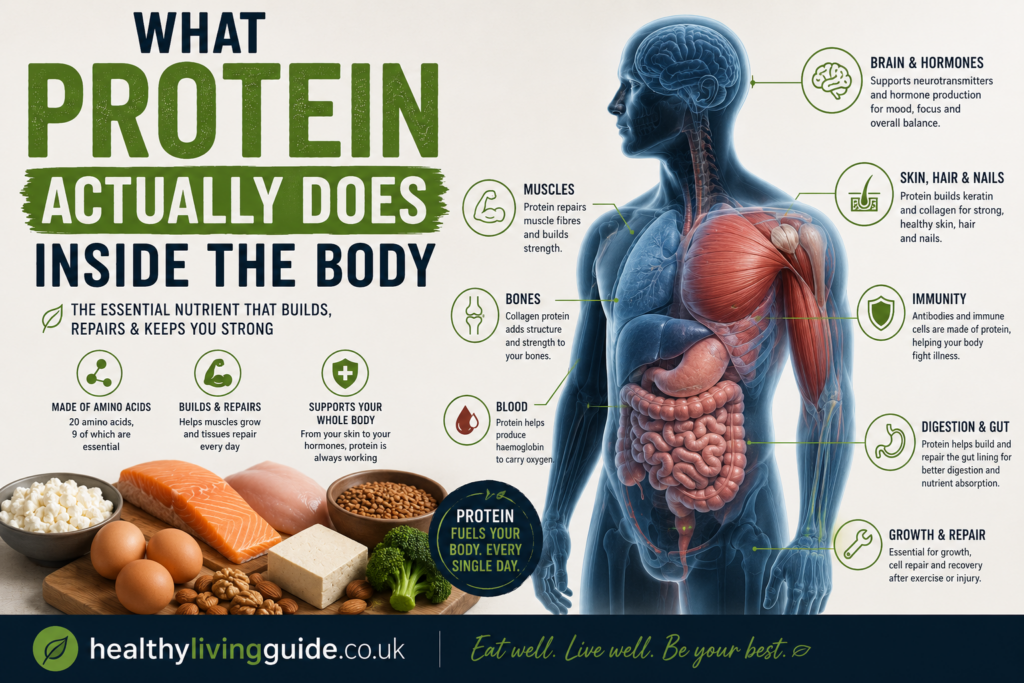
Protein is one of the three main macronutrients, alongside carbohydrates and fats. Each plays a different role in the body. Carbohydrates are a major energy source. Fats help with hormones, brain function and nutrient absorption. Protein is mainly used for building, repairing and maintaining the body.
Almost every part of you depends on protein.
Your muscles need protein to repair and grow. Your skin needs protein to stay strong and healthy. Your hair and nails are made partly from protein structures. Your gut lining uses protein. Your immune system depends on protein. Your body also uses protein to make enzymes and hormones.
Protein is made from amino acids. There are 20 amino acids involved in human health. Nine of these are known as essential amino acids because the body cannot make them by itself. You must get them from food.
This is one reason protein quality matters. Some foods provide all nine essential amino acids in good amounts. These are often called complete proteins. Examples include eggs, fish, meat, dairy, tofu and tempeh. Other foods may be lower in one or more essential amino acids, but they can still be valuable when combined with other foods.
For example, rice and lentils work well together. Peanut butter and wholegrain toast can complement each other. Hummus and pitta bread can also create a better amino acid mix. You do not always need every amino acid in perfect balance in every single bite, but variety across the day matters.
Protein also helps with appetite. Meals rich in protein tend to slow digestion, meaning food stays in the stomach longer. Protein can also reduce hunger hormones, helping you feel fuller. This is why a breakfast with eggs, Greek yogurt, tofu, beans or cottage cheese can often keep you satisfied longer than a sugary cereal.
For people trying to lose weight, protein is especially useful because it helps protect muscle. When calories are reduced, the body can lose both fat and muscle. Eating enough protein, combined with resistance training, helps preserve lean mass.
For people who strength train, protein supports muscle repair. Exercise creates tiny tears in muscle fibres. Protein provides the building blocks to repair those fibres stronger than before.
For older adults, protein becomes even more important. As we age, muscles become less responsive to protein. Appetite can also reduce, making it easier to under-eat. This is why older adults may need to be more intentional about including protein at each meal.
So yes, protein matters. It is not just another diet trend. But understanding its importance does not mean falling for every high-protein product on the shelf.
How Much Protein Do You Really Need Each Day
One of the biggest questions people ask is how much protein they actually need.
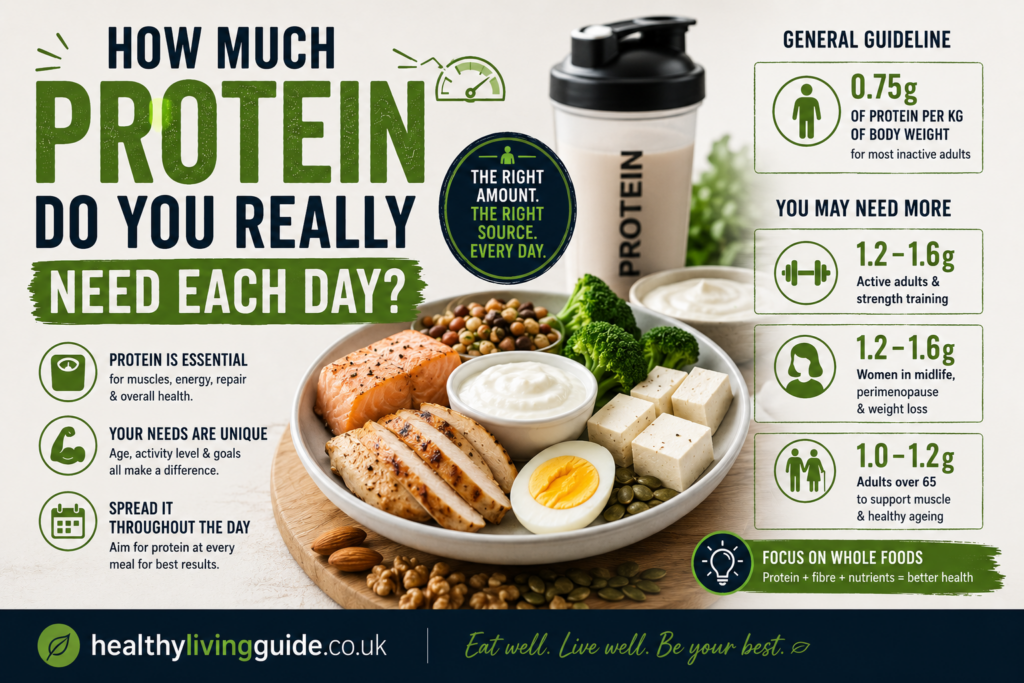
A common general guideline for adults is around 0.75 grams of protein per kilogram of body weight per day. This may be enough for many inactive adults. For example, someone weighing 80 kg may need around 60 grams daily as a baseline.
However, this number is not perfect for everyone.
If you are physically active, strength training, trying to build muscle, recovering from illness, dieting, or over 65, your needs may be higher. Many active people may benefit from around 1.2 to 1.6 grams per kilogram of body weight. Serious strength trainers may aim around 1.6 grams per kilogram. Beyond that, more protein does not always mean more muscle.
This is where some gym-goers go wrong. They may consume huge amounts of protein from shakes, bars and meals, thinking more is always better. But the body has a limit to how much it can use effectively for muscle building. Extra protein still contains calories. If the rest of the diet is low in fibre, vitamins and minerals, health can suffer despite high protein intake.
For someone lifting weights and weighing 90 kg, around 144 grams of protein per day may be plenty. Eating 300 or 400 grams daily is often unnecessary and may displace other important nutrients.
For women in midlife, especially around perimenopause and menopause, protein can be helpful for maintaining muscle and supporting energy. But it should be combined with strength training, walking, sleep and a balanced diet.
For older adults, protein needs often rise because of age-related muscle loss. Many experts suggest around 1 to 1.2 grams per kilogram for people over 65, depending on health, activity and appetite. This means an older adult weighing 70 kg may need around 70 to 84 grams daily.
The challenge is not always knowing protein is important. It is spreading it across the day.
Many people eat very little protein at breakfast, a moderate amount at lunch, and most of it at dinner. A better approach is to include a protein source in every meal. This may help appetite, energy, muscle maintenance and blood sugar control.
Good breakfast options include scrambled eggs on seeded toast, Greek yogurt with oats and berries, cottage cheese with fruit, tofu scramble, smoked salmon, beans on wholegrain toast, or a smoothie made with milk, nut butter and banana.
Lunch might include chicken, tuna, lentils, chickpeas, tofu, eggs, turkey, beans, cheese, prawns, tempeh or Greek yogurt-based sauces.
Dinner can include fish, lean meat, tofu, lentil curry, bean chilli, egg dishes, cottage cheese recipes, prawn curry, chicken stew, or quinoa bowls.
The key is not obsession. The key is awareness.
Protein should support your life, not become another source of stress.
The Hidden Problem With Protein Snacks And Protein Washing
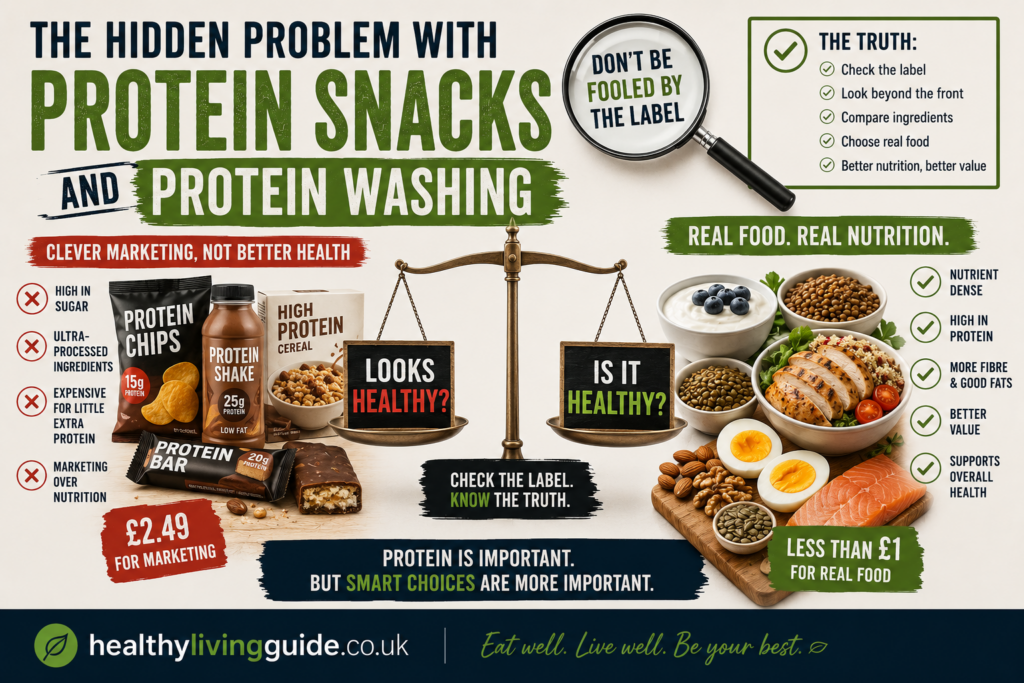
Protein washing is when brands use the word protein to make a product appear healthier than it really is.
This is now everywhere.
A chocolate bar becomes a protein bar. A sugary cereal becomes a high-protein breakfast. A packet of crisps becomes protein chips. A dessert becomes a fitness snack. A flapjack becomes a wellness product.
But when you turn the packet around, the truth often looks different.
Some high-protein products contain long ingredient lists, added sweeteners, flavourings, gums, emulsifiers, processed protein isolates and added sugars. They may be ultra-processed. They may also be far more expensive than ordinary foods that provide similar or better nutrition.
Sometimes the actual difference in protein is tiny. A high-protein bread may contain only one gram more protein per 100 grams than a normal loaf, yet cost significantly more. A protein yogurt may contain barely more protein than an ordinary Greek yogurt. Protein cereal may be expensive while still being processed and less satisfying than eggs or oats with yogurt.
Food brands know that consumers often read the front of the packet, not the back. The front is marketing. The back is information.
The front says high protein.
The back tells you the ingredients, calories, sugar, fibre, fat, sweeteners and actual protein amount.
A product can legally qualify as high protein if enough of its calories come from protein. But that does not always mean it is the best choice. Sometimes brands reduce fat or other nutrients to make the protein percentage look better. It becomes a numbers game.
This is why a protein snack can carry a health halo while still being less nutritious than a simple whole food.
A protein flapjack can have more sugar and calories than a doughnut.
Protein crisps may not even contain potato.
A protein chocolate bar is still a sweet snack.
Protein dirty soda, mixing diet cola with protein shakes, may provide protein, but it also combines multiple ultra-processed products and sweeteners.
The problem is not having these occasionally. The problem is believing they are automatically healthy.
Whole foods usually give you more than protein. Eggs provide vitamins, minerals and healthy fats. Greek yogurt gives calcium and probiotics. Lentils provide fibre and minerals. Beans support gut health. Fish provides omega 3 fats, iodine and selenium. Seeds give fibre, healthy fats and minerals. Tofu and tempeh provide plant protein and other nutrients.
A protein bar gives protein, but often not much else.
That does not mean you can never eat one. It simply means you should treat it honestly. It is a convenience product, not magic.
Before buying a protein snack, ask yourself:
How much protein does it actually contain?
How much sugar is in it?
How much fibre does it have?
Is it replacing a proper meal?
Could I get the same protein from Greek yogurt, eggs, nuts, beans, tuna, tofu or cottage cheese for less money?
Do I actually like this food, or am I eating it because it says protein?
The smartest protein habit is not buying every new product. It is learning to read labels.
Why Whole Food Protein Is Usually Better Than Protein Products
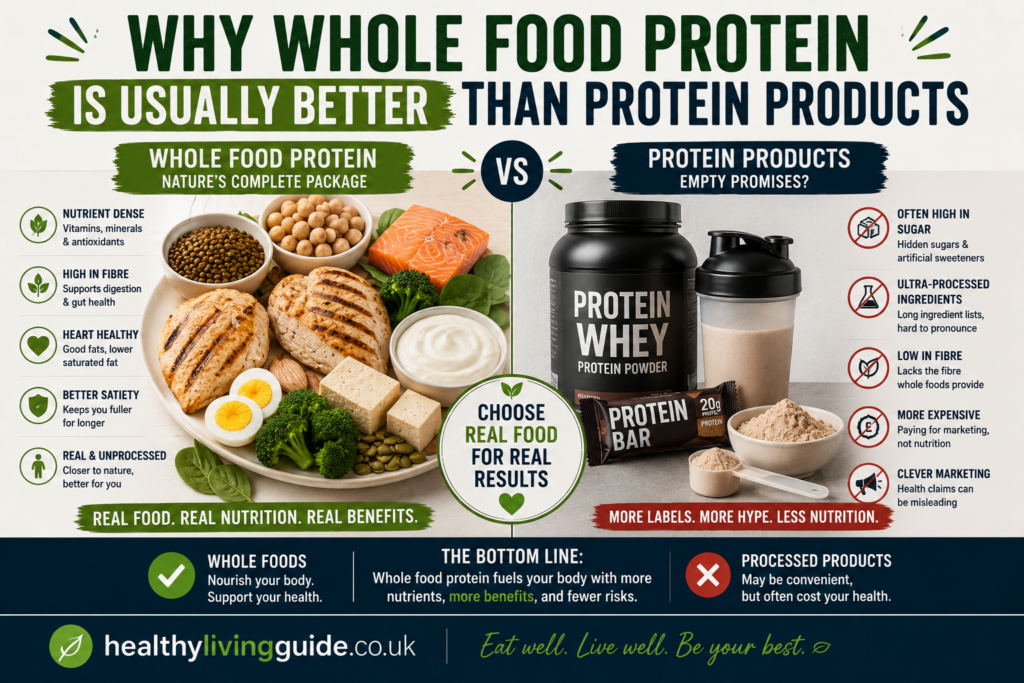
Whole food protein sources are usually better because they provide a package of nutrients, not just isolated protein.
This is the biggest difference between real food and supplements.
When you eat salmon, you get protein plus omega 3 fats, vitamin D, iodine and selenium. When you eat eggs, you get protein plus choline, B vitamins and healthy fats. When you eat Greek yogurt, you get protein plus calcium and gut-friendly cultures. When you eat lentils, you get protein plus fibre, iron, magnesium and slow-release carbohydrates.
Protein powder gives protein. That can be useful, but it does not offer the same complete nutritional package.
Chewing whole foods also helps fullness. Drinking calories is often less satisfying than eating them. When you chew, the body releases appetite-related signals that help you feel satisfied. A protein shake can be convenient, but it may not keep you as full as a proper meal.
This matters for weight loss. Many people drink protein shakes thinking they are making a healthy choice, then feel hungry later and snack more. A meal with eggs, vegetables and wholegrain toast may be more satisfying than a sweet shake.
Whole foods also support gut health because they often contain fibre. Fibre is one of the nutrients many people do not get enough of. While protein gets all the attention, fibre quietly supports digestion, heart health, blood sugar balance, gut bacteria and long-term disease prevention.
A high-protein diet that is low in fibre is not ideal.
This can happen when people rely heavily on shakes, bars, meat and processed snacks while neglecting vegetables, beans, lentils, fruits, whole grains, nuts and seeds.
Protein and fibre should work together. A strong breakfast might include Greek yogurt, oats, berries and seeds. A strong lunch might include chicken, lentils and salad. A strong dinner might include fish, vegetables and beans. A plant-based meal might combine tofu, quinoa, kale, broccoli, avocado, tahini and hemp seeds.
Protein does not have to come only from meat.
Plant-based foods can provide plenty. Tofu, tempeh, lentils, chickpeas, beans, edamame, quinoa, peas, nuts, seeds, soy milk and nutritional yeast can all contribute. Some plant foods are complete proteins, such as tofu, tempeh and edamame. Others work well in combinations.
Seeds are especially underrated. Hemp seeds can contain around 30 grams of protein per 100 grams. Pumpkin seeds, sesame seeds and chia seeds also add useful protein, healthy fats and minerals. You would not eat 100 grams of seeds in one sitting, but sprinkling them onto meals can help.
Cottage cheese is another food that has returned to popularity. It is high in protein, low in fat and versatile. Some viral recipes are excellent, while others taste awful. The lesson is simple. Just because a recipe goes viral does not mean it is worth eating.
A cottage cheese pizza base may be a smart high-protein twist. Cottage cheese brownies may not be enjoyable for everyone. Taste still matters.
Healthy eating must be sustainable. If you hate the food, you will not stick with it.
The best diet is not the one with the most protein products. It is the one built around real foods you enjoy, with enough protein, fibre, healthy fats, carbohydrates, vitamins and minerals.
Protein Powders, Shakes And Supplements Explained
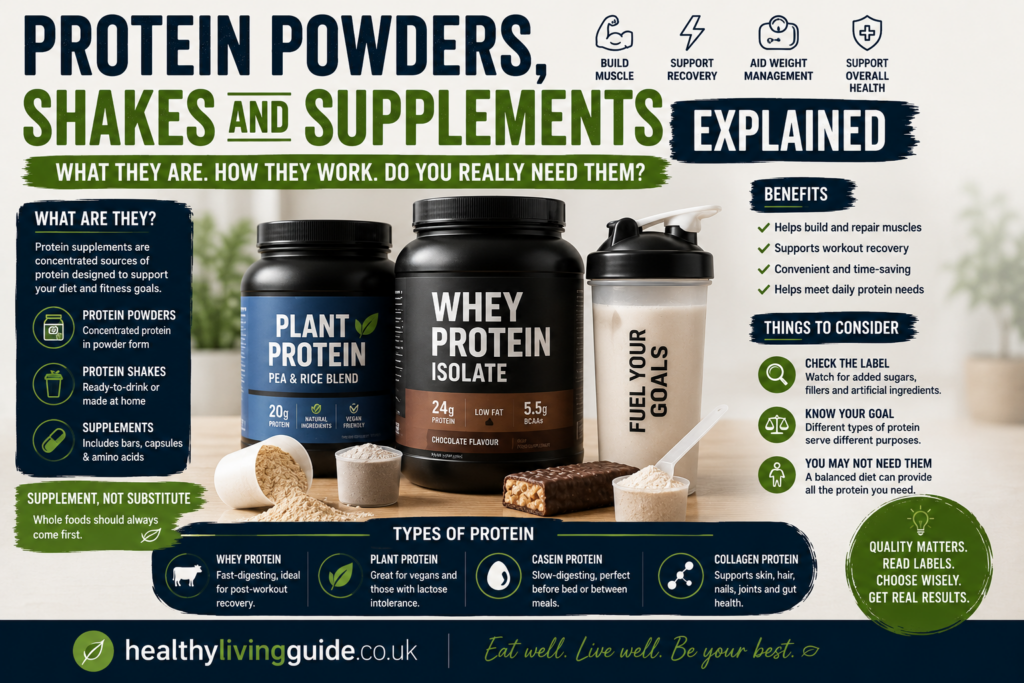
Protein powders are not new. They have existed for decades, originally used mainly by bodybuilders and athletes. Today, they are mainstream. Everyone from gym beginners to busy parents to older adults may consider using them.
The most common type is whey protein, which comes from milk. During production, whey is separated, filtered and dried into powder. Flavours, sweeteners and other ingredients are often added to make it taste better. Vegan protein powders may use pea, soy, rice or other plant proteins.
Protein powders can be useful in certain situations.
If you struggle to eat enough protein, a shake may help. If you train hard and need something convenient after a workout, it may be practical. If you are older and have low appetite, protein powder mixed into porridge or yogurt may help. If you are on weight loss medication and cannot eat much, a protein-rich option may help protect muscle.
But protein powders are supplements. They should supplement the diet, not become the foundation of it.
The problem starts when people rely on powders and bars instead of meals. This can push out fibre, healthy fats and micronutrients. It can also keep people trapped in a processed-food pattern.
Not all protein powders are equal. Some are simple. Others contain sweeteners, thickeners, artificial flavours, colours and added extras. Pre-made protein shakes can sometimes contain high amounts of sugar. Always check the label.
A good protein powder should be seen as a tool, not a miracle food.
If your diet is already rich in whole foods, you may not need it at all. If you do use it, choose one that fits your needs and does not upset your digestion. Some people tolerate whey well. Others feel bloated and prefer plant-based options. Some people prefer unsweetened powders because they can control the flavour themselves.
The timing of protein also matters less than many people think. You do not need to panic if you do not drink a shake within minutes of leaving the gym. What matters more is your total daily intake, spread across meals, combined with proper training and recovery.
For muscle building, protein helps repair muscle, but carbs and fats also matter. Carbohydrates fuel training. Fats support hormones and overall health. A person trying to build muscle while eating protein alone will not perform well.
For weight loss, protein helps fullness, but calories still matter. A high-protein snack can still be high in calories. Eating too many protein bars can slow fat loss just like eating too many ordinary snacks.
For general health, protein is only one part of the picture.
Sleep, movement, stress, hydration, fibre, vegetables, sunlight, strength training and overall food quality all matter.
The protein supplement industry is powerful because it sells convenience. But convenience should not replace wisdom.
Use protein powder when it genuinely helps you. Do not use it because marketing makes you feel inadequate.
How To Build A Smarter High Protein Diet Without Falling For Hype
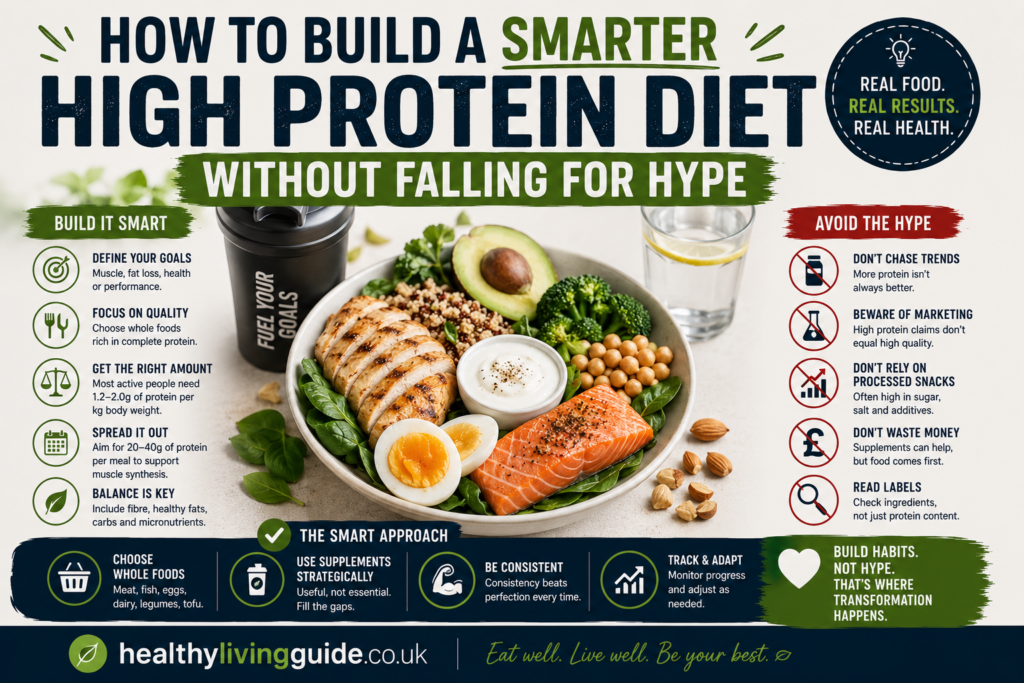
The smartest way to eat more protein is simple. Add a whole food protein source to each meal.
This approach avoids panic, saves money and improves overall nutrition.
Start with breakfast. Many people eat toast, cereal or pastries and get very little protein early in the day. This can lead to hunger, cravings and energy crashes. A protein-rich breakfast can change the whole day.
Try Greek yogurt with oats, berries and seeds. Try scrambled eggs on seeded toast. Try cottage cheese with fruit. Try tofu scramble. Try beans on wholegrain toast. Try a smoothie with milk, nut butter and banana. Try smoked salmon with eggs. Try edamame and pea smash on rye bread.
A strong breakfast does not need to be complicated. It just needs enough protein and fibre.
At lunch, think about simple upgrades. Add tuna to a salad. Add chicken to a wrap. Add lentils to soup. Add eggs to rice bowls. Add tofu to stir-fry. Add chickpeas to roasted vegetables. Add cottage cheese to a jacket potato. Add Greek yogurt to sauces instead of mayonnaise.
At dinner, build the plate around a protein source, vegetables and a satisfying carbohydrate. This could be salmon with potatoes and greens, chicken curry with rice, lentil dhal with vegetables, tofu stir-fry with noodles, prawn curry with lentils, turkey chilli with beans, or tempeh with quinoa and salad.
Do not forget cheaper protein sources. Eggs, beans, lentils, chickpeas, peas, canned fish, Greek yogurt, cottage cheese, peanuts and seeds can all be affordable. Many high-protein branded snacks cost far more per gram of protein than ordinary foods.
Peanuts, for example, can provide protein at a fraction of the price of protein crisps. Lentils are cheap, filling and full of fibre. Eggs remain one of the most versatile protein foods. Greek yogurt can be used in sweet and savoury meals.
If you are plant-based, focus on variety. Tofu, tempeh, edamame, lentils, beans, chickpeas, quinoa, nuts, seeds, soy yogurt and nutritional yeast can all help. Combining grains and legumes across the day improves the amino acid profile.
If you are over 65, consider including protein at every meal, even when appetite is low. Softer options like Greek yogurt, scrambled eggs, cottage cheese, soup with lentils, nut butter, fish, tofu and smoothies may be easier to eat.
If you are on weight loss medication or eating much less than usual, make every mouthful count. Prioritise protein and nutrient-dense foods first, because appetite may disappear quickly. Resistance training is also important to protect muscle.
If you are buying protein snacks, use the back of the packet.
Check protein per serving.
Check calories.
Check sugar.
Check fibre.
Check ingredients.
Check whether it is genuinely better than a cheaper alternative.
A protein label should never switch off your common sense.
Also be careful with social media nutrition trends. Viral does not mean true. A recipe may look exciting but be nutritionally pointless. A fitness influencer may have a huge following but no qualification. A sponsored post may be designed to sell, not educate.
A useful rule is to ask four questions.
Is this an advert?
Is the advice balanced?
Is the person credible?
Would a doctor or qualified professional agree, especially if I have a health condition?
This simple filter can protect you from many nutrition myths.
Protein is not the enemy. Protein snacks are not always bad. Protein powders are not useless. But the obsession around protein has made people forget the basics.
Eat mostly whole foods.
Include protein at each meal.
Get enough fibre.
Do strength training.
Read labels.
Avoid paying extra for tiny benefits.
Do not let marketing make you feel like your normal food is not good enough.
Protein is powerful, but it is not magic. It works best as part of a balanced lifestyle.
The hidden truth behind protein snacks is that many of them are selling the feeling of health more than health itself. Real health is usually quieter. It looks like eggs for breakfast, lentils in soup, Greek yogurt with berries, tofu in a stir-fry, fish with vegetables, beans on toast, seeds sprinkled on meals, and enough movement to keep your muscles working.
You do not need to fear protein products. You just need to understand them.
The goal is not to eat the most protein. The goal is to eat the right amount, from better sources, in a way you can enjoy and sustain.
That is how protein becomes useful again.
Not a craze.
Not a panic.
Not a marketing trick.
Just one important part of a healthy, balanced life.
Disclaimer
The information provided in this article is for educational and informational purposes only. While every effort has been made to ensure accuracy, the content is not intended to replace professional medical, nutritional, fitness, or healthcare advice.
The views and concepts discussed are based on publicly available information, scientific research, expert opinions, and interpretations of the topics covered. Individual health needs, dietary requirements, and fitness goals vary from person to person, and results may differ.
Before making significant changes to your diet, exercise routine, supplementation, or lifestyle habits, you should consult with a qualified healthcare professional, registered dietitian, physician, or other appropriate medical expert.
The author and publisher assume no responsibility for any loss, injury, or damage resulting from the use of information contained in this article. Readers are encouraged to conduct their own research and make informed decisions based on their individual circumstances.
By reading this article, you acknowledge that any actions you take based on the information provided are done at your own discretion and risk.ented in this article.