
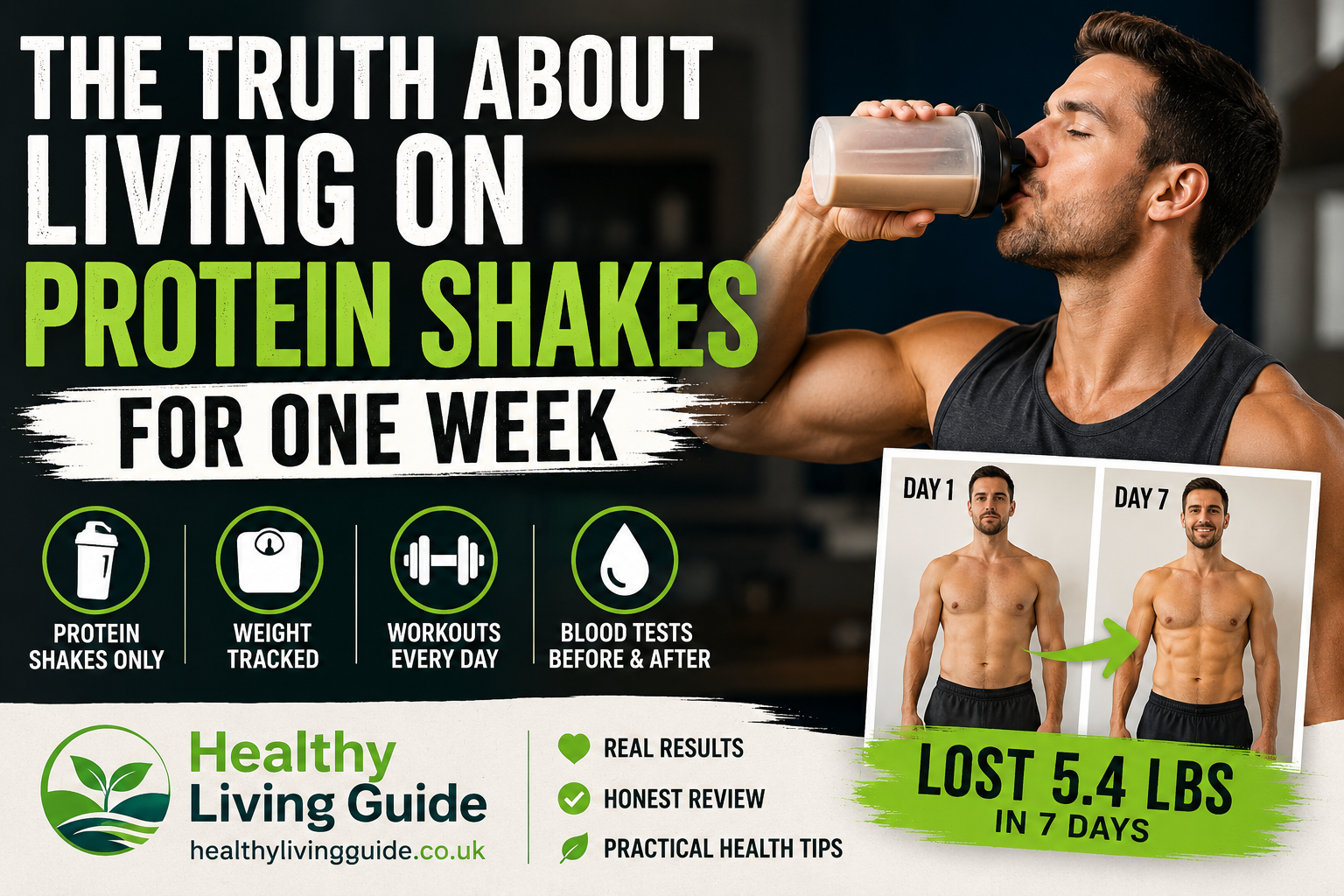
For years, protein shakes have been promoted as a convenient way to build muscle, lose weight, and improve recovery. Fitness enthusiasts use them daily, athletes rely on them after training sessions, and busy professionals often replace meals with them when time is short.
But what would happen if you consumed nothing but protein shakes for an entire week?
Would the weight fall off? Would muscle growth accelerate? Could you still perform well in the gym? Most importantly, would your health improve or suffer?
A popular fitness YouTuber decided to answer these questions by committing to a strict seven-day challenge. He consumed only protein shakes, water, and approved liquid additions. No burgers, no pizza, no snacks, and no solid meals whatsoever. Before beginning, he underwent blood testing, measured his weight, and established baseline strength levels to compare his results after seven days.
The results were surprising.
This article explores what happened during the challenge and examines the lessons that anyone interested in health, fitness, weight loss, or muscle building can learn from the experience.
Why Someone Would Live On Protein Shakes For Seven Days
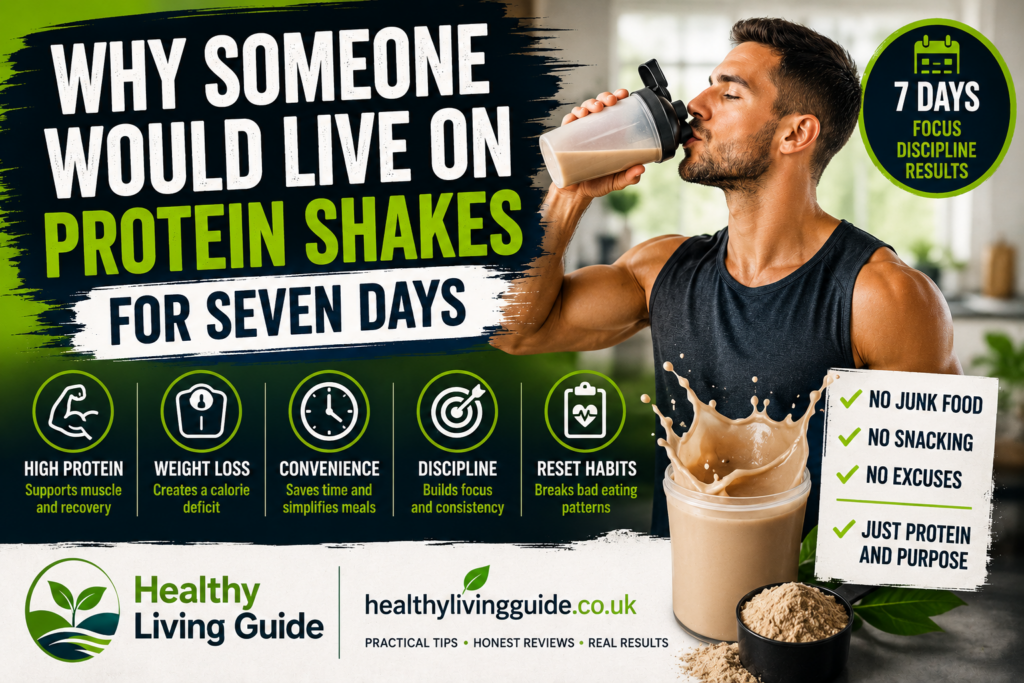
Protein shakes are one of the most popular supplements in the fitness industry.
The reason is simple. Protein is essential for repairing muscle tissue, maintaining lean body mass, supporting metabolism, and promoting satiety. Many people struggle to consume enough protein through food alone, making shakes an attractive solution.
The challenge began with several clear objectives:
- Measure weight changes
- Monitor blood markers before and after
- Test strength levels
- Assess energy levels
- Determine whether a short-term protein-only diet could transform body composition
The participant wasn’t overweight but admitted to frequent snacking and suspected he had become overly dependent on food throughout the day. He wanted to use the challenge as a reset and a way to improve discipline around eating habits.
Many people can relate to this.
Modern life makes constant eating incredibly easy. Snacks are available everywhere. Food delivery apps can bring high-calorie meals directly to your door within minutes. It is common to eat not because of hunger, but because of boredom, habit, stress, or convenience.
A week-long protein shake challenge removes almost all food choices. There is no decision fatigue and no temptation to indulge in favourite meals.
In theory, this creates a calorie deficit while maintaining protein intake, which should encourage fat loss.
However, theory and reality are often very different.
The Initial Measurements And Baseline Health Results
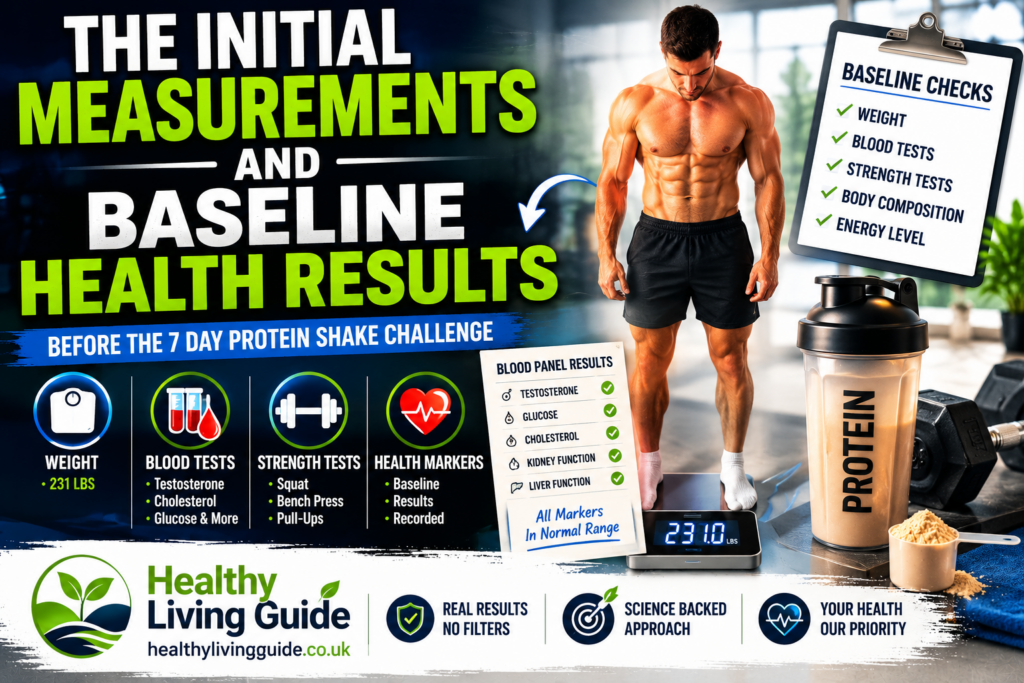
Before starting the challenge, several important measurements were taken.
First came the blood work. A comprehensive blood panel measured:
- Testosterone
- Blood sugar
- Cholesterol
- Various health markers
The purpose was to identify whether living on protein shakes would negatively impact health over a short period.
Next came the weigh-in.
The starting body weight was approximately 231 pounds.
The final baseline assessment involved strength testing.
Three exercises were selected:
- Squat
- Bench press
- Pull-ups
These exercises provide a good indication of overall strength and athletic performance. The participant established maximum effort numbers on day one, which would later be compared against the results on day seven.
This approach was important because weight loss alone does not tell the whole story.
Many diets cause rapid weight loss because people lose water, glycogen, and muscle tissue. What matters is whether performance and muscle mass can be maintained while body weight decreases.
The initial blood results showed normal health markers, including healthy blood sugar levels, normal testosterone levels, and acceptable cholesterol levels.
This provided a healthy starting point for the experiment.
The First Few Days Were Easier Than Expected

One of the biggest surprises during the challenge was how manageable the first couple of days felt.
Many people assume that switching suddenly to a liquid-only diet would cause immediate misery.
Instead, the participant found that hunger remained relatively controlled initially. He continued drinking several protein shakes each day while maintaining an intense workout schedule.
This is partly because protein is highly satiating.
Research consistently shows that protein increases feelings of fullness more effectively than carbohydrates or fats.
When people consume adequate protein, they often naturally reduce overall calorie intake because hunger becomes easier to manage.
Another reason the first days felt manageable was motivation.
At the beginning of any challenge, enthusiasm is high. People focus on the goal rather than the discomfort.
The participant remained active, walking daily, lifting weights, and maintaining a positive mindset.
Weight loss also began immediately.
By day two, weight had dropped slightly, although not dramatically. This initially surprised him because many people expect huge drops during restrictive diets.
The reality is that body weight fluctuates constantly due to:
- Water retention
- Sodium intake
- Glycogen storage
- Digestion
- Hormonal changes
A single day’s weight change rarely tells the full story.
The real challenge would emerge later in the week.
Hunger Cravings And Mental Challenges Became The Biggest Obstacle
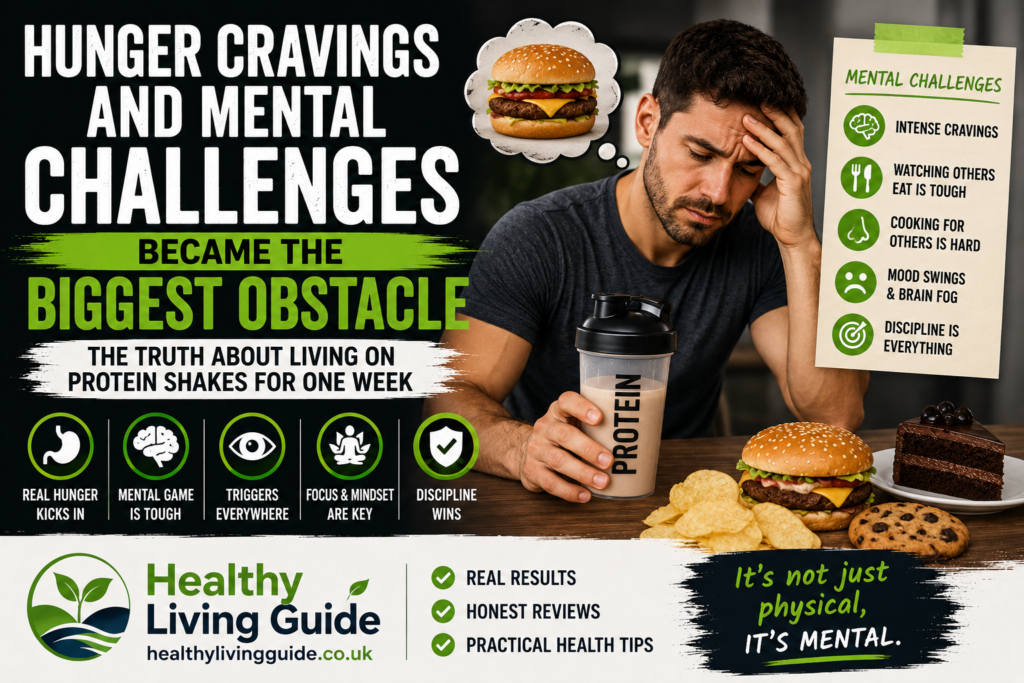
By the third day, things began to change.
The physical challenge became increasingly psychological.
The participant described experiencing brain fog, hunger, and intense cravings for solid food.
This is a critical lesson.
Many people believe they are addicted to specific foods, but often they are actually attached to eating experiences.
Consider what disappears when solid food is removed:
- Crunchy textures
- Chewing
- Social meals
- Aromas
- Food rituals
- Variety
Protein shakes may provide calories and protein, but they cannot replicate the sensory experience of eating.
One of the most difficult moments occurred after attending lunch with friends.
Watching others enjoy meals while consuming only liquids created powerful cravings.
Later, another challenge emerged when he cooked dinner for his wife.
Preparing food while unable to eat it proved extremely difficult. The aromas intensified hunger and made the restriction feel even more severe.
These experiences highlight something important about successful nutrition.
Most eating is emotional and environmental rather than purely biological.
People often eat because:
- Food is visible
- Others are eating
- A meal is available
- A favourite smell triggers cravings
- Stress encourages comfort eating
Understanding these triggers is often more valuable than understanding calories.
The challenge exposed how strongly environment influences eating behaviour.
Training Performance And Muscle Strength During The Challenge
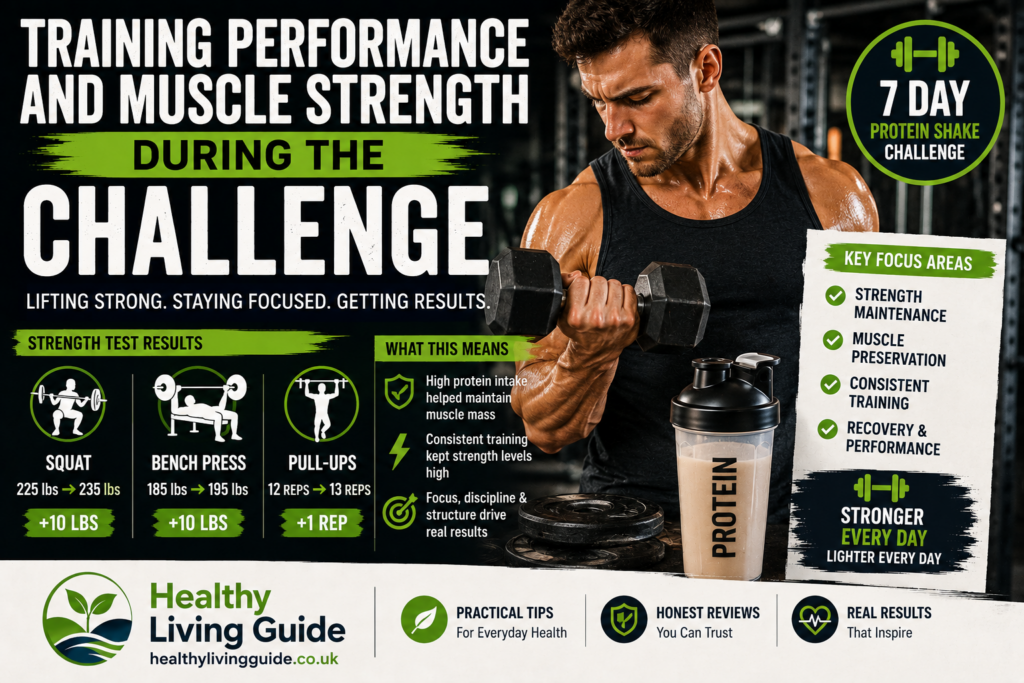
One concern with restrictive diets is reduced exercise performance.
If calories are lower and no solid foods are consumed, strength could potentially decline.
Surprisingly, that was not what happened.
Throughout the week, the participant continued:
- Resistance training
- Running
- Walking
- Recovery sessions
He alternated between high-volume workouts and strength-focused sessions.
Although energy levels sometimes suffered, especially around day three, he continued training consistently.
One challenge involved protein intake itself.
Despite consuming multiple shakes daily, he realised he might not actually be reaching the optimal protein target for his body weight. As someone weighing around 230 pounds and training intensely, he estimated that over 200 grams of protein per day would be ideal.
This reveals an important misconception.
Many people assume protein shakes automatically provide huge amounts of protein.
In reality, several shakes may still be insufficient for larger, highly active individuals.
Protein quality matters, but total intake matters too.
Toward the end of the week, an additional complication emerged when a lower back strain occurred during squats.
Fortunately, it was not severe enough to stop the challenge.
By the final day, strength testing revealed something remarkable.
Despite eating only protein shakes and losing weight, strength performance improved.
His squat increased.
His bench press improved.
His pull-up performance remained strong while carrying less body weight.
This suggests that short-term weight reduction combined with high protein intake may help maintain or even improve relative strength in some individuals.
What Happened To Weight Loss And Body Composition
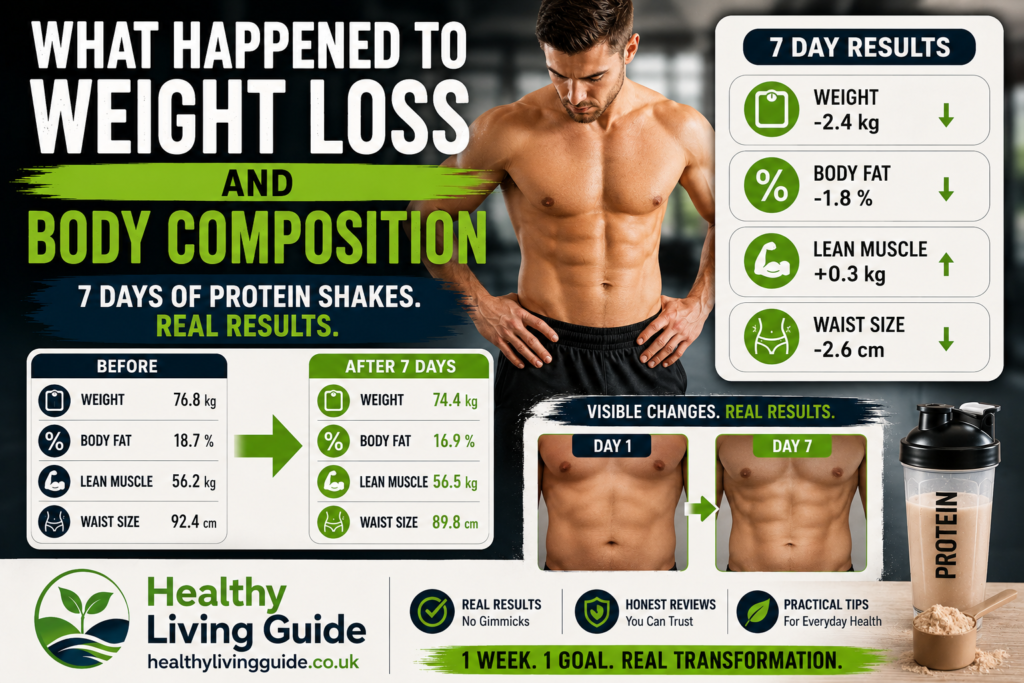
Most people considering a protein shake challenge are primarily interested in weight loss.
After seven days, the final results showed a loss of approximately 5.4 pounds.
At first glance, that sounds impressive.
However, understanding the composition of that weight loss is important.
Weight lost during the first week of a restrictive diet typically comes from several sources:
Water Weight
Reduced carbohydrate intake lowers glycogen storage.
Every gram of glycogen stored in muscle holds water.
When glycogen decreases, water is released.
This often causes rapid weight loss during the first few days.
Digestive Contents
Solid food occupies space within the digestive system.
When food volume decreases significantly, body weight can fall even without substantial fat loss.
Body Fat
A calorie deficit encourages fat burning.
Some portion of the weight loss almost certainly came from stored body fat.
Muscle Mass
Adequate protein intake and resistance training help preserve muscle.
Because the participant continued training and consuming large amounts of protein, muscle loss was likely minimised.
This is one reason high-protein diets are often recommended during weight-loss phases.
The most interesting aspect was how slowly some of the weight loss occurred.
There were several days where weight barely changed or even temporarily increased.
This demonstrates why daily weigh-ins can be misleading.
Successful fat loss is rarely linear.
Progress often appears messy from day to day even when the overall trend is positive.
The Blood Test Results Revealed An Important Health Lesson
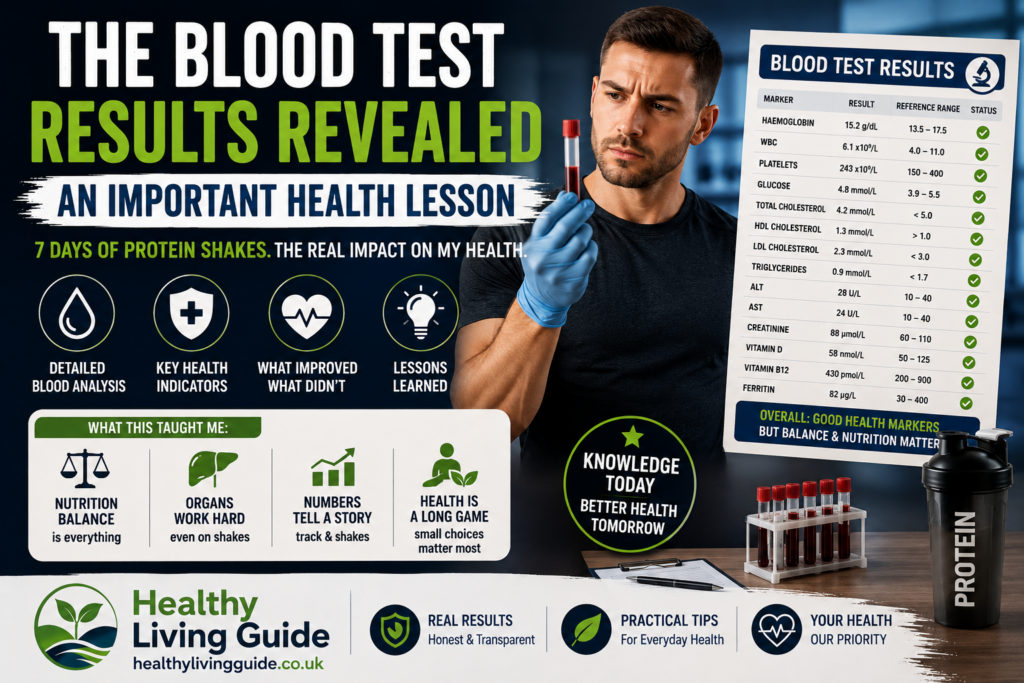
The blood work provided one of the most valuable insights from the entire experiment.
Before the challenge, health markers were generally normal.
After seven days, most markers remained largely unchanged.
This was encouraging because it suggested that a short-term protein shake challenge did not dramatically disrupt overall health.
However, there was one notable change.
White blood cell count and neutrophil levels were lower than before.
Initially, this sounded concerning.
After further analysis, however, it became clear that there were plausible explanations.
Factors such as:
- Heavy training
- Physical stress
- Calorie restriction
- Intense exercise volume
can temporarily influence these markers.
This highlights an important point.
Health data should always be interpreted within context.
Blood test results are snapshots.
One abnormal value does not automatically indicate disease.
Lifestyle factors, recent exercise, sleep quality, hydration, and diet can all influence laboratory results.
The challenge demonstrated that short-term dietary experiments may create temporary changes without necessarily indicating long-term health problems.
Nevertheless, it is important to remember that protein shakes are supplements.
They are designed to supplement a healthy diet, not replace one indefinitely.
Whole foods provide:
- Fibre
- Phytonutrients
- Vitamins
- Minerals
- Antioxidants
that cannot always be replicated through protein powders alone.
The Biggest Lessons From Seven Days On Protein Shakes
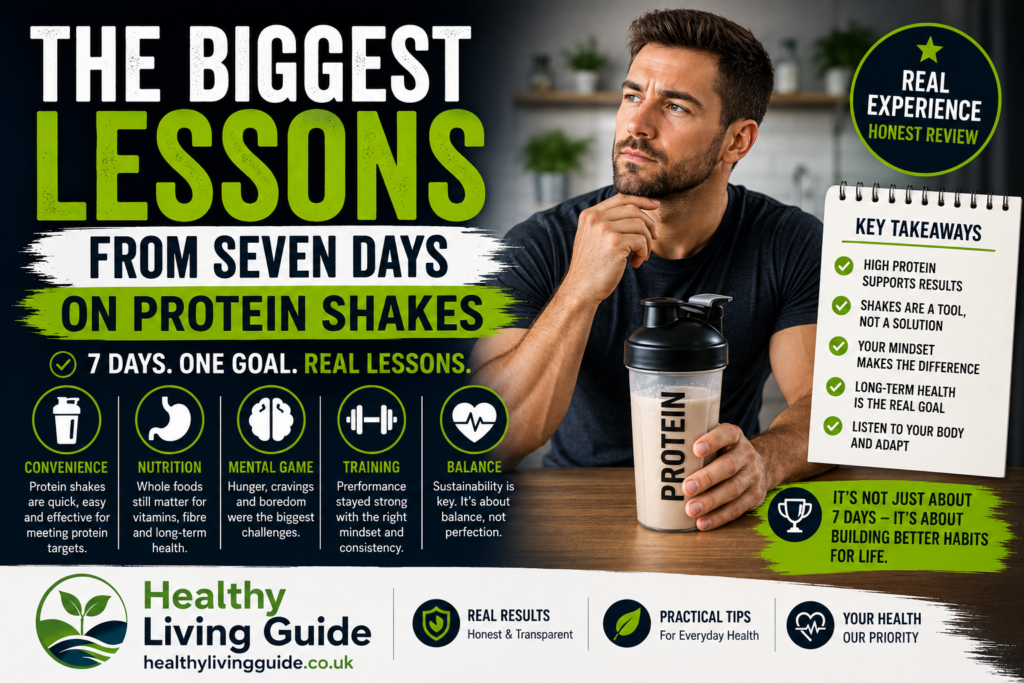
At the end of the challenge, the participant finally enjoyed a real meal and described intense excitement at returning to normal eating.
While the challenge succeeded in producing weight loss and maintaining strength, the broader lessons were even more valuable.
Protein Is Extremely Powerful
Protein remains one of the most important nutrients for:
- Muscle maintenance
- Recovery
- Satiety
- Fat loss
Many people would benefit from increasing protein intake.
Weight Loss Is Not Always Dramatic
Even with a highly restrictive diet, daily fluctuations occurred.
The body does not lose weight in a perfectly predictable way.
Patience remains essential.
Hunger Is Often Psychological
One of the biggest discoveries involved cravings rather than actual hunger.
The desire for textures, smells, and social eating experiences was often stronger than true physical hunger.
Exercise Protects Muscle
Combining high protein intake with resistance training helped maintain performance throughout the week.
This reinforces the importance of strength training during any weight-loss effort.
Whole Foods Still Matter
The challenge demonstrated that protein shakes can be useful tools.
However, they should not replace a balanced diet permanently.
Long-term health depends on a diverse range of nutrient-rich foods.
Discipline Can Be Trained
Perhaps the most valuable lesson was behavioural.
Completing a difficult challenge created greater awareness of eating habits, cravings, and self-control.
Many successful health transformations begin with this type of self-awareness.
Short-Term Challenges Can Create Long-Term Change
A seven-day challenge will not transform someone’s entire life.
However, it can create momentum.
Many people discover that temporary challenges help break unhealthy routines and establish healthier habits moving forward.
The participant finished lighter, stronger, and more aware of his relationship with food than when he started.
That may ultimately be the most valuable result of all.
For most people, the takeaway is not that they should consume only protein shakes for a week. Instead, it is a reminder that increasing protein intake, reducing mindless snacking, exercising consistently, and developing better nutritional discipline can produce meaningful results in a surprisingly short period of time. Protein shakes can certainly play a role in that journey, but the best long-term approach will always combine high-quality protein with a balanced diet built around nutritious whole foods.nefits of better energy, improved health, greater resilience, and a more fulfilling life.
Disclaimer
The information provided in this article is for educational and informational purposes only. While every effort has been made to ensure accuracy, the content is not intended to replace professional medical, nutritional, fitness, or healthcare advice.
The views and concepts discussed are based on publicly available information, scientific research, expert opinions, and interpretations of the topics covered. Individual health needs, dietary requirements, and fitness goals vary from person to person, and results may differ.
Before making significant changes to your diet, exercise routine, supplementation, or lifestyle habits, you should consult with a qualified healthcare professional, registered dietitian, physician, or other appropriate medical expert.
The author and publisher assume no responsibility for any loss, injury, or damage resulting from the use of information contained in this article. Readers are encouraged to conduct their own research and make informed decisions based on their individual circumstances.
By reading this article, you acknowledge that any actions you take based on the information provided are done at your own discretion and risk.ented in this article.