
A private colonoscopy in the UK can cost from around £1,700 to over £5,000, depending on the hospital, consultant, location, sedation, whether biopsies are taken, whether polyps are removed, and what is included in the package.
For many people paying privately, a more realistic planning figure is around £1,950 to £3,300 for a straightforward private colonoscopy, although some hospitals quote more. The cheapest advertised price is not always the final price, so it is important to ask exactly what is included before you book.
A colonoscopy is not the kind of test most people look forward to, but it can be an important investigation when there are ongoing bowel symptoms, bleeding, unexplained changes in bowel habits, iron-deficiency anaemia, inflammatory bowel disease monitoring, or concern about bowel cancer risk.
This guide explains what a private colonoscopy usually costs in the UK in 2026, what affects the price, what may be included, what can cost extra, and how to compare NHS and private routes safely.
What Is A Colonoscopy And Why Might You Need One?
A colonoscopy is a test that allows a specialist to look inside the large bowel using a long, thin, flexible tube with a small camera. The tube is passed into the back passage and gently moved through the bowel so the lining can be checked.
The test can help investigate symptoms such as:
- Blood in your poo
- Bleeding from the bottom
- Ongoing diarrhoea or constipation
- A change in bowel habit that is unusual for you
- Abdominal pain
- Unexplained weight loss
- Unexplained iron-deficiency anaemia
- Possible inflammatory bowel disease
- Previous bowel polyps
- Follow-up after earlier bowel investigations
A colonoscopy may also allow the specialist to take small tissue samples, known as biopsies. In some cases, small growths called polyps can be removed during the procedure. Polyps are not always cancerous, but some can develop into cancer over time, so removing them can be important.
It is important to understand that a colonoscopy is a medical procedure, not just a simple scan. It involves bowel preparation, possible sedation, recovery time, and a small risk of complications. That does not mean people should be scared of it, but it does mean you should take the decision seriously and ask the right questions.
Some people consider a private colonoscopy because they want faster access, more choice over hospital or consultant, or clearer appointment dates. Others may choose private care because they have private medical insurance. Some people may still be better served by the NHS route, especially if their symptoms meet urgent referral criteria.
The most important point is this: if you have worrying bowel symptoms, do not simply book a private test without speaking to a doctor. A GP can assess your symptoms, arrange appropriate tests, check whether you need urgent referral, and help you understand the safest pathway.
How Much Does A Private Colonoscopy Cost In The UK In 2026?
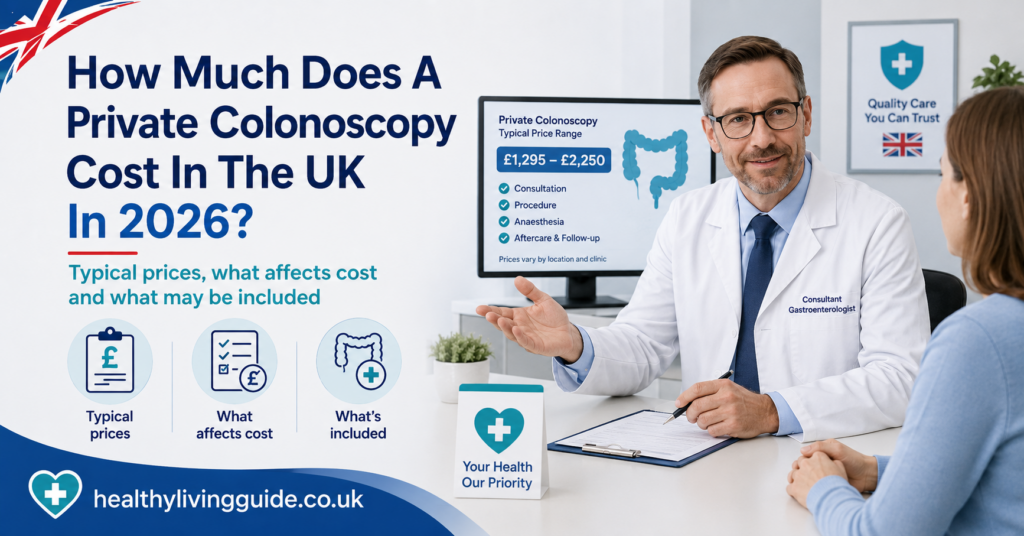
In 2026, private colonoscopy prices in the UK vary widely. Based on current advertised provider examples, the cost can range from around £1,700 to more than £5,000.
Many people will see prices around £1,950 to £3,300, but some hospitals quote lower or higher depending on location and package structure.
Here is a simple guide to typical private colonoscopy costs in the UK:
| Private colonoscopy item | Typical UK cost range |
|---|---|
| Initial private consultation | £145 to £250+ |
| Private colonoscopy procedure | £1,700 to £5,300+ |
| Common self-pay planning range | £1,950 to £3,300 |
| Sedation | Sometimes included, sometimes extra |
| Biopsy or tissue sample | Sometimes included, sometimes extra |
| Polyp removal | May be included or may cost extra |
| Histology or lab testing | Sometimes included, sometimes extra |
| Follow-up appointment | Sometimes included, sometimes extra |
Some providers show a single all-inclusive guide price. Others separate the consultation fee from the procedure fee. This is why two prices that look similar at first may not actually include the same things.
For example, one hospital may quote a colonoscopy price that includes pre-assessment, the main procedure and post-discharge care. Another may show only the treatment price, with the consultation and lab fees listed separately. A third provider may advertise a lower starting price but charge more if biopsies, polyp removal or histology are needed.
This is why you should not compare private colonoscopy prices using only the headline figure.
A cheaper quote is not automatically better, and a higher quote is not automatically worse. The key question is: what exactly do you get for the price?
Before booking, ask the hospital or clinic whether the quoted price includes:
- The initial consultant appointment
- Pre-assessment
- The colonoscopy procedure
- Sedation or pain relief
- Use of the endoscopy suite
- Nursing care
- Recovery room care
- Biopsies if needed
- Polyp removal if needed
- Histology or laboratory analysis
- Written results
- Follow-up consultation
- Aftercare advice
- Emergency contact details after the procedure
If the hospital cannot explain this clearly, keep asking until you understand the full potential cost.
What Is Usually Included In The Price?

What is included in a private colonoscopy package depends on the provider. Some hospitals offer fixed-price packages. Others offer guide prices, meaning the final cost may change depending on your consultant, your medical history, the complexity of the procedure and what is found during the test.
A typical private colonoscopy pathway may include the following stages.
First, you may have an initial consultation with a consultant gastroenterologist, colorectal surgeon or another specialist. During this appointment, they will discuss your symptoms, medical history, medication, previous tests, family history and whether colonoscopy is the right investigation.
The consultation is important because not every bowel symptom automatically needs colonoscopy. Some people may need blood tests, stool tests, a CT colonography, a flexible sigmoidoscopy, or urgent referral through another route. A good consultant should explain why the test is being recommended.
Second, you may have a pre-assessment. This can include basic health checks and questions about medication, allergies, heart or lung conditions, diabetes, blood thinners, previous reactions to sedation, and whether you will have someone to take you home.
Third, you will be given bowel preparation instructions. This usually involves changing your diet before the procedure and taking strong laxatives to empty the bowel. The bowel needs to be clear so the specialist can see the lining properly. If the bowel is not clear enough, the colonoscopy may need to be repeated or another test may be needed.
Fourth, you attend the hospital or clinic for the procedure. A colonoscopy is usually done as an outpatient or day-case procedure. Many people are offered sedation or pain relief, although the exact options depend on the provider and your medical suitability.
During the test, the colonoscope is passed into the bowel. Air or carbon dioxide may be used to gently open the bowel so the specialist can see more clearly. If needed, biopsies may be taken. If small polyps are found, they may be removed during the same procedure.
After the procedure, you will spend time in recovery. If you had sedation, you will usually need someone to collect you and stay with you afterwards. You should not drive, drink alcohol, operate machinery, or make important decisions for the period advised by your clinical team.
You may receive immediate findings on the day, especially if the specialist was able to see clearly. However, if biopsies or polyps were sent to the lab, final results may take longer.
A private package may also include a written report and follow-up advice. Some providers include a follow-up consultation, while others charge separately.
The main thing is to check what your chosen provider means by “included”. Do not assume that every hospital includes the same items.
What Can Make The Final Price Higher?

The final price of a private colonoscopy can rise for several reasons.
The first factor is location. Private healthcare prices are often higher in London and some major cities. A hospital in central London may quote more than a provider outside London, even for a similar procedure.
The second factor is the consultant. Some consultants charge more than others, especially if they are highly experienced, work in a high-demand specialty, or have private fees set separately from the hospital fee.
The third factor is sedation or anaesthetic choice. A simple colonoscopy with light sedation may be priced differently from a procedure requiring deeper sedation or anaesthetic involvement. Not everyone needs the same level of sedation, and not everyone is suitable for every option.
The fourth factor is whether biopsies are taken. A biopsy is a small tissue sample. The sample may need to be sent to a laboratory for analysis. If histology is not included in the package, this can increase the total cost.
The fifth factor is polyp removal. If polyps are found and removed, there may be additional charges, depending on the provider and package. Some packages include this, while others separate diagnostic and therapeutic procedures.
The sixth factor is whether the colonoscopy is completed successfully. Sometimes the specialist cannot see the whole bowel clearly, possibly because of bowel preparation issues, anatomy, discomfort, narrowing, or technical difficulty. If further tests are needed, this may create extra cost.
The seventh factor is whether further investigations are needed afterwards. If the colonoscopy finds inflammation, polyps, bleeding, diverticular disease, or something suspicious, you may need follow-up appointments, imaging, blood tests, medication, or referral for treatment.
The eighth factor is private medical insurance rules. If you are using insurance, your insurer may require pre-authorisation. They may only cover certain consultants, hospitals or procedure codes. They may also exclude some symptoms or pre-existing conditions. You should check this before booking, otherwise you could be left with a bill.
The ninth factor is whether you choose finance. Some private hospitals offer monthly payment plans. This can make the cost feel more manageable, but you must check whether interest applies. A 0% plan over a short period is very different from a longer finance plan with interest.
Before agreeing to anything, ask for a written quote. The quote should clearly show what is included, what is not included, and what could make the price increase.
A good question to ask is:
“If the consultant takes biopsies or removes polyps during the colonoscopy, will I pay extra?”
Another important question is:
“If the results show I need further treatment, what happens next and what could that cost?”
Private healthcare can be useful, but you need to understand the full pathway, not just the first test.
NHS Vs Private Colonoscopy Which Route Makes Sense?
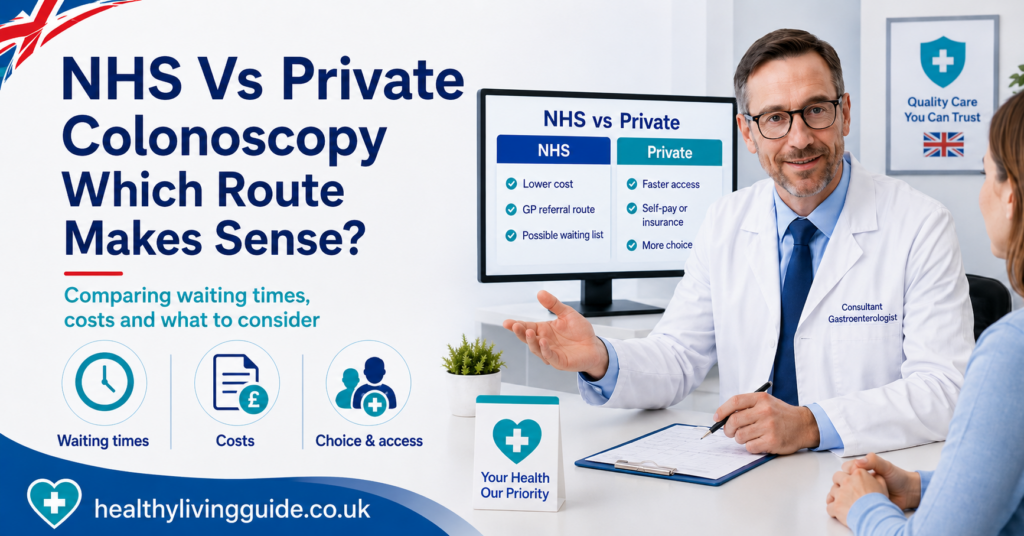
For many people in the UK, the NHS is the right route for bowel symptoms, especially if the symptoms are urgent or could suggest bowel cancer. If your GP thinks your symptoms need urgent investigation, they can refer you through the appropriate NHS pathway.
The NHS also runs bowel cancer screening for eligible people. In England, people aged 50 to 74 who are registered with a GP are invited for bowel cancer screening using a home FIT kit every two years. People aged 75 and over can request a kit through the bowel cancer screening helpline.
Screening is different from investigating symptoms. If you have symptoms, you should not wait for a routine screening kit. You should speak to your GP.
A private colonoscopy may make sense if:
- You want faster access and can afford it
- You have private medical insurance
- You want more choice over appointment timing
- You want to choose a specific hospital or consultant
- Your symptoms are troubling but not being treated as urgent
- You have already discussed the issue with a GP or specialist
- You understand the full cost and possible extras
However, private does not always mean better. It mainly means you are paying for access, convenience and choice. The clinical decision still needs to be appropriate.
There are also situations where private care may not be the best first step. If you have severe symptoms, heavy bleeding, signs of dehydration, black stools, severe abdominal pain, fainting, or symptoms that feel urgent, you should seek urgent medical help rather than shopping around for private prices.
You should also be careful about booking a private colonoscopy purely for reassurance. Colonoscopy is useful, but it is not risk-free and it is not always the right first test. A doctor may suggest another investigation depending on your age, symptoms and medical history.
For some people, a stool test, blood test, flexible sigmoidoscopy, CT colonography or other investigation may be more appropriate. For others, colonoscopy may be exactly the right test.
The safest approach is to start with proper medical assessment, then decide whether NHS or private access works best for your situation.
How To Prepare For A Colonoscopy And What Happens On The Day
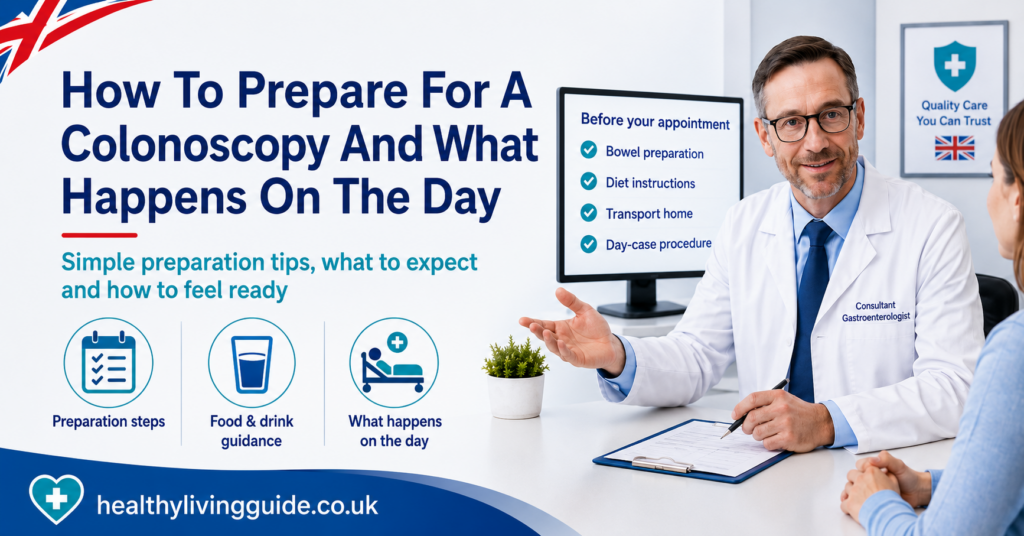
The preparation is often the part people worry about most. In many cases, the procedure itself is shorter and easier than expected, while the bowel preparation takes more planning.
Before the colonoscopy, your hospital or clinic will give you specific instructions. Follow these instructions carefully because they can vary between providers.
You may be told to eat a low-fibre diet for a short period before the test. This usually means avoiding foods that leave residue in the bowel, such as seeds, nuts, some fruits, some vegetables, wholegrains and high-fibre cereals.
The day before the colonoscopy, you will usually need to take laxatives to empty your bowel. These laxatives can cause frequent diarrhoea, so you should stay near a toilet. It is sensible not to plan work, travel, social events or long journeys during the bowel preparation period.
You may also be told when to stop eating solid food and when to drink only clear fluids. It is important to drink the bowel preparation exactly as instructed. If your bowel is not clear, the specialist may not get a good view, which can reduce the usefulness of the test.
Tell the hospital if you take medication, especially blood thinners, diabetes medication, iron tablets, regular painkillers, or medication for heart, kidney or bowel conditions. Do not stop prescribed medication unless your doctor or clinical team tells you to.
On the day of the colonoscopy, you will usually check in at the hospital or clinic. Staff may check your blood pressure, pulse and medical details. You will be asked about allergies, medication, and whether you followed the bowel preparation.
You may be asked to change into a gown. Before the procedure, the specialist should explain what will happen and ask for consent.
During the colonoscopy, you may be given sedation, pain relief, gas and air, or another comfort option depending on the provider and your health. Some people feel pressure, cramping or bloating. Many people remember very little if they have sedation.
The test itself may take around 20 to 45 minutes, although the total appointment time will be longer because of admission, preparation and recovery.
Afterwards, you may feel bloated or have wind because air or gas was used during the procedure. This usually settles. If you had sedation, you will need time to recover and someone should take you home.
You should receive aftercare advice before leaving. This should explain what symptoms are normal and what symptoms need urgent help.
Seek medical advice urgently after a colonoscopy if you develop severe abdominal pain, heavy bleeding, fever, repeated vomiting, dizziness, fainting, black stools, or symptoms that feel serious.
Most people recover quickly, but it is still a medical procedure and you should take the aftercare instructions seriously.
Questions To Ask Before Booking And Final Thoughts

Before booking a private colonoscopy, ask clear questions. This protects both your health and your money.
Here are the most important questions to ask:
- Do I definitely need a colonoscopy, or would another test be more suitable?
A good doctor should explain why colonoscopy is being recommended. - Who will perform the procedure?
Ask whether it will be a consultant gastroenterologist, colorectal surgeon, or another trained endoscopist. - What exactly is included in the quoted price?
Ask about consultation, sedation, biopsies, polyp removal, histology, written results and follow-up. - Could the price increase on the day?
This is especially important if biopsies or polyp removal may be needed. - What happens if something abnormal is found?
Ask how results are explained, whether you return to the NHS, and whether further private treatment would cost extra. - How quickly will I get the results?
Visual findings may be available quickly, but lab results can take longer. - What are the risks?
Ask about bleeding, perforation, sedation risks, incomplete procedure and what support is available after discharge. - What bowel preparation will I need?
Ask how many days you need to prepare and whether you need time off work. - Can I drive afterwards?
If you have sedation, you usually cannot drive afterwards and will need someone to collect you. - Is the provider registered and regulated?
Check that the hospital or clinic is properly regulated and that you feel comfortable with the information provided.
FAQ
Is a private colonoscopy worth it?
A private colonoscopy may be worth it if you need quicker access, want more choice, have insurance, or can afford self-pay treatment. However, it should still be clinically appropriate. If symptoms are urgent, speak to your GP or NHS 111 rather than waiting to compare private prices.
Can I get a colonoscopy without a GP referral?
Some private providers may allow self-referral, but many still require or strongly recommend a GP or consultant assessment first. Even if self-referral is possible, it is sensible to involve a doctor so the right test is chosen.
How long does a private colonoscopy take?
The procedure itself may take around 20 to 45 minutes, but you should expect to spend longer at the hospital because of admission, preparation, recovery and discharge. If you have sedation, you will need someone to take you home.
Is a colonoscopy painful?
A colonoscopy can be uncomfortable, but many people are offered sedation or pain relief. Some people feel cramping, pressure or bloating. Speak to the provider before booking if you are anxious about discomfort.
Can polyps be removed during a colonoscopy?
Small polyps can often be removed during a colonoscopy. However, whether this is included in the price depends on the provider and the type of package. Always ask before booking.
Will private insurance cover a colonoscopy?
It depends on your policy, symptoms, medical history and insurer rules. You should contact your insurer before booking and get pre-authorisation if required. Do not assume it will be covered.
What is the cheapest private colonoscopy in the UK?
Some advertised prices are below £2,000, but the cheapest price is not always the final price. Check whether the consultation, sedation, biopsies, histology, polyp removal and follow-up are included.
What should I do if I have bowel cancer symptoms?
If you have blood in your poo, bleeding from your bottom, unexplained weight loss, persistent changes in bowel habits, ongoing abdominal pain, or symptoms that worry you, contact your GP. If symptoms are severe or urgent, use NHS 111 or emergency services.
Final thoughts
A private colonoscopy in the UK is not cheap, but for some people it can provide quicker access, clearer appointment dates and more choice. In 2026, many self-pay patients should expect to budget somewhere around £1,950 to £3,300, although prices can be lower or much higher depending on provider, location and what is included.
The most important thing is not just the price. It is whether the test is right for you, whether the provider is clear about costs, and whether you understand what happens next if the colonoscopy finds something.
Before booking, speak to a GP or appropriate clinician, ask for a full written quote, check what is included, and do not ignore symptoms that need urgent medical attention.
Your health comes first. The right test, at the right time, with the right follow-up, matters more than simply finding the lowest advertised price.
Important Medical Disclaimer
This article is for general information only. It is not medical advice and should not be used to diagnose symptoms. If you have blood in your poo, bleeding from your bottom, unexplained weight loss, persistent changes in bowel habits, severe abdominal pain, black stools, dizziness, or symptoms that concern you, contact your GP, NHS 111, or emergency services if urgent.