
Fifteen years ago, a foreign resident moving from Texas to Japan noticed something unusual. After spending time walking through Japanese cities, using public transport, visiting restaurants, and observing everyday life, one thing became impossible to ignore.
Very few people were overweight.
At first, it seemed like a coincidence. But the longer he lived in Japan, the more obvious it became. Compared to many Western countries, obesity was remarkably rare.
The statistics support that observation.
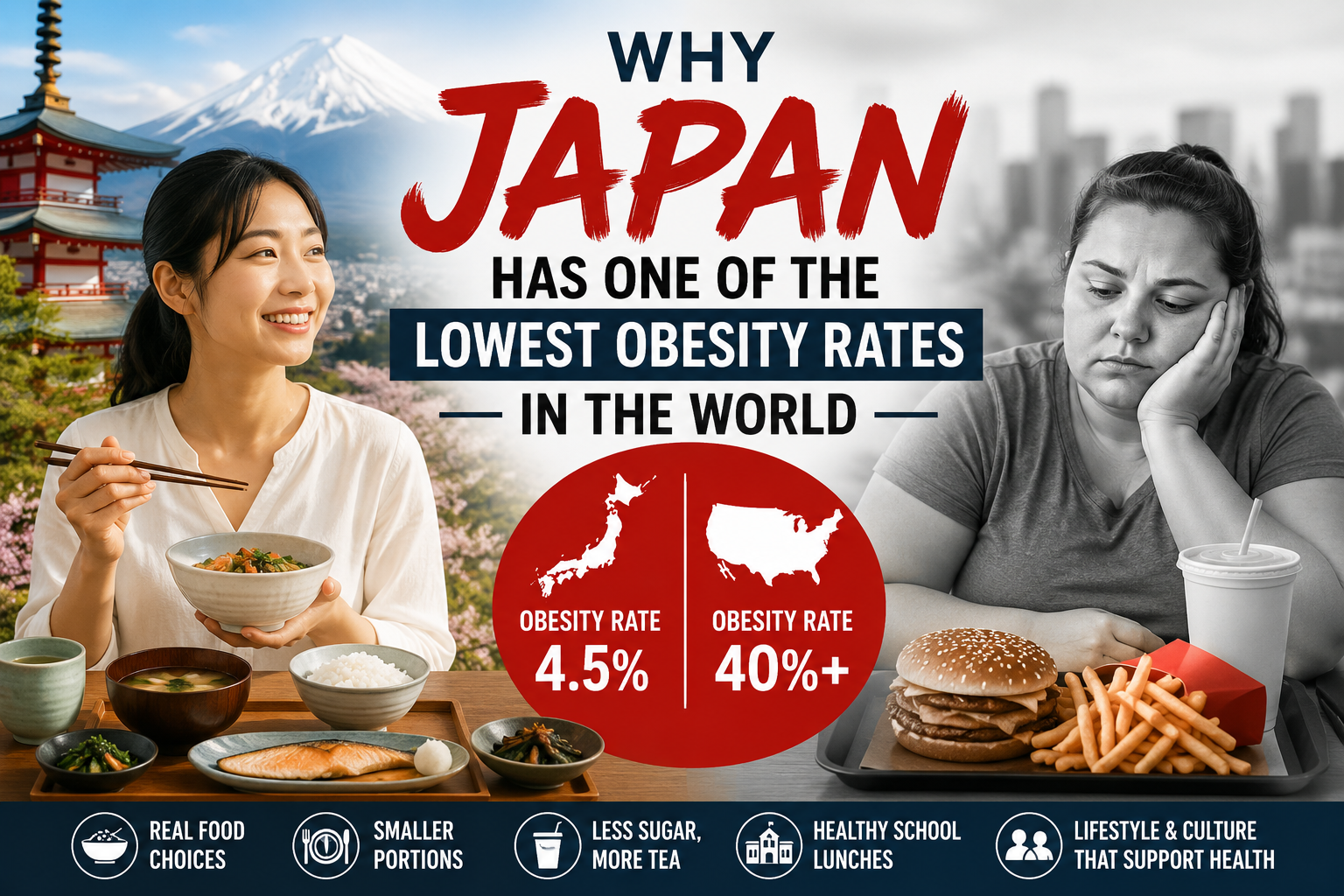
In the United States, obesity rates have risen dramatically over the past several decades. In the 1960s, roughly 12 percent of Americans were classified as obese. Today, that number exceeds 40 percent. In contrast, Japan’s obesity rate remains around 4.5 percent, one of the lowest among developed nations.
This difference raises an important question.
What exactly is Japan doing differently?
Is it genetics? Green tea? More exercise? Smaller appetites? Better discipline?
The reality is far more interesting.
Japan’s success is not based on a miracle food, a secret supplement, or an extreme fitness culture. Instead, it is the result of a food environment that naturally encourages healthier eating habits without requiring extraordinary willpower.
Let’s explore the key reasons Japan has largely avoided the obesity crisis that has affected so much of the developed world.
The Japanese Food Environment Makes Healthy Choices Easier
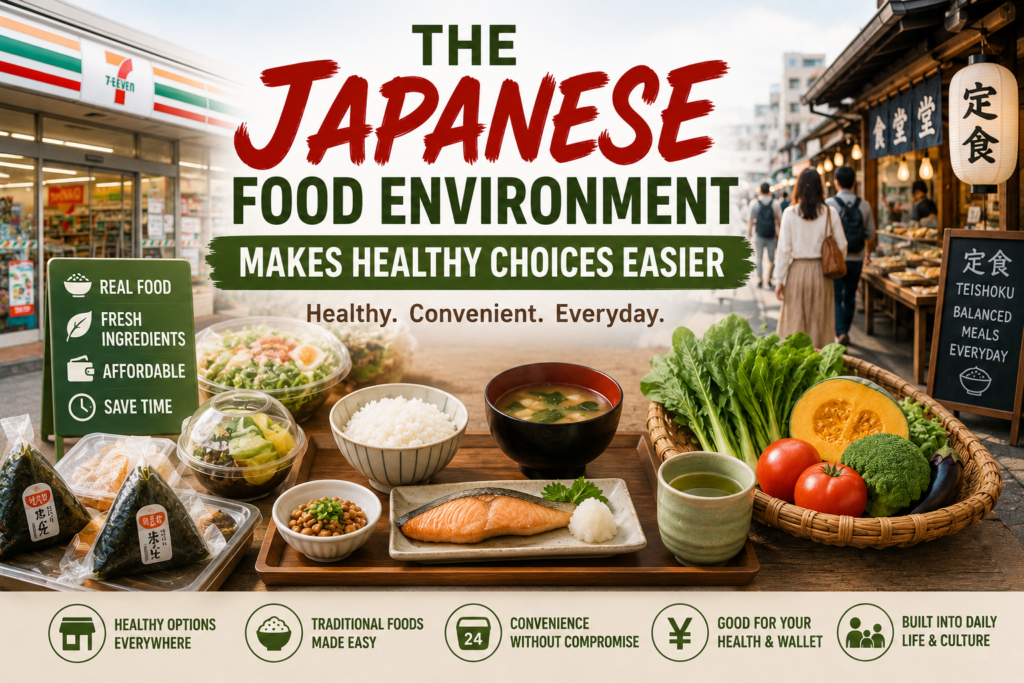
One of the biggest differences between Japan and many Western countries is that healthy eating often requires very little effort.
In America, convenience frequently means highly processed food.
A busy commuter grabbing breakfast may choose from fast food sandwiches, sugary pastries, oversized coffee drinks, breakfast burritos, pancakes, or processed convenience foods.
Japan offers a very different experience.
Walk into a typical Japanese breakfast restaurant and you may find a simple meal consisting of:
- Rice
- Grilled fish
- Miso soup
- Fermented soybeans
- Pickled vegetables
These meals are inexpensive, satisfying, and nutrient-dense.
Even major chains such as rice bowl restaurants serve traditional foods that have been staples of Japanese diets for generations.
The result is that convenience does not automatically equal junk food.
A person in Japan can eat quickly and affordably without consuming excessive calories, sugar, and ultra-processed ingredients.
This may sound like a small difference, but over years and decades it becomes enormously significant.
When healthy food is easy to access, people naturally consume more of it.
When unhealthy food dominates the environment, maintaining a healthy weight becomes much more difficult.
One of the most powerful lessons from Japan is that people are heavily influenced by the food options surrounding them every day.
Convenience Stores Offer Real Food Instead Of Empty Calories
Many visitors are shocked when they first experience Japanese convenience stores.
In many countries, convenience stores are associated with:
- Candy
- Crisps
- Sugary drinks
- Processed snacks
- Deep fried foods
Japanese convenience stores are different.
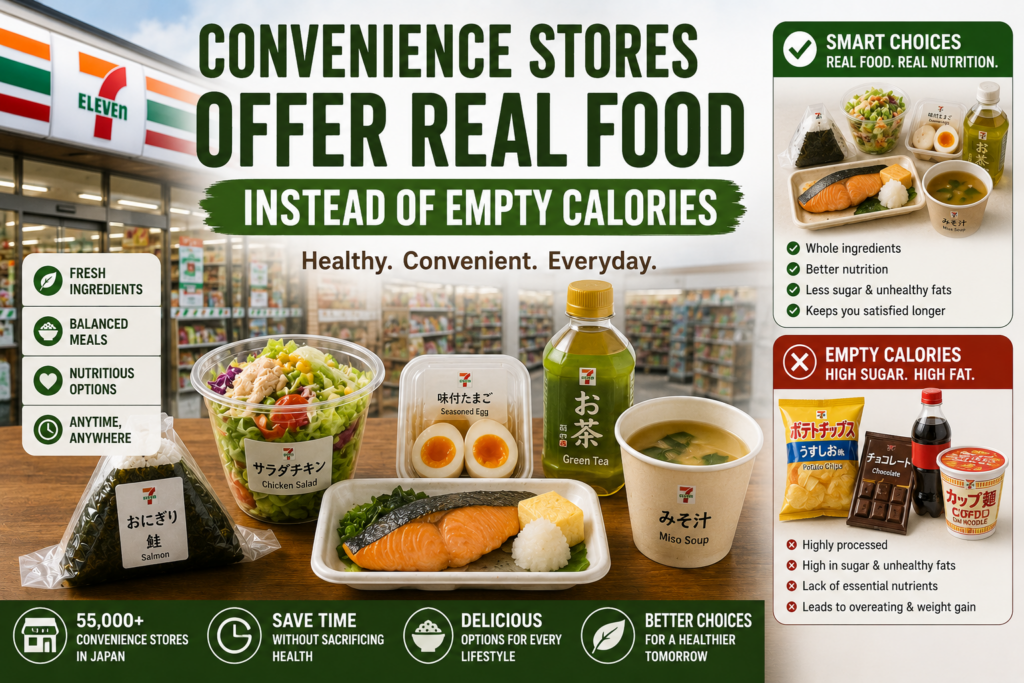
Known locally as “kombini,” they have become famous worldwide for offering fresh, ready-to-eat meals that are surprisingly balanced.
A typical convenience store meal may include:
- Rice balls
- Grilled fish
- Boiled eggs
- Salads
- Roasted chicken
- Tofu products
- Seaweed
- Fresh fruit
- Unsweetened tea
These foods are available almost everywhere.
Japan has tens of thousands of convenience stores, making healthy options accessible around the clock.
This matters because modern life is busy.
People often eat whatever is easiest.
If the easiest option is a sugary snack and a giant soda, weight gain becomes more likely.
If the easiest option is grilled fish, rice, vegetables, and tea, maintaining a healthy weight becomes far easier.
The Japanese food environment recognizes an important reality.
People do not always have time to cook.
Rather than expecting perfect behavior, Japan provides healthier convenience options that fit real life.
That simple difference may play a major role in keeping obesity rates low.
Japan Consumes Far Less Sugar Than America
Sugar consumption is one of the clearest differences between Japanese and American eating habits.
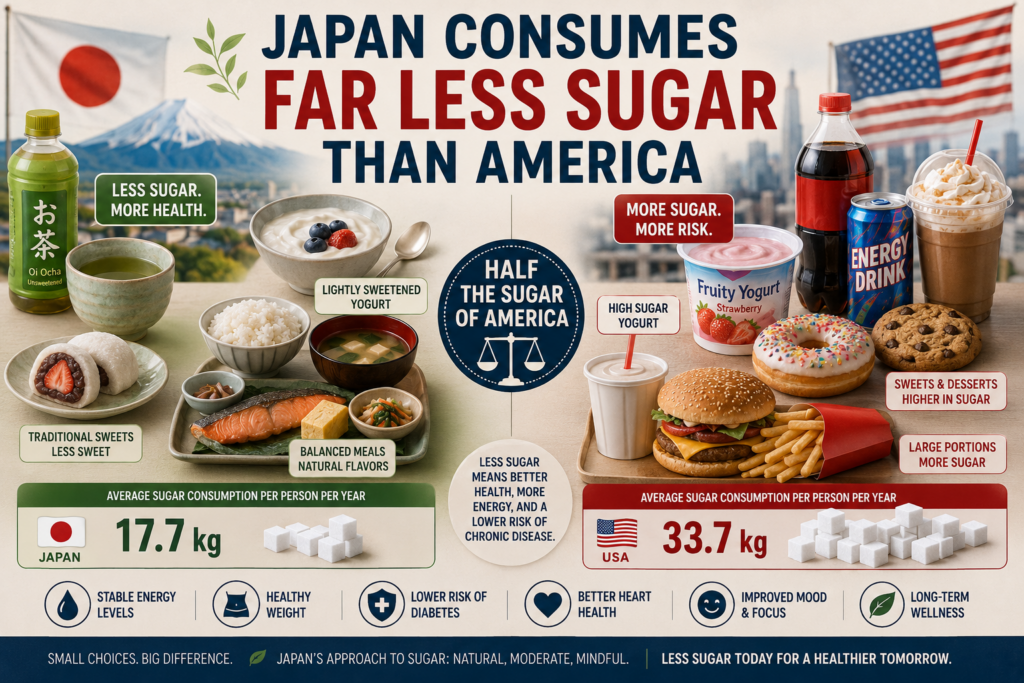
The average American consumes roughly twice as much sugar as the average Japanese person.
This difference appears everywhere.
Japanese desserts are typically less sweet.
Japanese yogurts contain less sugar.
Soft drinks are smaller.
Many beverages contain little or no added sugar.
When visitors first arrive in Japan, some describe desserts as bland or not sweet enough.
However, something interesting happens after a few months.
Their taste buds adapt.
Foods that once seemed boring suddenly taste perfectly sweet.
Then when they return to America, many foods feel overwhelmingly sugary.
Research suggests this adaptation is real.
People who significantly reduce sugar intake often become more sensitive to sweetness over time.
Foods that once required large amounts of sugar begin tasting sweet naturally.
Fruit becomes more satisfying.
Desserts require less added sugar.
Cravings often decrease.
Japan benefits from a culture where excessive sweetness never became the norm.
As a result, people consume fewer calories from sugar while still enjoying satisfying foods.
This contributes not only to lower obesity rates but also to improved metabolic health.
Reducing sugar consumption may be one of the simplest and most effective strategies available for weight management.
Portion Sizes Remain Sensible And Controlled
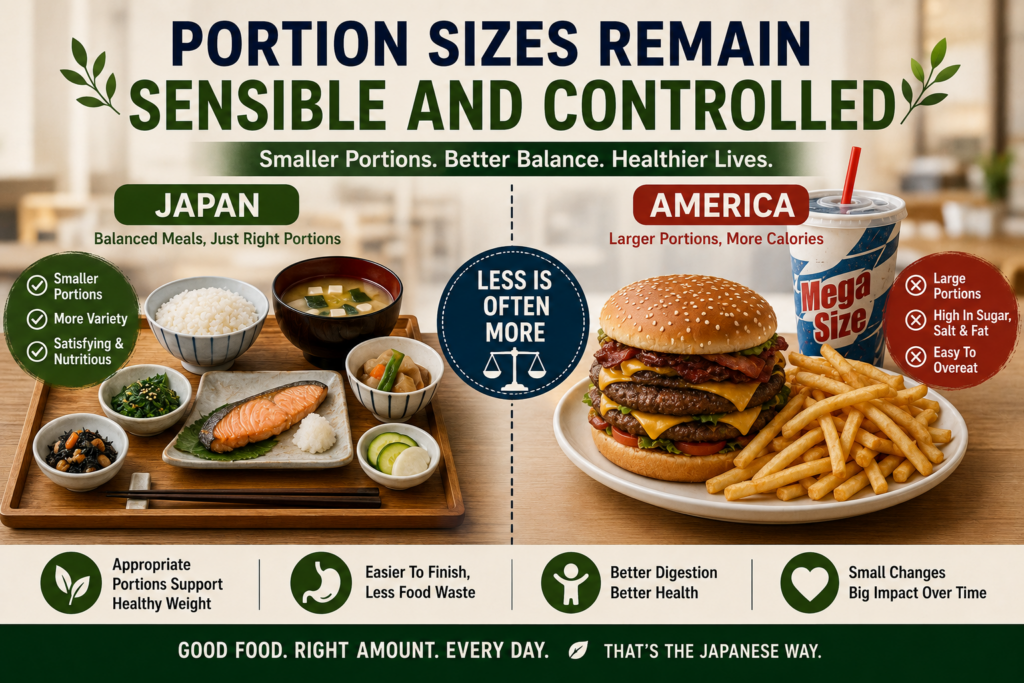
Portion sizes are another major difference between Japan and America.
In many Western countries, bigger portions are often marketed as better value.
Restaurants compete by offering:
- Larger burgers
- Bigger fries
- Larger soft drinks
- Massive breakfast platters
- Oversized desserts
Consumers become accustomed to seeing enormous portions as normal.
Over time, this shifts expectations.
What was once considered a large meal becomes an average meal.
Japan has largely resisted this trend.
Meals tend to be smaller, balanced, and carefully portioned.
Instead of one giant serving, a Japanese meal often includes several smaller dishes.
For example:
- A bowl of rice
- Fish or meat
- Soup
- Vegetables
- Pickles
The meal feels complete despite containing fewer calories.
There is also a cultural emphasis on avoiding waste.
Children are taught from a young age to respect food and finish what they are served.
Leaving large amounts of food uneaten is generally discouraged.
As a result, restaurants often provide portions that can reasonably be finished without excess.
This creates an environment where overeating is less common.
The average person consumes fewer calories without feeling deprived.
Small reductions in daily calorie intake may seem insignificant, but over decades they can dramatically influence body weight.
Japanese Children Learn Healthy Eating Habits Early
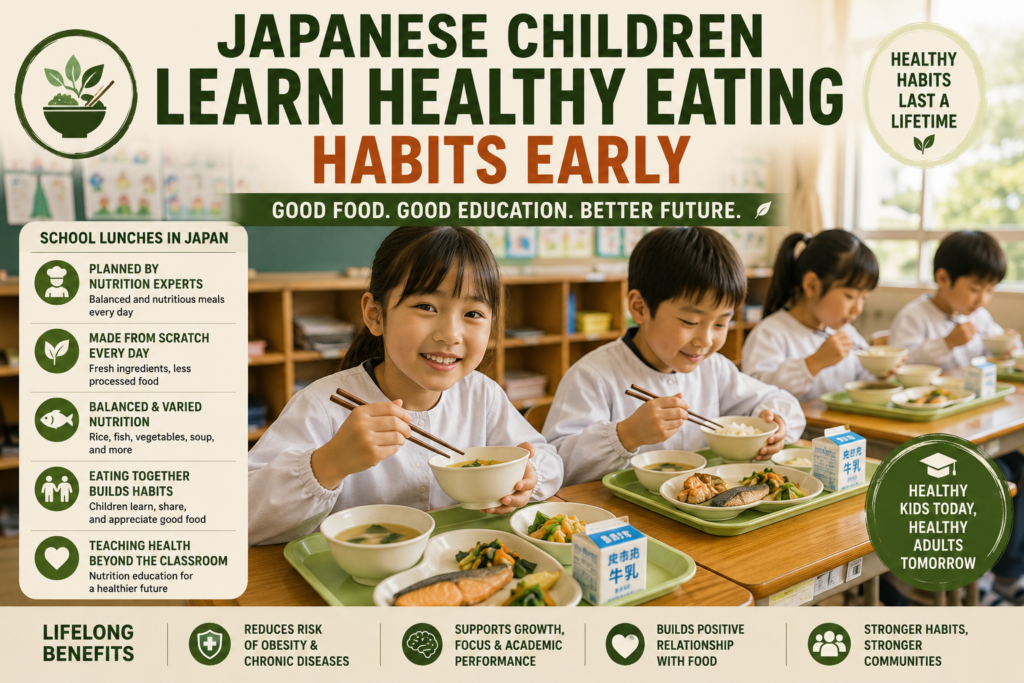
Perhaps one of Japan’s greatest advantages is its approach to school lunches.
Children do not simply learn mathematics and science.
They also learn nutrition.
School lunches in Japan are often planned by nutrition professionals and prepared with balance in mind.
Meals commonly include:
- Rice
- Vegetables
- Fish
- Lean proteins
- Soup
- Fruit
The goal is not merely feeding children.
The goal is teaching them how a healthy meal should look.
Students become familiar with nutritious foods from a young age.
Healthy eating becomes normal rather than exceptional.
Contrast this with many school systems where highly processed foods have historically played a major role.
When children grow up eating fries, sugary drinks, desserts, and processed snacks daily, those habits often continue into adulthood.
Japan’s approach creates a different foundation.
Children learn that vegetables belong on the plate.
Fish is normal.
Soup is normal.
Balanced meals are normal.
By adulthood, healthy eating feels natural rather than forced.
This may be one of the most important long-term factors behind Japan’s low obesity rates.
Habits formed during childhood often last a lifetime.
Tea And Water Are Preferred Over Sugary Drinks
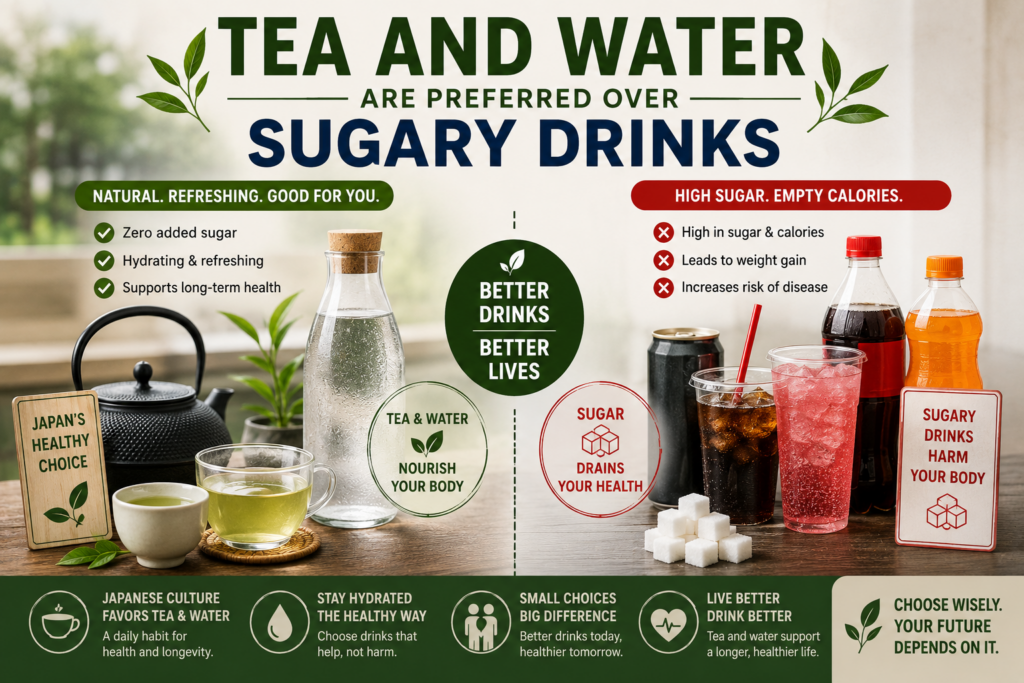
Liquid calories are one of the hidden drivers of obesity.
Many people consume hundreds of calories each day without realizing it through:
- Soft drinks
- Sweetened coffee drinks
- Energy drinks
- Sports drinks
- Sugary juices
Japan largely avoids this problem.
Unsweetened beverages dominate the market.
Vending machines are everywhere throughout Japan, but they often offer:
- Green tea
- Black tea
- Oolong tea
- Water
- Black coffee
Many of these drinks contain little or no sugar.
It is completely normal for someone to drink tea throughout the day rather than soda.
Even restaurant meals are commonly served with water or tea.
This creates a significant calorie advantage.
Consider the difference.
A person drinking multiple large sodas daily may consume hundreds of extra calories.
Someone drinking water and tea consumes virtually none.
Over a year, that difference can represent tens of thousands of calories.
The impact on body weight becomes substantial.
Japanese beverage culture demonstrates that staying hydrated does not require consuming large amounts of sugar.
The widespread availability of unsweetened drinks makes healthier choices effortless.
Variety Keeps Healthy Eating Enjoyable
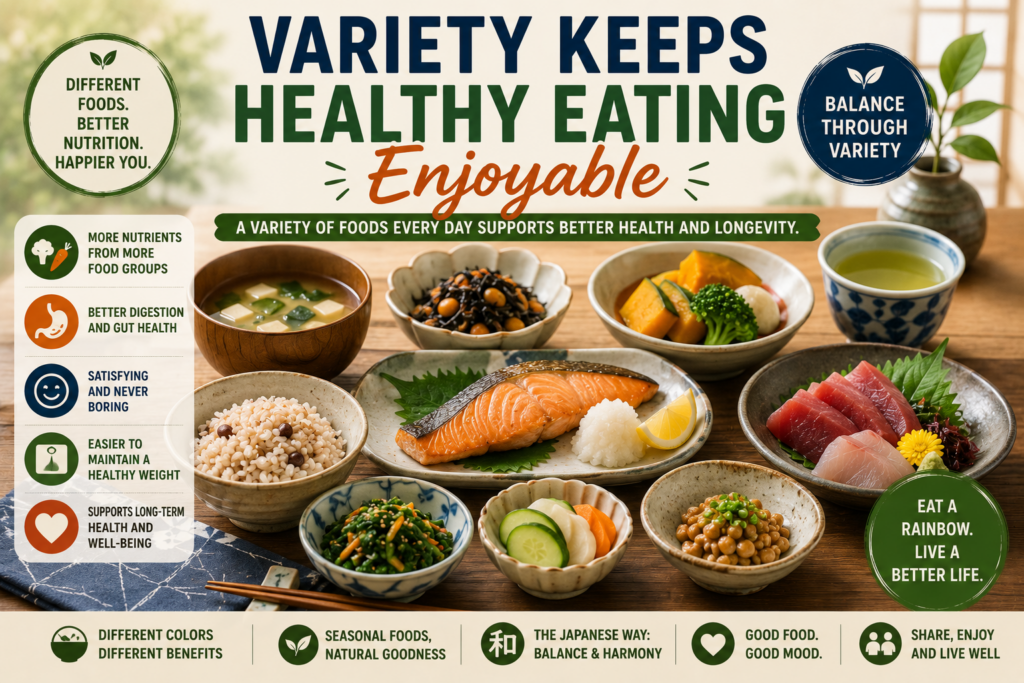
One reason many diets fail is boredom.
People become tired of eating the same foods repeatedly.
Eventually they return to old habits.
Japan solves this problem through variety.
Japanese cuisine includes a remarkable range of foods and preparation methods.
Meals may feature:
- Fish
- Seafood
- Rice
- Noodles
- Vegetables
- Fermented foods
- Soups
- Tofu
- Eggs
- Seaweed
- Pickled vegetables
Each ingredient can be prepared in countless ways.
This variety makes healthy eating more enjoyable.
People do not feel trapped eating identical meals every day.
Even social dining often includes balanced options.
Japanese pubs known as izakayas typically serve a wide range of dishes, many of which include vegetables, seafood, grilled meats, and other nutrient-rich foods.
Healthy choices remain available in social settings.
This matters because diets must be sustainable.
The healthiest diet is not the one that works for two weeks.
It is the one that people can follow comfortably for decades.
Japan’s food culture succeeds because healthy eating remains enjoyable and accessible.
People do not feel like they are sacrificing pleasure to maintain their weight.
The Real Secret Is Culture Rather Than Willpower
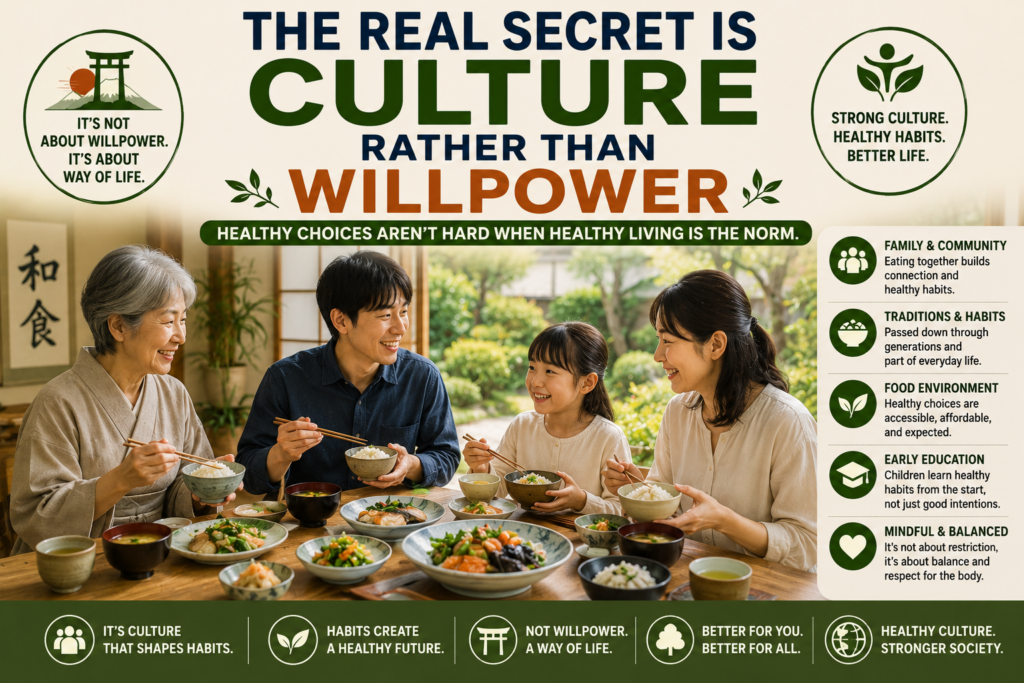
Many people assume that Japanese citizens simply possess extraordinary self-control.
The evidence suggests otherwise.
The real difference is culture.
The environment shapes behavior.
In Japan:
- Portions are smaller.
- Sugar consumption is lower.
- Healthy convenience foods are common.
- School lunches emphasize nutrition.
- Tea often replaces soda.
- Balanced meals are widely available.
- Food waste is discouraged.
None of these factors alone explains Japan’s low obesity rate.
Together, however, they create a powerful system.
People are not constantly battling temptation.
Healthy choices are often the easiest choices.
This is an important lesson for anyone trying to lose weight.
Success is not only about motivation.
It is also about environment.
When your kitchen contains nutritious foods, healthy eating becomes easier.
When water is more accessible than sugary drinks, hydration improves naturally.
When portion sizes are controlled, calorie intake often decreases automatically.
Japan demonstrates that obesity prevention works best when healthy behaviors are built into everyday life.
Rather than relying entirely on willpower, the culture itself supports healthier decisions.
What The Rest Of The World Can Learn From Japan
Japan is not perfect.
Like every country, it faces health challenges.
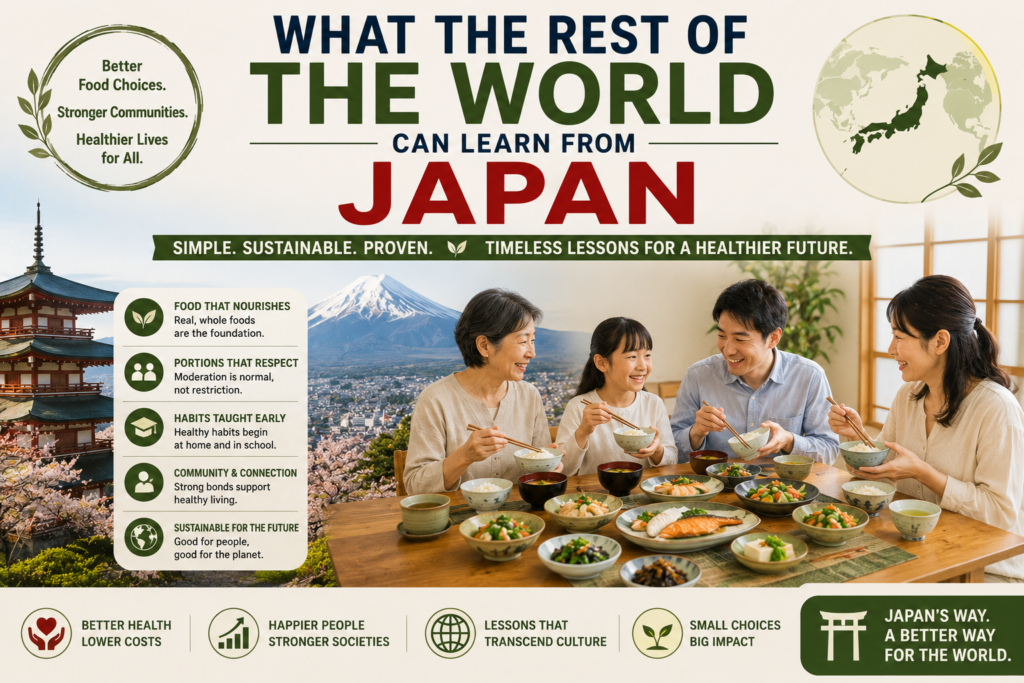
However, its success in maintaining one of the world’s lowest obesity rates offers valuable lessons.
The answer is not a magic food.
It is not green tea alone.
It is not genetics.
It is not endless gym sessions.
Instead, Japan has created a food environment where moderation is normal.
Healthy choices are widely available.
Portions remain reasonable.
Sugar consumption stays relatively low.
Children learn healthy habits early.
Tea and water often replace sugary beverages.
Balanced meals are easy to find almost everywhere.
The result is a culture that naturally supports healthy body weight.
For anyone seeking better health, the lesson is simple.
Focus less on extreme diets and more on creating an environment that makes healthy eating easy.
Choose smaller portions.
Reduce sugary drinks.
Eat more whole foods.
Increase variety.
Make nutritious choices convenient.
Over time, these simple habits can produce remarkable results.
Japan’s experience shows that lasting health is rarely built through drastic measures.
More often, it comes from small daily decisions repeated consistently over many years.
The country may not have discovered a secret weight-loss formula, but it has created something arguably more valuable: a lifestyle that makes maintaining a healthy weight feel normal rather than difficult.
Disclaimer
The information provided in this article is for educational and informational purposes only. While every effort has been made to ensure accuracy, the content is not intended to replace professional medical, nutritional, fitness, or healthcare advice.
The views and concepts discussed are based on publicly available information, scientific research, expert opinions, and interpretations of the topics covered. Individual health needs, dietary requirements, and fitness goals vary from person to person, and results may differ.
Before making significant changes to your diet, exercise routine, supplementation, or lifestyle habits, you should consult with a qualified healthcare professional, registered dietitian, physician, or other appropriate medical expert.
The author and publisher assume no responsibility for any loss, injury, or damage resulting from the use of information contained in this article. Readers are encouraged to conduct their own research and make informed decisions based on their individual circumstances.
By reading this article, you acknowledge that any actions you take based on the information provided are done at your own discretion and risk.ented in this article.