
For decades, scientists have searched for the secret to a long and healthy life. They have studied genetics, exercise habits, social connections, stress levels, and countless dietary patterns. Yet one of the most fascinating discoveries has emerged not from a miracle supplement or a revolutionary diet, but from the everyday eating habits of people who have lived beyond the age of 100.
Imagine sitting across from a 104-year-old woman who has witnessed world wars, technological revolutions, and societal transformations. You ask her what she eats for lunch, expecting some exotic longevity secret. Instead, she shrugs and says, “The same thing every day.”
That simple answer may hold more wisdom than many modern nutrition trends.
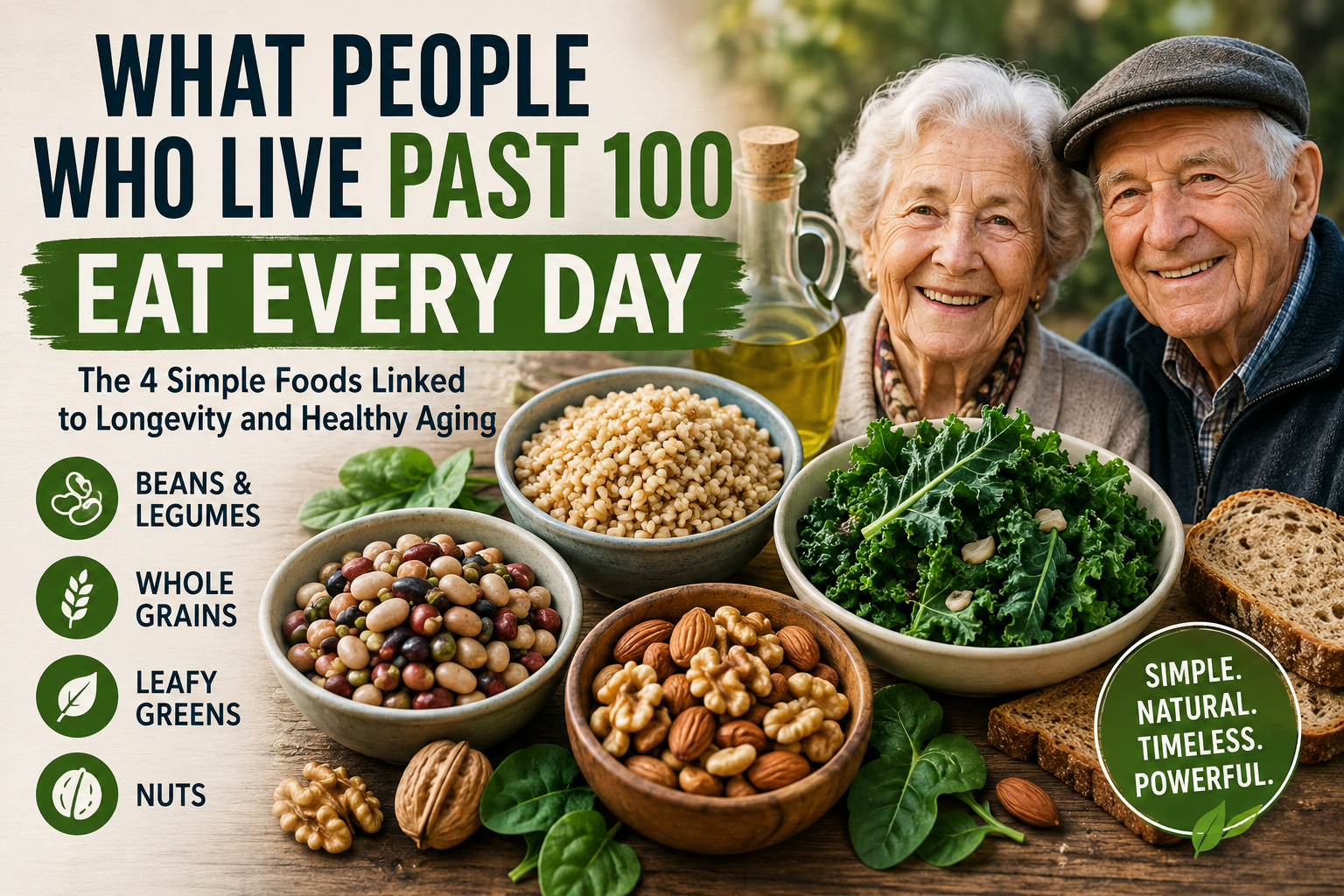
Researchers studying centenarians discovered that despite living in different countries, speaking different languages, and growing up in different cultures, many of the world’s longest-living people regularly consumed the same four food categories. These foods repeatedly appeared in dietary records from centenarians living in places such as Okinawa, Sardinia, Ikaria, Nicoya, Loma Linda, and communities throughout North America.
What makes this discovery so powerful is its simplicity. These foods are inexpensive, widely available, and familiar to almost everyone. They do not require special diets, expensive supplements, or complicated meal plans.
The four foods are:
- Beans and legumes
- Whole grains
- Leafy greens
- Nuts
Let’s explore why these foods appear again and again in the diets of people who live exceptionally long lives and how you can incorporate them into your own daily routine.
Why Scientists Study Centenarians For Longevity Clues

Centenarians are people who live to 100 years old or beyond. They represent one of the most valuable populations for longevity research because they provide real-world evidence of what healthy aging looks like.
Many longevity studies focus on laboratory experiments or short-term interventions. Centenarians offer something different. They show the cumulative effects of lifestyle choices made consistently over many decades.
Researchers examining centenarian populations noticed something remarkable. Although these individuals lived in vastly different regions, many shared similar dietary patterns.
Unlike modern nutrition studies that often rely on participants remembering what they ate recently, centenarian research frequently examines long-term dietary habits confirmed by family members, historical records, and decades of observation.
The goal is not simply to identify foods associated with a longer lifespan. The goal is to understand what dietary patterns repeatedly show up among people who remain physically active, mentally sharp, and independent well into their later years.
One recurring theme stands out above all others.
Longevity is rarely built through dramatic interventions.
It is usually built through consistency.
The people who lived the longest often ate simple foods repeatedly for decades. Their diets were not exciting, trendy, or highly varied. Instead, they were based on traditional foods that had nourished their families for generations.
This finding challenges the modern obsession with constantly searching for the next superfood or miracle health hack.
The centenarians were not chasing novelty.
They were practicing consistency.
Beans And Legumes The Foundation Of Longevity Diets
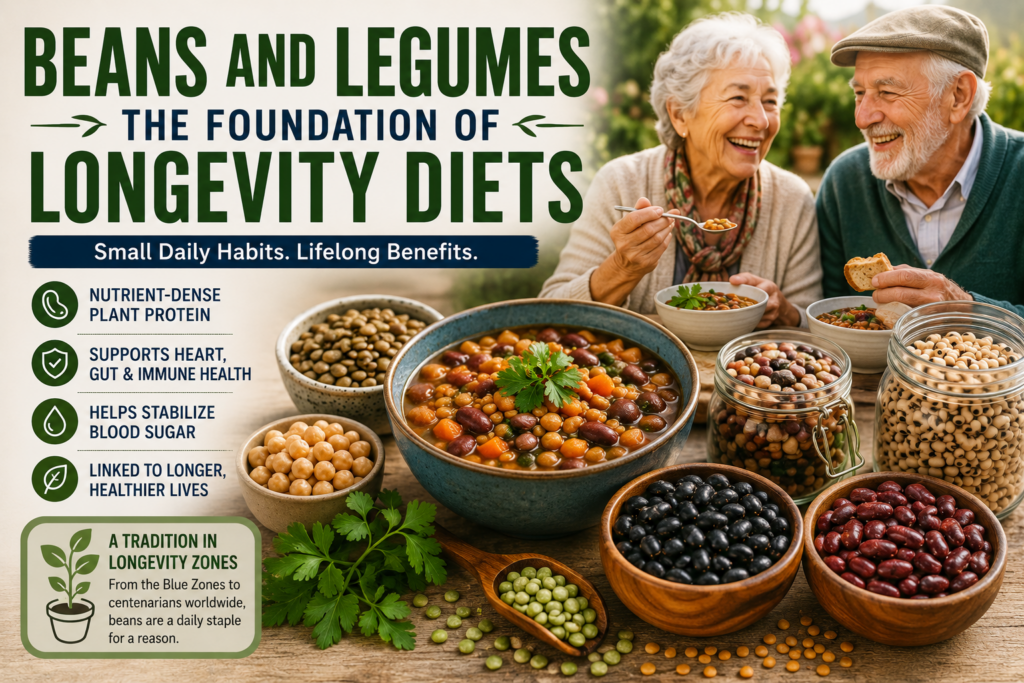
If there is one food category that appears almost universally among centenarian populations, it is beans and legumes.
Whether it is black beans in Costa Rica, lentils in Greece, chickpeas in Italy, soybeans in Okinawa, or various legumes throughout North America, these foods consistently form the backbone of long-lived populations.
Beans offer an extraordinary nutritional profile.
They provide:
- Plant-based protein
- Dietary fiber
- B vitamins
- Magnesium
- Potassium
- Iron
- Antioxidants
One reason legumes attract so much scientific interest is their relationship with insulin-like growth factor 1, commonly known as IGF-1.
IGF-1 plays an important role during childhood and early adulthood by supporting growth and development. However, persistently elevated levels later in life have been associated with accelerated aging and increased risk of certain diseases.
Research suggests that diets rich in legumes may help maintain healthier IGF-1 levels during adulthood.
Beyond this, beans help regulate blood sugar levels due to their combination of protein and fiber. This creates a slower release of glucose into the bloodstream compared to many refined carbohydrates.
The fiber content also supports a healthy gut microbiome.
Scientists increasingly recognize that gut health influences nearly every aspect of well-being, including immune function, inflammation, and metabolic health.
Consider a simple bowl of lentil soup.
It may not appear impressive on social media.
Yet when eaten consistently for decades, it may contribute to profound long-term health benefits.
Many centenarians did not consume legumes because they understood the science.
They consumed them because they were affordable, filling, and deeply rooted in their cultural traditions.
The biology simply rewarded the habit.
Whole Grains The Forgotten Powerhouse Of Healthy Aging
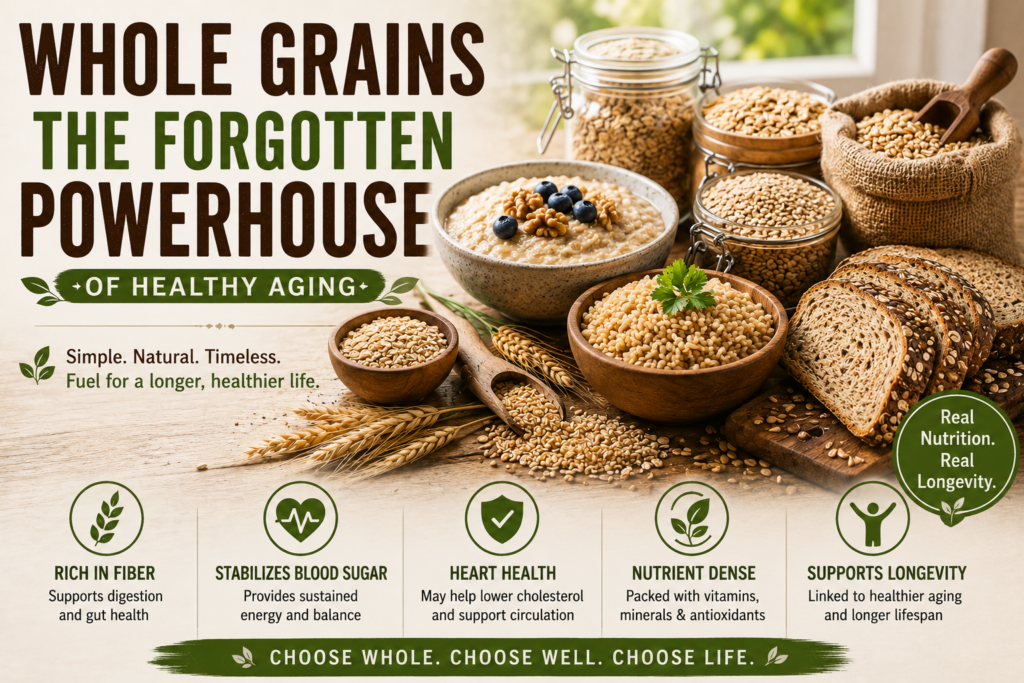
Whole grains form the second major pillar of centenarian diets.
However, it is important to understand that the grains consumed by centenarians differ significantly from many grain products found in modern supermarkets.
The key distinction lies in processing.
Traditional longevity populations typically consumed grains in their most natural form, including:
- Steel-cut oats
- Barley
- Brown rice
- Farro
- Rye
- Traditional sourdough bread
These foods retain their natural fiber and nutrient content.
By contrast, heavily processed grain products often behave more like refined carbohydrates despite marketing claims.
The difference becomes apparent in how the body responds.
Intact whole grains digest more slowly, helping to stabilize blood sugar levels and reduce insulin spikes.
Over time, this may help reduce metabolic stress and support healthier aging.
Traditional sourdough bread deserves special mention.
In regions such as Sardinia, long fermentation processes were common. These fermentation methods improved nutrient availability and altered how the body processed the grains.
Centenarians were not consuming these foods because they had studied nutrition.
They were simply eating the foods their grandparents had always prepared.
The result was a dietary pattern naturally aligned with modern longevity science.
Another advantage of whole grains is their fiber content.
Fiber supports digestive health, feeds beneficial gut bacteria, and promotes satiety, helping people maintain healthy body weight throughout life.
The lesson is simple.
Not all grains are equal.
The closer a grain remains to its natural state, the more likely it is to deliver the benefits associated with long-lived populations.
Leafy Greens Nature’s Daily Medicine
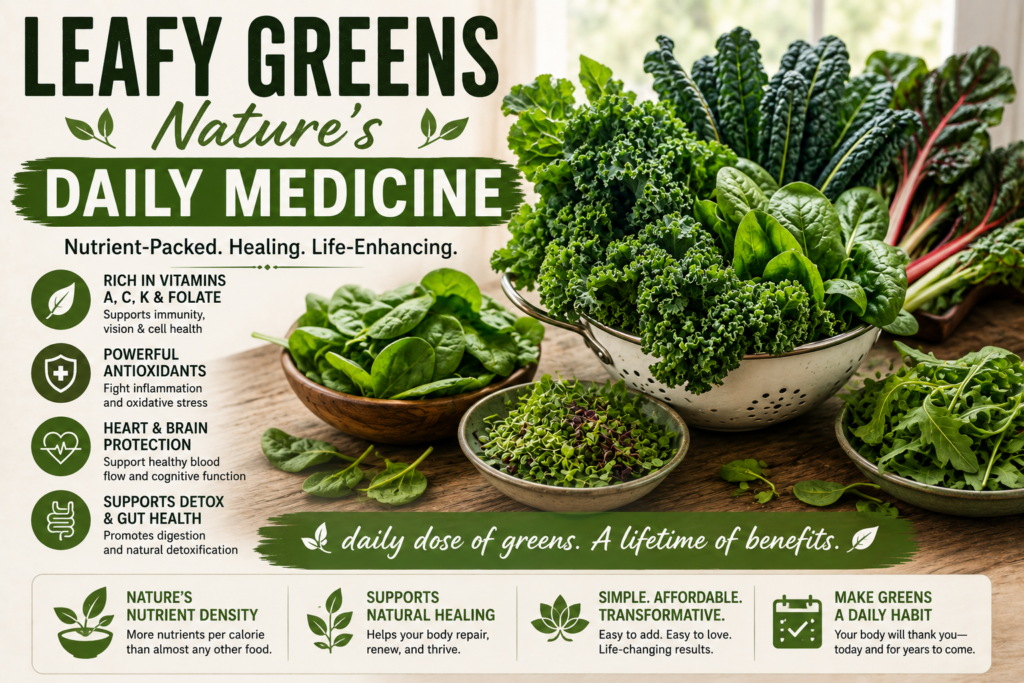
If beans form the foundation of centenarian diets, leafy greens may be the most powerful supporting actor.
Dark leafy greens appear consistently across virtually every longevity hotspot on the planet.
Examples include:
- Kale
- Spinach
- Mustard greens
- Collard greens
- Swiss chard
- Dandelion greens
- Wild greens
These vegetables are nutritional powerhouses.
They contain high concentrations of:
- Folate
- Vitamin K
- Vitamin C
- Magnesium
- Potassium
- Polyphenols
- Antioxidants
One particularly important function involves the regulation of homocysteine, a compound associated with cardiovascular disease and cognitive decline when levels become elevated.
The B vitamins found in leafy greens help the body process homocysteine efficiently.
Another fascinating aspect of leafy greens is their polyphenol content.
Polyphenols activate protective cellular pathways that help defend against oxidative stress and inflammation.
In regions such as Ikaria, wild greens known as horta are consumed daily.
Many of these plants have a naturally bitter taste.
Interestingly, that bitterness may be part of what makes them beneficial.
The compounds responsible for bitterness often possess potent antioxidant properties.
Modern diets frequently avoid bitter foods because people prefer sweeter flavors.
Centenarians often did the opposite.
They embraced these traditional vegetables as a normal part of daily life.
A plate of sautéed greens may not seem transformative.
Yet over decades, the cumulative impact of improved vascular health, reduced inflammation, and enhanced cellular protection can become substantial.
This is one of the recurring themes of longevity research.
Small daily actions become powerful when repeated thousands of times.
Nuts And The Secret To Strong Hearts After 100
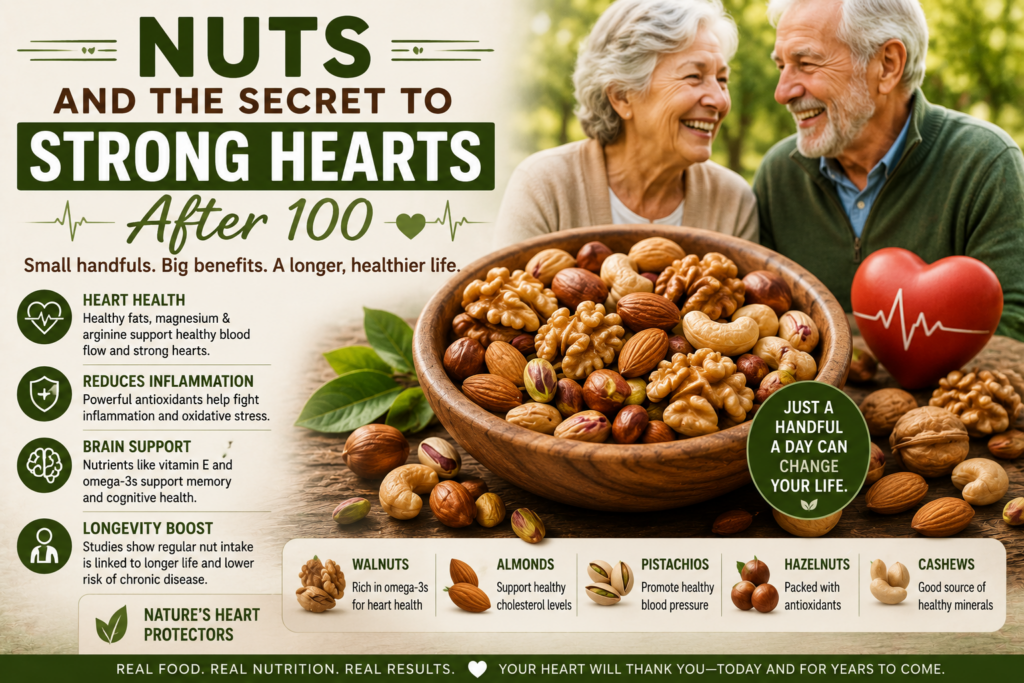
The fourth food category shared by many centenarians is nuts.
Walnuts, almonds, pistachios, hazelnuts, and other nuts appear repeatedly in dietary records of long-lived populations.
Scientific studies have shown impressive associations between regular nut consumption and improved cardiovascular health.
Nuts provide:
- Healthy fats
- Protein
- Fiber
- Magnesium
- Vitamin E
- Antioxidants
One particularly important nutrient found in many nuts is arginine.
Arginine serves as a precursor to nitric oxide, a compound that helps blood vessels relax and remain flexible.
Healthy blood vessels support efficient circulation and reduce strain on the cardiovascular system.
Walnuts are especially noteworthy because they contain alpha-linolenic acid, a plant-based omega-3 fatty acid.
These healthy fats help support heart health and may reduce inflammation throughout the body.
Research involving large populations has found that people who regularly consume nuts often experience lower rates of cardiovascular disease.
What makes this finding remarkable is its simplicity.
The protective effect is not linked to exotic supplements.
It is linked to a small handful of nuts eaten consistently over many years.
One centenarian described carrying walnuts in a paper bag wherever he went.
He did not think of them as a health food.
He thought of them as a snack.
That distinction matters.
The healthiest habits are often the ones that become automatic.
The Real Secret Is Consistency Not Perfection
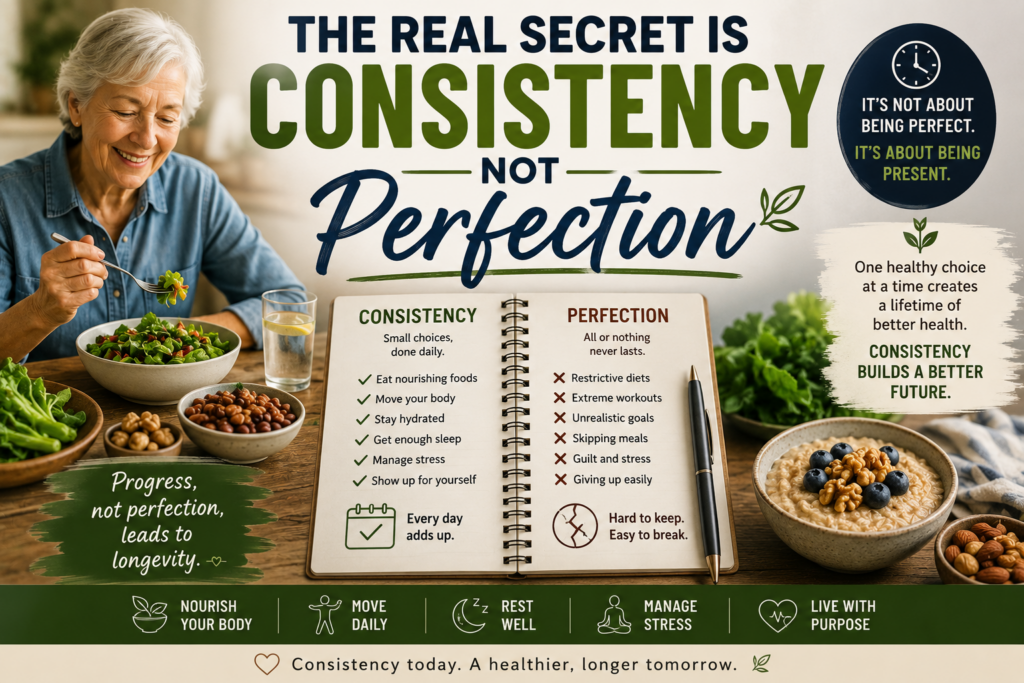
When people hear about longevity research, they often focus on individual foods.
But the deeper lesson may be even more important.
The real power lies in consistency.
Centenarians rarely followed perfect diets.
They enjoyed celebrations, family gatherings, and occasional indulgences.
What distinguished them was not perfection.
It was repetition.
Day after day.
Year after year.
Decade after decade.
They returned to the same healthy foods.
Modern culture often promotes short-term transformation.
People want visible results within days or weeks.
Longevity operates on a different timeline.
The benefits of legumes may take years to become measurable.
The cardiovascular advantages of nuts may accumulate gradually.
The protective effects of leafy greens may unfold over decades.
These benefits compound quietly.
A daily bowl of bean soup may seem insignificant.
Yet multiplied across 50 years, it becomes one of the most powerful health interventions imaginable.
The challenge is psychological.
Humans naturally seek immediate rewards.
Longevity rewards patience.
The centenarians understood this without necessarily realizing it.
They simply continued eating the foods that had always been part of their lives.
The result was a biological advantage that became visible only much later.
Why Simpler Diets Often Produce Better Health Outcomes
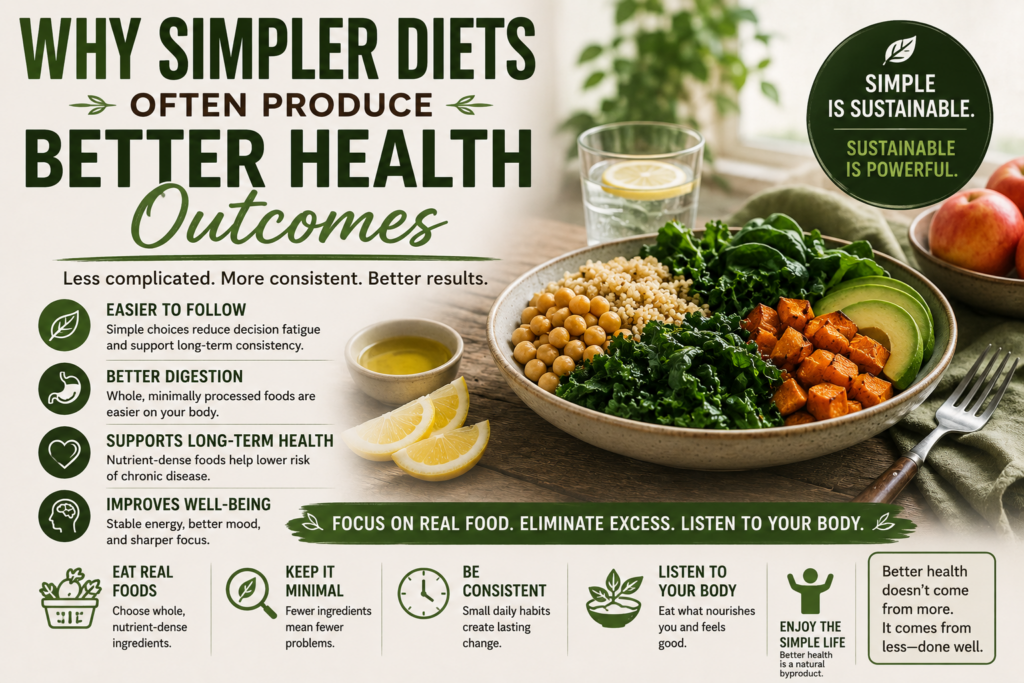
One surprising finding from longevity research is that food simplicity often outperforms food abundance.
Many centenarians grew up during periods when food choices were limited.
Their diets were repetitive by modern standards.
Yet this simplicity may have provided unexpected advantages.
Simple diets often mean:
- Fewer ultra-processed foods
- Less added sugar
- Lower calorie intake
- Greater nutrient density
- More consistent eating habits
Today’s food environment encourages constant novelty.
Thousands of products compete for attention.
Many are engineered to be hyper-palatable and easy to overconsume.
Centenarians grew up in a different world.
Meals were built around staple foods rather than packaged products.
Their diets contained fewer ingredients but often more nutrients.
Researchers have observed that some individuals who grew up with modest food availability actually demonstrated excellent health outcomes later in life.
This does not mean food scarcity is beneficial.
Rather, it highlights the value of simplicity.
A diet centered around beans, whole grains, greens, and nuts naturally avoids many of the pitfalls associated with modern eating patterns.
These foods provide nourishment without excessive calories.
They support satiety without promoting overconsumption.
Most importantly, they are sustainable.
The best diet is not the one that works for two weeks.
It is the one you can follow for decades.
How To Apply The Centenarian Food Strategy In Your Own Life

The encouraging aspect of this research is how practical it is.
You do not need expensive supplements.
You do not need a private chef.
You do not need exotic ingredients.
You simply need to make these four food categories a regular part of your routine.
Here is a simple framework:
Daily
- One serving of leafy greens
- One small handful of nuts
Three To Five Times Per Week
- Beans, lentils, chickpeas, or other legumes as a main meal component
Most Days
- Whole grains such as oats, barley, brown rice, or traditional sourdough bread
Example daily menu:
Breakfast
Steel-cut oats topped with walnuts and berries.
Lunch
Lentil soup with whole grain bread and a side salad.
Snack
A handful of almonds.
Dinner
Black beans with brown rice and sautéed kale.
This approach is affordable, accessible, and supported by many of the world’s longest-living populations.
The goal is not to replicate the diet of a specific centenarian.
The goal is to embrace the underlying principles.
Simple foods.
Minimal processing.
Daily consistency.
Long-term commitment.
The remarkable truth is that the dietary habits of many people who reached 100 years old were not complicated at all.
They did not rely on miracle foods or expensive health products.
Instead, they built their meals around beans and legumes, whole grains, leafy greens, and nuts.
These four food categories appeared again and again across different cultures, different continents, and different generations.
Perhaps the most powerful lesson from centenarian research is that longevity often looks ordinary.
It looks like the same bowl of bean soup enjoyed for decades.
It looks like a handful of walnuts before morning coffee.
It looks like dark leafy greens served with dinner night after night.
The secret is not excitement.
The secret is repetition.
While no single food can guarantee a long life, the evidence suggests that consistently returning to these nutrient-rich staples may help support healthier aging, stronger cardiovascular health, and greater resilience over time.
The people who lived past 100 did not chase every new health trend.
They simply kept coming back to the same right foods.
And perhaps that is the most valuable longevity lesson of all.
Disclaimer
The information provided in this article is for educational and informational purposes only. While every effort has been made to ensure accuracy, the content is not intended to replace professional medical, nutritional, fitness, or healthcare advice.
The views and concepts discussed are based on publicly available information, scientific research, expert opinions, and interpretations of the topics covered. Individual health needs, dietary requirements, and fitness goals vary from person to person, and results may differ.
Before making significant changes to your diet, exercise routine, supplementation, or lifestyle habits, you should consult with a qualified healthcare professional, registered dietitian, physician, or other appropriate medical expert.
The author and publisher assume no responsibility for any loss, injury, or damage resulting from the use of information contained in this article. Readers are encouraged to conduct their own research and make informed decisions based on their individual circumstances.
By reading this article, you acknowledge that any actions you take based on the information provided are done at your own discretion and risk.ented in this article.