

Few places in the world have captured the attention of scientists, nutritionists, and health researchers quite like Okinawa. This small chain of islands in southern Japan has long been famous for its remarkable number of centenarians. For decades, people from around the world have wondered why so many Okinawans live beyond 100 years of age while maintaining their mobility, mental sharpness, and independence.
The answer has fascinated researchers for generations. Was it genetics? The climate? Good fortune?
One of the most influential researchers to investigate these questions was Dr. Makoto Suzuki, a Japanese cardiologist who devoted decades of his life to studying Okinawa’s oldest residents. What he discovered challenged many assumptions about aging and health.
The secret was not hidden in a laboratory. It was not found in expensive supplements or cutting-edge medical technology.
Instead, it was found in kitchens, gardens, and daily habits that had been practiced for generations.
The Okinawan approach to longevity revolves around simple foods, mindful eating, and a lifestyle that naturally supports the body’s ability to stay healthy as the years pass.
Let us explore the key principles that have helped generations of Okinawans enjoy long, healthy, and active lives.
The Remarkable Story Behind Okinawa’s Longevity

When researchers first arrived in Okinawa, they expected to find elderly people burdened by chronic illness. After all, aging is commonly associated with cardiovascular disease, diabetes, arthritis, memory loss, and declining physical ability.
Instead, they found something extraordinary.
Many Okinawan men and women in their eighties, nineties, and even beyond one hundred years old were still active members of their communities. Some continued gardening, farming, walking long distances, and participating in social activities.
Many required little or no medication.
Researchers observed lower rates of heart disease, stroke, certain cancers, and dementia compared with many Western populations.
This led scientists to investigate what made Okinawa different.
While genetics undoubtedly play a role in longevity, researchers discovered that lifestyle was far more influential than previously believed.
Evidence emerged when Okinawans who moved abroad and adopted Western dietary patterns gradually lost their longevity advantage. Likewise, as modern eating habits became more common in Okinawa itself, health outcomes began to change.
This suggested that the secret was not inherited. It was practiced.
The traditional Okinawan way of eating appeared to support three critical biological systems associated with aging:
- Reduced chronic inflammation
- Lower oxidative stress
- Stable blood sugar regulation
These three factors are now considered major contributors to healthy aging.
Understanding how Okinawans naturally managed them provides valuable lessons for people everywhere.
Purple Sweet Potatoes And The Foundation Of The Okinawan Diet

One of the most surprising discoveries from Okinawa was the importance of a humble root vegetable.
For much of the twentieth century, the purple sweet potato served as the primary source of calories for many Okinawans.
Unlike many modern diets that rely heavily on refined grains and processed foods, traditional Okinawans built much of their nutrition around this nutrient-rich staple.
Purple sweet potatoes contain:
- Dietary fiber
- Complex carbohydrates
- Potassium
- Vitamin C
- Antioxidants known as anthocyanins
Anthocyanins are the same compounds responsible for the deep blue and purple colors found in blueberries and other richly colored fruits and vegetables.
These compounds help protect cells from oxidative damage caused by free radicals.
Oxidative stress is often compared to rust slowly forming on metal. Over time, it contributes to aging and increases the risk of numerous diseases.
Another important advantage of sweet potatoes is their relatively low glycemic impact compared with many refined carbohydrate foods.
When people consume highly processed carbohydrates such as white bread, sugary cereals, pastries, or sweetened beverages, blood sugar can rise rapidly.
Repeated blood sugar spikes may contribute to:
- Insulin resistance
- Increased inflammation
- Weight gain
- Cardiovascular disease
Sweet potatoes release energy more gradually.
This can help support stable energy levels throughout the day while reducing dramatic fluctuations in blood glucose.
Traditional Okinawans often consumed sweet potatoes as a central component of meals rather than relying on highly processed breakfast foods.
Modern individuals seeking to apply this principle may benefit from replacing refined carbohydrates with nutrient-dense whole food alternatives.
The goal is not simply to add sweet potatoes to an already excessive diet. Instead, it is to substitute more nutritious foods for less beneficial options.
Small changes repeated daily often produce significant long-term results.
Bitter Melon And The Okinawan Approach To Blood Sugar Control
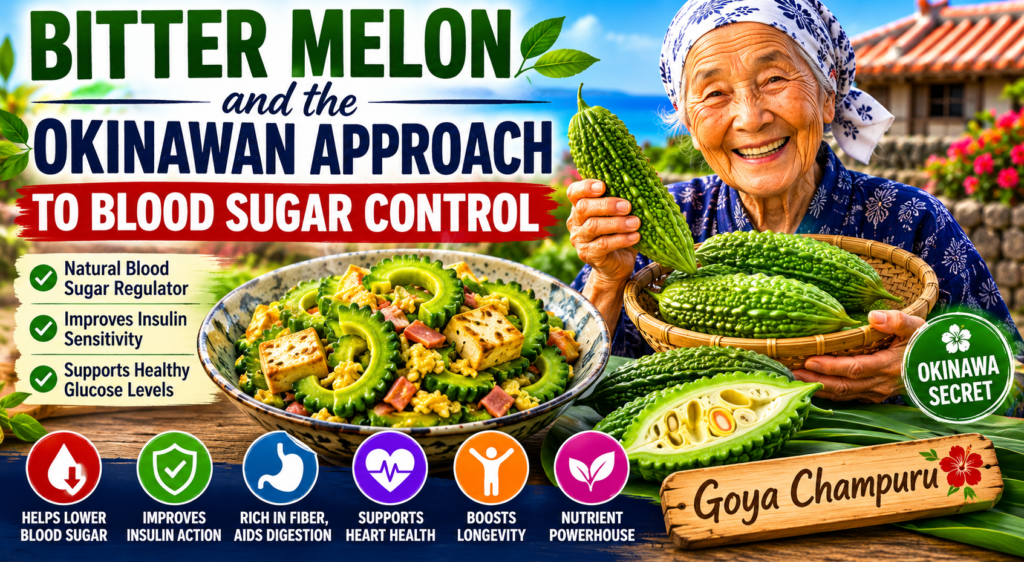
Another key component of the Okinawan diet is a vegetable that remains unfamiliar to many people outside Asia.
Known locally as goya, bitter melon has been used in traditional cooking for generations.
At first glance, bitter melon does not appear particularly appealing. Its distinctive bitterness can be challenging for people trying it for the first time.
Yet Okinawans have long considered it one of their most valuable foods.
Research has identified several compounds within bitter melon that may support healthy blood sugar regulation.
These include:
- Charantin
- Vicine
- Polypeptide P
Scientists have investigated these compounds because they appear to influence how the body handles glucose.
Blood sugar control becomes increasingly important as people age.
Poor glucose regulation has been linked to:
- Type 2 diabetes
- Heart disease
- Cognitive decline
- Chronic inflammation
- Accelerated aging
Many modern dietary approaches focus primarily on reducing carbohydrates.
The Okinawan example offers a slightly different perspective.
Rather than eliminating carbohydrates entirely, Okinawans traditionally paired carbohydrate-rich foods with vegetables and other foods that helped support healthy glucose metabolism.
One famous Okinawan dish is Goya Champuru.
This stir fry typically includes:
- Bitter melon
- Tofu
- Eggs
- Small amounts of pork
- Seasonings such as soy sauce
The combination provides protein, fiber, healthy fats, and beneficial plant compounds.
Importantly, Okinawans consumed these foods as whole meals rather than isolated supplements.
This distinction matters.
Modern nutrition often focuses on extracting individual compounds from foods and packaging them into capsules.
While supplements can sometimes play a useful role, whole foods provide complex combinations of nutrients, fiber, and bioactive compounds that work together in ways researchers are still trying to fully understand.
The Okinawan approach emphasizes eating foods in their natural form whenever possible.
Hara Hachi Bu And The Habit That Researchers Almost Missed
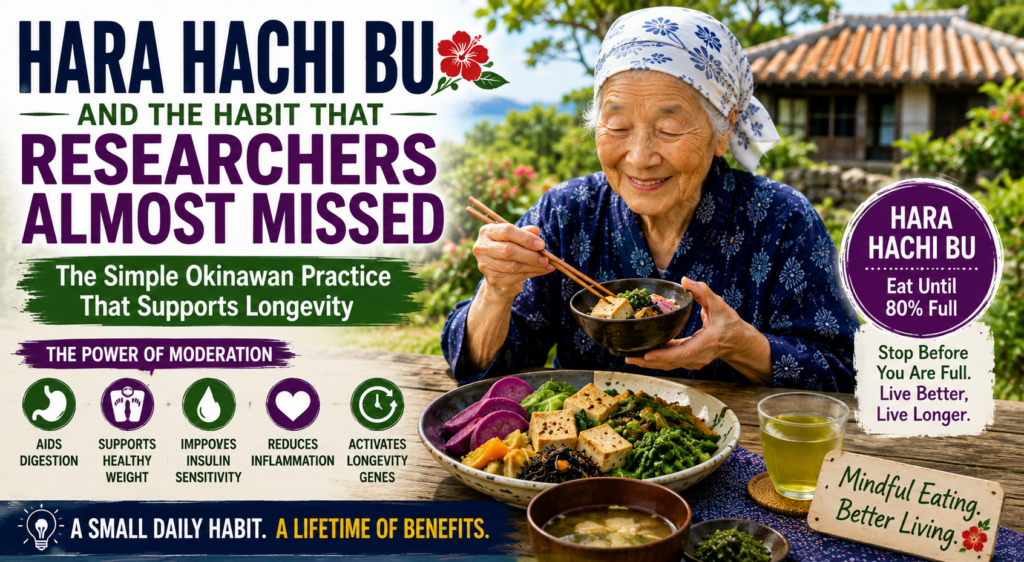
Among all the discoveries made during Okinawan longevity research, one of the most important was not a food at all.
It was a habit.
Known as Hara Hachi Bu, this traditional practice encourages people to stop eating when they are approximately 80 percent full.
At first glance, this idea may seem too simple to matter.
Yet researchers repeatedly observed this behavior among Okinawan centenarians.
The concept originates from Confucian teachings and has been passed down through generations.
The principle is straightforward:
Eat until comfortably satisfied rather than completely full.
Many people in modern societies continue eating until physical fullness becomes obvious.
The challenge is that the body’s fullness signals often lag behind actual food intake.
It can take around twenty minutes for the brain to fully register satiety signals.
As a result, eating quickly often leads to unintentional overeating.
Hara Hachi Bu encourages greater awareness during meals.
Potential benefits include:
- Reduced calorie intake
- Improved digestion
- Better weight management
- Enhanced insulin sensitivity
- Reduced metabolic stress
Researchers found that traditional Okinawans often consumed fewer calories than many Western populations despite maintaining adequate nutrition.
This modest calorie reduction appears to support biological pathways associated with healthy aging.
One of these pathways involves the FOXO3 gene.
FOXO3 has attracted significant attention in longevity research because it is associated with improved cellular repair and resistance to age-related damage.
Although genetics influence FOXO3 activity, lifestyle factors appear capable of enhancing its expression.
Caloric moderation is one of those factors.
The remarkable lesson from Okinawa is that many centenarians practiced this approach naturally without counting calories or following complicated diets.
They simply stopped eating before becoming overly full.
Turmeric Sea Vegetables And Nature’s Everyday Medicine Cabinet

Traditional Okinawan diets also include several foods that are less common in Western eating patterns.
Two notable examples are turmeric and sea vegetables.
Turmeric has been used throughout Asia for centuries.
Its active compound, curcumin, has been extensively studied for its anti-inflammatory and antioxidant properties.
Chronic inflammation is increasingly recognized as one of the primary drivers of age-related disease.
Inflammation contributes to:
- Heart disease
- Arthritis
- Neurodegenerative disorders
- Metabolic dysfunction
Okinawans frequently incorporated turmeric into everyday meals rather than treating it as a supplement.
This highlights an important principle.
Many beneficial compounds are absorbed more effectively when consumed as part of whole foods.
For example, curcumin absorption improves significantly when combined with black pepper and dietary fat.
Traditional cooking naturally created these combinations.
Sea vegetables are another unique aspect of the Okinawan diet.
These include varieties such as:
- Wakame
- Kombu
- Mozuku
Sea vegetables provide valuable nutrients including:
- Iodine
- Magnesium
- Calcium
- Potassium
- Marine antioxidants
Many Western diets contain relatively few marine plants, creating a nutritional gap that traditional Okinawan diets naturally filled.
Researchers believe these foods may contribute to improved cardiovascular health and overall metabolic function.
What is particularly interesting is how these foods worked together.
No single ingredient appears responsible for Okinawa’s longevity.
Instead, a collection of nutrient-rich foods consumed consistently over many decades created a dietary pattern that supported long-term health.
The lesson is not to search for a miracle food.
The lesson is to create a sustainable way of eating that supports the body every day.
Why Modern Diets Often Miss The Real Secret

One of the biggest misconceptions about longevity is the belief that health can be purchased in a bottle.
The supplement industry generates billions of pounds every year by promising quick solutions.
People often search for:
- Anti-aging pills
- Fat-burning supplements
- Longevity compounds
- Miracle vitamins
Yet Okinawa’s centenarians achieved exceptional health without access to modern supplement stores.
Their advantage came from consistency.
They practiced healthy habits daily for decades.
Modern lifestyles often create several challenges:
First, many diets rely heavily on processed foods.
These foods are typically high in refined sugars, unhealthy fats, and excess calories while lacking protective nutrients.
Second, eating has become increasingly disconnected from hunger signals.
Large portions, constant snacking, and distracted eating make it difficult to recognize when enough food has been consumed.
Third, convenience frequently replaces preparation.
Cooking at home has declined in many societies, reducing control over ingredients and nutritional quality.
The Okinawan model offers a different approach.
Instead of searching for shortcuts, it emphasizes:
- Whole foods
- Simplicity
- Moderation
- Consistency
- Long-term habits
This approach may appear less exciting than the latest health trend.
However, it has one major advantage.
It works.
The evidence from Okinawa suggests that small practices repeated over decades can dramatically influence health outcomes.
Healthy aging is not usually the result of a single decision.
It is the cumulative effect of thousands of daily choices.
How To Apply Okinawan Principles To Your Own Life

The encouraging news is that you do not need to move to Okinawa to benefit from its lessons.
Most people can begin incorporating these principles immediately.
Start with breakfast.
Replace highly processed breakfast foods with nutrient-dense alternatives such as sweet potatoes, oats, eggs, fruit, or other whole foods.
Focus on blood sugar stability rather than quick energy spikes.
Increase vegetable consumption.
Include a variety of colorful vegetables throughout the week.
Different colors provide different protective compounds.
Practice mindful eating.
Before reaching for a second helping, pause for several minutes.
Ask yourself whether you are still hungry or simply continuing out of habit.
Cook more meals at home.
Home cooking provides greater control over ingredients and portion sizes.
Experiment with traditional ingredients.
Turmeric, sea vegetables, tofu, legumes, and other nutrient-rich foods can expand dietary diversity.
Reduce reliance on processed foods.
Small reductions can have significant long-term effects.
Perhaps most importantly, focus on consistency rather than perfection.
The Okinawan centenarians did not follow strict diets for a few months.
They followed sustainable habits for a lifetime.
That distinction matters.
The goal is not rapid transformation.
The goal is creating a way of eating that supports health year after year.
When researchers studied Okinawa’s oldest residents, they discovered that longevity was not the result of a miracle food or a secret genetic advantage.
It emerged from simple daily practices repeated consistently over decades.
Purple sweet potatoes helped stabilize blood sugar and provide valuable antioxidants.
Bitter melon supported healthy glucose regulation.
Turmeric and sea vegetables supplied important protective nutrients.
Most importantly, the practice of Hara Hachi Bu encouraged moderation and mindful eating.
Together, these habits created a lifestyle that naturally reduced inflammation, minimized oxidative stress, and supported metabolic health.
In a world obsessed with shortcuts and quick fixes, Okinawa offers a refreshing reminder.
Extraordinary health often comes from ordinary habits practiced consistently.
The secret to living to 100 may not be hidden in a laboratory.
It may simply begin with what is on your plate, how much you eat, and the choices you make every day.
Disclaimer
The information provided in this article is for educational and informational purposes only. While every effort has been made to ensure accuracy, the content is not intended to replace professional medical, nutritional, fitness, or healthcare advice.
The views and concepts discussed are based on publicly available information, scientific research, expert opinions, and interpretations of the topics covered. Individual health needs, dietary requirements, and fitness goals vary from person to person, and results may differ.
Before making significant changes to your diet, exercise routine, supplementation, or lifestyle habits, you should consult with a qualified healthcare professional, registered dietitian, physician, or other appropriate medical expert.
The author and publisher assume no responsibility for any loss, injury, or damage resulting from the use of information contained in this article. Readers are encouraged to conduct their own research and make informed decisions based on their individual circumstances.
By reading this article, you acknowledge that any actions you take based on the information provided are done at your own discretion and risk.ented in this article.