
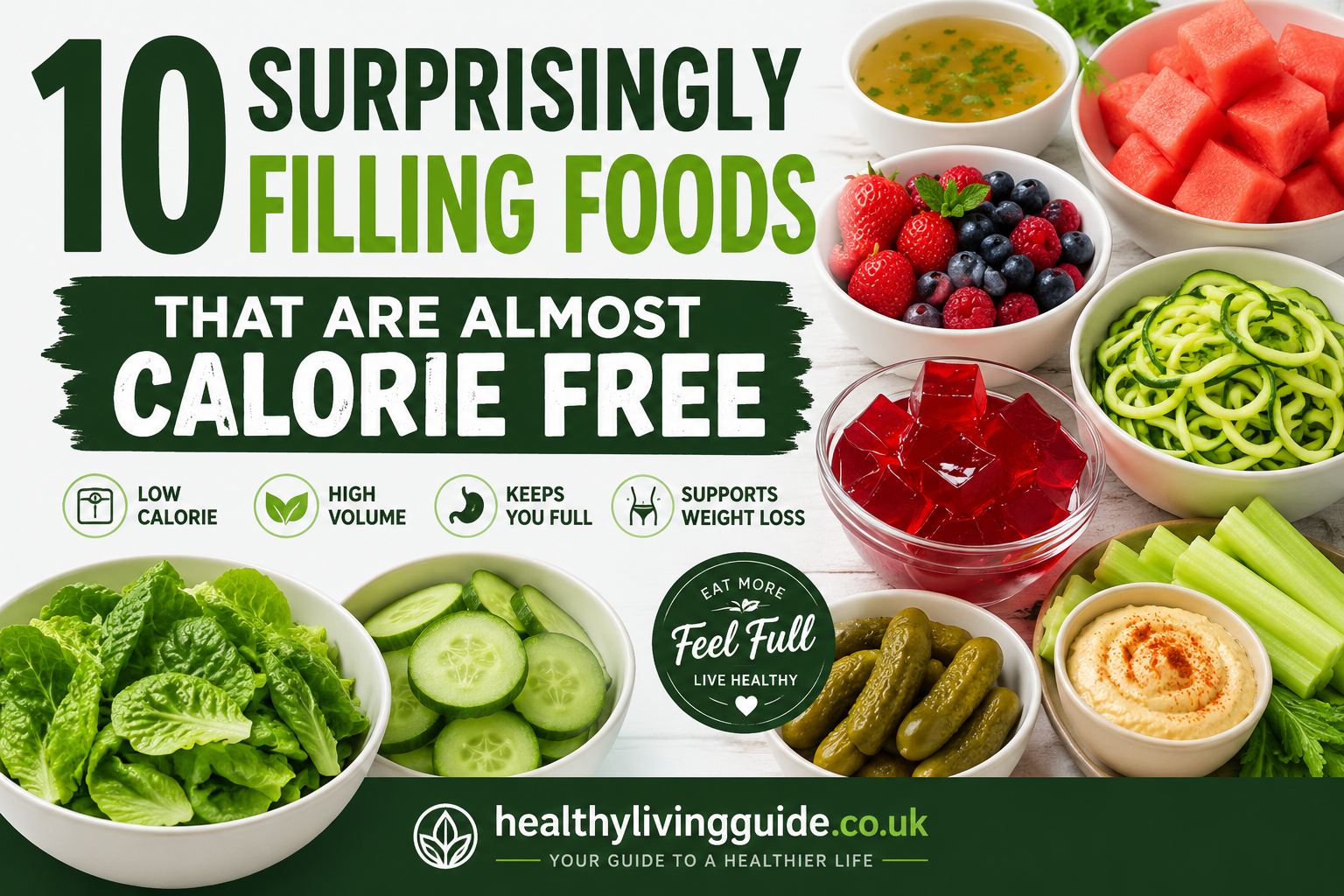
Many people believe that losing weight means constantly feeling hungry, counting every calorie, and surviving on tiny portions of food. This is one of the biggest reasons diets fail. Hunger eventually wins, cravings take over, and people return to old eating habits.
The truth is that successful weight loss is often less about eating less food and more about choosing the right foods. Certain foods contain very few calories yet provide significant volume, water, fibre, or protein. These characteristics help you feel fuller for longer while naturally reducing your calorie intake.
The concept is simple. If you can fill your stomach with foods that provide satisfaction without excessive calories, maintaining a calorie deficit becomes much easier and far more sustainable.
In this guide, we explore ten foods that are surprisingly low in calories while offering impressive fullness benefits. We will also look at practical ways to include them in your daily meals so you can enjoy food, manage hunger, and work towards your health goals without feeling deprived.
Why Feeling Full Is The Secret To Sustainable Weight Loss
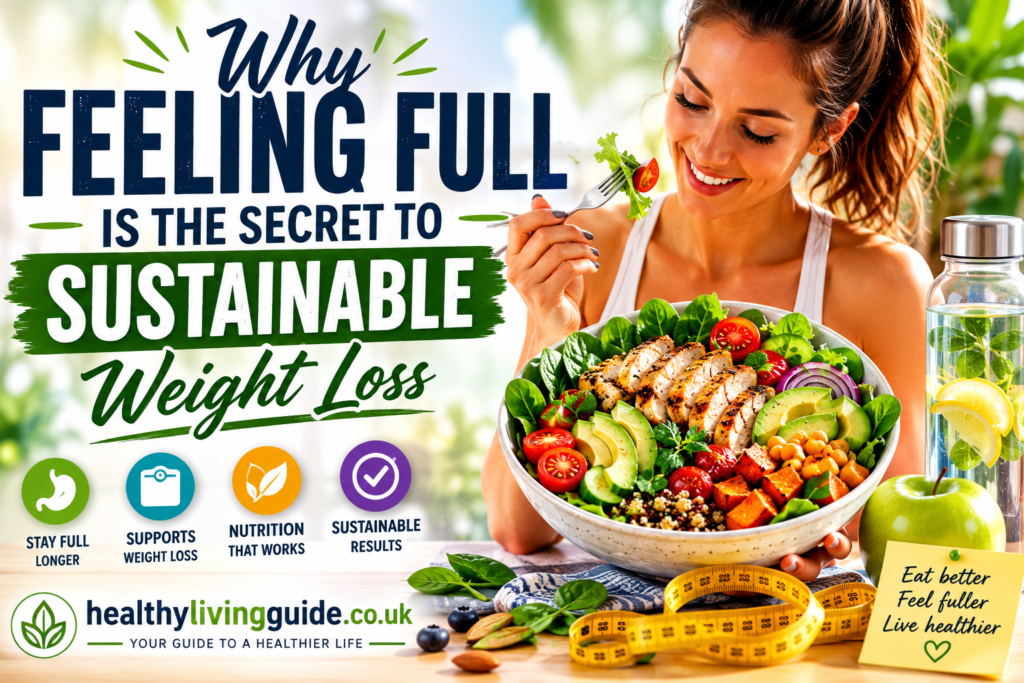
One of the biggest mistakes people make when trying to lose weight is focusing exclusively on reducing calories.
While calorie balance matters, hunger management is equally important.
Your body has several mechanisms that influence appetite:
- Stomach stretch receptors
- Hunger hormones
- Blood sugar regulation
- Protein intake
- Fibre consumption
- Water content in foods
Foods that contain high amounts of water, fibre, or protein often provide more satiety per calorie than processed foods.
For example, 300 calories of biscuits may disappear in minutes and leave you hungry shortly afterwards. In contrast, 300 calories of vegetables, lean protein, and fruit can leave you feeling satisfied for hours.
This principle is sometimes called “volume eating.”
Volume eating allows you to consume larger portions while keeping calorie intake relatively low. As a result, dieting feels easier and more sustainable.
The following foods are excellent examples of this strategy.
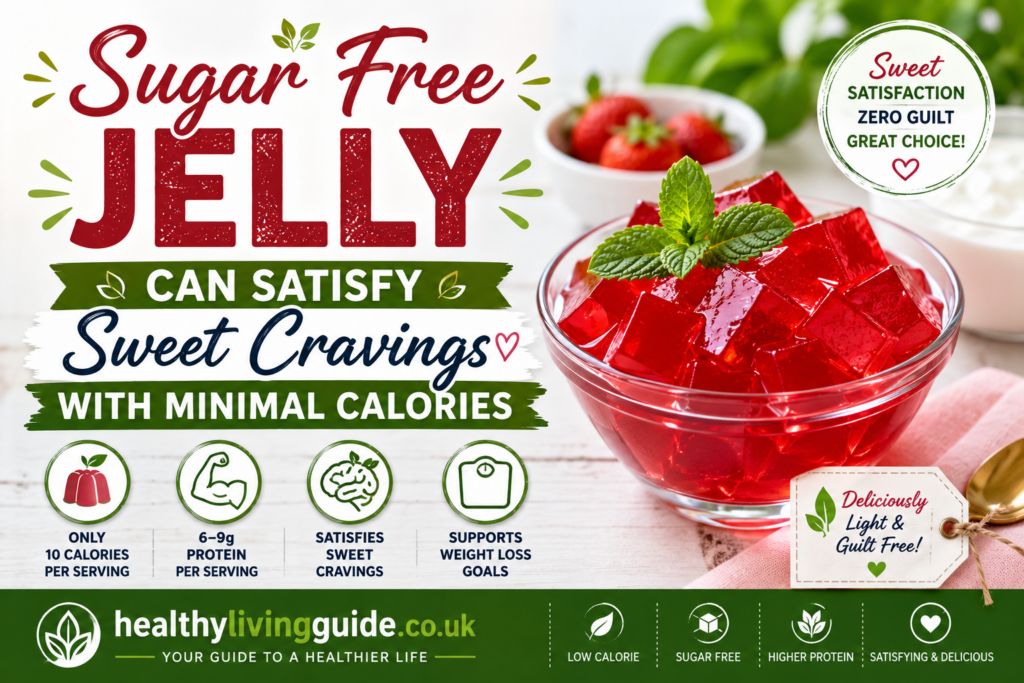
Sugar Free Jelly Can Satisfy Sweet Cravings With Minimal Calories
Many adults overlook sugar free jelly because they associate it with children’s parties or hospital desserts.
However, it can be a surprisingly useful tool for appetite control.
A typical serving contains approximately:
- 10 calories
- 6 to 9 grams of protein from gelatin
- Minimal sugar
Although gelatin is not considered a complete protein, it can still contribute to feelings of fullness.
One major challenge during weight loss is managing sweet cravings. Many diets fail because people crave desserts, chocolate, or sugary snacks.
Sugar free jelly offers a sweet flavour without adding hundreds of calories to your daily intake.
Ways To Enjoy Sugar Free Jelly
- Eat it as an evening dessert
- Pair it with Greek yogurt
- Add fresh berries
- Use it as a snack between meals
A bowl of sugar free jelly and Greek yogurt can feel indulgent while remaining relatively low in calories.
For people who struggle with dessert cravings, this simple combination can be a game changer.
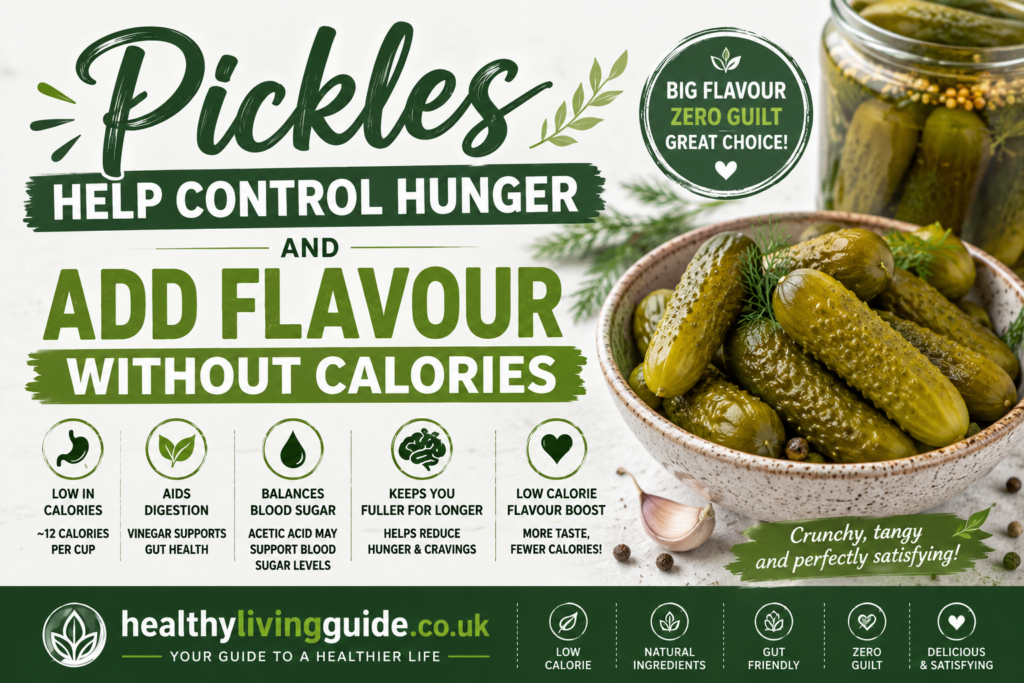
Pickles Help Control Hunger And Add Flavour Without Calories
Pickles are often treated as a side item or burger topping, but they deserve more attention.
A cup of pickles contains roughly:
- 12 calories
- Significant water content
- Virtually no fat
Pickles are made from cucumbers preserved in vinegar.
The vinegar contains acetic acid, which has attracted attention for its potential role in blood sugar management.
Stable blood sugar levels can help reduce hunger fluctuations and energy crashes that often lead to overeating.
Pickles also provide:
- Crunch
- Strong flavour
- Large volume for very few calories
These qualities make them particularly useful during a calorie deficit.
Practical Ways To Use Pickles
- Add them to sandwiches
- Include them with burgers
- Serve them alongside meals
- Eat a few spears as a snack
One consideration is sodium content.
Many commercial pickles contain significant amounts of salt. If sodium intake is a concern, look for lower sodium options.
Fermented pickles may also provide additional digestive benefits due to naturally occurring beneficial bacteria.
Cucumbers Deliver Maximum Volume With Almost No Calories
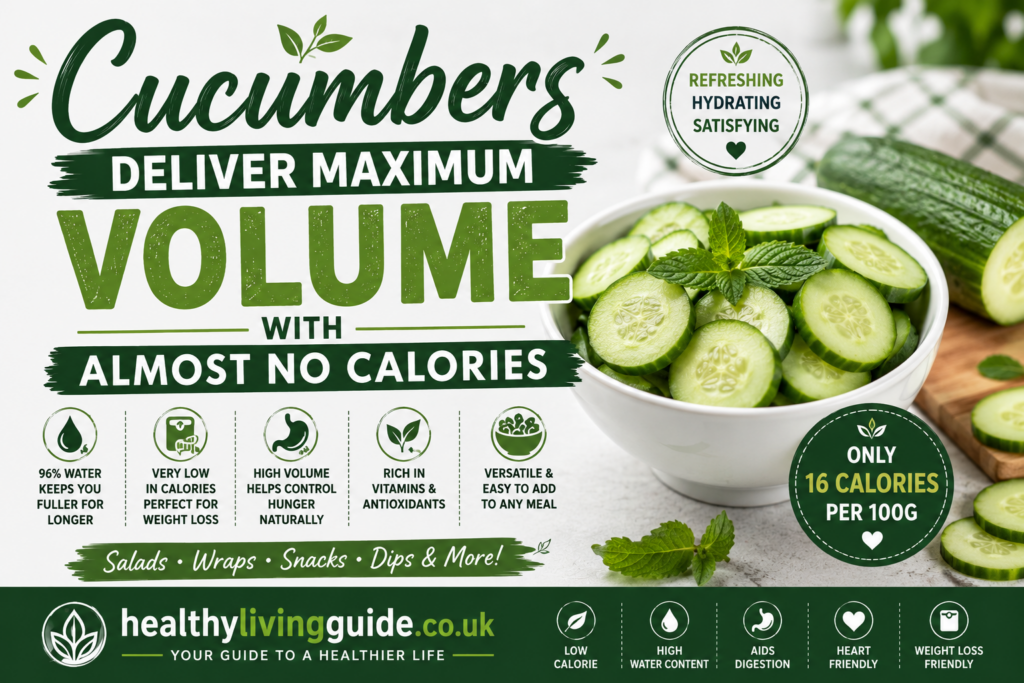
Cucumbers are among the most impressive low calorie foods available.
One hundred grams contains approximately:
- 16 calories
- 96 percent water
This extremely high water content is one reason cucumbers are so filling.
When you consume foods rich in water, they occupy space in the stomach and stimulate stretch receptors that signal fullness to the brain.
The result is greater satisfaction without a large calorie cost.
Benefits Of Cucumbers
- Very low calorie density
- High water content
- Refreshing texture
- Easy to include in meals
Healthy Ways To Eat Cucumbers
- Slice them into salads
- Pair with cottage cheese
- Add tuna on top
- Use them as a crunchy snack
- Include them in wraps
Many people underestimate how much fullness a large cucumber can provide.
A substantial serving can contribute to satiety while adding very few calories to your day.
Celery Is One Of The Most Underrated Weight Loss Foods
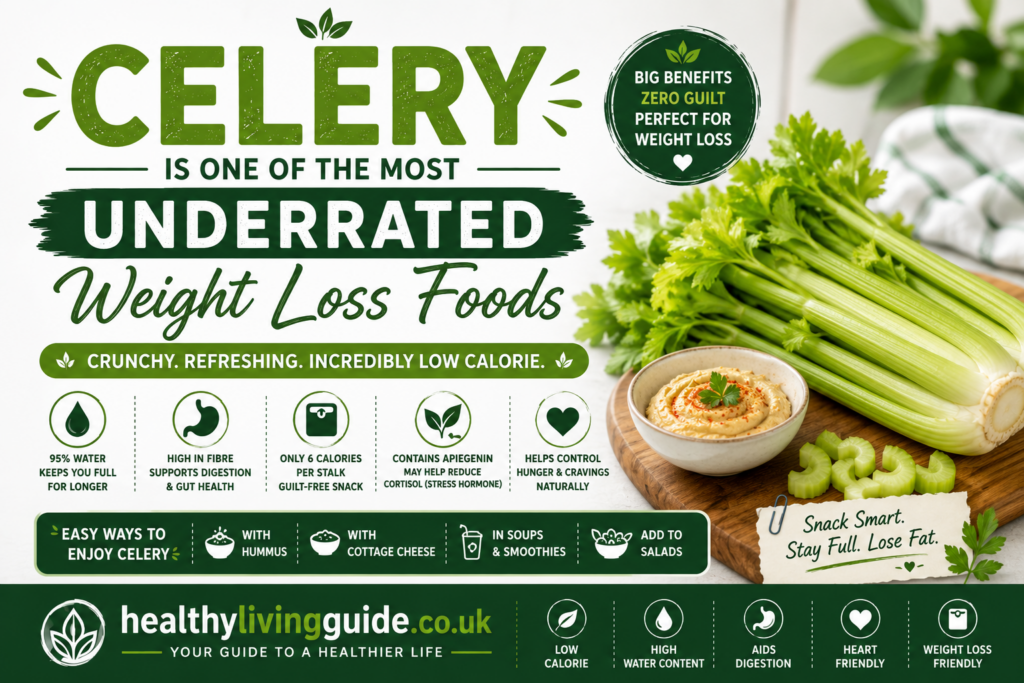
Celery has been stereotyped as a “diet food” for decades.
Despite the jokes, there is a good reason why celery remains popular among health conscious individuals.
One stalk contains approximately:
- 6 calories
- Around 95 percent water
This combination creates a food that is difficult to overeat from a calorie perspective.
The crunchy texture also encourages slower eating, which may help your brain register fullness more effectively.
Why Celery Works
Celery combines:
- Water
- Fibre
- Volume
- Crunch
Together, these factors can help reduce hunger while keeping calorie intake extremely low.
Easy Celery Snack Ideas
- Celery with hummus
- Celery with cottage cheese
- Celery sticks and Greek yogurt dip
- Celery added to soups
Many people find that having celery available during the afternoon helps prevent less healthy snacking later in the day.
Zucchini Makes High Calorie Meals Much Lighter
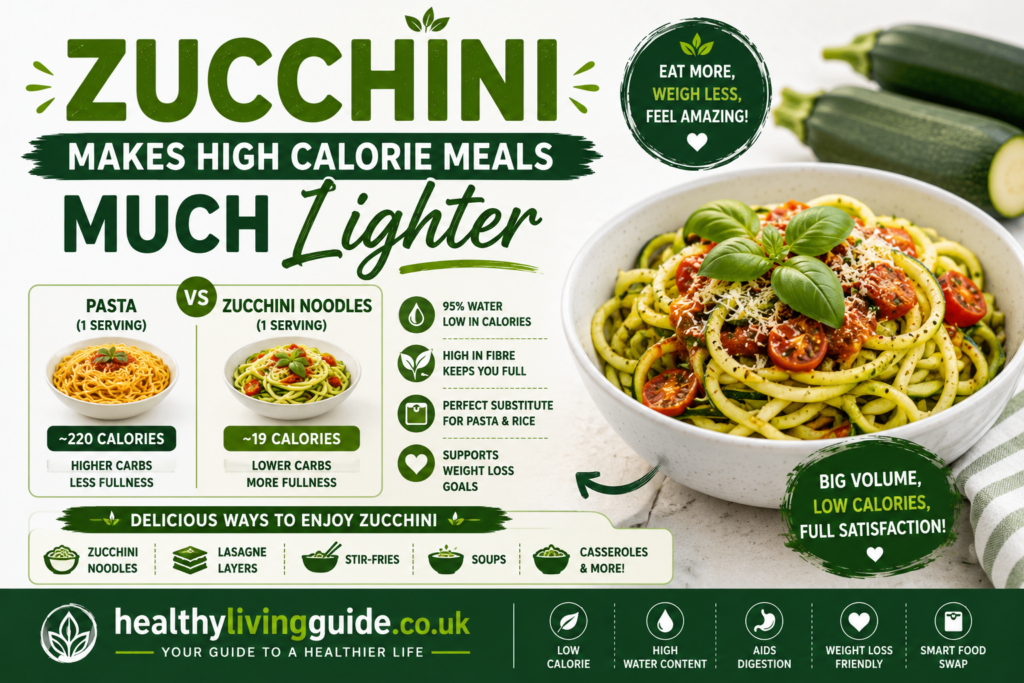
One of the most powerful weight loss strategies is replacing calorie dense foods with lower calorie alternatives.
Zucchini excels at this.
A cup contains roughly:
- 19 calories
- Around 95 percent water
What makes zucchini unique is its versatility.
It can replace foods that are typically much higher in calories.
Zucchini As A Pasta Alternative
Traditional pasta may contain:
- Around 220 calories per serving
Zucchini noodles may contain:
- Around 19 calories for a similar volume
This simple substitution can save hundreds of calories while still creating a satisfying meal.
Other Uses For Zucchini
- Zucchini noodles
- Stir fries
- Lasagne layers
- Soups
- Casseroles
For people who enjoy large portions, zucchini can significantly increase meal volume without increasing calories.
Konjac Noodles Provide Huge Portions For Very Few Calories
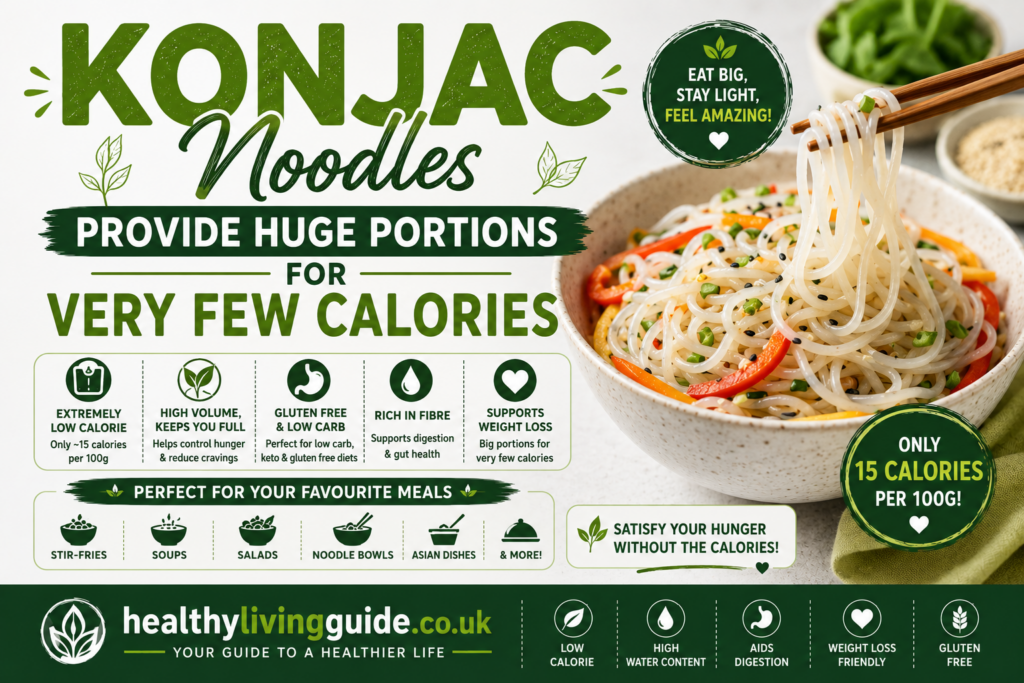
Konjac noodles, also known as shirataki noodles, are one of the most remarkable low calorie foods available.
A serving typically contains:
- Around 10 calories
This is dramatically lower than traditional pasta.
Konjac noodles are made from the konjac plant and contain a fibre known as glucomannan.
Glucomannan absorbs water and forms a gel-like substance in the digestive system.
This may help:
- Slow digestion
- Increase fullness
- Support appetite control
Why Konjac Noodles Are Popular
People often enjoy them because they can eat what appears to be a large bowl of noodles while consuming very few calories.
How To Prepare Them
- Rinse thoroughly
- Cook with sauces
- Add to stir fries
- Use in soups
- Pair with lean proteins
The texture differs from conventional pasta, but many people find them useful when trying to reduce calorie intake.
Romaine Lettuce Creates Filling Meals Without Adding Calories
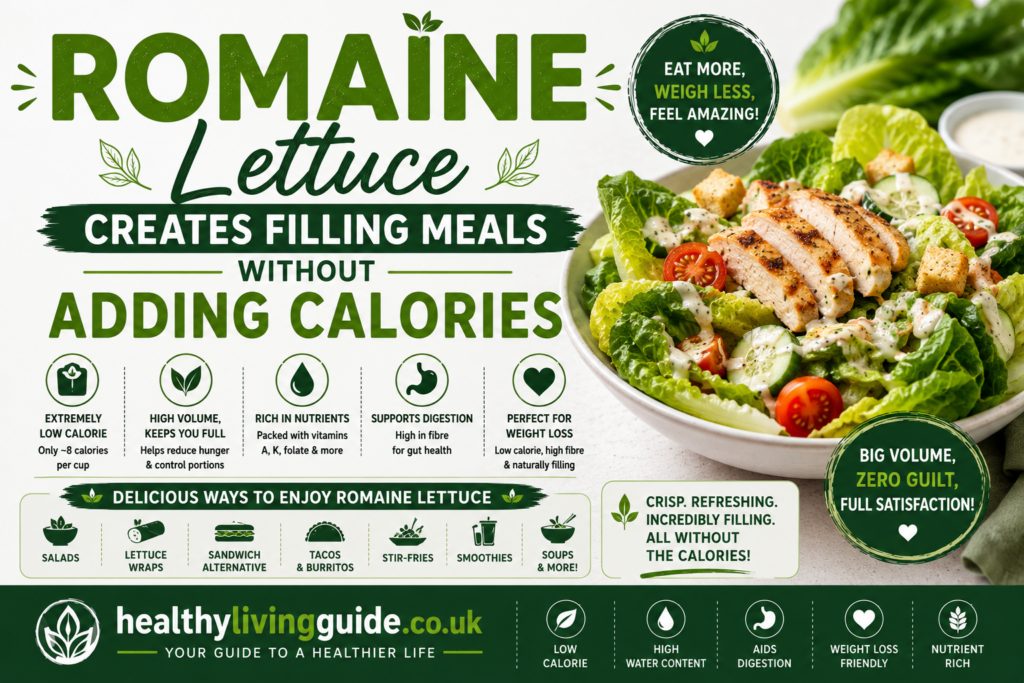
Romaine lettuce is one of the simplest ways to increase food volume.
A cup contains approximately:
- 10 calories
This means you can build enormous salads while adding very few calories.
Benefits Of Romaine Lettuce
- High water content
- Fibre
- Crunch
- Vitamins and minerals
Large salads can help satisfy hunger before higher calorie foods are consumed.
Smart Ways To Use Romaine
- Base for large salads
- Lettuce wraps
- Burger wraps
- Taco substitutes
- Sandwich alternatives
Replacing bread or tortillas with lettuce can dramatically reduce calories while still providing texture and satisfaction.
For individuals trying to lose weight, this strategy can create substantial calorie savings over time.
Watermelon And Berries Help Beat Sugar Cravings Naturally
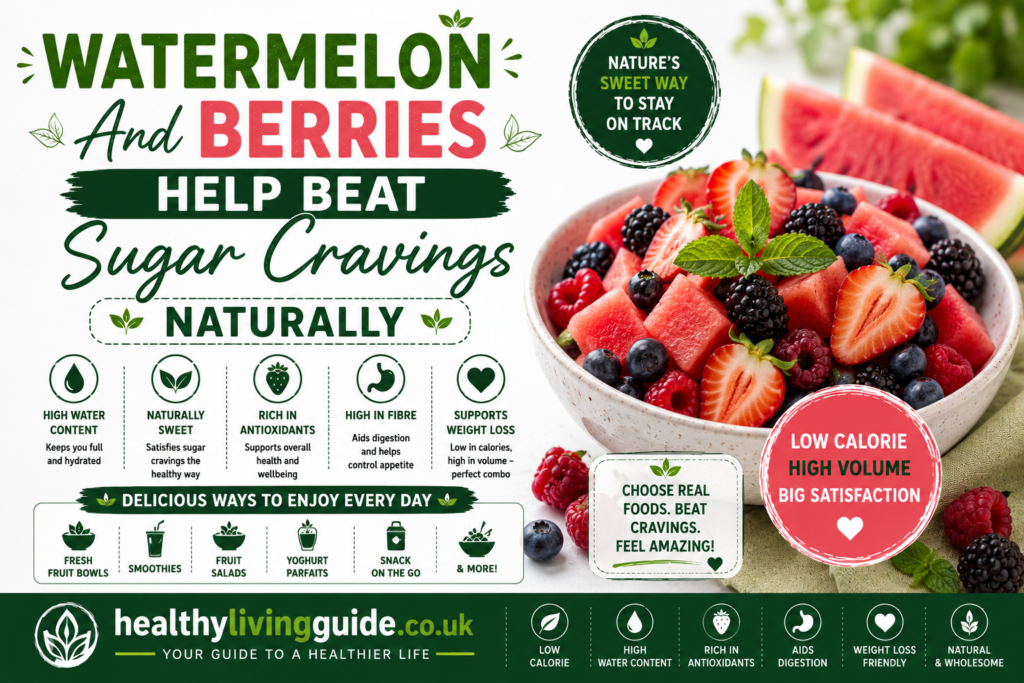
One of the biggest challenges during weight loss is managing sweet cravings.
Fruit can be a valuable solution.
Watermelon
Watermelon contains approximately:
- 46 calories per cup
- Around 92 percent water
Its high water content allows you to eat a generous portion for relatively few calories.
Benefits include:
- Natural sweetness
- Hydration
- High volume
- Refreshing flavour
Many people find watermelon especially satisfying during warmer months.
Berries
Berries such as:
- Strawberries
- Blueberries
- Raspberries
- Blackberries
Typically contain between:
- 50 to 85 calories per cup
They also provide:
- Fibre
- Vitamins
- Antioxidants
Compared with cakes, sweets, and biscuits, berries offer a much lower calorie option while still satisfying a desire for something sweet.
Simple Berry Ideas
- Add to Greek yogurt
- Blend into smoothies
- Freeze for snacks
- Mix into porridge
These small changes can significantly reduce overall calorie intake without sacrificing enjoyment.
Broth Based Soups May Be The Ultimate Appetite Control Food
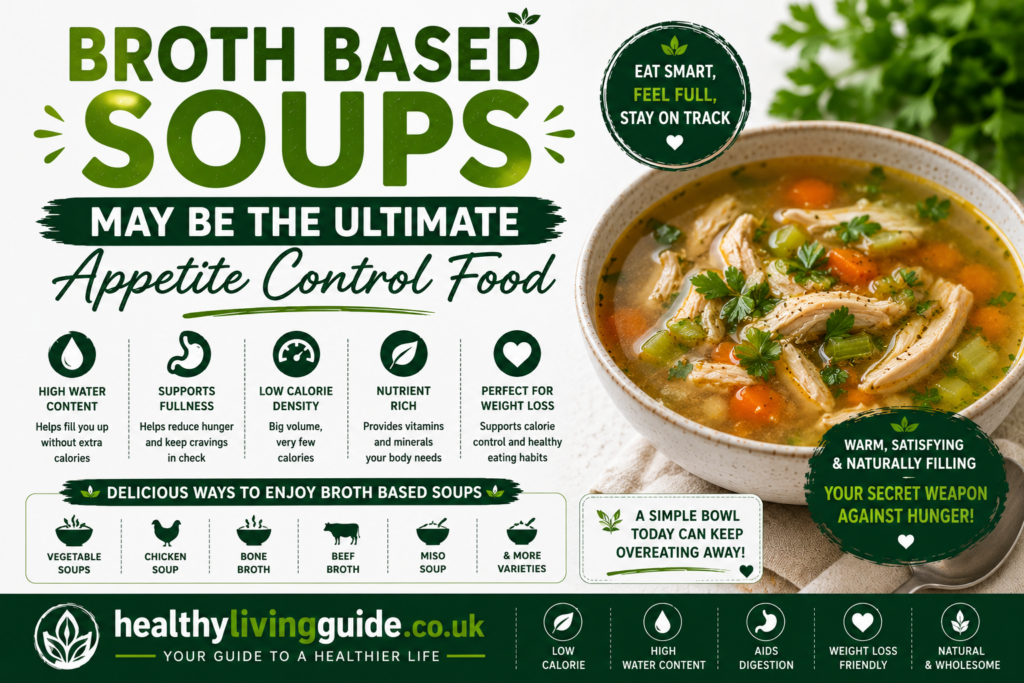
Many people overlook soup when trying to lose weight.
However, broth based soups may be one of the most effective appetite management tools available.
A cup of broth based soup often contains:
- Around 15 calories
Research has shown that consuming soup before a meal can reduce overall calorie intake during the meal itself.
Why?
Because the liquid occupies space in the stomach and helps create a feeling of fullness before eating begins.
Benefits Of Broth Based Soup
- Extremely low calorie
- Hydrating
- Warming and satisfying
- Easy to prepare
Good Options Include
- Chicken broth
- Vegetable broth
- Miso soup
- Bone broth
Many people find that having soup before lunch or dinner naturally reduces portion sizes without requiring willpower.
This simple habit can create a meaningful calorie deficit over time.
Building Your Diet Around Low Calorie High Volume Foods
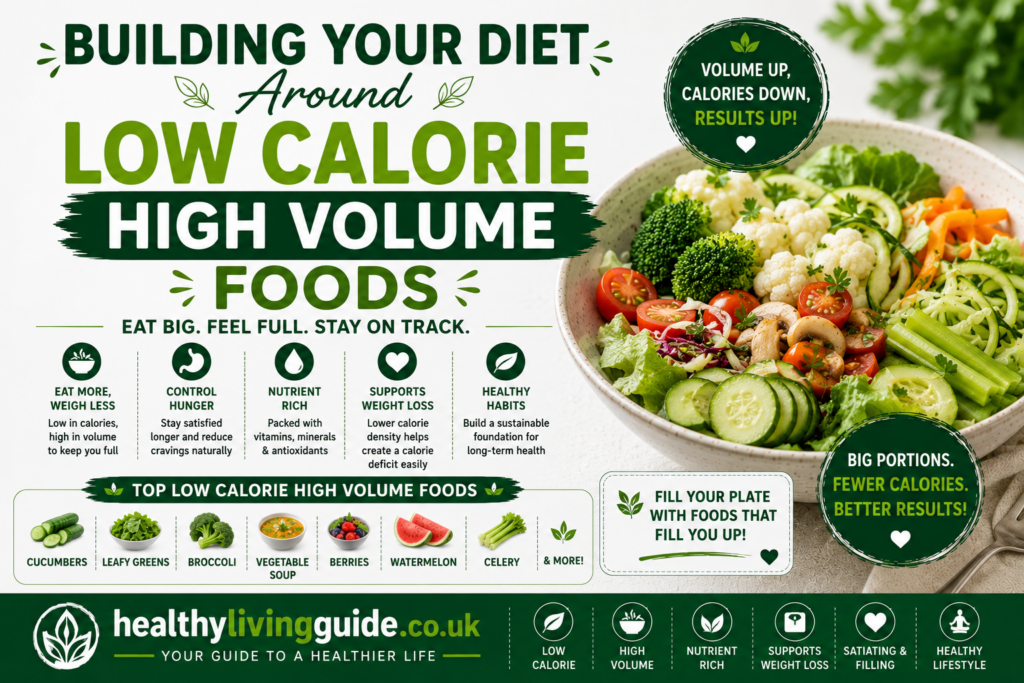
The biggest lesson from these foods is that successful weight loss does not require constant hunger.
Instead of asking:
“How can I eat less?”
A better question is:
“How can I eat more filling foods?”
The foods covered in this guide provide different benefits:
- Sugar free jelly helps control sweet cravings
- Pickles add flavour and volume
- Cucumbers provide hydration and fullness
- Celery offers crunch and fibre
- Zucchini replaces higher calorie foods
- Konjac noodles create huge portions
- Romaine lettuce builds filling meals
- Watermelon satisfies sweet cravings
- Berries deliver sweetness and nutrients
- Broth based soups help reduce overall food intake
By incorporating these foods into your routine, you can make healthy eating feel easier and more sustainable.
Remember that no single food causes weight loss on its own. Long term success comes from consistently maintaining healthy eating habits, staying physically active, getting adequate sleep, and creating a lifestyle you can follow for years rather than weeks.
The good news is that these foods make that process much easier. Instead of battling hunger every day, you can use smart food choices to stay satisfied, support your health, and move closer to your weight loss goals while still enjoying what you eat.
Disclaimer
The information provided in this article is for educational and informational purposes only. While every effort has been made to ensure accuracy, the content is not intended to replace professional medical, nutritional, fitness, or healthcare advice.
The views and concepts discussed are based on publicly available information, scientific research, expert opinions, and interpretations of the topics covered. Individual health needs, dietary requirements, and fitness goals vary from person to person, and results may differ.
Before making significant changes to your diet, exercise routine, supplementation, or lifestyle habits, you should consult with a qualified healthcare professional, registered dietitian, physician, or other appropriate medical expert.
The author and publisher assume no responsibility for any loss, injury, or damage resulting from the use of information contained in this article. Readers are encouraged to conduct their own research and make informed decisions based on their individual circumstances.
By reading this article, you acknowledge that any actions you take based on the information provided are done at your own discretion and risk.ented in this article.