
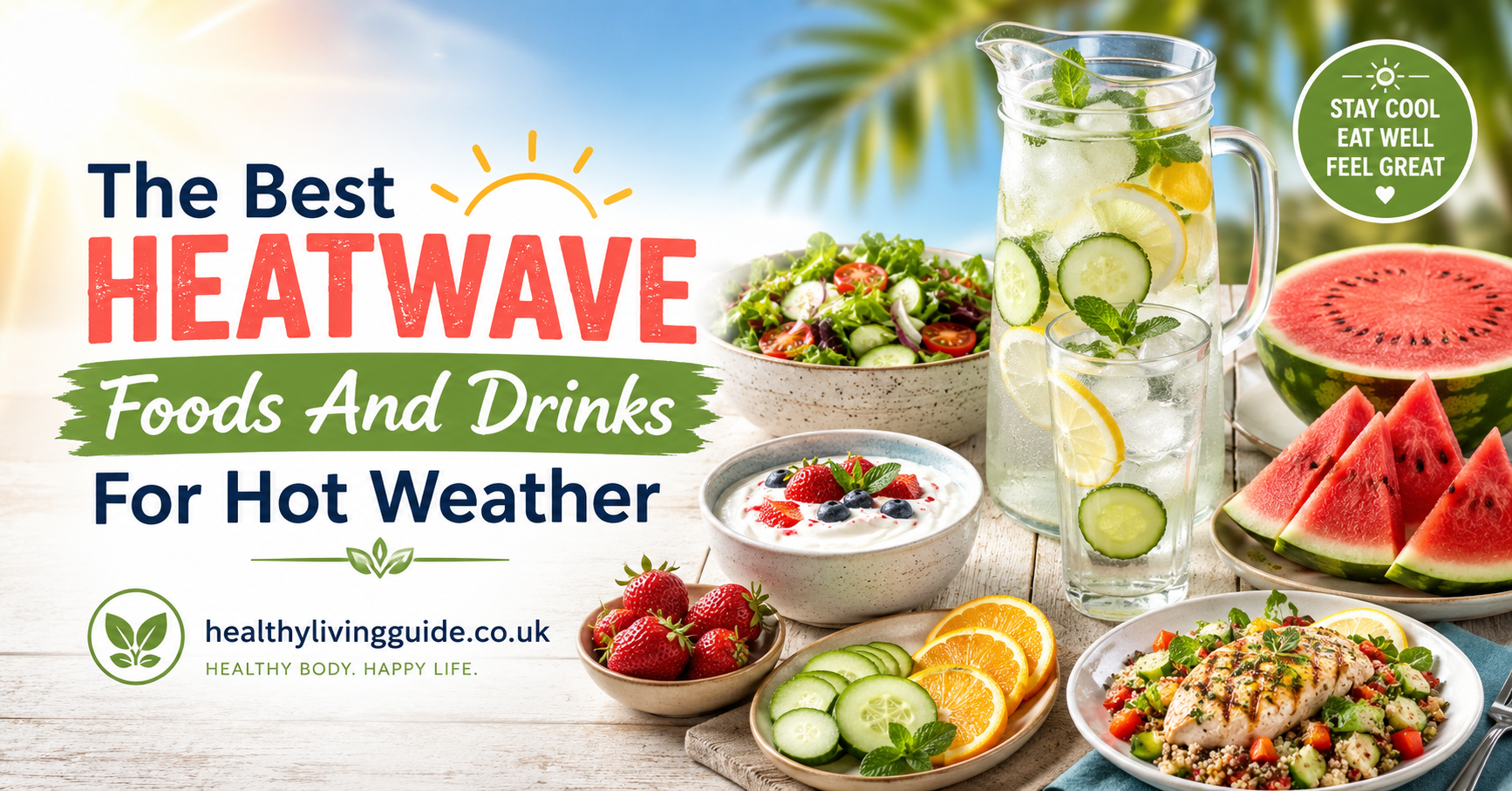
When a heatwave arrives in the UK, most people think about fans, open windows, sun cream and staying out of direct sunlight. Those things matter, but what you eat and drink can also make a real difference to how well your body copes.
A heatwave is not just “nice sunny weather”. The Met Office describes a UK heatwave as at least three consecutive days where the daily maximum temperature reaches or exceeds the official threshold for that area. Those thresholds vary across the country, because what counts as unusual heat in Scotland or northern England may be different from what counts as unusual heat in London or the South East.
During hot weather, your body works harder to cool itself. You sweat more, lose more fluid, may lose more salt, and your appetite can change. Some people feel less hungry, some crave salty snacks, and many reach for fizzy drinks, iced coffees, beer, ice cream or quick takeaway food. The problem is that not all summer choices help your body stay cool and hydrated. Some can leave you more sluggish, thirsty or uncomfortable.
The NHS advises people to have cold food and regular cold drinks during hot weather, drink extra fluids, and avoid alcohol, caffeine and hot drinks when trying to cool down. It also advises staying out of the heat where possible, especially between 11am and 3pm, and avoiding activity that makes you hotter.
This guide explains what to eat and drink during a heatwave in a practical, everyday way. It is written for UK readers who want simple choices they can actually follow at home, at work, during school holidays, while travelling, or when caring for children, older relatives or vulnerable neighbours.
This article is for general information only and is not personal medical advice. If you have kidney disease, heart failure, diabetes, are pregnant, take water tablets or have been told to restrict fluids, follow your own medical team’s advice.
Why Heatwaves Change What Your Body Needs
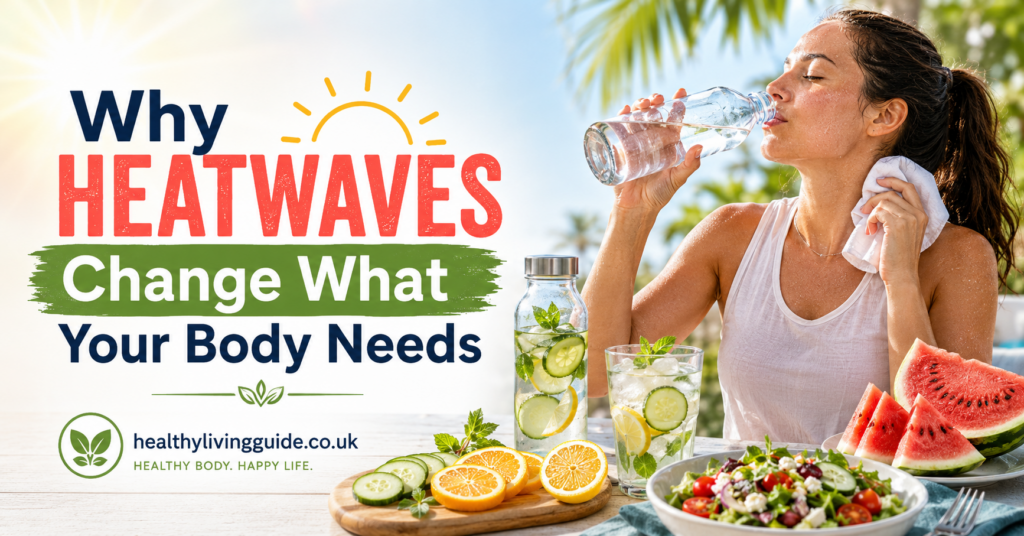
Your body is always trying to keep its internal temperature within a safe range. When the weather is mild, this happens quietly in the background. When the temperature rises, especially during a heatwave, your body has to work harder.
One of the main ways your body cools itself is through sweating. Sweat evaporates from your skin and helps release heat. But sweating also means losing water. If you do not replace that water, dehydration can develop. The British Dietetic Association explains that fluid helps regulate body temperature through sweating, transports nutrients in the blood, removes waste through urine and supports normal body function.
This is why hydration becomes more important in hot weather. You are not drinking water simply because you feel thirsty. You are helping your blood volume, concentration, kidneys, digestion, temperature control, brain function and energy levels work properly.
A common mistake is waiting until thirst becomes strong before drinking. Thirst matters, but it is not always a perfect early warning system. The BDA notes that you may stop feeling thirsty before your body is fully rehydrated, and that urine colour can be a useful guide. Pale straw-coloured urine usually suggests better hydration, while dark yellow urine can be a sign that you may need more fluids.
Heat can affect anyone, but some people are at higher risk. UKHSA highlights that older people, people with underlying health conditions, and those who may struggle to keep themselves cool and hydrated need extra attention during hot weather. UKHSA also advises checking on vulnerable friends, family and neighbours during heat-health alerts.
Children also need support because they may not recognise or explain thirst clearly. Older adults may have a weaker thirst response. People who work outdoors, commute in hot conditions, exercise, fast, wear heavy clothing, live in top-floor flats or sleep in warm rooms may also need to be more careful.
Food matters because it can either support hydration or make heat harder to tolerate. Large heavy meals, very salty snacks, too much alcohol, high-sugar drinks and poorly stored foods can all become problems. On the other hand, water-rich fruits, salads, yoghurt, soups served cold, lighter protein meals, diluted drinks and balanced snacks can help you stay nourished without feeling overloaded.
During a heatwave, the goal is not to follow a strict “summer diet”. The goal is to make your meals easier for your body to handle. Think of it as three priorities: enough fluid, enough minerals, and enough light nutrition to keep your energy steady.
Drink More Fluids, But Choose Them Wisely
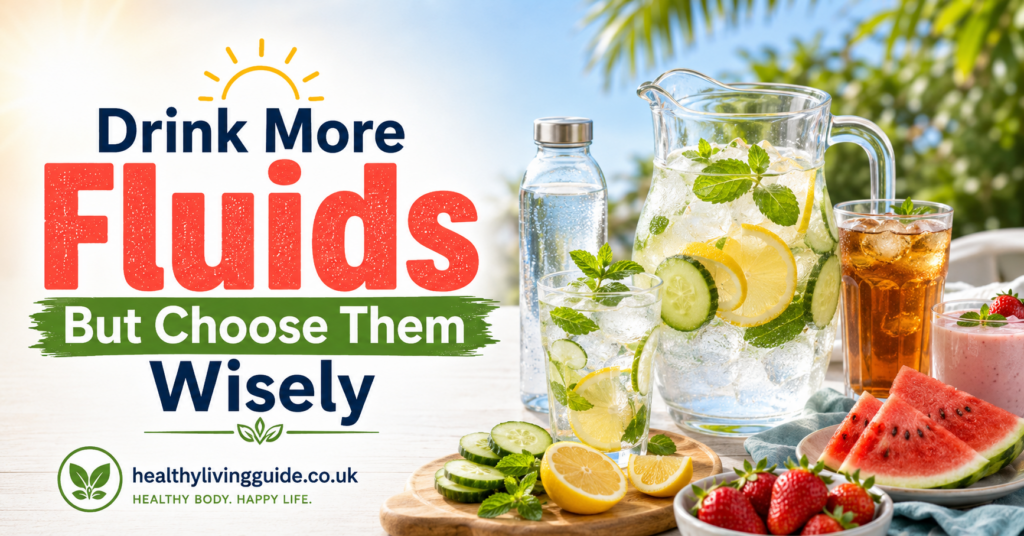
The most important heatwave drink is still plain water. It is simple, affordable, calorie-free, sugar-free and easy to carry. NHS guidance says most people should aim for enough fluid so their urine is a clear pale yellow colour, and the Eatwell Guide recommends 6 to 8 cups or glasses of fluid a day as a general guide. The NHS also says you may need more if you are in a hot environment, physically active, pregnant, breastfeeding, ill or recovering from illness.
That does not mean every person must force down a fixed number of litres. Your needs depend on your body size, sweat rate, activity level, health conditions, medication, diet and environment. A person sitting indoors in a cool room may need less than someone walking to work, driving without air conditioning, working in a kitchen, fasting through the day or exercising outdoors.
The BDA gives adult adequate water intake from drinks as around 2,000ml per day for men and 1,600ml per day for women, while also noting that temperature, humidity and exercise can increase needs. This is useful as a rough guide, but the best everyday approach is to drink regularly, watch urine colour, and increase fluids when sweating more.
Good heatwave drinks include cold water, water with lemon or cucumber, diluted squash, diluted fruit juice, lower-fat milk, unsweetened iced tea, homemade iced herbal tea, and sugar-free drinks. The NHS says water, lower-fat milk and sugar-free drinks, including tea and coffee, can count towards daily fluid intake.
However, during a heatwave, it is still sensible not to rely heavily on caffeine. Caffeine has a mild diuretic effect, although moderate tea and coffee still contribute fluid overall. The BDA notes that tea and coffee can help maintain hydration, but caffeine intake should be considered, especially for pregnant women and children.
A practical approach is to keep your normal morning tea or coffee if you enjoy it, but add water alongside it. For example, have your coffee with a glass of water, or switch your afternoon coffee to an iced herbal tea, diluted squash or water with fruit. During very hot weather, iced coffee drinks from shops can also contain a lot of sugar, syrup, cream or calories, so they are not always the best hydration choice.
Alcohol needs more caution. The British Nutrition Foundation explains that alcoholic drinks have a diuretic effect, meaning they can increase water loss through urine and may contribute to dehydration. This matters because beer, cider, cocktails and wine may feel refreshing at first, but they are not a reliable way to hydrate in hot weather.
If you drink alcohol during a heatwave, keep it moderate, drink water between alcoholic drinks, avoid drinking in direct sun, and be especially careful if you are already sweating, travelling, exercising, fasting or caring for children. Alcohol can also affect judgement, sleep and balance, which increases risk during hot weather.
A simple heatwave drinking routine could look like this: water when you wake up, a drink with every meal, a refillable bottle when leaving the house, a cold drink mid-afternoon, and water again in the evening. Do not wait until you feel exhausted or have a headache.
For children, water and milk are the best everyday drinks. NHS guidance says children should avoid sugary fizzy drinks, squash and juice drinks, because these can contribute to excess weight and tooth decay. In hot weather, make water visible and easy: cups on the table, bottles in school bags, chilled water in the fridge, and fruit pieces or ice cubes to make it more appealing.
Eat Water-Rich Foods That Help You Stay Hydrated
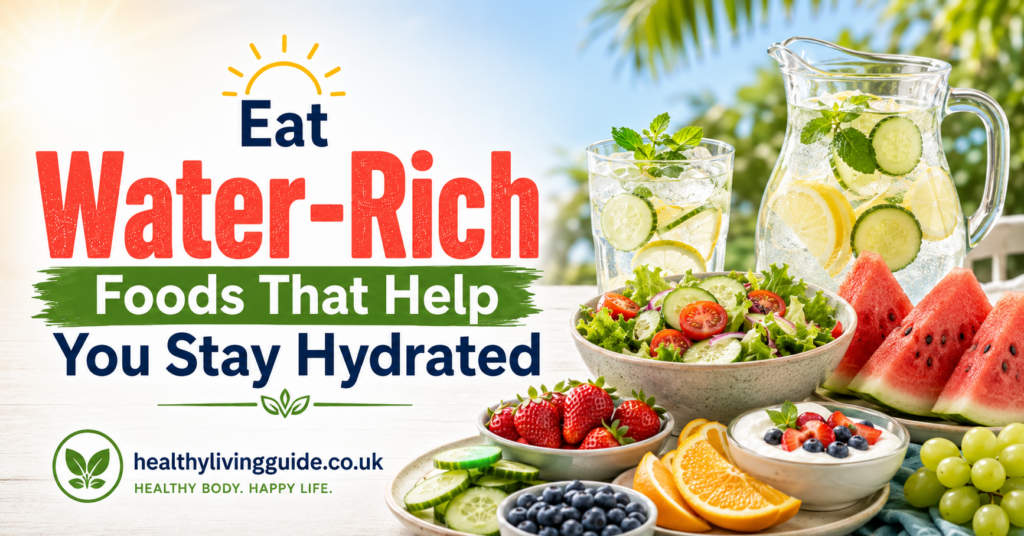
Drinks matter most, but food also contributes to hydration. The BDA explains that drinks provide around 70–80% of our water needs, while the remaining 20–30% comes from foods such as soups, stews, fruits and vegetables with high water content.
The British Nutrition Foundation also notes that fruits and vegetables are often more than 80% water, and that soups and stews can provide fluid too. During a heatwave, this makes water-rich foods especially useful because they provide fluid, fibre, vitamins, minerals and a lighter feeling than heavy meals.
Good water-rich foods include cucumber, lettuce, tomatoes, celery, peppers, courgette, watermelon, strawberries, melon, oranges, grapes, pineapple, peaches, nectarines and berries. You do not need to overthink it. A bowl of strawberries, a tomato salad, cucumber sticks with hummus, melon after dinner, or grapes from the fridge can all help.
Cold foods can also feel easier to eat when the weather is hot. NHS heatwave advice specifically recommends cold food and regular cold drinks as part of cooling down. This is why salads, fruit bowls, yoghurt bowls, chilled pasta salads, cold rice salads, overnight oats and smoothies can work well.
That does not mean you must only eat raw food. Some people digest cooked vegetables better than raw salads. You can still eat cooked meals, but make them lighter. For example, grilled chicken with salad and boiled potatoes may feel better than a large creamy curry. Omelette with tomatoes and spinach may feel better than a greasy fry-up. Lentil soup served lukewarm or chilled can be easier than a very heavy hot dinner.
Yoghurt is a useful heatwave food because it provides fluid, protein and calcium. Plain Greek yoghurt with berries, banana, seeds or a small amount of honey can be a good breakfast or snack. You can also freeze yoghurt with fruit to make homemade ice-lollies. This gives you a cooling snack without relying on high-sugar ice cream every day.
Fruit is helpful, but it should not be the only thing you eat. A heatwave can reduce appetite, and it is tempting to live on fruit, ice lollies and drinks. That may feel refreshing short term, but it may leave you low in protein, salt, energy and steady blood sugar. Try to pair fruit with something more sustaining, such as yoghurt, nuts, peanut butter on toast, cottage cheese, boiled eggs, chicken, tuna, beans or lentils.
Water-rich meals can be simple. Try cucumber, tomato and feta salad with wholemeal pitta. Try tuna, sweetcorn and rice salad. Try chicken, avocado and lettuce wraps. Try hummus with cucumber, carrots and oatcakes. Try overnight oats with milk, chia seeds and berries. Try a smoothie made with milk, banana and frozen berries, but keep fruit juice portions modest.
Fruit juice and smoothies can contribute fluid and nutrients, but they contain free sugars. The British Nutrition Foundation advises keeping fruit juices and smoothies to one small glass of 150ml per day. Whole fruits are usually better because they contain more fibre and are more filling.
For older adults with low appetite, fluid-rich foods can be especially useful. Yoghurt, milky drinks, soups, smoothies, stewed fruit, custard, porridge made with milk, and soft fruits may be easier than large meals. The key is to avoid letting heat turn into under-eating and dehydration at the same time.
Build Light, Balanced Meals Instead Of Skipping Food
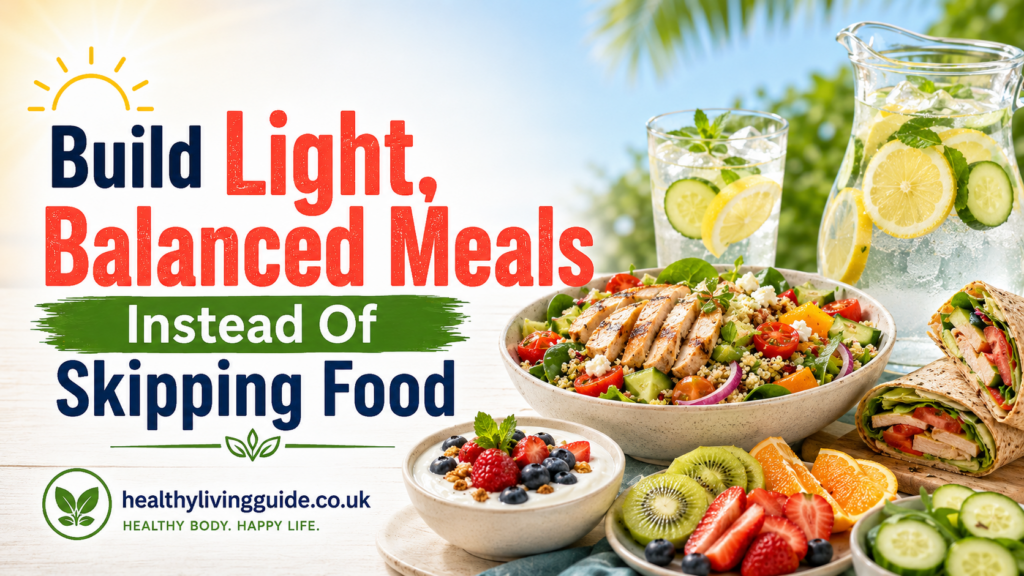
Many people lose their appetite during a heatwave. This is understandable. Heavy meals can feel uncomfortable when your body is already trying to cool down. But skipping food completely can leave you tired, dizzy, irritable or more likely to snack on crisps, biscuits, ice cream and fizzy drinks later.
A better strategy is to eat lighter balanced meals. This means each meal should include fluid-rich plants, a protein source, some carbohydrate if needed, and a little healthy fat. You do not need huge portions. You need enough nutrition to keep your body functioning.
Protein is important because it helps preserve muscle, supports fullness and stabilises energy. During hot weather, choose easier options such as eggs, yoghurt, cottage cheese, tuna, salmon, chicken, turkey, tofu, beans, lentils, chickpeas or hummus. These can be served cold or with minimal cooking.
Carbohydrates still matter, especially if you are active, working, walking, caring for children or training. Choose lighter options such as boiled potatoes, rice salad, couscous, wholemeal wraps, oats, wholegrain bread, pasta salad or fruit. You do not need to cut carbs during a heatwave; you just need to avoid turning every meal into a heavy, greasy, oversized plate.
Healthy fats make meals more satisfying, but portions matter. Avocado, olive oil, nuts, seeds and oily fish can all fit well. A salad with no fat or protein may leave you hungry after an hour. A salad with chicken, chickpeas, avocado or olive oil dressing is more complete.
Breakfast could be overnight oats with milk, yoghurt and berries. It could be eggs with tomatoes and wholemeal toast. It could be Greek yoghurt with banana and seeds. It could be a smoothie with milk, oats and frozen fruit if you struggle to eat first thing.
Lunch could be a chicken salad wrap, tuna and sweetcorn pasta salad, chickpea and cucumber salad, boiled eggs with potato salad, or hummus with pitta and vegetables. Dinner could be grilled fish with salad and rice, lentil dhal with cucumber raita, chicken kebabs with couscous, tofu stir-fry with vegetables, or a cold mezze-style plate.
The important thing is not to make food too complicated. During a heatwave, people are less likely to cook elaborate meals. Prepare simple foods in advance when the kitchen is cooler, such as early morning or evening. Boil eggs, cook rice, wash salad, chop fruit, make yoghurt pots, prepare sandwich fillings and keep chilled drinks ready.
Be careful with extreme dieting in hot weather. Very low-calorie eating, fasting without planning, or doing intense exercise while underhydrated can increase the chance of headaches, dizziness and fatigue. If you fast for religious or personal reasons during a heatwave, plan fluids carefully during eating windows and include water-rich foods, salt-containing meals and balanced nutrition.
People with diabetes need extra care because hot weather, dehydration, appetite changes and activity changes can affect blood glucose. If you use insulin or medication, follow your care plan and seek professional advice if you are unsure. Heat can also affect medicine storage, and UKHSA advises checking that medicines can be stored according to packaging instructions during hot weather.
For children, keep meals familiar but lighter. Sandwiches, pasta salad, yoghurt, fruit, boiled eggs, cheese, beans on toast, wraps and homemade ice lollies can work well. Do not rely only on sugary drinks and ice cream, because that can displace more nourishing food and may worsen tooth decay risk.
Replace Salt Sensibly When You Sweat More
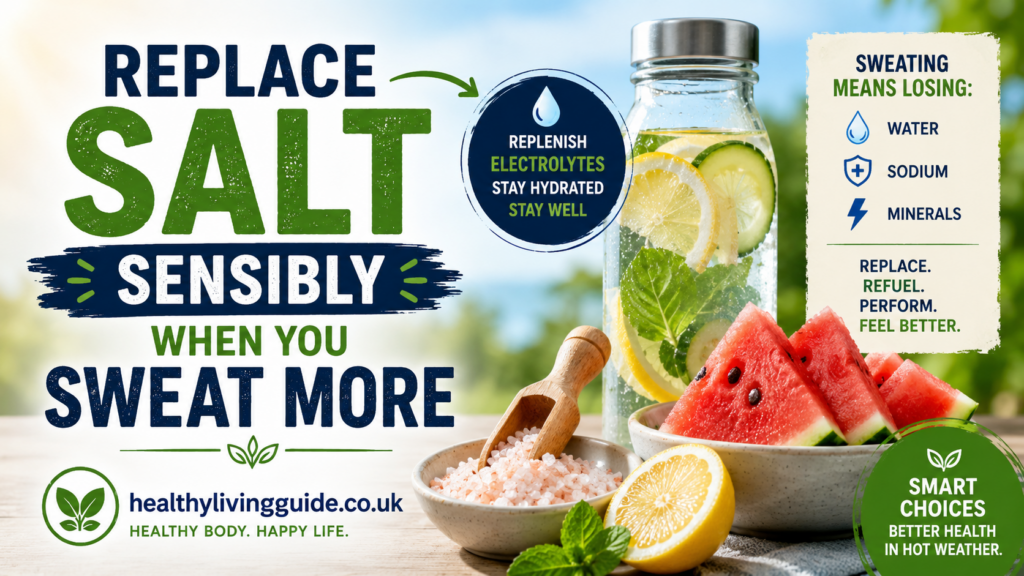
When you sweat, you lose water and some salt. For most people doing normal daily activities, regular meals provide enough salt and electrolytes. You do not automatically need electrolyte tablets, sports drinks or special powders just because the weather is hot.
The British Nutrition Foundation explains that sports drinks usually contain carbohydrates and electrolytes, and may help replace sodium lost in sweat, but they are mainly needed for high-level training or endurance activity where sweat losses are higher. For everyday heatwave hydration, water plus normal meals is usually enough for healthy adults.
That said, there are times when electrolytes may be useful. If you have been sweating heavily for a long time, doing intense exercise, working outdoors, vomiting, having diarrhoea, or showing signs of heat exhaustion, you may need more than plain water.
NHS advice for heat exhaustion says to move the person to a cool place, remove unnecessary clothing, give plenty of water, and that an isotonic sports drink or oral rehydration powder mixed with water can help replace salt lost through sweating. NHS dehydration guidance also notes that when people are being sick or have diarrhoea and losing too much fluid, they need to replace sugar, salts and minerals, and a pharmacist can recommend oral rehydration solutions.
The key word is “sensibly”. More electrolytes are not always better. Many people already eat enough salt, and some electrolyte drinks or sports drinks contain sugar, sweeteners or sodium that may not be suitable for everyone. If you have high blood pressure, kidney disease, heart failure or have been told to manage salt intake, do not add salt drinks or electrolyte products without advice.
A food-first approach is usually better. Lightly salted meals, soups, yoghurt, milk, cheese, beans, lentils, eggs, fish, chicken, olives, hummus and whole foods can provide minerals alongside nutrition. If you are sweating more, a balanced meal may be more useful than a bright-coloured sports drink.
Good heatwave electrolyte-supporting foods include bananas, potatoes, yoghurt, milk, beans, lentils, tomatoes, leafy greens, nuts, seeds and fish. These provide potassium, magnesium, calcium or protein as part of a normal diet. You do not need to obsess over each mineral. Focus on eating real meals and drinking regularly.
For active people, plan ahead. If you are going for a long run, cycling, doing football training, working outdoors or walking for hours in strong heat, start hydrated, carry water, avoid the hottest part of the day, and consider an electrolyte drink if you are sweating heavily for more than an hour. The BNF notes that water is fine after moderate exercise, but carbohydrate and sodium drinks may be useful after high-intensity activity lasting more than about an hour.
For people with kidney disease, dialysis or transplant history, fluid and electrolyte advice must be personalised. Kidney Care UK explains that people with CKD, dialysis patients and transplant recipients need extra care in hot weather because fluid balance can be more complicated, and dialysis patients may have individual fluid restrictions set by their kidney team.
The same caution applies to heart failure. The British Heart Foundation advises that people who have been told to restrict fluid intake should speak to their GP about ways to keep cool, and those taking diuretics who feel dizzy or lightheaded should let their doctor know.
For most healthy adults, the message is simple: water first, normal balanced meals, a little extra attention if sweating heavily, and oral rehydration products when there is genuine fluid and salt loss from illness or heat exhaustion.
Foods And Drinks To Limit During A Heatwave
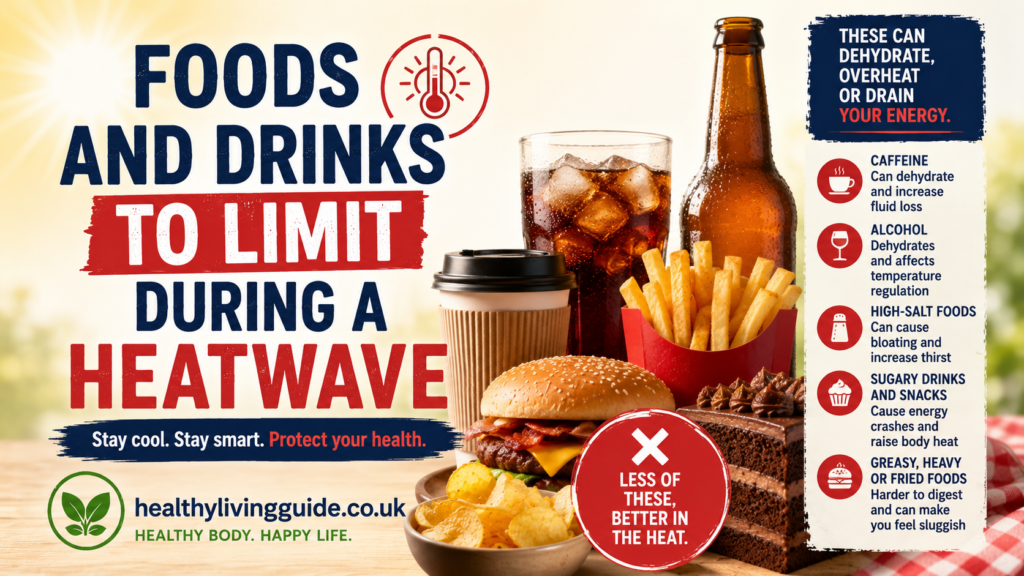
During a heatwave, you do not need to ban every treat. But some foods and drinks are best limited because they can make dehydration, tiredness, digestive discomfort or food-safety risks worse.
The first is alcohol. Alcohol may feel refreshing when served cold, but it can increase urine output and contribute to dehydration. The British Nutrition Foundation notes that alcoholic drinks have a diuretic effect, and UKHSA advises drinking plenty of fluids and avoiding excess alcohol during hot weather.
The second is high-sugar drinks. Fizzy drinks, energy drinks, sweetened iced coffees, milkshakes, bubble tea, syrups, sweet squash and large juices can add a lot of sugar without keeping you full. They may be enjoyable occasionally, but they should not replace water. The British Nutrition Foundation advises limiting sugary drinks because they provide few nutrients and can contribute to excess sugar intake.
Energy drinks deserve special caution. Many contain caffeine and other stimulants, and the BNF states that energy drinks can be high in sugar and caffeine and are not suitable for children. During a heatwave, using energy drinks to push through tiredness may hide the fact that your body needs rest, shade, food and water.
The third is too much caffeine. Tea and coffee can count towards fluid intake in moderate amounts, but large amounts of caffeine may worsen sleep, anxiety, palpitations or dehydration concerns in some people. In hot weather, it is sensible to balance tea and coffee with water, especially if you are sweating heavily. The BDA notes that caffeine has a small dehydrating effect, although the fluid in tea and coffee still contributes overall.
The fourth is very salty snack food. Crisps, salted nuts, processed meats, instant noodles, salty takeaways and heavily salted fast food can increase thirst. Salt is not “bad” in every situation, and some salt may be helpful when sweating heavily, but relying on salty ultra-processed snacks is not the same as replacing electrolytes sensibly.
The fifth is very heavy greasy food. Large fried meals, creamy sauces, heavy takeaways and oversized portions can feel harder to digest in hot weather. They may make you feel sluggish, sleepy and uncomfortable. A burger or fish and chips occasionally is not a disaster, but during a heatwave, lighter meals usually feel better.
The sixth is too much ice cream and frozen dessert. Cold sweet foods can be enjoyable, but they are not a hydration plan. Many are high in sugar and saturated fat. Better everyday cooling options include frozen grapes, yoghurt with berries, homemade fruit-and-yoghurt lollies, chilled melon, smoothie ice cubes or frozen banana blended with yoghurt.
The seventh is food that has been left out too long. This is one of the biggest hidden heatwave risks. Warm weather helps bacteria grow, and food poisoning can be much more than a mild stomach upset. The Food Standards Agency warns that warm weather and outdoor cooking can create good conditions for bacteria to grow, especially where raw meat, undercooked food or cross-contamination are involved.
During a heatwave, limiting risky foods is not about fear. It is about reducing avoidable strain on your body. Dehydration plus food poisoning is a miserable combination, and it can be dangerous for young children, older adults, pregnant women and people with underlying conditions.
Keep Food Safe When Eating Outdoors Or During Hot Weather
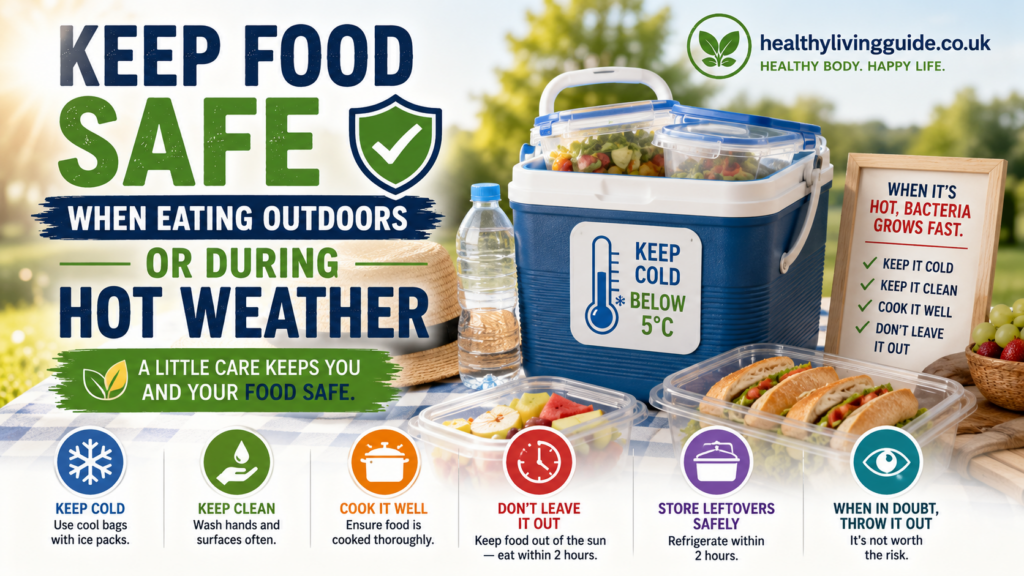
Heatwave eating is not only about nutrition. It is also about food safety. In hot weather, chilled foods warm up quickly, bacteria multiply faster, and outdoor meals can become risky if food is left uncovered, unrefrigerated or mixed with raw meat juices.
The Food Standards Agency advises remembering the 4Cs: cleaning, chilling, cooking and avoiding cross-contamination. For picnics, it recommends washing fruit, vegetables and salad leaves before packing them, washing hands before preparing and eating food, and using hand sanitiser where handwashing is not possible.
Picnic foods that usually need refrigeration should be kept cool. This includes foods with a use-by date, cooked dishes, prepared salads, sandwiches, dairy products, dips, spreads, sausage rolls, quiches, yoghurts and pre-cut fruit and vegetables. The FSA advises placing these foods in a cool box or cool bag with ice or frozen gel packs, distributing ice packs throughout the bag, and keeping the cool box in the shade.
A useful trick is to pack drinks separately from perishable food. Drinks are opened more often, so if they are in the same cool bag as chicken, yoghurt, salads or sandwiches, the food warms up every time someone reaches for a bottle. Keep one cool bag for drinks and another for food if possible.
The FSA advises taking cold food out only when needed and putting remaining food back into the cool box once served. If food has been out at warm temperatures for four hours or more, the risk from bacteria increases; in extremely hot weather, food that has been out of the fridge should be used within two hours.
BBQs need extra care. The FSA says food poisoning can be avoided by good hygiene, cooking meat properly and preventing cross-contamination. It advises washing hands, keeping food covered and chilled until cooking, using clean utensils and serving dishes, and not mixing utensils used for raw and ready-to-eat foods.
Chicken, pork, burgers, sausages and kebabs should not be served pink or rare at home. The FSA advises checking that BBQ meat is steaming hot throughout, has no pink meat visible when cut into the thickest part, and that juices run clear. It also warns that charred on the outside does not always mean cooked on the inside.
If you are cooking for young children, pregnant women, older people or anyone with a weakened immune system, take extra care. The FSA lists young children, pregnant women, older people and people with underlying health conditions as groups at increased risk from food poisoning.
Leftovers also matter. BBQ leftovers should be covered, cooled quickly and placed in the fridge or cool bag within one to two hours, especially on hot days. The FSA recommends eating BBQ leftovers within 48 hours and reheating only once until steaming hot.
A simple heatwave food-safety checklist is: keep cold food cold, keep raw meat separate, wash hands, wash salad, use separate utensils, cook meat properly, avoid leaving food out, and throw food away if you are unsure. It is better to waste a small amount of food than risk food poisoning during extreme heat.
The best heatwave diet is not complicated. Drink regularly, keep water close, eat more water-rich fruits and vegetables, choose lighter balanced meals, use electrolytes only when genuinely needed, limit alcohol and high-sugar drinks, and take food safety seriously.
In a UK heatwave, your body does not need punishment, detoxes or extreme rules. It needs steady hydration, sensible meals, shade, rest and practical planning. A glass of water, a bowl of yoghurt and berries, a chicken salad wrap, a chilled fruit snack, a properly packed cool bag and a check-in on an older neighbour may be simple actions, but during hot weather, simple actions can protect health.
Disclaimer
This article is for general information and educational purposes only. It is not intended to replace professional medical advice, diagnosis or treatment. During a heatwave, people with existing health conditions, older adults, young children, pregnant women, and anyone taking regular medication may need personalised advice from a GP, pharmacist or healthcare professional. If you experience symptoms such as confusion, fainting, severe weakness, chest pain, difficulty breathing, or signs of heatstroke, seek urgent medical help immediately.