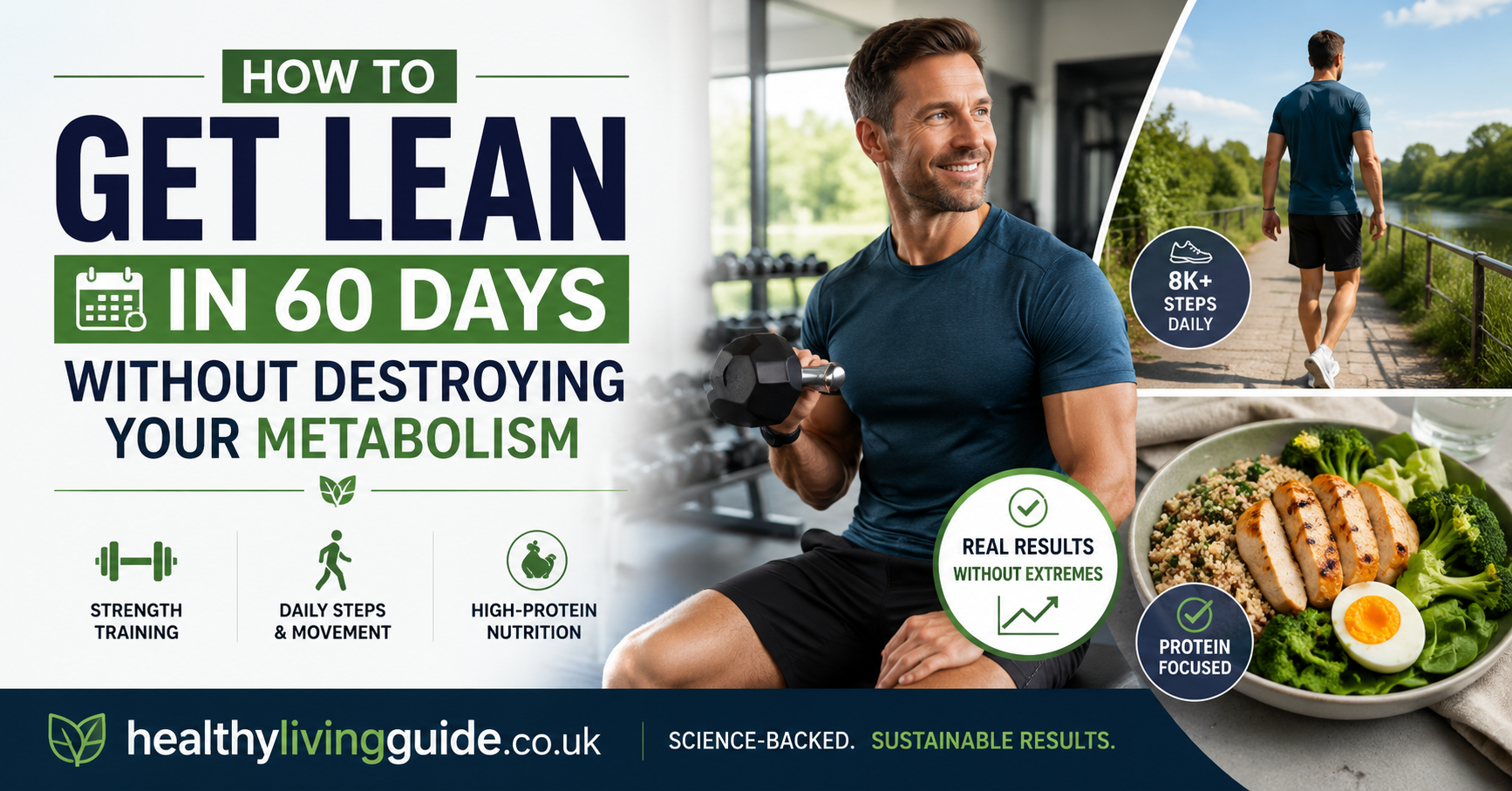
Getting lean is one of those goals that sounds simple on the surface but becomes confusing the moment you try to do it properly. You start with motivation, you clean up your meals, you maybe add cardio, and then within a few weeks you are hungry, tired, irritated and wondering why the mirror is not changing as quickly as you expected.
The fitness world makes this even harder. Social media can make it look as if visible abs are normal, everyone is walking around at 10% body fat, and anyone who is not shredded is doing something wrong. In reality, most of what we see online is a highlight reel: good lighting, good angles, temporary leanness, filters, strict dieting phases and people who often build their entire lifestyle around their physique.
The transcript this article is based on explains a 60-day fat-loss journey from 15.6% body fat to 11.6%, with a strong focus on protein, calorie control, weight training, walking, planned flexibility and long-term maintenance rather than crash dieting.
For everyday people in the UK, the real goal should not be to copy an influencer’s body at any cost. The goal should be to become leaner, healthier, stronger and more confident in a way that you can maintain. Losing fat is not just about eating less. It is about building a system that works when motivation is high, but also when life becomes stressful, busy and imperfect.
Before going further, it is important to be sensible. If you have a medical condition, a history of disordered eating, diabetes, are taking medication, or are unsure whether fat loss is safe for you, speak to your GP, pharmacist or a registered dietitian before making major diet changes. NHS advice encourages safe and sustainable weight loss, and the NHS Better Health guidance explains that weight loss normally requires eating and drinking fewer calories than you currently consume, with a suggested reduction of around 600 calories per day for many adults.
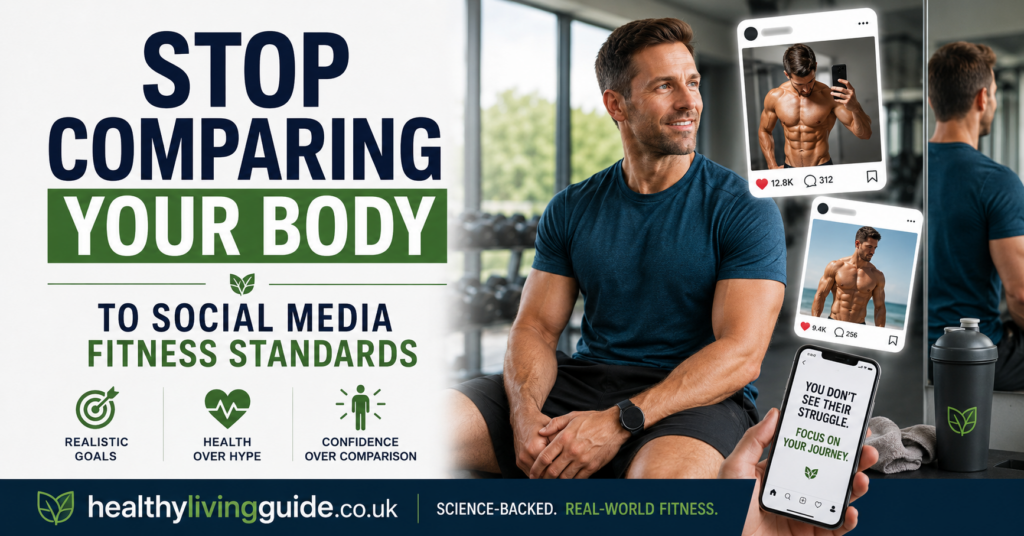
Stop Comparing Your Body To Social Media Fitness Standards
One of the biggest fat-loss mistakes happens before the diet even starts: choosing the wrong target.
A person opens Instagram, TikTok or YouTube and sees people with sharp abs, lean arms, round shoulders and perfect lighting. After a while, the brain starts to accept this as normal. You may begin to think, “Why don’t I look like that?” or “I must be failing because I don’t have visible abs yet.”
But social media is not a normal sample of the population. It is a filtered collection of people showing their best angles, best days and best physiques. Many fitness creators only look extremely lean for short periods, especially around photo shoots, competitions or content creation phases. Some are genetically gifted. Some have been training for 10 or 15 years. Some may be using performance-enhancing substances. Others are simply very good at lighting, posing and editing.
That does not mean you cannot get lean. It means you need a realistic definition of lean.
For many men, a body fat range somewhere around the mid-teens can already look athletic, especially if they have built some muscle. For many women, a healthy and lean appearance can happen at a higher body fat percentage than men because women naturally carry more essential fat. The exact number matters less than your health markers, waist size, strength, energy, sleep, mood and ability to maintain your lifestyle.
The trap is believing you need to reach an extreme body fat percentage to be successful. If your target is too aggressive, the process becomes miserable. Hunger rises. Energy drops. Sleep can suffer. Training performance may decline. Social life becomes difficult. Then, even if you reach the target, you may not be able to maintain it.
This is why your first job is not to cut calories. Your first job is to define success properly.
A good fat-loss goal might be:
“I want my waist to come down, my clothes to fit better, my face to look leaner, and my strength to stay stable.”
That is a much healthier target than:
“I need to look like a fitness model in eight weeks.”
Body fat percentage can be useful, but it is also easy to misread. Smart scales, handheld devices and gym machines can give estimates, but they are not perfect. Hydration, food intake, time of day and device quality can all affect readings. Instead of obsessing over one number, track a combination of body weight trends, waist measurement, progress photos, gym performance and how your clothes fit.
The leanest body is not always the healthiest body. A physique that looks impressive for a few weeks may require a lifestyle that feels restrictive, stressful and unsustainable. The better goal is a body that looks good, functions well and can be lived in.
That mindset shift changes everything. You are no longer punishing yourself because you do not look like someone online. You are building a stronger version of your own body.
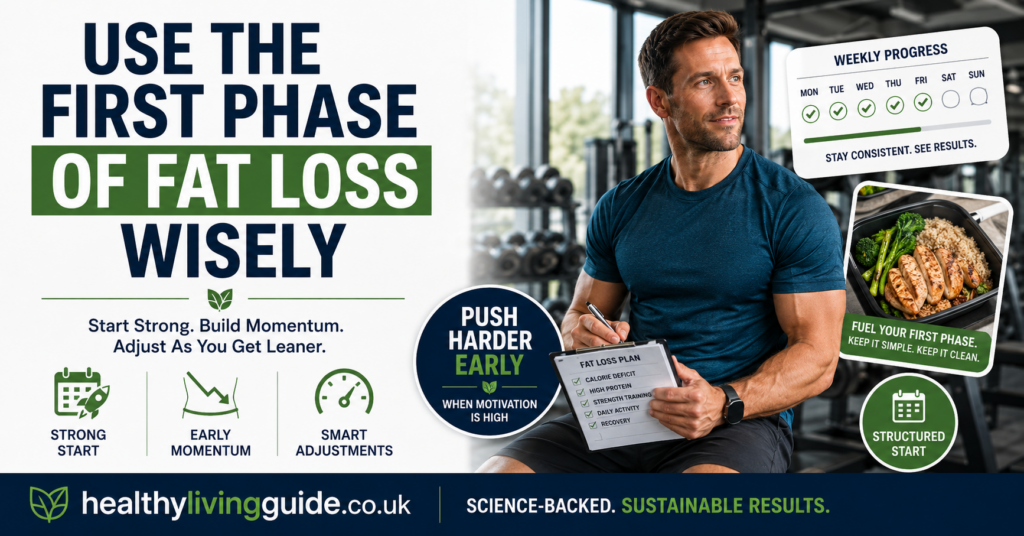
Use The First Phase Of Fat Loss Wisely
A common fat-loss approach is to start very slowly. People cut a few calories, add a little exercise and tell themselves they will become stricter later. On paper, that sounds sensible. In some cases, it is. But there is another way to think about it.
At the beginning of a diet, motivation is usually high. You have more body fat to lose. Your energy is usually better than it will be later. You are mentally excited because you want to see change. This is the period when many people are best equipped to handle a more focused push.
The transcript argues for starting with a more aggressive first phase, then easing back when hunger, cravings and fatigue increase. That idea can work for some people, but it needs to be handled carefully.
Aggressive does not mean reckless. It does not mean starving yourself, skipping essential nutrients, cutting out entire food groups or training twice a day while sleeping badly. It means being more structured for a short period while your motivation and energy are still strong.
For example, a sensible first phase might include:
Eating mostly whole foods.
Keeping protein high.
Reducing obvious high-calorie extras.
Walking more each day.
Lifting weights consistently.
Planning meals in advance.
Avoiding random snacking.
Reducing takeaway meals and liquid calories.
This type of “aggressive” start is not about suffering. It is about removing the easy sources of excess calories quickly, so you see progress early and build confidence.
Early progress matters because it creates belief. When your waist measurement drops, your face looks slightly leaner, or your clothes start fitting better, you feel the plan is working. That makes it easier to continue.
However, the body does adapt. As weight comes down, your body burns fewer calories because there is less of you to move. Hunger can increase. Cravings can become stronger. Your daily movement may unconsciously fall because you feel more tired. This is why many diets feel easy at first and then suddenly become difficult.
The mistake is trying to push harder and harder forever. That is when people burn out.
A smarter approach is to divide fat loss into phases.
The first phase can be focused and structured. The second phase can be more moderate. If needed, you can also include a maintenance break where calories are brought closer to maintenance for a short period while keeping healthy habits in place. This gives the mind a rest and helps you practise the lifestyle you will need after the diet ends.
NICE guidance on overweight and obesity management covers prevention and management across adults and emphasises proper assessment and long-term management rather than quick fixes. This is important because fat loss should not be treated like a punishment challenge. It is a health and behaviour change process.
For a 60-day plan, you might think of it like this:
Days 1 to 21: structured push.
Days 22 to 42: steady continuation.
Days 43 to 60: controlled finish and preparation for maintenance.
The final part is crucial. Many people finish a diet and immediately return to the habits that caused weight gain. That is why the last phase should not only be about losing the final pounds. It should be about learning how you will live after the diet.
A leaner body is not built by one heroic week. It is built by repeated decisions that are simple enough to repeat.
Make Protein The Foundation Of Every Meal
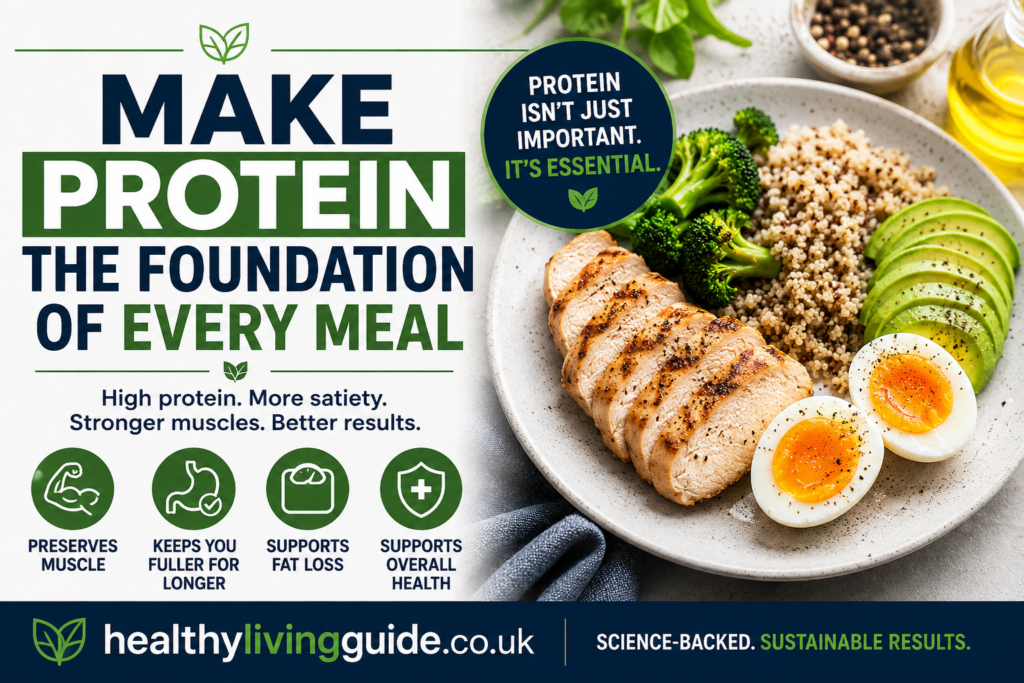
If there is one nutrient that deserves special attention during fat loss, it is protein.
Protein helps with fullness, supports muscle repair, and plays an important role in preserving lean mass while calories are lower. When people diet without enough protein, they may lose weight but not achieve the look they want. The scale goes down, but they feel softer, weaker or “skinny fat” because some of the weight lost may come from muscle as well as fat.
The UK Reference Nutrient Intake for adults is commonly cited as 0.75g of protein per kilogram of body weight per day, but research and expert discussions often suggest higher intakes can be useful for older adults, active people and those trying to preserve muscle during weight loss. The British Dietetic Association has also discussed higher protein needs for older adults, particularly for maintaining or regaining lean body mass.
For practical everyday fat loss, you do not need to make this complicated. A simple rule is to include a clear protein source at every meal.
Good protein options include:
Eggs.
Chicken.
Turkey.
Lean beef.
Fish.
Greek yoghurt.
Cottage cheese.
Lentils.
Beans.
Tofu.
Tempeh.
Whey protein.
Quorn or other meat alternatives.
Tinned tuna or salmon.
For a UK lifestyle, this could look very simple.
Breakfast might be Greek yoghurt with berries, eggs on toast, or a protein smoothie.
Lunch might be chicken salad wraps, tuna jacket potato, lentil soup, or lean beef mince with rice and vegetables.
Dinner might be salmon with potatoes and greens, chicken curry with controlled rice portions, tofu stir-fry, or turkey chilli.
The key is not perfection. The key is repetition.
Protein helps because it makes dieting feel less like starvation. A breakfast of sugary cereal and toast may be easy to overeat and leave you hungry quickly. A breakfast with eggs or Greek yoghurt often keeps you fuller for longer. A dinner with a palm-sized portion of chicken, fish, lean meat, tofu or lentils is usually more satisfying than a low-protein meal made mostly from refined carbohydrates and fats.
This does not mean carbohydrates are bad. Rice, potatoes, oats, bread, pasta and fruit can all fit into a fat-loss plan. The issue is balance. A plate that is mostly refined carbs and fat can be very calorie dense without being filling. A plate built around protein, vegetables and a sensible carb portion is usually easier to control.
One helpful plate method is:
One quarter protein.
One quarter carbohydrates.
Half vegetables or salad.
A small amount of healthy fats.
This approach is flexible enough for British, Bangladeshi, Indian, Mediterranean or standard family meals. You do not need to eat plain chicken breast and broccoli every day. You can still eat curry, rice, wraps, potatoes, soups and pasta. You simply adjust the structure.
For example, instead of a large plate of rice with a small amount of meat curry, reverse the balance. Have a smaller rice portion, a generous serving of chicken or fish, and extra vegetables or salad. Instead of three whole eggs cooked with lots of oil, use two eggs plus extra egg whites and cook with less oil. Instead of a takeaway kebab meal with chips and sauces, have grilled meat with salad and a smaller portion of bread or rice.
These small changes are powerful because they do not feel like a completely different life. They feel like your normal meals, improved.
That is the secret to consistency.
Create A Calorie Deficit Without Making Food Miserable
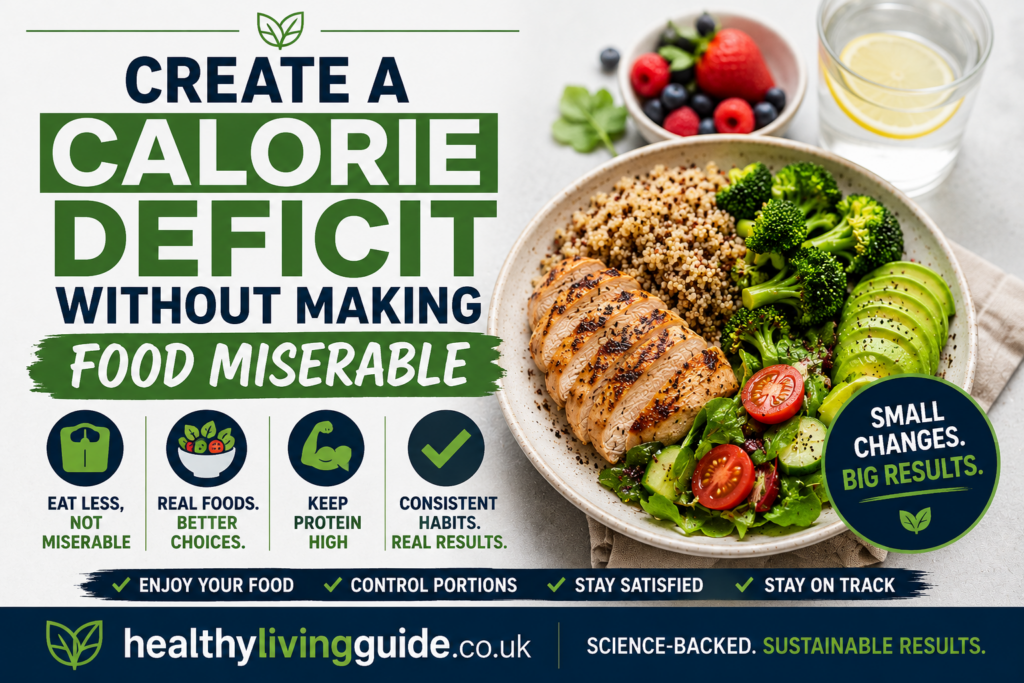
Fat loss requires an energy deficit. In simple terms, over time you need to consume fewer calories than your body uses. NHS guidance explains that weight loss requires eating and drinking fewer calories than you currently consume, and suggests reducing intake by around 600 calories per day as a safe and sustainable approach for many adults.
But there is a big difference between knowing this and actually doing it.
Most people do not fail because they have never heard of calories. They fail because the way they reduce calories makes life miserable.
They remove all carbs. They ban bread. They stop eating rice. They cut out snacks completely. They eat tiny portions. They survive on salad. Then, after a few days or weeks, cravings explode and they overeat.
A better strategy is to make small calorie adjustments that are almost invisible.
This is one of the strongest ideas from the transcript: fat loss does not always require removing your favourite foods; it often requires modifying them.
Think of your current meals. Where are the easy calorie reductions?
If you use lots of oil, measure it instead of pouring freely.
If you eat three slices of toast, try two with more protein.
If you add a full avocado, use half.
If you drink sugary drinks, switch to zero-sugar versions.
If your rice portion is huge, reduce it slightly and add vegetables.
If you snack at night, choose Greek yoghurt, fruit or a protein option.
If you order takeaway twice a week, reduce it to once and choose a better option.
If you eat biscuits with tea every day, reduce the number or keep them for planned occasions.
These changes may not sound dramatic, but they add up. A tablespoon of oil here, a large rice portion there, a sugary drink, a few biscuits, extra sauce, a handful of nuts, a creamy coffee — these can quietly add hundreds of calories to a day.
The best fat-loss diet is not always the strictest diet. It is the diet you can repeat.
This is especially important for people with busy lives. If you work long shifts, have family responsibilities, commute, or feel tired often, you need a plan that survives real life. A diet that only works when you have unlimited time, perfect sleep and no stress is not a useful diet.
A realistic fat-loss meal structure could be:
High-protein breakfast.
Simple packed lunch.
Home-cooked dinner with controlled portions.
One planned snack.
Plenty of water.
A flexible meal once or twice per week.
This is not glamorous, but it works because it reduces decision fatigue.
You should also be careful with “healthy” foods that are calorie dense. Olive oil, nuts, avocado, granola, peanut butter, smoothies and protein bars can all be part of a healthy diet, but they can also slow fat loss if portions are too large. Healthy does not automatically mean low calorie.
On the other hand, do not make the mistake of eating only low-calorie foods and ignoring satisfaction. If your meals are boring and joyless, your plan will eventually break. Use spices, herbs, garlic, chilli, lemon, vinegar, low-calorie sauces and different cooking methods to keep food enjoyable.
A fat-loss diet should be structured, not miserable.
Plan For Weekends, Family Meals And Cravings Before They Happen
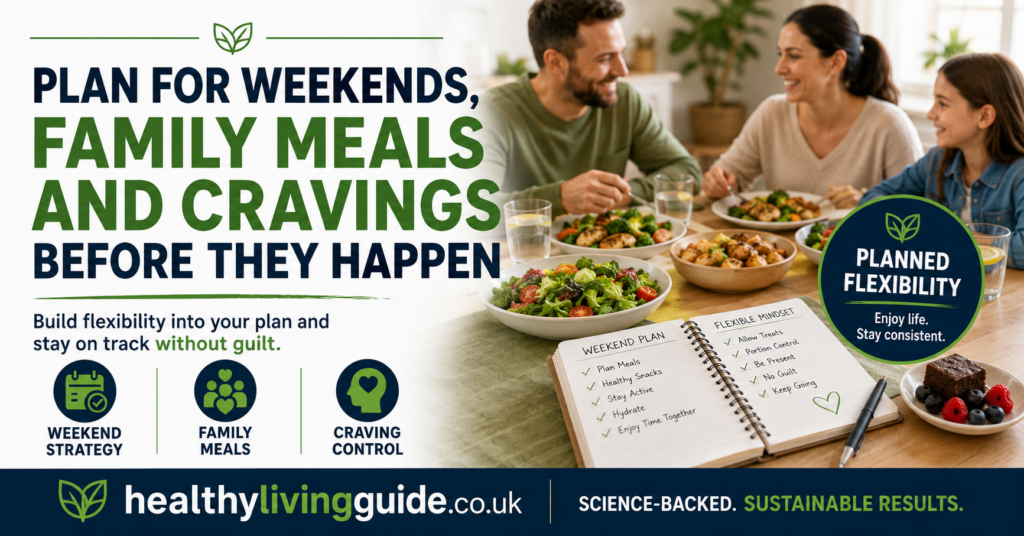
Many people do well from Monday to Friday and undo their progress at the weekend.
This does not happen because they are weak. It happens because they have no plan for real life.
During the week, routine makes discipline easier. You wake up, go to work, eat your planned meals, train, walk and sleep. Then the weekend arrives. There is a birthday, a family dinner, a restaurant meal, a wedding, a takeaway night, or simply boredom and more time near the kitchen.
One unplanned meal becomes a full day of overeating. One full day becomes a weekend. Then guilt arrives. Then the “I’ll start again Monday” mindset takes over.
The solution is not to avoid social life forever. The solution is to plan flexibility.
A controlled higher-calorie meal can help some people stay consistent. This is different from a cheat day. A cheat day often becomes uncontrolled overeating. A planned meal is intentional. You decide when it will happen, what you will enjoy, and how you will return to normal afterward.
For example, you might plan a Saturday evening meal with family. Earlier that day, you keep breakfast and lunch high in protein and moderate in calories. You walk more. You enjoy the evening meal without guilt. Then the next morning, you return to normal.
This removes the emotional drama.
You are not “breaking the diet.” You are following the plan.
This is powerful because guilt often causes more damage than the meal itself. A single restaurant meal rarely ruins progress. The problem is the spiral afterward. People think they have failed, so they continue overeating for days.
Instead, use a simple rule:
Never miss twice.
If one meal is higher in calories, the next meal returns to normal. No punishment. No starvation. No panic cardio. Just back to the system.
Cravings also need to be understood, not feared. Cravings often increase when calories are low, sleep is poor, stress is high, or the diet is too restrictive. If you ban every food you enjoy, cravings become louder. Planned flexibility reduces that pressure.
You can also build lower-calorie versions of foods you enjoy.
Craving a burger? Make one at home with lean mince, a normal bun, salad and air-fried potatoes.
Craving curry? Use lean protein, less oil and control the rice.
Craving dessert? Have Greek yoghurt with berries and a little honey.
Craving chocolate? Plan a small portion after dinner instead of eating randomly from the cupboard.
The point is not to live like a robot. The point is to stay in control without feeling trapped.
For many people, this is the difference between a diet that lasts 10 days and a lifestyle that lasts 10 years.
Lift Weights And Walk More Instead Of Relying Only On Cardio
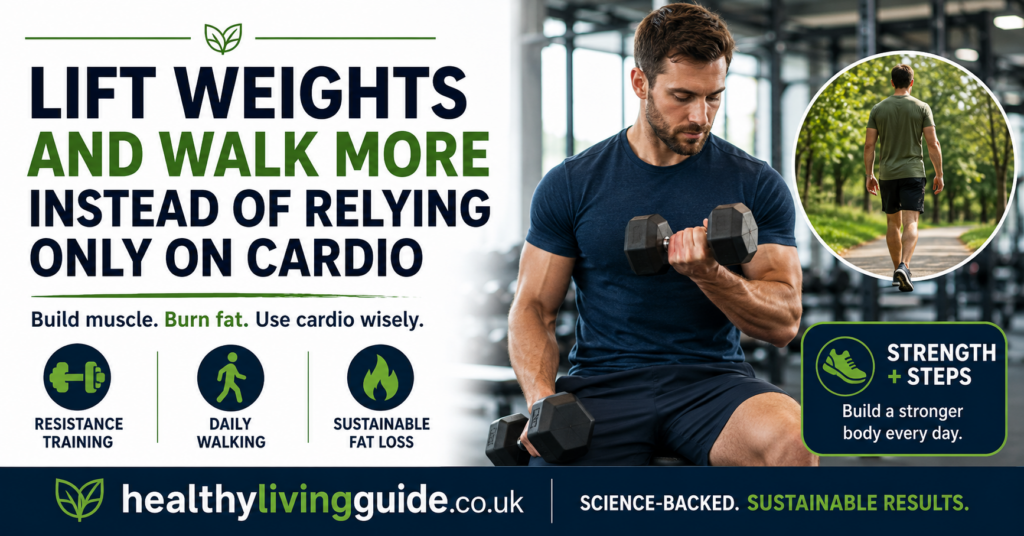
Losing weight and building a lean-looking body are not the same thing.
If you only focus on the scale, you may end up smaller but not necessarily happier with your shape. Muscle is what gives the body structure. Shoulders, arms, chest, back, glutes and legs all look better when muscle is maintained or built. During fat loss, resistance training sends a signal to the body: keep this muscle because it is still needed.
That is why weight training is so important.
The goal of lifting during fat loss is not mainly to burn calories. The goal is to preserve strength, protect muscle and shape the body as fat comes off.
A simple weekly routine might include three or four resistance-training sessions. You do not need an advanced bodybuilding plan. You need consistency with the basic movement patterns:
Squat or leg press.
Hip hinge, such as Romanian deadlift.
Push, such as bench press or press-ups.
Pull, such as rows or lat pulldowns.
Shoulder press.
Core work.
Loaded carries or functional movements.
Try to keep strength as stable as possible while dieting. You may not hit personal records every week in a calorie deficit, but you should avoid letting training collapse. If you feel tired, adjust slightly, but do not abandon lifting completely.
Cardio can be useful, but it is often misunderstood. Many people think the answer to fat loss is endless running, cycling or treadmill sessions. Cardio does burn calories, and it can improve cardiovascular fitness, but it can also increase hunger or fatigue in some people. If hard cardio makes you exhausted and causes you to move less for the rest of the day, the total benefit may be smaller than expected.
Walking is one of the most underrated fat-loss tools.
It is low impact, accessible, sustainable and easy to recover from. You can walk before work, after meals, during lunch breaks, while listening to podcasts, or as part of your commute. It does not require a gym membership. It does not destroy your legs. It does not usually increase hunger in the same way intense cardio can.
The transcript mentions increasing daily steps as a practical way to support fat loss without relying on exhausting cardio. That is a very useful lesson for everyday life.
If you currently walk around 4,000 steps per day, moving toward 7,000 or 8,000 can make a meaningful difference. If you already walk 8,000, moving toward 10,000 may help. But do not jump too aggressively if your feet, knees or back are not used to it. Build gradually.
A good starting target is:
Add 10 minutes of walking after one meal.
Then add another 10 minutes later in the day.
Then aim for a daily step target you can maintain.
The NHS also encourages physical activity as part of weight management and overall health, and NHS weight-loss guidance includes practical advice around diet, activity and behaviour changes.
The best fat-loss exercise plan is not the one that looks most impressive online. It is the one that you can still do when work is busy, the weather is bad, sleep is imperfect and motivation is low.
For most people, that means lifting weights a few times per week and walking more every day.
Simple. Boring. Effective.
Build A Maintenance System Before The Diet Ends
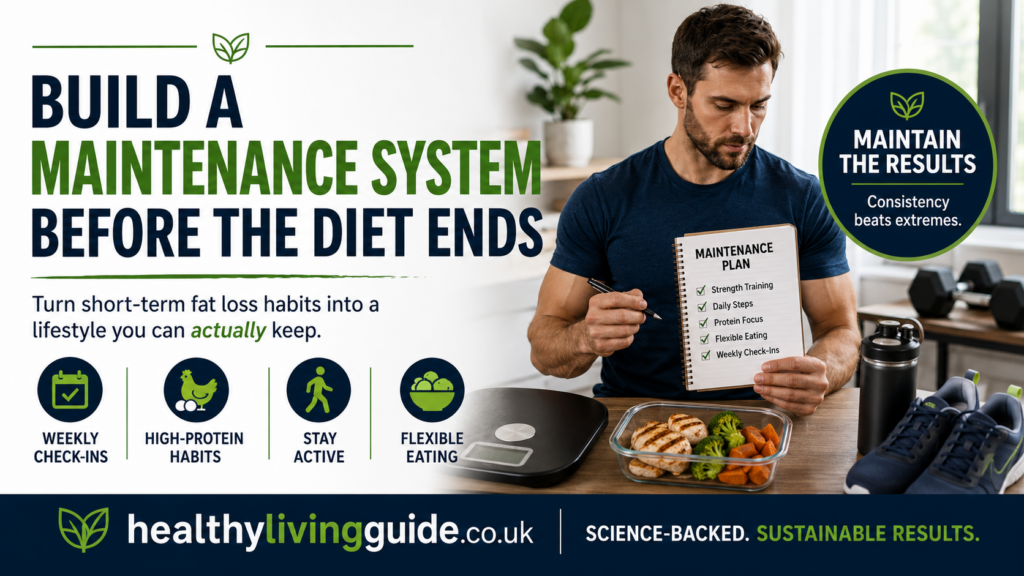
The hardest part of fat loss is not always losing the weight. It is keeping it off.
This is the part most diets ignore.
People treat fat loss as a temporary project. They follow a strict plan for 8 or 12 weeks, reach a lower weight, celebrate, and then return to the habits that caused the problem. Slowly, the weight comes back. Then they start again. This cycle can continue for years.
Research on weight-loss maintenance shows how difficult long-term maintenance can be. One review notes that in a meta-analysis of long-term weight-loss studies, more than half of lost weight was regained within two years, and more than 80% was regained by five years. Another well-known paper notes that around 20% of overweight individuals were successful at long-term weight loss when success was defined as losing at least 10% of initial body weight and maintaining that loss for at least one year.
This does not mean maintenance is impossible. It means you need to respect it.
Your body changes after weight loss. You weigh less, so you burn fewer calories during movement. Your maintenance calories may be lower than before. Hunger can remain higher for a while. Old habits can return if you stop paying attention.
That is why the end of a diet should not be a finish line. It should be a transition.
A good maintenance system includes:
Keeping protein high.
Continuing weight training.
Maintaining daily steps.
Tracking body weight occasionally.
Keeping waist measurement in check.
Planning flexible meals.
Avoiding all-or-nothing thinking.
Having a clear upper weight limit where you take action early.
For example, after your 60-day fat-loss phase, you might increase calories slightly, but not return to uncontrolled eating. You keep the same meal structure but add a little more food. Maybe your rice portion increases slightly. Maybe you add an extra snack. Maybe you include two flexible meals per week instead of one.
The key is to maintain the habits that created the result.
This is where identity matters. Instead of thinking, “I am on a diet,” start thinking, “I am someone who trains, walks, eats protein and manages my health.”
That identity is more powerful than motivation.
Motivation comes and goes. Identity guides behaviour even when motivation is low.
You also need a relapse plan. Life will happen. Holidays, weddings, family stress, illness, work pressure and emotional eating can all interrupt your routine. The goal is not to avoid setbacks forever. The goal is to recover quickly.
A useful rule is:
Do not let a bad week become a bad month.
If your weight creeps up, do not panic. Return to your basic system for two weeks: protein at every meal, controlled portions, daily walking, three workouts, fewer snacks, less takeaway. Most small gains can be corrected early if you pay attention.
The people who stay lean are not perfect. They are consistent enough, and they correct course quickly.
In the end, getting lean is not about finding the perfect diet. It is not about suffering more than everyone else. It is not about copying an influencer’s exact routine. It is about building a system that fits your body, your work, your family, your culture and your real life.
A realistic 60-day fat-loss plan should help you learn the habits you will use for years:
Eat enough protein.
Create a sensible calorie deficit.
Make small food swaps.
Lift weights.
Walk more.
Plan flexibility.
Protect your sleep.
Track progress without obsession.
Move into maintenance carefully.
That is how you build a leaner body without destroying your metabolism, your mood or your relationship with food.
The real prize is not reaching a certain body fat percentage for a few weeks. The real prize is becoming healthier, stronger, more confident and more in control of your daily habits.
That is lasting success.
Disclaimer
This article is for general information only and is not medical advice. Fat-loss needs vary from person to person. Speak to your GP, pharmacist or a registered dietitian before starting a major diet or exercise change, especially if you have a medical condition, take medication, have a history of eating disorders, or are unsure what approach is safe for you.dered eating.