
Starting a healthy lifestyle can feel overwhelming. With so much information available online, it is easy to become confused about where to begin. One expert recommends a low-carb diet, another promotes plant-based eating, while someone else insists that intense exercise is the key to better health.
The truth is that good health is not built on a single diet, supplement, or workout plan. Instead, it is created through a collection of daily habits that work together to support your body and mind.
The most successful healthy lifestyles are not complicated. They are built on a strong foundation of simple habits practiced consistently over time.
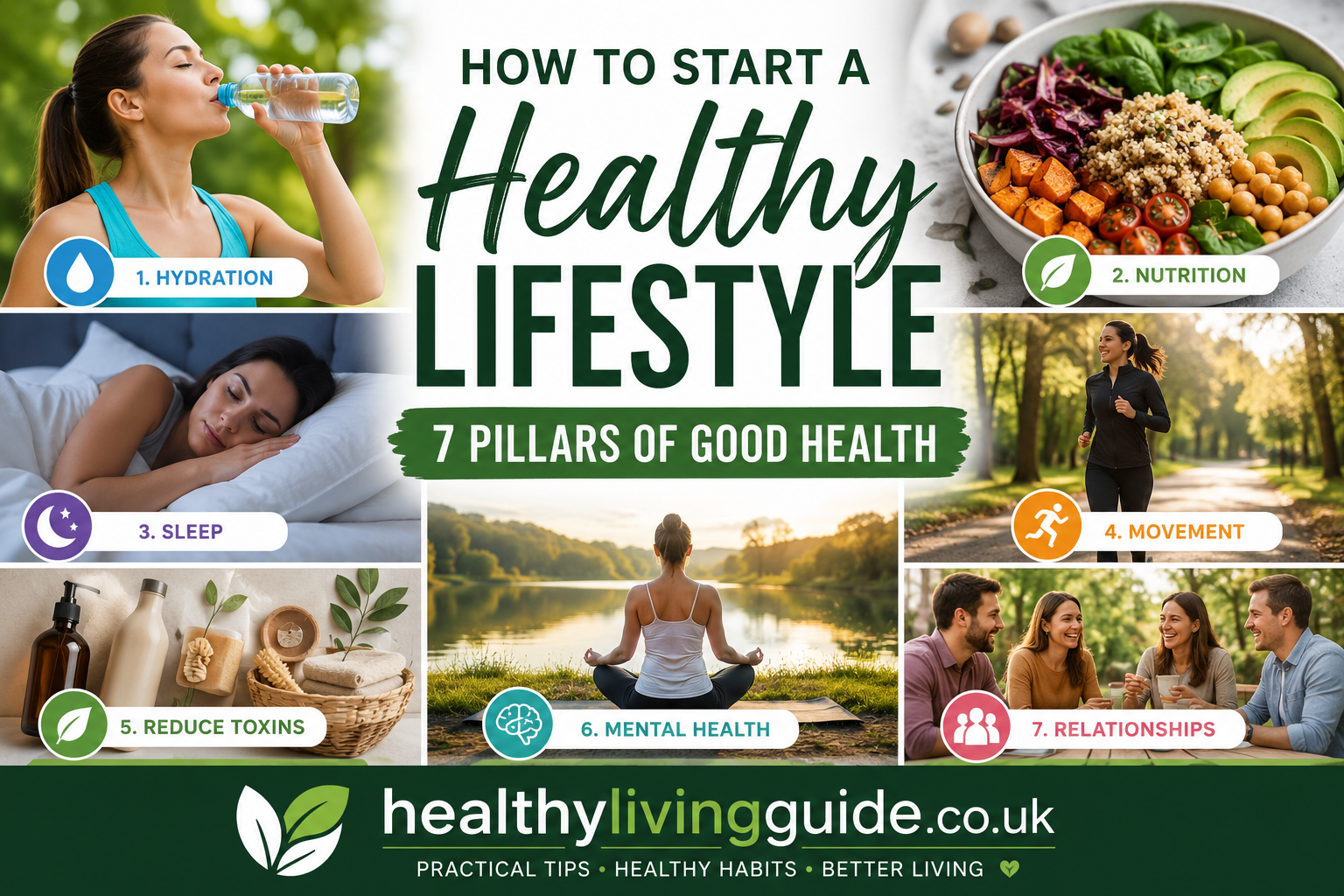
If you are looking for a practical and sustainable approach to improving your wellbeing, these seven pillars of good health provide an excellent starting point. By focusing on hydration, nutrition, sleep, movement, environmental health, mental wellbeing, and relationships, you can create lasting changes that improve your quality of life for years to come.
Why Building A Healthy Lifestyle Matters More Than Following Trends
Many people spend years jumping from one health trend to another. They try restrictive diets, expensive supplements, extreme exercise programs, and complicated wellness routines. Often these approaches produce short-term results but fail to create lasting change.
A healthy lifestyle is different.
Rather than relying on temporary fixes, it focuses on habits that support your body’s natural ability to function optimally. Small daily actions may seem insignificant at first, but over months and years they can transform your health.
Research consistently shows that lifestyle factors influence the risk of many chronic conditions including heart disease, obesity, type 2 diabetes, high blood pressure, and certain forms of cancer.
Beyond disease prevention, healthy habits also improve:
- Energy levels
- Mood and emotional wellbeing
- Sleep quality
- Cognitive performance
- Physical fitness
- Immune function
- Longevity
The good news is that you do not need to change everything overnight. In fact, gradual changes are usually more effective because they are easier to maintain.
Let’s explore the seven pillars that form the foundation of a healthy life.
Hydration Is The Foundation Of Good Health
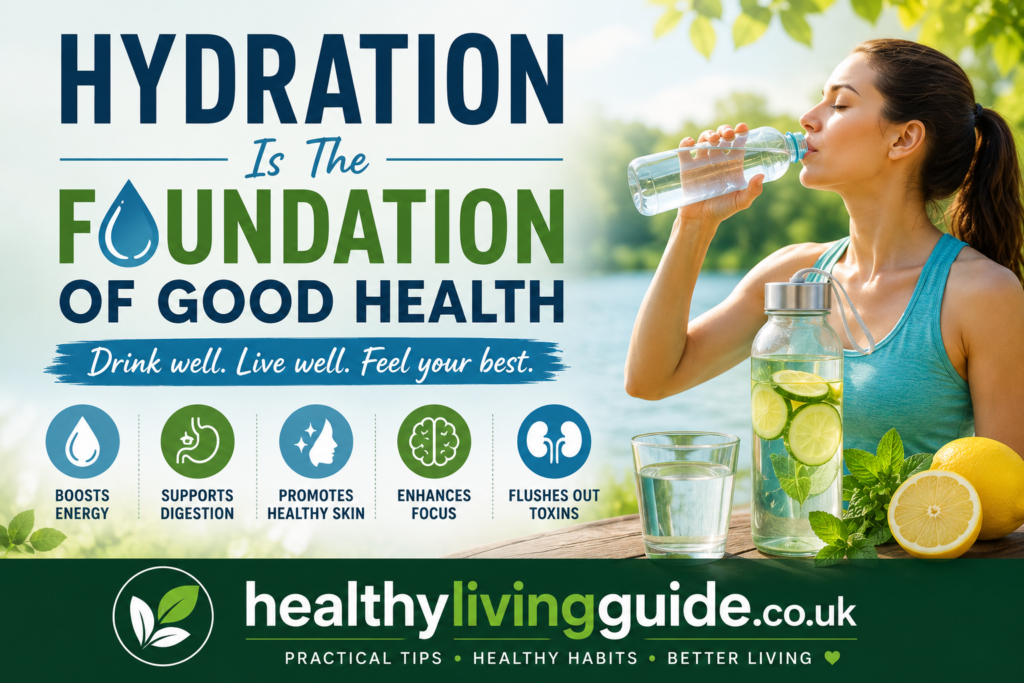
Water is often overlooked, yet it is one of the most important nutrients your body requires.
The human body is approximately 50 to 60 percent water, and every cell depends on proper hydration to function effectively.
Water plays a critical role in:
- Transporting nutrients
- Removing waste products
- Supporting digestion
- Regulating body temperature
- Lubricating joints
- Maintaining skin health
- Supporting brain function
Even mild dehydration can negatively affect energy levels, concentration, and mood.
Many people mistakenly wait until they feel thirsty before drinking water. However, thirst is often a sign that dehydration has already begun.
How Much Water Do You Need?
Individual requirements vary depending on factors such as age, activity level, climate, and overall health.
A simple guideline is to drink water consistently throughout the day and monitor the colour of your urine. Pale yellow urine generally indicates good hydration.
Practical Hydration Tips
If you struggle to drink enough water, try these simple strategies:
Keep water visible
People are more likely to drink water when it is easily accessible. Keep a reusable bottle nearby throughout the day.
Start your morning with water
Drink a glass of water shortly after waking up to replenish fluids lost during sleep.
Use reminders
Set phone reminders or use hydration tracking apps if needed.
Flavour naturally
Add slices of lemon, cucumber, berries, or mint to make water more appealing.
Choose filtered water
Many people prefer filtered water for taste and quality. Popular options include water filter pitchers and filtration systems for home use.
Hydration may seem simple, but it is one of the easiest ways to improve overall wellbeing.
Nutrition Should Focus On Real Whole Foods
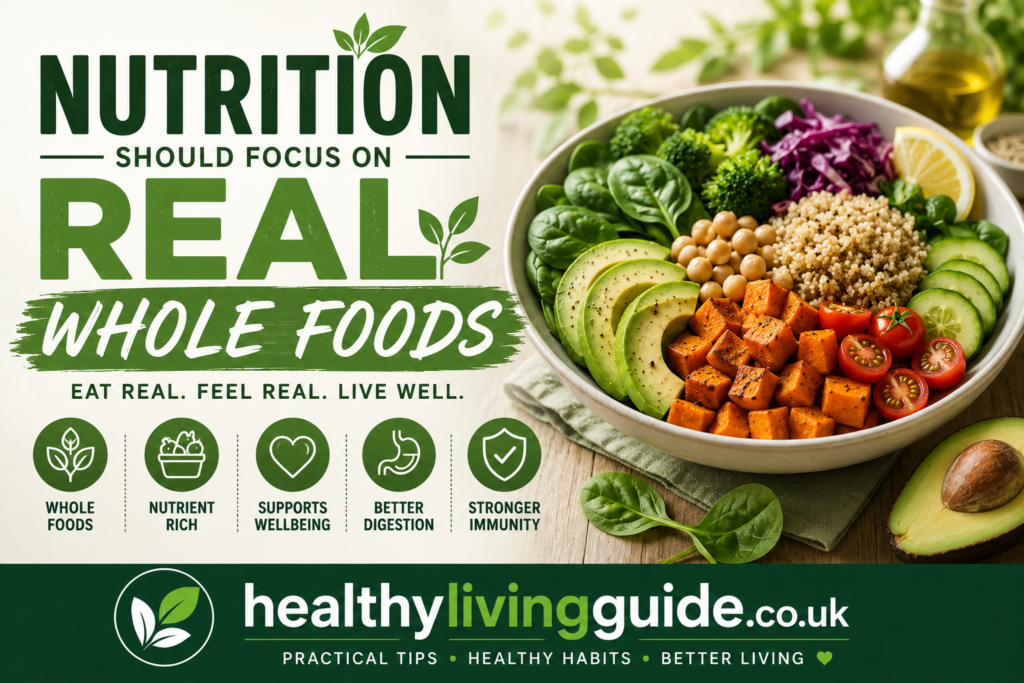
Nutrition is often presented as a complicated science filled with conflicting advice.
In reality, healthy eating can be remarkably simple.
The foundation of a healthy diet is eating predominantly real, minimally processed foods.
This includes:
- Vegetables
- Fruits
- Lean proteins
- Fish
- Eggs
- Whole grains
- Legumes
- Nuts
- Seeds
- Healthy fats
When you build meals around whole foods, you naturally increase your intake of essential vitamins, minerals, fibre, and antioxidants.
Why Whole Foods Matter
Highly processed foods are often high in:
- Added sugar
- Refined carbohydrates
- Unhealthy fats
- Artificial ingredients
- Excess sodium
While occasional treats are perfectly fine, relying heavily on processed foods can contribute to poor health outcomes over time.
Cook More Meals At Home
Preparing meals from scratch offers several advantages.
You gain complete control over:
- Ingredients
- Portion sizes
- Cooking methods
- Nutritional quality
Home cooking also encourages greater awareness of what you are consuming.
Eat The Rainbow
One simple strategy for improving nutrition is to increase the variety of colours on your plate.
Different coloured fruits and vegetables contain different nutrients and beneficial plant compounds.
Examples include:
- Red peppers
- Blueberries
- Spinach
- Carrots
- Purple cabbage
- Sweet potatoes
The more colours you consume, the broader your nutritional coverage is likely to be.
Healthy eating does not require perfection. Consistently choosing nourishing foods most of the time is what matters.
Prioritising Sleep Can Transform Your Health
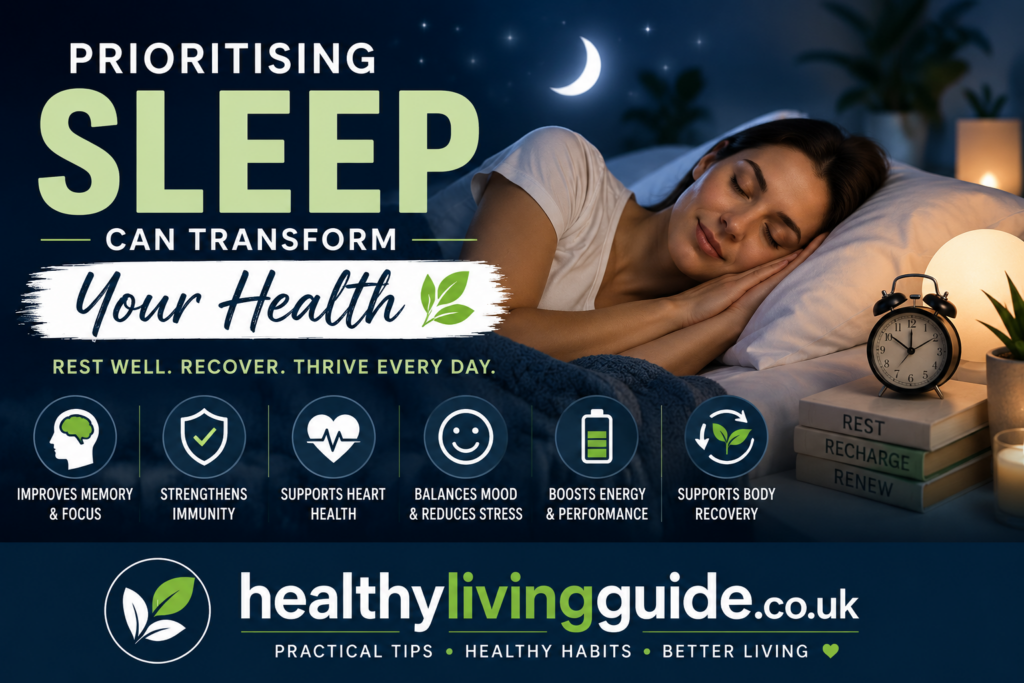
Sleep is often sacrificed in modern society.
Many people view sleep as optional or something that can be reduced to fit a busy schedule.
In reality, sleep is one of the most powerful recovery tools available.
Humans spend approximately one-third of their lives sleeping, and for good reason.
During sleep, the body performs essential maintenance tasks including:
- Cellular repair
- Hormone regulation
- Memory consolidation
- Tissue recovery
- Immune system support
Without adequate sleep, almost every aspect of health suffers.
The Consequences Of Poor Sleep
Chronic sleep deprivation is associated with:
- Weight gain
- Reduced concentration
- Increased stress
- Lower productivity
- Poor athletic performance
- Weakened immunity
- Increased risk of chronic disease
Improve Your Sleep Quality
Fortunately, several simple habits can dramatically improve sleep.
Maintain A Consistent Schedule
Try to go to bed and wake up at similar times every day, including weekends.
Consistency helps regulate your body’s internal clock.
Create A Sleep Friendly Environment
Your bedroom should ideally be:
- Dark
- Quiet
- Cool
- Comfortable
Blackout curtains and white noise machines can help if needed.
Reduce Screen Exposure
Blue light from phones, tablets, and televisions may interfere with melatonin production.
Aim to limit screen use during the hour before bed.
Develop A Relaxing Routine
Reading, stretching, prayer, meditation, or deep breathing can help prepare the body for sleep.
Small improvements in sleep often lead to significant improvements in energy, mood, and overall health.
Daily Movement Keeps The Body Strong And Resilient
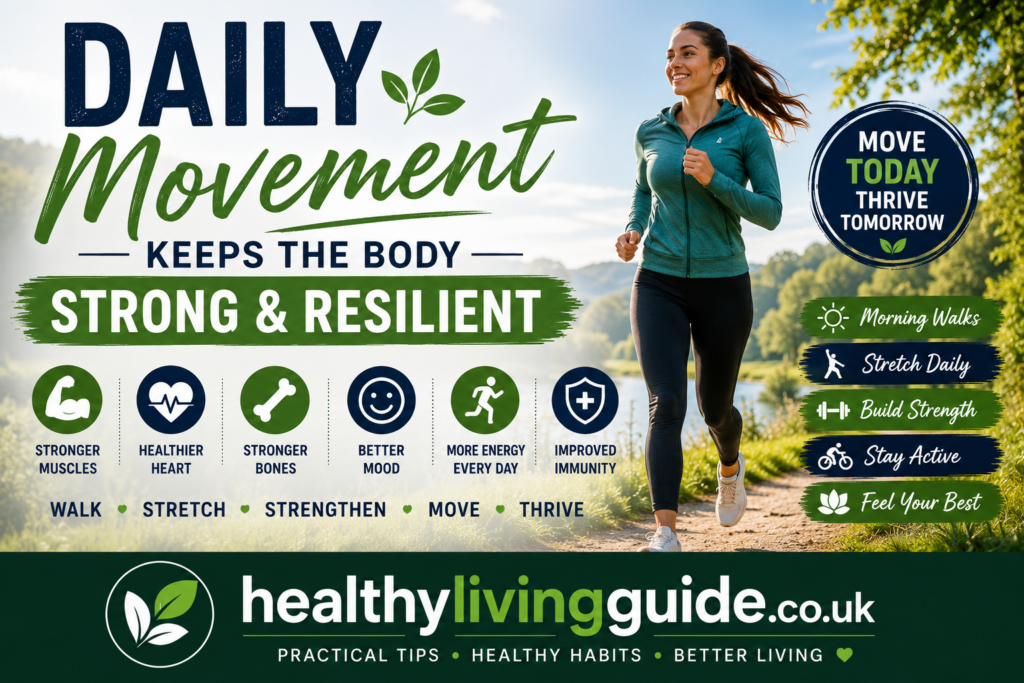
The human body was designed to move.
Unfortunately, modern lifestyles often involve extended periods of sitting, driving, and screen time.
Physical inactivity has become one of the biggest threats to long-term health.
Regular movement benefits nearly every system in the body.
Benefits Of Exercise
Exercise can improve:
- Cardiovascular health
- Bone density
- Muscle strength
- Flexibility
- Mental health
- Blood sugar control
- Weight management
Movement also releases endorphins that enhance mood and reduce stress.
Start Small And Stay Consistent
One of the biggest mistakes beginners make is trying to do too much too soon.
Extreme exercise plans often lead to:
- Burnout
- Injury
- Frustration
- Loss of motivation
Instead, focus on building consistency.
Simple starting points include:
- Ten-minute walks
- Gentle stretching
- Cycling
- Swimming
- Yoga
- Bodyweight exercises
Find Activities You Enjoy
Exercise becomes sustainable when it is enjoyable.
Some people love running.
Others prefer:
- Dancing
- Martial arts
- Hiking
- Tennis
- Weight training
- Pilates
The best exercise is the one you will actually continue doing.
Remember that every movement counts. Consistency always beats intensity when building a lifelong healthy lifestyle.
Reducing Toxic Exposure In Your Environment

Health is influenced not only by what we eat and drink but also by what surrounds us every day.
Many household and personal care products contain ingredients that may contribute to our overall toxic burden.
While it is impossible to eliminate all environmental exposures, making thoughtful choices can reduce unnecessary chemical contact.
Common Areas To Review
Consider examining:
- Skincare products
- Cosmetics
- Cleaning products
- Air fresheners
- Laundry products
- Personal hygiene products
Ingredients Worth Researching
Many health-conscious consumers choose to limit exposure to ingredients such as:
- Parabens
- Phthalates
- Artificial fragrances
- Certain preservatives
Make Changes Gradually
There is no need to throw away every product in your home.
Instead:
- Replace products as they run out.
- Prioritise products used daily.
- Focus on items applied directly to large areas of skin.
Examples include:
- Body lotions
- Moisturisers
- Deodorants
- Shampoos
Small improvements over time can make healthy living more manageable and affordable.
Mental Health Is Just As Important As Physical Health
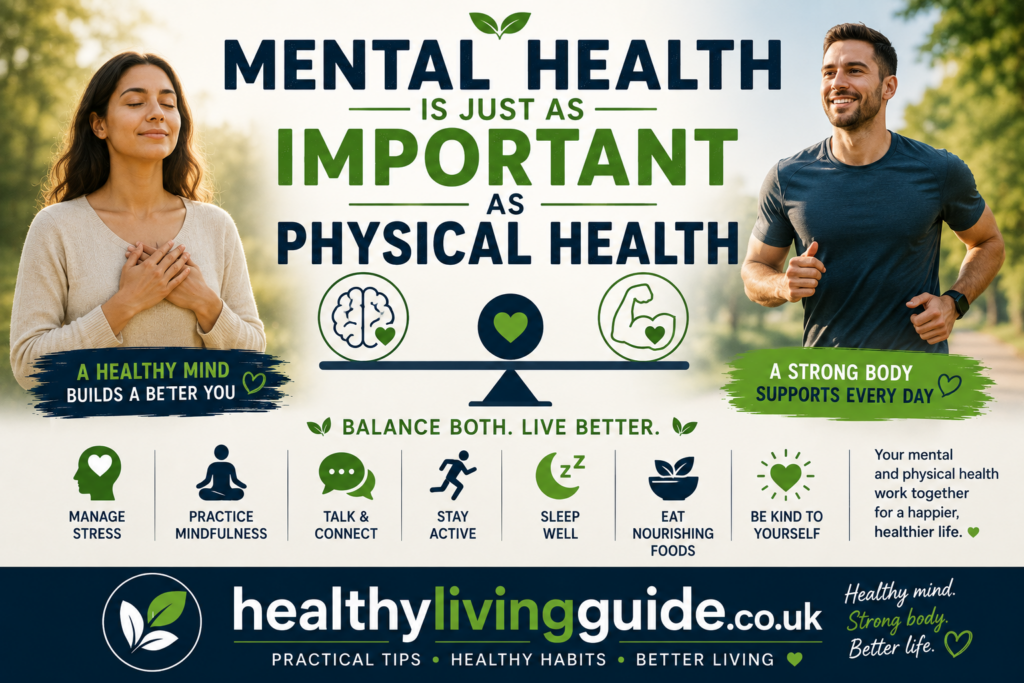
For many years, physical health received far more attention than mental wellbeing.
Today we understand that the two are deeply connected.
Mental health influences:
- Relationships
- Work performance
- Physical health
- Motivation
- Quality of life
Likewise, physical health affects emotional wellbeing.
The Impact Of Chronic Stress
Stress is a normal part of life, but chronic stress can have serious consequences.
Long-term stress may contribute to:
- Sleep problems
- Anxiety
- Depression
- Digestive issues
- High blood pressure
- Weakened immunity
Learning to manage stress is therefore an essential part of a healthy lifestyle.
Effective Stress Management Strategies
Practice Mindfulness
Mindfulness encourages awareness of the present moment and can help reduce anxiety.
Journal Regularly
Writing down thoughts and emotions can improve self-awareness and emotional processing.
Spend Time In Nature
Research suggests that time outdoors can lower stress levels and improve mood.
Seek Support
Talking to trusted friends, family members, or mental health professionals can provide valuable perspective and support.
Pay Attention To Your Internal Dialogue
The way you speak to yourself matters.
Negative self-talk can influence emotions and behaviours in powerful ways.
Try to replace harsh self-criticism with realistic and compassionate thinking.
Mental health is not a luxury. It is a core component of overall wellbeing.
Strong Relationships And Community Support Better Health

The final pillar of good health is often overlooked, yet it may be one of the most powerful.
Human beings are social creatures.
Meaningful relationships provide:
- Emotional support
- Encouragement
- Belonging
- Purpose
- Resilience during difficult times
Research consistently shows that strong social connections are associated with longer, healthier lives.
The Influence Of Your Social Circle
There is a popular saying:
“You become like the people you spend the most time with.”
While not literally true, there is considerable wisdom in this statement.
The people around us influence:
- Habits
- Attitudes
- Behaviours
- Expectations
- Beliefs
If your social circle values health, personal growth, and positivity, those attitudes often become easier to adopt.
Nurture Positive Relationships
Make time for people who:
- Encourage you
- Inspire you
- Support your goals
- Respect your values
Healthy relationships contribute significantly to mental and emotional wellbeing.
Build Community
Community can come from many places:
- Family
- Friends
- Faith groups
- Sports clubs
- Volunteer organisations
- Local events
Even small social interactions can improve happiness and reduce feelings of isolation.
Strong relationships are not just good for emotional health. They are good for physical health as well.
Bringing The Seven Pillars Together For Lifelong Health
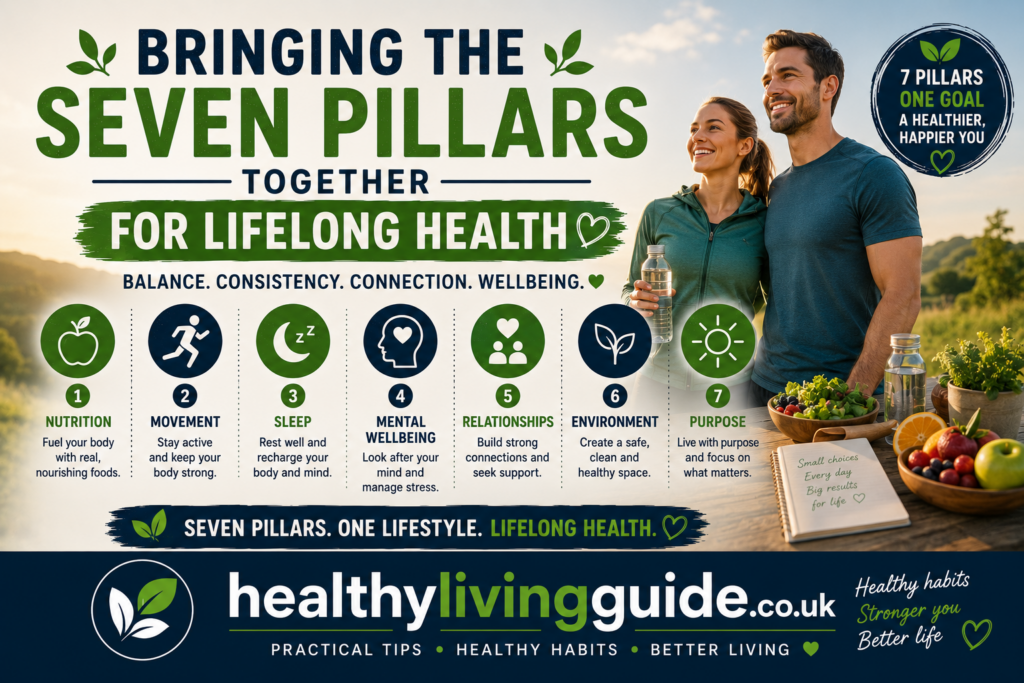
Healthy living does not require perfection.
It does not require expensive supplements, complicated diets, or extreme fitness programs.
The foundation of good health can be built through seven simple pillars:
- Stay hydrated.
- Eat mostly whole foods.
- Prioritise quality sleep.
- Move your body daily.
- Reduce unnecessary toxic exposures.
- Protect your mental wellbeing.
- Build strong relationships and community.
You do not need to master all seven at once.
Choose one area that needs improvement and focus on it consistently. Once that habit becomes established, move on to the next.
Over time, these small changes compound into extraordinary results.
A healthier lifestyle is not a destination. It is an ongoing journey of making choices that support your wellbeing day after day, year after year.
The sooner you start, the sooner you begin experiencing the benefits of better energy, improved health, greater resilience, and a more fulfilling life.
Disclaimer
The information provided in this article is for educational and informational purposes only. While every effort has been made to ensure accuracy, the content is not intended to replace professional medical, nutritional, fitness, or healthcare advice.
The views and concepts discussed are based on publicly available information, scientific research, expert opinions, and interpretations of the topics covered. Individual health needs, dietary requirements, and fitness goals vary from person to person, and results may differ.
Before making significant changes to your diet, exercise routine, supplementation, or lifestyle habits, you should consult with a qualified healthcare professional, registered dietitian, physician, or other appropriate medical expert.
The author and publisher assume no responsibility for any loss, injury, or damage resulting from the use of information contained in this article. Readers are encouraged to conduct their own research and make informed decisions based on their individual circumstances.
By reading this article, you acknowledge that any actions you take based on the information provided are done at your own discretion and risk.ented in this article.