
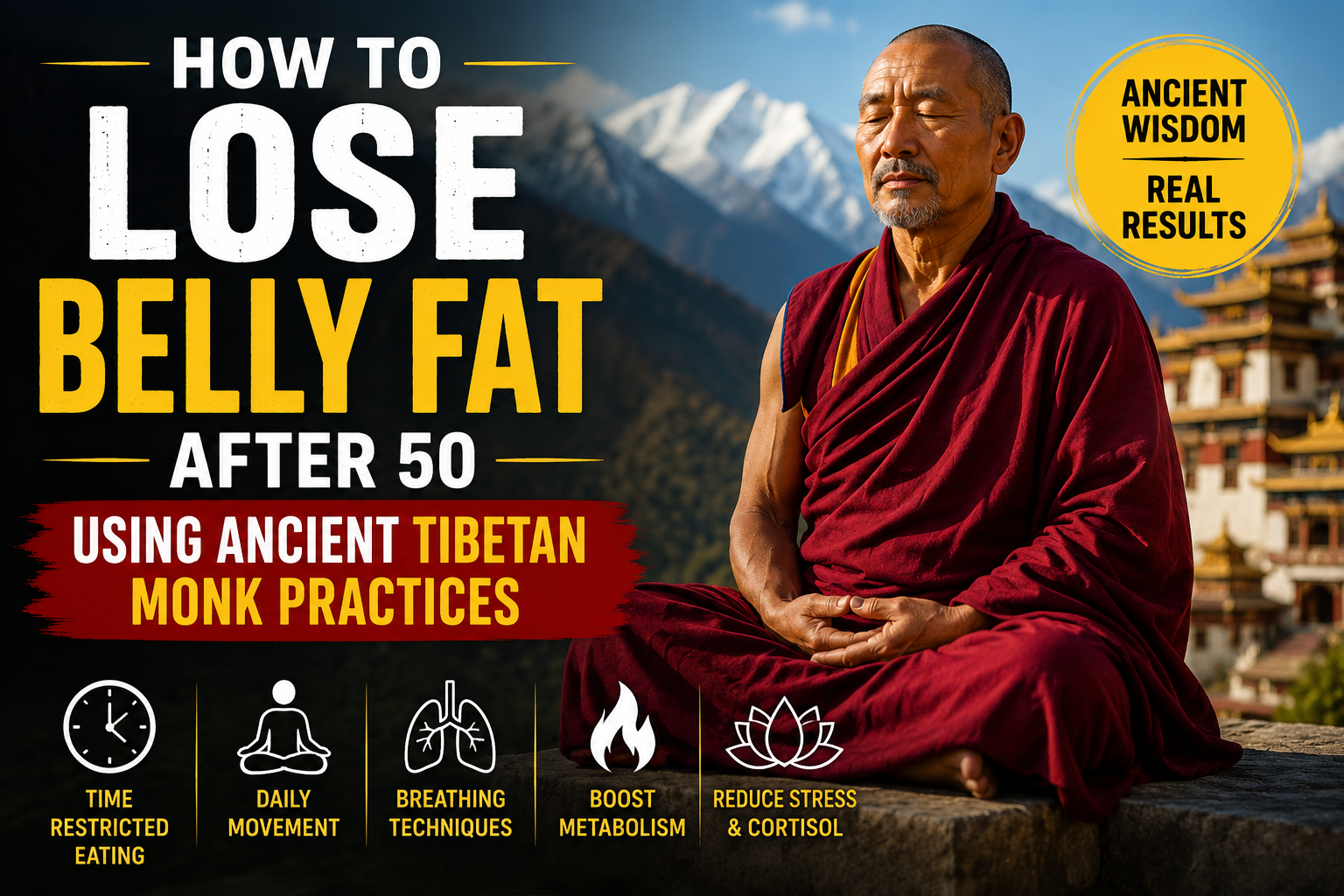
Belly fat becomes one of the biggest challenges many people face after the age of 50. What worked in your thirties suddenly stops working. Long walks no longer seem enough. Hours on a treadmill produce disappointing results. Calorie counting becomes frustrating and difficult to maintain.
Yet in the remote monasteries of Tibet and the Himalayan region, many monks remain lean, energetic, and physically capable well into their seventies and eighties. They achieve this without gym memberships, expensive supplements, personal trainers, or endless cardio sessions.
Modern science is beginning to uncover why.
Research into fasting, metabolic health, stress reduction, and traditional practices has revealed that many of the habits followed by Tibetan monks align remarkably well with what researchers now know about fat loss and healthy aging.
The secret is not about exercising harder. It is about working with the body’s natural biology instead of fighting against it.
This article explores the ancient protocol inspired by Tibetan monastic traditions and explains how these principles may help people over 50 reduce belly fat, improve energy levels, and enhance overall wellbeing.
Why Belly Fat Becomes More Difficult To Lose After 50

Many people become frustrated when their waistline expands despite maintaining the same eating habits they followed for years.
The reason is simple.
The body changes with age.
Muscle mass naturally declines. Hormone levels shift. Insulin sensitivity often decreases. Recovery becomes slower. Stress levels may increase due to work, family responsibilities, financial concerns, and health issues.
As these changes occur, the body becomes more likely to store visceral fat.
Visceral fat is different from the fat you can pinch under the skin. It surrounds internal organs and has been linked to various health concerns.
The challenge is that traditional weight-loss methods often fail to address the real causes of this fat accumulation.
Many people respond by eating less and exercising more.
Unfortunately, this approach can sometimes backfire.
Extreme calorie restriction may increase hunger. Excessive cardio can increase stress hormones. Both may lead to burnout and eventual weight regain.
Tibetan monastic traditions approach the problem from an entirely different angle.
Instead of focusing primarily on burning calories, they focus on creating an internal environment where the body naturally accesses stored fat for fuel.
This shift in perspective changes everything.
The goal is not simply to lose weight.
The goal is to create a healthier metabolism.
When the metabolism improves, fat loss often follows naturally.
The Ancient Practice Of Time Restricted Eating

One of the most powerful habits found among many monastic traditions is eating within a limited daily window.
Modern researchers call this time-restricted eating.
Monks have practiced variations of it for centuries.
Instead of eating from early morning until late evening, food consumption is confined to a specific period during the day.
For example, a person may eat between 10 a.m. and 6 p.m. and consume only water, black coffee, or unsweetened tea outside that window.
This creates a fasting period of approximately sixteen hours.
Why does this matter?
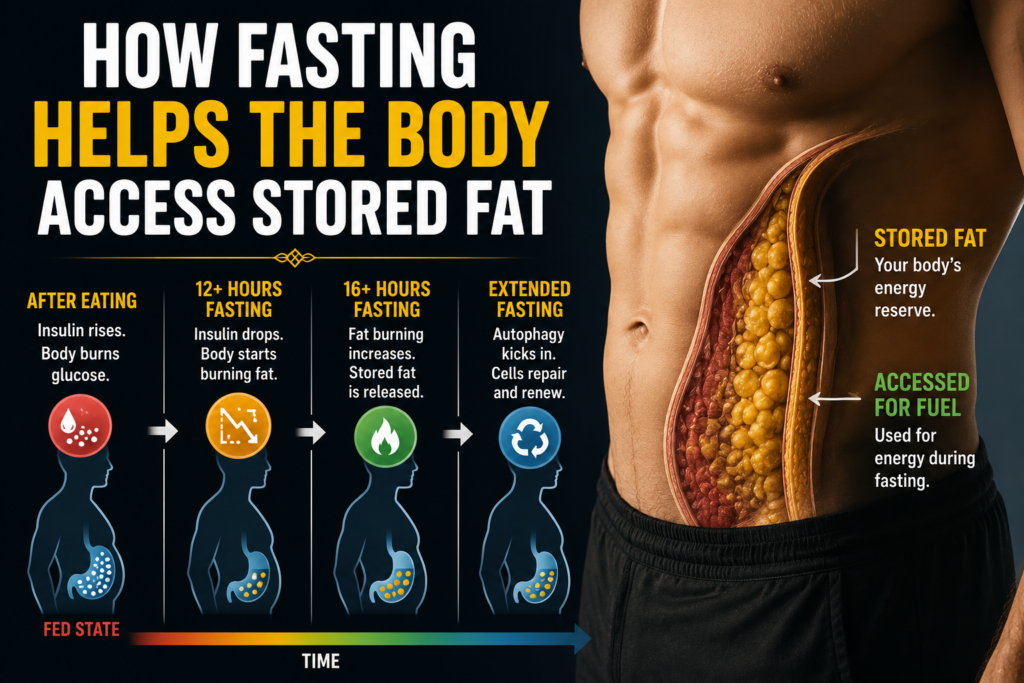
When we eat, insulin rises.
Insulin helps move nutrients into cells, but it also signals the body to store energy.
When insulin remains elevated throughout the day because of constant snacking and frequent meals, the body has fewer opportunities to access stored fat.
During fasting periods, insulin levels gradually decline.
As this happens, the body becomes more likely to use stored fat as fuel.
Many people report improvements in energy, appetite control, and mental clarity after adapting to a consistent fasting schedule.
The first few days may feel challenging.
Hunger tends to arrive in waves.
However, many people discover that these waves pass surprisingly quickly.
Over time, the body learns to become more flexible in its use of fuel.
Rather than relying exclusively on incoming food, it becomes better at utilizing stored energy.
This metabolic flexibility is one reason fasting continues to attract significant scientific interest.
For adults over 50, it may provide a practical way to support healthy weight management without constantly counting calories.
How Fasting Helps The Body Access Stored Fat
Understanding the science behind fasting helps explain why it can be effective.
Most people spend the majority of their day in what is known as the fed state.
Breakfast, snacks, lunch, coffee drinks, afternoon treats, dinner, and evening snacks keep the body continually processing incoming calories.
In this state, the body primarily burns glucose.
Fat stores remain largely untouched.
Fasting changes this process.
After many hours without food, insulin levels decrease and the body begins shifting toward fat utilization.
This transition can feel uncomfortable at first.
People accustomed to frequent eating often mistake the adaptation process for a problem.
In reality, the body is learning a new skill.
As fasting becomes routine, many people experience:
- More stable energy levels
- Reduced cravings
- Better appetite awareness
- Improved focus
- Gradual reductions in waist circumference
Researchers have also studied a process known as autophagy.
Autophagy is the body’s natural cellular recycling system.
During fasting periods, the body begins identifying and breaking down damaged cellular components.
Scientists continue exploring the potential role this process may play in healthy aging.
The important point is not that fasting is a miracle cure.
Rather, it allows the body to spend more time in a state where repair, maintenance, and fat utilization can occur.
For people over 50, these effects may become increasingly valuable.
The Five Tibetan Rites And Their Potential Benefits
Many discussions about Tibetan wellness practices eventually lead to the Five Tibetan Rites.
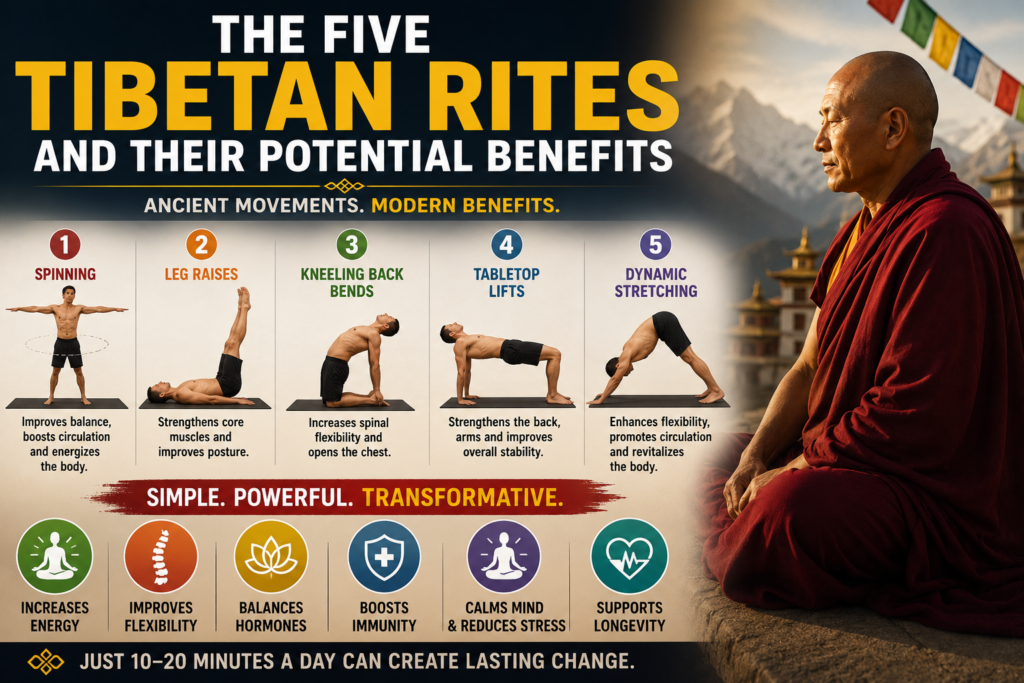
These are a series of movements often described as a form of moving meditation.
Unlike lengthy workout programs, the rites can be completed in a relatively short amount of time.
The five movements involve:
- Spinning
- Leg raises
- Kneeling back bends
- Tabletop lifts
- Dynamic stretching movements
Practitioners traditionally begin with only a few repetitions and gradually increase over time.
What makes these movements interesting is not their calorie-burning potential.
Their value lies elsewhere.
The rites encourage:
- Joint mobility
- Flexibility
- Balance
- Coordination
- Circulation
- Body awareness
For adults over 50, maintaining mobility becomes increasingly important.
A flexible, mobile body supports daily function, reduces stiffness, and contributes to overall vitality.
Many fitness programs focus heavily on intensity.
The Tibetan rites focus on consistency.
A practice performed every day often produces better long-term results than an extreme workout performed occasionally.
Another advantage is accessibility.
The movements require little space and no expensive equipment.
This removes many of the barriers that prevent people from maintaining regular exercise habits.
When combined with fasting and healthy eating, these movements may contribute to improved physical function and a leaner physique.
The Hidden Role Of Stress And Cortisol In Belly Fat Storage
One of the most overlooked factors in weight management is stress.
Modern life exposes many people to constant stimulation.
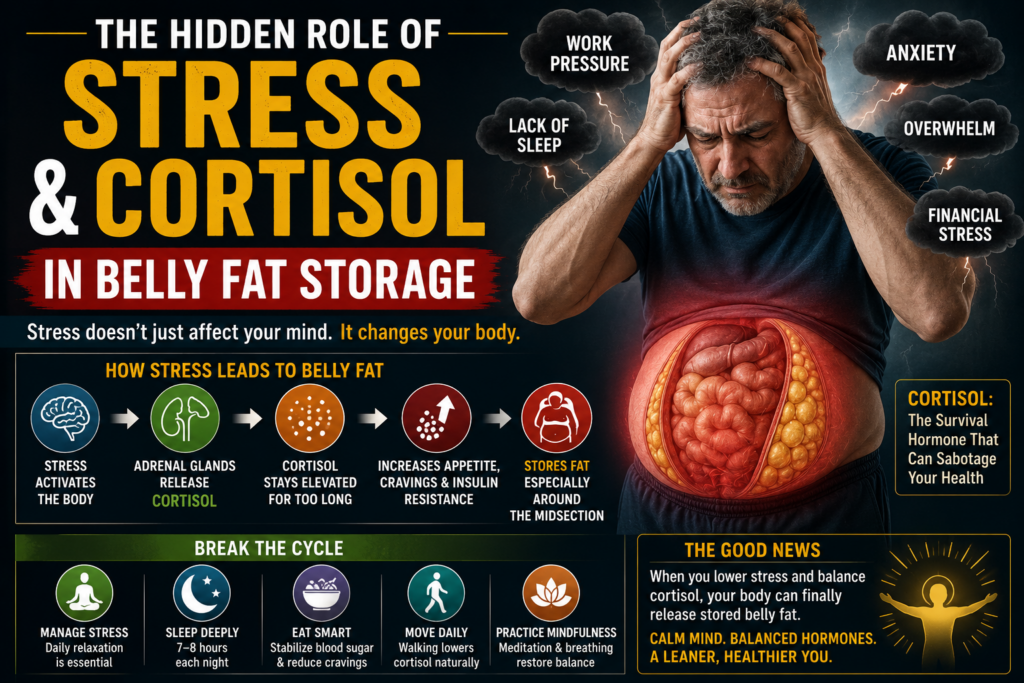
Work pressures, financial worries, digital distractions, poor sleep, and chronic anxiety create a persistent stress response.
The body responds by producing cortisol.
Cortisol serves important functions.
It helps us respond to challenges and threats.
However, chronically elevated cortisol can create problems.
Research suggests that long-term stress may contribute to increased abdominal fat accumulation.
This is where Tibetan practices offer another valuable lesson.
Monastic traditions place tremendous emphasis on calming the mind.
Meditation, controlled breathing, mindfulness, and contemplative practices are central elements of daily life.
These practices help regulate the nervous system.
When the nervous system becomes calmer, cortisol levels may become more balanced.
Many people spend years trying to lose belly fat while completely ignoring stress management.
They focus exclusively on food and exercise.
Meanwhile, chronic stress continues pushing their body toward fat storage.
Reducing stress does not mean eliminating all challenges.
It means changing how the body responds to those challenges.
Simple practices may include:
- Meditation
- Deep breathing exercises
- Nature walks
- Prayer
- Mindfulness training
- Adequate sleep
These activities may not appear impressive on social media.
However, their impact on long-term health can be profound.
Sometimes the most powerful fat-loss tool is not another workout.
Sometimes it is learning how to relax.
Tummo Breathing And Metabolic Control
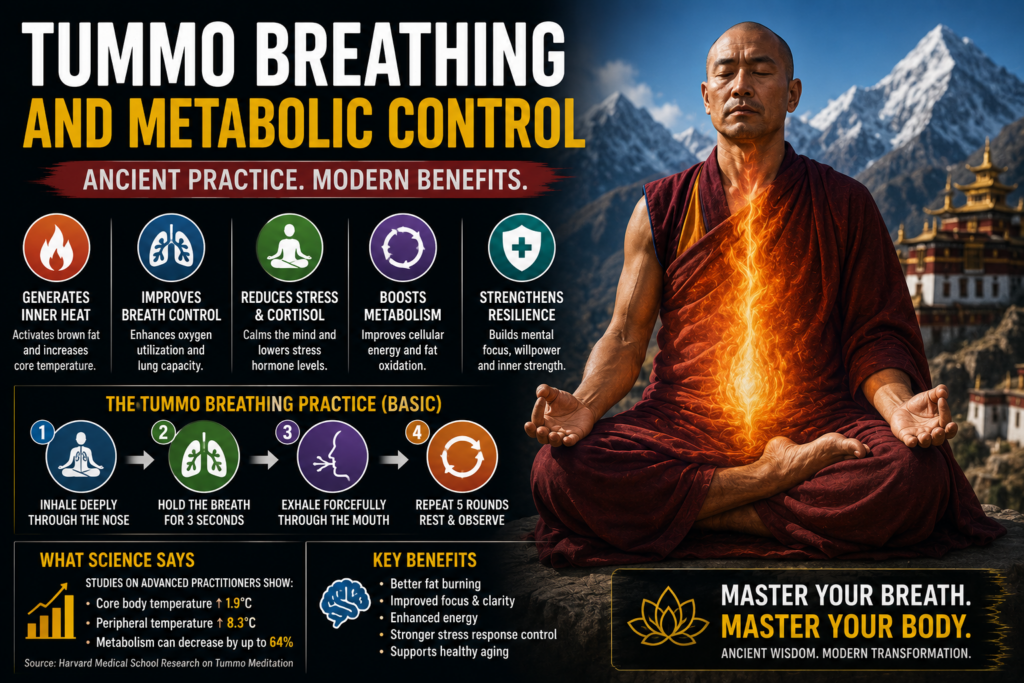
One of the most fascinating Tibetan practices is Tummo breathing.
Tummo has gained attention because of reports of monks generating significant body heat during meditation.
Researchers studying advanced practitioners have documented remarkable physiological responses.
Although most people will never achieve these extraordinary levels of mastery, the underlying principles remain valuable.
Tummo involves controlled breathing, concentration, and visualization.
These elements help practitioners develop greater awareness and control over their internal state.
For beginners, the greatest benefit may not be heat generation.
It may be stress regulation.
Controlled breathing directly influences the autonomic nervous system.
Slow, deliberate breathing can help shift the body away from a fight-or-flight response and toward a calmer state.
This has several potential benefits:
- Lower perceived stress
- Improved focus
- Better emotional regulation
- Enhanced relaxation
- Greater resilience
Many people underestimate how closely breathing and metabolism are connected.
When stress dominates, fat loss becomes more difficult.
When calmness increases, the body often functions more efficiently.
This is one reason breathing practices have become increasingly popular among athletes, executives, and health professionals.
The simplicity of the practice is part of its power.
No equipment is required.
No membership is needed.
The breath is always available.
Creating Your Own Tibetan Inspired Belly Fat Loss Plan
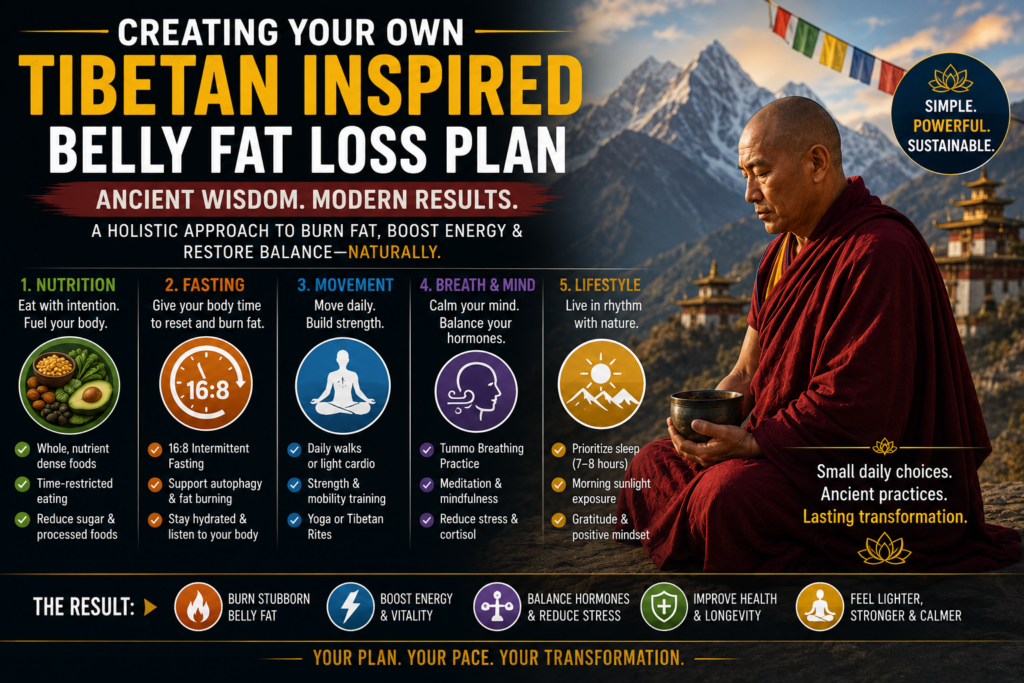
The most effective approach is often the simplest one.
Rather than attempting an extreme transformation overnight, focus on gradual progress.
A Tibetan-inspired strategy might look something like this.
Week One Through Four:
- Finish dinner by 6 p.m.
- Fast until 10 a.m.
- Drink water in the morning
- Practice the Five Tibetan Rites daily
- Eat nutrient-dense meals
- Prioritize sleep
Week Five Through Eight:
- Continue fasting schedule
- Gradually increase movement repetitions
- Introduce daily breathing exercises
- Reduce processed foods
- Increase walking
Month Three And Beyond:
- Refine eating windows if desired
- Continue daily movement practice
- Deepen meditation or breathing routines
- Focus on consistency rather than perfection
- Monitor waist measurements instead of obsessing over scale weight
The most important lesson from Tibetan traditions is not a specific fasting window or breathing technique.
It is consistency.
The monks achieve remarkable results because they practice their habits daily for years.
Modern culture often promotes quick fixes.
Monastic culture promotes mastery.
The difference is enormous.
Anyone can follow a strict diet for a week.
Anyone can exercise intensely for a month.
Few people can maintain healthy habits for years.
That is where lasting transformation occurs.
If you are over 50 and struggling with belly fat, consider shifting your focus.
Instead of asking how many calories you can burn, ask how well you can support your body’s natural systems.
Instead of seeking the fastest solution, seek the most sustainable one.
Instead of chasing perfection, pursue consistency.
The lean physiques often seen among Tibetan monks are not the result of shortcuts.
They are the byproduct of daily discipline, mindful eating, regular movement, stress management, and patience.
Those principles remain just as powerful today as they were centuries ago.
The true lesson is not about belly fat.
It is about self-mastery.
When you learn to master your habits, your appetite, your stress, and your daily routines, physical transformation often becomes a natural consequence.
The path may not be flashy.
It may not be marketed in a bottle or sold through a subscription.
But it has stood the test of time.
And sometimes the oldest wisdom offers the most practical solution for modern life.
Disclaimer
The information provided in this article is for educational and informational purposes only. While every effort has been made to ensure accuracy, the content is not intended to replace professional medical, nutritional, fitness, or healthcare advice.
The views and concepts discussed are based on publicly available information, scientific research, expert opinions, and interpretations of the topics covered. Individual health needs, dietary requirements, and fitness goals vary from person to person, and results may differ.
Before making significant changes to your diet, exercise routine, supplementation, or lifestyle habits, you should consult with a qualified healthcare professional, registered dietitian, physician, or other appropriate medical expert.
The author and publisher assume no responsibility for any loss, injury, or damage resulting from the use of information contained in this article. Readers are encouraged to conduct their own research and make informed decisions based on their individual circumstances.
By reading this article, you acknowledge that any actions you take based on the information provided are done at your own discretion and risk.ented in this article.