
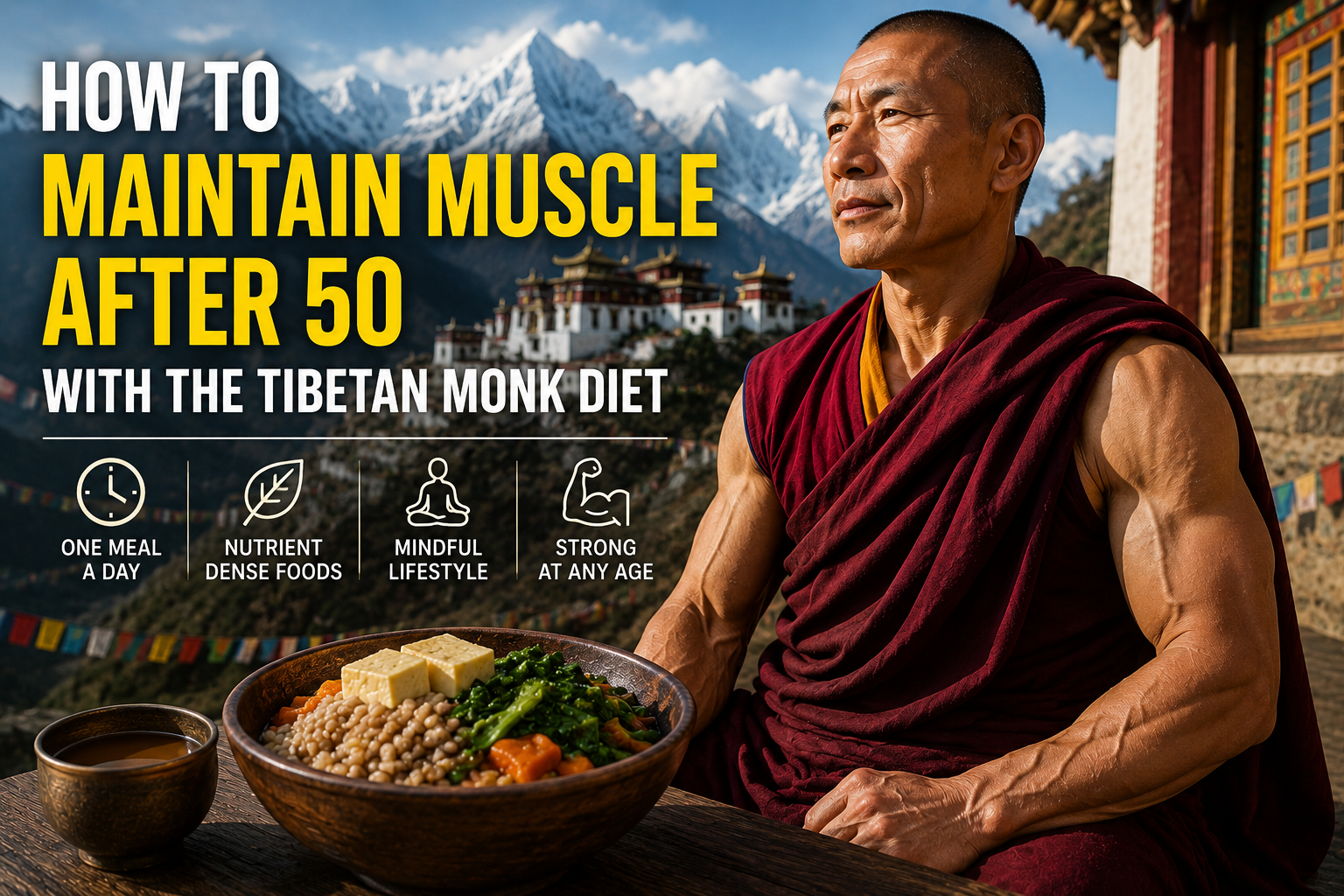
The modern fitness industry often tells us that building and maintaining muscle requires eating every few hours. We are encouraged to consume protein shakes, frequent snacks, and multiple meals throughout the day to avoid muscle loss. For many people over the age of 50, this advice has become accepted as fact.
Yet high in the mountains of Tibet, a very different approach has existed for centuries.
Many Tibetan monks traditionally consume all of their food in a single meal before noon. They then spend the rest of the day fasting. Despite this seemingly restrictive eating pattern, many maintain impressive strength, excellent posture, remarkable endurance, and healthy muscle mass well into their later years.
How is this possible?
The answer lies in a combination of fasting, nutrient-dense foods, physical activity, hormonal balance, and a lifestyle designed around simplicity rather than constant consumption.
While some claims about Tibetan monks and muscle building are often exaggerated online, there are valuable lessons we can learn from their traditional practices. Understanding these principles may help older adults improve body composition, maintain muscle, and support healthy aging.
The Ancient Eating Pattern Of Tibetan Monks
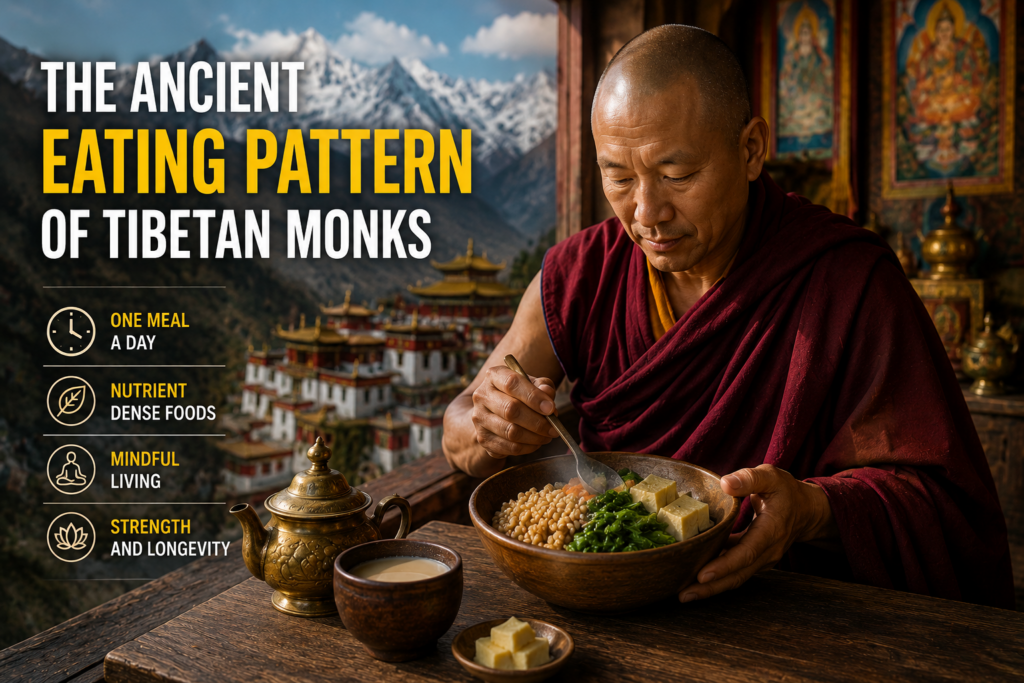
For hundreds of years, many Tibetan monasteries followed a simple eating schedule.
The day often began before sunrise with prayer, meditation, and light activity. Rather than consuming multiple meals, monks typically ate one substantial meal late in the morning or around midday.
Their traditional foods included:
- Tsampa (roasted barley flour)
- Yak butter
- Yak milk products
- Vegetables
- Lentils and legumes
- Occasional yak meat
- Herbal teas
This pattern naturally created a long fasting period between meals.
Unlike modern eating habits that involve breakfast, lunch, dinner, snacks, and sugary beverages, monks spent much of their day without significant calorie intake.
Today, scientific interest in intermittent fasting has revealed that these long fasting periods may trigger several beneficial metabolic changes.
When food is unavailable for extended periods, insulin levels tend to decrease. Lower insulin allows the body to access stored fat for energy more efficiently.
The body gradually shifts from relying primarily on glucose to utilizing stored fat and ketones as fuel.
This metabolic flexibility appears to be one of the keys to maintaining health and body composition throughout life.
The important point is that Tibetan monks did not necessarily eat less food overall. Instead, they often consumed their daily calories within a shorter timeframe.
This distinction matters because fasting is not automatically starvation.
Many people misunderstand fasting as severe calorie restriction. In reality, the traditional monk approach focused on meal timing rather than chronic underfeeding.
This allowed the body to experience the benefits of fasting while still receiving adequate nutrition.
For adults over 50, this concept can be particularly interesting because aging often brings challenges such as insulin resistance, weight gain, and declining muscle mass.
Optimizing meal timing may help address some of these issues when combined with proper nutrition and exercise.
Why Fasting May Help Preserve Muscle As We Age
One of the greatest fears surrounding fasting is muscle loss.
Many people assume that skipping meals automatically causes the body to break down muscle tissue for energy.
However, the human body has evolved sophisticated mechanisms to protect muscle during short-term fasting.
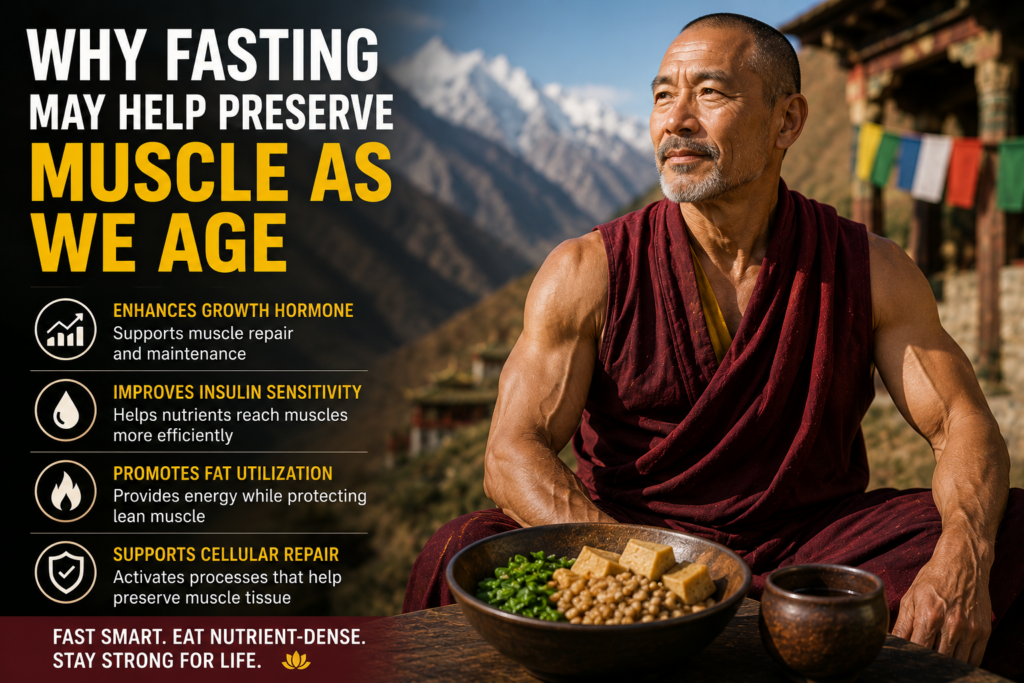
Research suggests that fasting can increase the release of growth hormone.
Growth hormone plays several important roles in the body:
- Supports tissue repair
- Helps preserve lean mass
- Encourages fat utilization
- Supports recovery processes
Although growth hormone alone does not build muscle, it creates an environment that helps preserve muscle tissue during periods without food.
Another important factor is insulin sensitivity.
When people eat constantly throughout the day, insulin remains elevated for longer periods. Over time, this may contribute to reduced insulin sensitivity.
When fasting periods are introduced, insulin levels decline.
As insulin sensitivity improves, nutrients consumed during meals may be directed more efficiently toward muscle tissue and other essential functions.
This does not mean that fasting automatically builds muscle.
Muscle growth still requires:
- Sufficient protein
- Resistance training
- Adequate calories
- Proper recovery
However, fasting may create a hormonal environment that supports these goals.
For older adults, preserving muscle becomes increasingly important because of sarcopenia, the age-related loss of muscle mass and strength.
Beginning around age 30, muscle mass naturally declines. This process accelerates after age 50.
Loss of muscle affects:
- Mobility
- Balance
- Independence
- Metabolic health
- Longevity
The monk lifestyle demonstrates that age alone does not guarantee weakness.
Daily movement, disciplined eating habits, and adequate nutrition can help maintain physical capability far beyond middle age.
The lesson is not that everyone should immediately adopt one meal a day.
Rather, it is that the body is often more resilient and adaptable than modern diet culture suggests.
The Power Of Nutrient Dense Meals
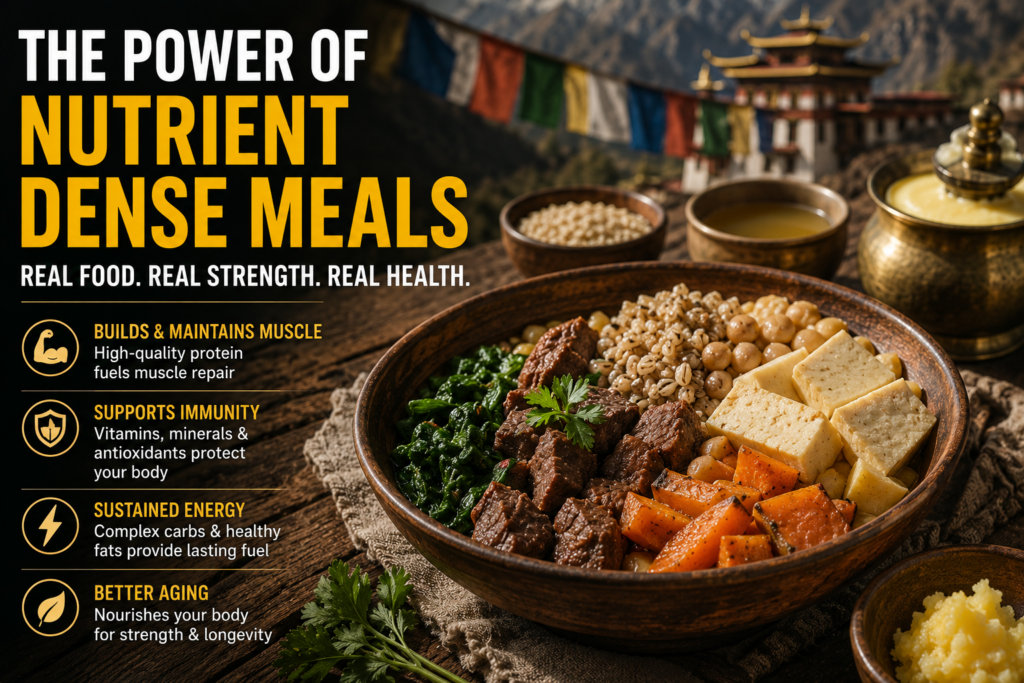
One reason traditional monks can thrive on fewer meals is the quality of the food they consume.
Modern diets frequently emphasize quantity over quality.
Many people eat large amounts of ultra-processed foods that are high in calories but relatively low in nutrients.
Traditional Tibetan foods are different.
Their meals often contain:
- Complex carbohydrates
- Healthy fats
- Fiber
- Vitamins
- Minerals
- Protein
Tsampa, the staple food of Tibet, is particularly interesting.
Made from roasted barley flour, it provides:
- Slow-digesting carbohydrates
- Fiber
- Essential minerals
- Sustained energy
Unlike highly refined grains, barley tends to produce a more gradual rise in blood sugar.
Yak butter and other animal fats contribute energy and fat-soluble nutrients.
Vegetables and legumes add fiber, antioxidants, and plant-based protein.
When available, animal proteins provide essential amino acids needed for muscle maintenance.
This nutrient density becomes especially important when eating fewer meals.
Every meal must deliver substantial nutrition.
For adults seeking to maintain muscle after 50, protein intake deserves special attention.
Research consistently shows that older adults require adequate protein to stimulate muscle protein synthesis effectively.
Good protein sources include:
- Eggs
- Fish
- Chicken
- Turkey
- Lean beef
- Greek yogurt
- Cottage cheese
- Lentils
- Beans
- Tofu
Many experts recommend consuming approximately 25 to 40 grams of high-quality protein per meal for older adults.
A nutrient-dense eating pattern prioritizes whole foods rather than relying heavily on supplements.
While protein shakes can be useful, they should complement rather than replace a balanced diet.
Traditional cultures maintained strength for generations without modern supplements because they focused on real food.
This remains a valuable lesson today.
Movement Rather Than Endless Workouts
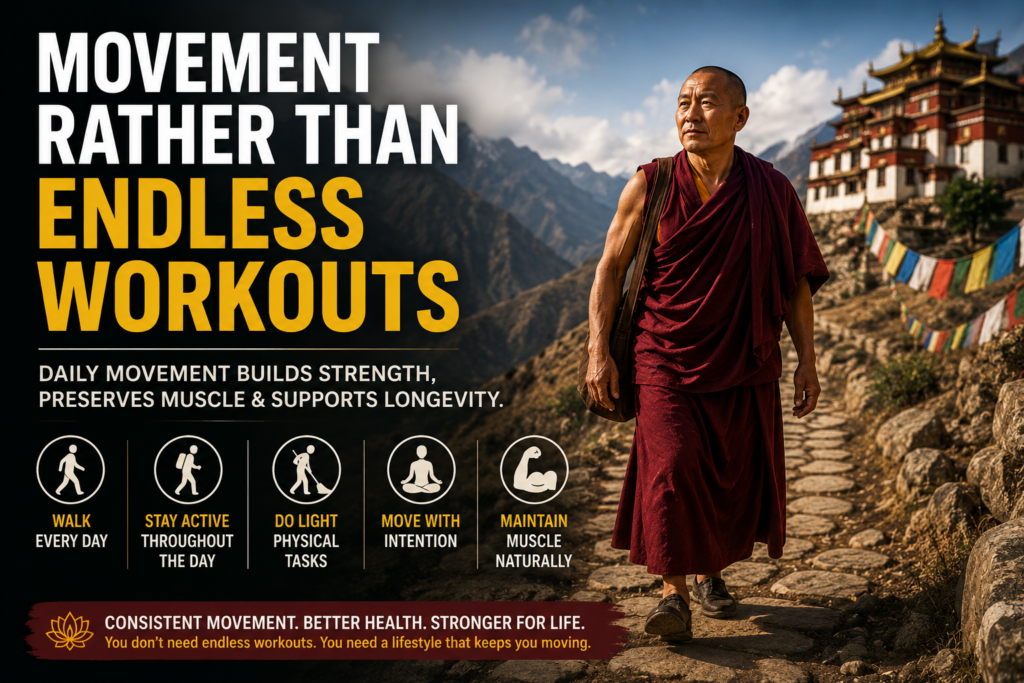
Another overlooked aspect of the monk lifestyle is physical activity.
Many people assume that muscle maintenance requires spending hours in the gym.
Tibetan monks often take a different approach.
Their daily routines naturally include movement throughout the day.
Activities may involve:
- Walking
- Climbing hills
- Carrying supplies
- Cleaning
- Gardening
- Manual tasks
- Meditation postures
This creates a physically active lifestyle rather than isolated exercise sessions.
Modern research increasingly supports the importance of daily movement.
Even individuals who exercise regularly can experience negative effects if they remain sedentary for the rest of the day.
The combination of movement and fasting may be particularly effective.
Light activity during fasting encourages the body to utilize stored fat while preserving muscle.
Walking is especially beneficial because it:
- Improves cardiovascular health
- Supports insulin sensitivity
- Enhances recovery
- Burns calories without excessive stress
For adults over 50, resistance training remains essential.
Muscles require a stimulus to remain strong.
Simple exercises can be highly effective:
- Squats
- Push-ups
- Resistance band exercises
- Lunges
- Rows
- Bodyweight movements
The goal is not necessarily bodybuilding.
The goal is maintaining strength, functionality, and independence.
Monks demonstrate that consistent daily movement often matters more than occasional extreme workouts.
A lifestyle built around regular physical activity supports long-term health far better than brief periods of intense exercise followed by prolonged inactivity.
This philosophy aligns closely with the habits observed in many of the world’s longest-living populations.
The Relationship Between Hormones And Healthy Aging
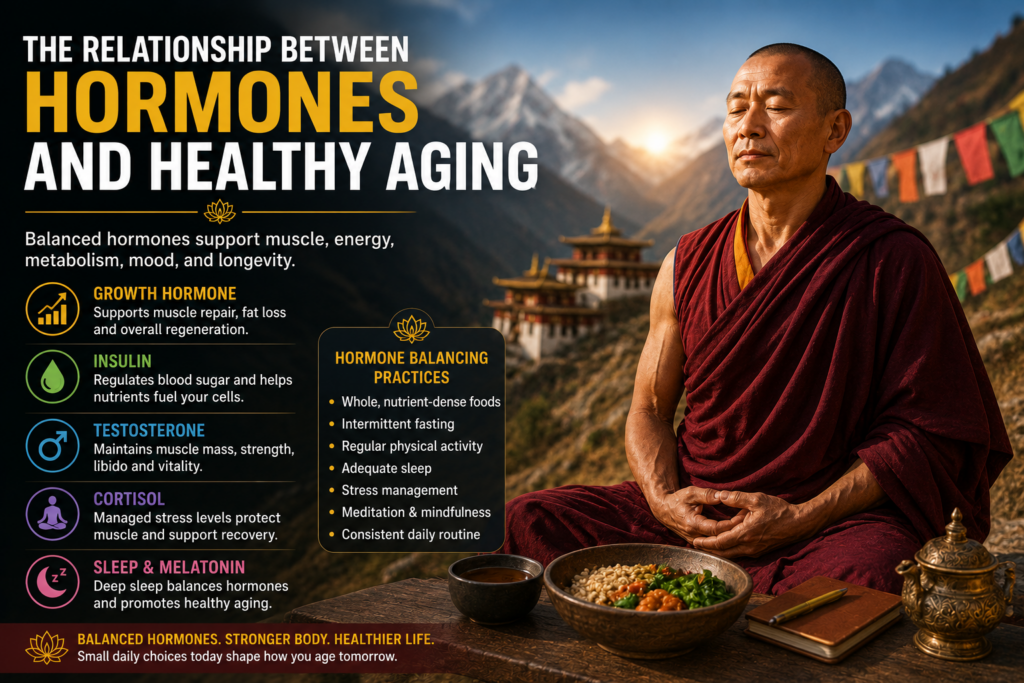
One of the most fascinating aspects of the monk lifestyle involves hormonal health.
Hormones influence nearly every aspect of aging.
These include:
- Insulin
- Growth hormone
- Testosterone
- Cortisol
- Leptin
- Ghrelin
When these systems function well, maintaining a healthy weight and strong body composition becomes easier.
When they become dysregulated, weight gain and muscle loss often follow.
Frequent eating can contribute to chronically elevated insulin levels in some individuals.
Over time, this may reduce the body’s ability to manage blood sugar efficiently.
Fasting periods provide insulin with an opportunity to decline.
This allows metabolic processes associated with repair and maintenance to become more active.
Sleep also plays a critical role.
Tibetan monks typically maintain consistent routines that align closely with natural circadian rhythms.
Quality sleep supports:
- Hormone production
- Muscle recovery
- Cognitive function
- Immune health
Unfortunately, modern lifestyles often disrupt these natural cycles through:
- Late-night eating
- Excessive screen exposure
- Irregular sleep schedules
- Chronic stress
Stress management is another major factor.
Meditation has been central to Tibetan monastic life for centuries.
Research increasingly shows that meditation can help reduce stress and improve emotional well-being.
Chronic stress elevates cortisol.
Excessively high cortisol over long periods can contribute to:
- Muscle breakdown
- Fat accumulation
- Poor sleep
- Increased inflammation
The monk lifestyle naturally addresses many of these issues.
Their routines encourage:
- Mindfulness
- Simplicity
- Consistency
- Rest
- Spiritual practice
These factors may indirectly support muscle preservation and healthy aging.
While most people will never live in a monastery, incorporating elements of this lifestyle can still be beneficial.
Even ten minutes of daily meditation may help improve stress resilience.
Small changes often produce meaningful results over time.
How To Apply Tibetan Monk Principles In Modern Life

You do not need to move to Tibet or eat exactly like a monk to benefit from these principles.
The goal is to adapt the underlying concepts to your own lifestyle.
Start by focusing on meal quality.
Choose whole foods that provide:
- Protein
- Healthy fats
- Complex carbohydrates
- Fiber
- Micronutrients
Reduce reliance on highly processed snacks and sugary beverages.
Next, experiment with extending your overnight fasting period.
For example:
- Finish dinner at 7:00 p.m.
- Eat breakfast at 9:00 a.m.
This creates a simple 14-hour fasting window.
As your body adapts, some individuals may choose to extend fasting further.
However, fasting should always be approached carefully, especially for people with medical conditions or those taking medications.
Strength training should become a regular part of your routine.
Aim for at least two to three sessions per week focusing on major muscle groups.
Walking daily can complement this approach.
Try to accumulate:
- 7,000 to 10,000 steps per day
- Regular movement breaks
- Outdoor activity whenever possible
Prioritize sleep.
Aim for seven to nine hours of quality sleep each night.
Create a consistent bedtime routine and reduce screen exposure before bed.
Practice stress reduction.
Consider:
- Meditation
- Deep breathing
- Prayer
- Mindfulness
- Nature walks
These practices support overall health and recovery.
Most importantly, remember that muscle maintenance after 50 is achievable.
The belief that aging automatically means weakness is simply not true.
The examples set by Tibetan monks and many other traditional cultures demonstrate that strength can be maintained well into later life.
Their secret is not a miracle food or a hidden supplement.
It is a combination of disciplined eating, consistent movement, nutrient-dense meals, stress management, and respect for the body’s natural rhythms.
Modern science continues to uncover evidence supporting many of these ancient practices.
While one meal a day may not be suitable for everyone, the underlying principles offer valuable lessons for anyone seeking better health, improved body composition, and greater vitality after 50.
By focusing on quality rather than quantity, consistency rather than extremes, and nourishment rather than constant consumption, it may be possible to age with greater strength, energy, and resilience.
The wisdom of Tibetan monks reminds us that sometimes the most effective solutions are not the newest ones. They are the practices that have quietly stood the test of time for centuries.
Disclaimer
The information provided in this article is for educational and informational purposes only. While every effort has been made to ensure accuracy, the content is not intended to replace professional medical, nutritional, fitness, or healthcare advice.
The views and concepts discussed are based on publicly available information, scientific research, expert opinions, and interpretations of the topics covered. Individual health needs, dietary requirements, and fitness goals vary from person to person, and results may differ.
Before making significant changes to your diet, exercise routine, supplementation, or lifestyle habits, you should consult with a qualified healthcare professional, registered dietitian, physician, or other appropriate medical expert.
The author and publisher assume no responsibility for any loss, injury, or damage resulting from the use of information contained in this article. Readers are encouraged to conduct their own research and make informed decisions based on their individual circumstances.
By reading this article, you acknowledge that any actions you take based on the information provided are done at your own discretion and risk.ented in this article.