
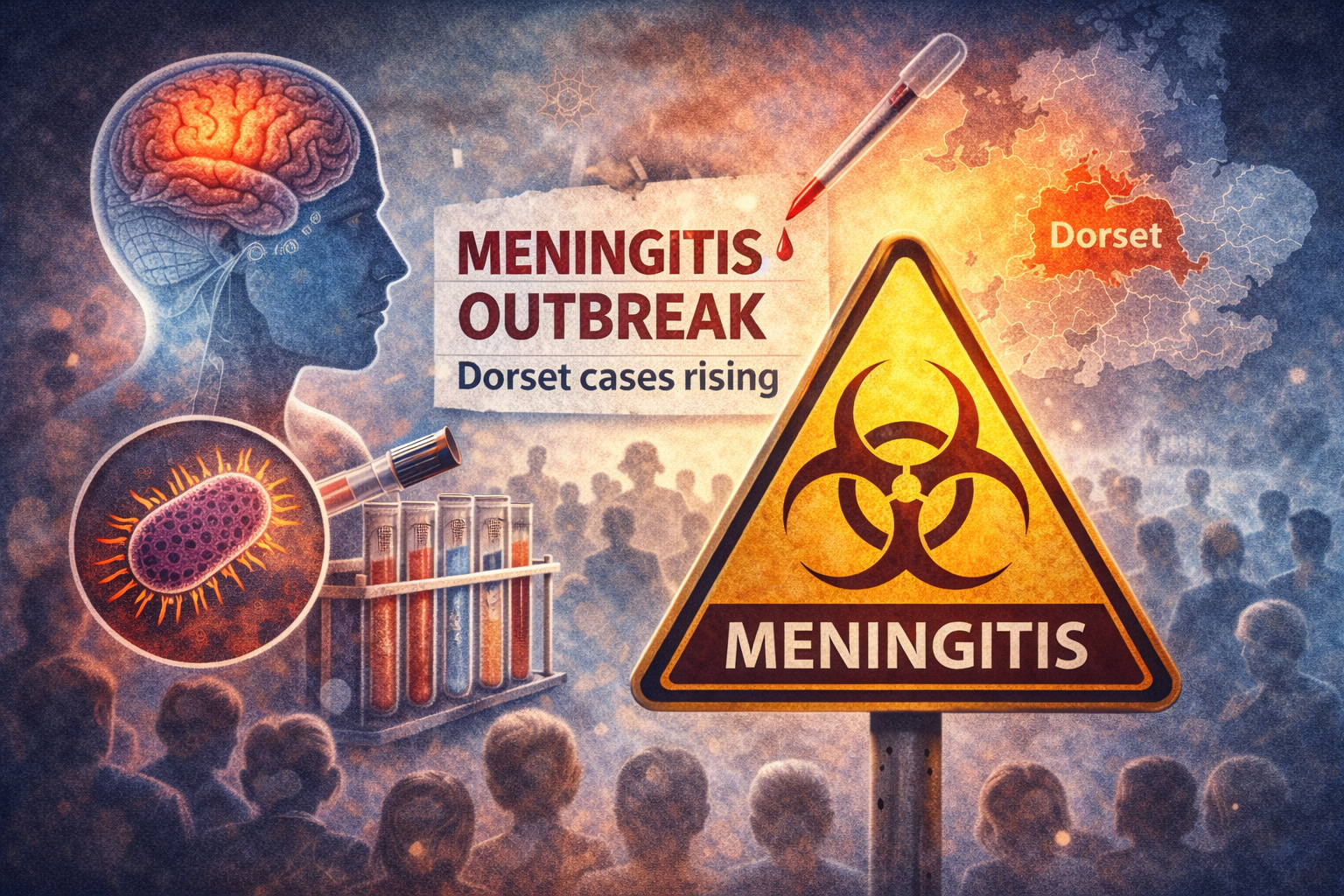
Meningitis is often viewed as a disease of the past, something largely controlled through vaccines and modern healthcare. Yet, recent local outbreaks across the United Kingdom, including a MenB outbreak in Dorset, remind us that this serious condition remains a real and evolving threat.
Despite medical advancements, meningitis continues to demand vigilance. Localised outbreaks can emerge quickly, spread within communities, and pose significant risks, particularly to children, teenagers, and young adults. Public health authorities must remain alert, and individuals need to understand both the symptoms and the importance of early intervention.
This article explores the nature of meningitis outbreaks, the recent concerns in England, the science behind MenB, and why ongoing monitoring is essential for public safety.
What Is Meningitis And Why Is It Dangerous
Meningitis is an inflammation of the protective membranes surrounding the brain and spinal cord, known as the meninges. It can be caused by bacteria, viruses, fungi, or parasites, but bacterial meningitis is the most severe form.
The most dangerous types include:
- Meningococcal meningitis
- Pneumococcal meningitis
- Haemophilus influenzae type b (Hib)
Among these, meningococcal disease is particularly concerning because it can progress rapidly and become life-threatening within hours.
Symptoms to Watch For
Meningitis symptoms can appear suddenly and worsen quickly. Common signs include:
- High fever
- Severe headache
- Neck stiffness
- Sensitivity to light
- Vomiting
- Confusion or difficulty concentrating
In some cases, a distinctive rash may appear, especially in meningococcal infections.
Early recognition is critical. Delayed treatment can lead to severe complications, including brain damage, hearing loss, and even death.
Understanding MenB And Its Impact
One of the most talked-about strains in recent UK outbreaks is Meningococcal Group B, commonly referred to as MenB.
What Makes MenB Different
MenB is particularly challenging because:
- It is one of the most common causes of bacterial meningitis in the UK
- It primarily affects infants, young children, and teenagers
- Symptoms can escalate extremely quickly
Unlike some other strains, MenB has historically been harder to target with vaccines, although recent developments have improved prevention efforts.
Vaccination and Protection
The UK introduced the MenB vaccine into the routine childhood immunisation schedule in 2015. This has significantly reduced cases among infants.
However, protection is not universal:
- Older children and adults may not be vaccinated
- Immunity may vary over time
- Outbreaks can still occur in specific communities
Recent Local Outbreaks In England
Localised meningitis outbreaks, such as the one reported in Dorset, highlight how quickly the disease can resurface.
These incidents often involve:
- Small clusters of cases within a community
- Schools, universities, or close-contact environments
- Rapid public health responses to contain spread
Why Local Outbreaks Occur
Meningitis outbreaks are typically driven by:
- Close living conditions
- High levels of social interaction
- Low immunity within certain groups
Even a few cases can trigger significant concern due to the severity of the disease.
The Role Of Public Health Monitoring
Public health agencies in the UK, including the UK Health Security Agency, play a critical role in managing outbreaks.
Their responsibilities include:
- Tracking infection rates
- Identifying clusters
- Issuing public health alerts
- Coordinating vaccination campaigns
Rapid Response Measures
When an outbreak is detected, authorities may:
- Offer emergency vaccinations to close contacts
- Provide antibiotics to prevent further spread
- Advise schools or institutions on safety measures
These interventions are crucial in preventing wider transmission.
Why Meningitis Still Spreads In Modern Britain
It may seem surprising that meningitis remains a concern in a country with advanced healthcare. However, several factors contribute to ongoing outbreaks.
Population Density and Urban Living
In areas with high population density, such as London, infectious diseases can spread more easily due to close contact.
Social Behaviour Patterns
Environments where people mix closely, such as:
- Universities
- Nightlife settings
- Shared accommodation
can increase the risk of transmission.
Gaps in Vaccination Coverage
Although vaccines are available, not everyone is fully protected.
Reasons include:
- Missed vaccinations
- Lack of awareness
- Age-related eligibility
Evolving Bacterial Strains
Bacteria can adapt over time, which may influence:
- Transmission rates
- Vaccine effectiveness
The Impact On Communities
Even small outbreaks can have a profound effect on local communities.
Fear and Uncertainty
Meningitis is widely known for its severity, which can create:
- Public anxiety
- Increased healthcare demand
- Heightened media attention
Disruption to Daily Life
Outbreaks may lead to:
- Temporary school closures
- Changes in public behaviour
- Increased pressure on local health services
Emotional Toll
Families affected by meningitis often face:
- Long-term health consequences
- Emotional trauma
- Financial challenges
The Importance Of Early Diagnosis And Treatment
One of the most critical aspects of meningitis management is speed.
Why Time Matters
Bacterial meningitis can progress rapidly. In some cases:
- Symptoms worsen within hours
- Severe complications develop quickly
Early treatment with antibiotics can be life-saving.
Challenges in Diagnosis
Meningitis symptoms can initially resemble:
- Flu
- Viral infections
- General illness
This can lead to delays in seeking medical attention.
Public awareness campaigns aim to educate people on recognising warning signs and acting quickly.
Prevention Strategies That Work
Preventing meningitis requires a combination of individual action and public health measures.
Vaccination
Vaccination remains the most effective tool.
In the UK, routine vaccines include protection against:
- MenB
- MenC
- MenACWY
- Hib
Ensuring vaccinations are up to date is essential.
Hygiene Practices
Simple measures can reduce transmission:
- Regular handwashing
- Avoiding sharing drinks or utensils
- Covering coughs and sneezes
Awareness and Education
Understanding symptoms and risks helps people:
- Seek help early
- Reduce spread
- Protect vulnerable individuals
Schools And Universities: High-Risk Environments
Educational institutions are often at the centre of meningitis outbreaks.
Why Students Are Vulnerable
Factors include:
- Close living quarters
- Social interaction
- Stress and lifestyle changes
University students, in particular, are considered a high-risk group.
Preventive Measures in Education Settings
Institutions often implement:
- Vaccination campaigns
- Health awareness programmes
- Rapid response protocols
Global Perspective On Meningitis
While this article focuses on the UK, meningitis remains a global health concern.
Regions such as sub-Saharan Africa experience:
- Large-scale outbreaks
- Seasonal epidemics
- Limited healthcare resources
International organisations, including the World Health Organization, are working toward eliminating meningitis as a public health threat by 2030.
The Future Of Meningitis Control
Advances in medicine and technology offer hope for better prevention and management.
Improved Vaccines
Ongoing research aims to:
- Increase vaccine coverage
- Enhance effectiveness
- Protect against more strains
Faster Diagnostic Tools
New technologies may allow:
- Rapid detection
- Earlier treatment
- Better patient outcomes
Data-Driven Public Health
Enhanced data systems enable:
- Real-time outbreak tracking
- Faster response
- Improved resource allocation
What You Should Do If You Suspect Meningitis
If meningitis is suspected, immediate action is essential.
Key Steps
- Seek urgent medical attention
- Do not wait for symptoms to worsen
- Inform healthcare providers of all symptoms
Trusting your instincts can make a critical difference.
Why Public Awareness Still Matters
Despite medical progress, awareness remains one of the strongest defences against meningitis.
Many people are unaware of:
- Early symptoms
- Risk factors
- Available vaccines
Improving public knowledge can save lives.
Final Thoughts
Meningitis outbreaks, even when localised, serve as an important reminder that infectious diseases are never fully eliminated. The recent MenB incidents in Dorset highlight the need for ongoing vigilance, strong public health systems, and informed communities.
While vaccines and modern medicine have dramatically reduced the overall burden of meningitis, the disease still has the potential to cause serious harm. Early detection, rapid response, and continued awareness are key to keeping communities safe.
In a world where health threats can evolve quickly, staying informed is not just beneficial, it is essential.
Disclaimer
This article is for informational purposes only and does not constitute medical advice. If you suspect meningitis or any serious illness, seek immediate medical attention from a qualified healthcare professional.