
Building muscle is often associated with chicken breasts, eggs, tuna, steak and whey protein shakes. Walk into almost any gym and you will hear people discussing how much meat they eat, which protein powder they use and how many eggs they consume for breakfast.
This can create the impression that building a strong, muscular body without meat is extremely difficult. However, meat is not the substance that directly builds muscle. Your body builds and repairs muscle using amino acids, which are obtained when dietary protein is digested.
Those amino acids can come from animal foods, plant foods or a combination of both.
Research comparing plant and animal proteins suggests that the source of protein may be less important than many people assume, particularly when someone consumes enough total protein, eats a varied diet and follows an effective resistance-training programme. A systematic review found no significant difference between plant and animal protein for overall changes in muscle strength or absolute lean mass, although animal protein may offer a small advantage in some circumstances because of its amino acid concentration and digestibility.
One controlled trial also found that a high-protein vegan diet supported muscle and strength gains similarly to a protein-matched omnivorous diet when participants completed resistance training and consumed approximately 1.6 grams of protein per kilogram of body weight each day.
This does not mean that simply adding a spoonful of chia seeds to breakfast will transform your body. It means that a properly planned plant-based diet can provide the protein, carbohydrates, calories and micronutrients needed to support muscle development.
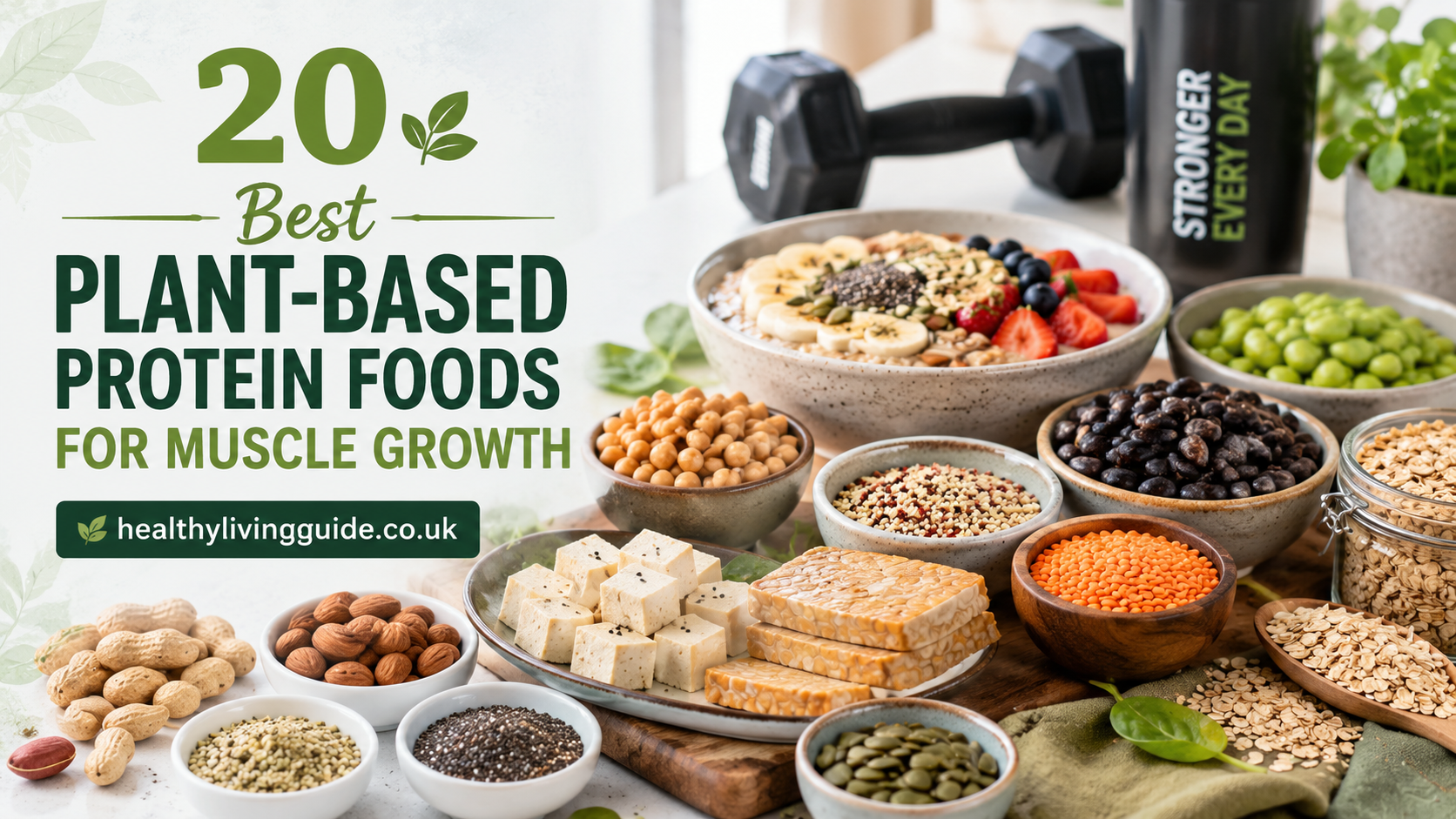
The following 20 plant foods can all contribute. Some, such as tofu, tempeh, seitan, lentils and edamame, can form the main protein source in a meal. Others, including nuts, seeds, oats and nutritional yeast, work better as supporting ingredients that increase the total protein content.
Understanding the difference is important. A useful protein topping should not be mistaken for a complete muscle-building meal.
Can You Really Build Muscle Without Eating Meat?
Muscle growth occurs when resistance training creates a stimulus that encourages your body to adapt. Your body then needs sufficient energy, protein, sleep and recovery to repair the trained muscles and gradually make them stronger.
Protein supports the process, but protein without training does not automatically create larger muscles. The NHS recommends that adults undertake strengthening activities involving all the major muscle groups on at least two days each week. These activities can include lifting weights, using resistance bands, performing bodyweight exercises or doing physically demanding movements that challenge the muscles.
People who train regularly usually need more protein than sedentary adults. The British Dietetic Association states that athletes involved in strength and endurance activities may require approximately 1.4 to 2.0 grams of protein per kilogram of body weight each day. The precise amount depends on factors such as training volume, body weight, age, overall calorie intake and whether the person is trying to gain muscle or lose fat.
For a person weighing 70 kilograms, that broad range would equal approximately 98 to 140 grams of protein a day. Not everyone needs to aim for the top of the range. A recreational gym-goer training several times a week may have different requirements from a competitive bodybuilder completing a demanding programme.
The more important lesson is that protein should be planned rather than left to chance.
A common mistake is to eat a relatively low-protein breakfast and lunch, followed by one very large protein-heavy evening meal. A more practical approach is to distribute protein across breakfast, lunch, dinner and one or two snacks.
For example, a plant-based day could include:
- Oats, soya milk, peanut butter and hemp seeds at breakfast.
- A lentil, chickpea or tofu meal at lunchtime.
- Tempeh, seitan, beans or edamame with dinner.
- Fortified soya yoghurt, roasted chickpeas or a smoothie as a snack.
Protein quality also deserves attention. Proteins are made from amino acids, including nine essential amino acids that the body cannot manufacture in sufficient quantities. Soy foods contain all nine essential amino acids, which is one reason tofu, tempeh, edamame and soya milk are particularly valuable in a meat-free muscle-building diet.
Some other plant proteins contain smaller amounts of one or more essential amino acids. Wheat protein, for example, is relatively low in lysine, while many legumes contain less methionine.
This does not mean you must carefully combine specific foods at every meal. Eating a varied selection of legumes, grains, soy foods, nuts and seeds throughout the day can help provide a broad amino acid intake. Nevertheless, pairing foods can be an easy way to improve both nutrition and enjoyment. Examples include lentils with rice, chickpeas with wholemeal pitta, seitan with beans and peanut butter with wholegrain bread.
Leucine is another amino acid that receives considerable attention because it helps stimulate muscle protein synthesis. Some plant proteins contain less leucine per serving than whey and other animal proteins. This can often be addressed by eating a sufficiently large protein portion, combining different plant foods or choosing higher-quality sources such as soy and pea protein.
The conclusion is straightforward: you do not need meat to build muscle, but you do need a structured diet. The plant foods below are tools. Their effectiveness depends on how you use them.
Lentils Chickpeas Black Beans And Green Peas Make An Affordable Protein Base
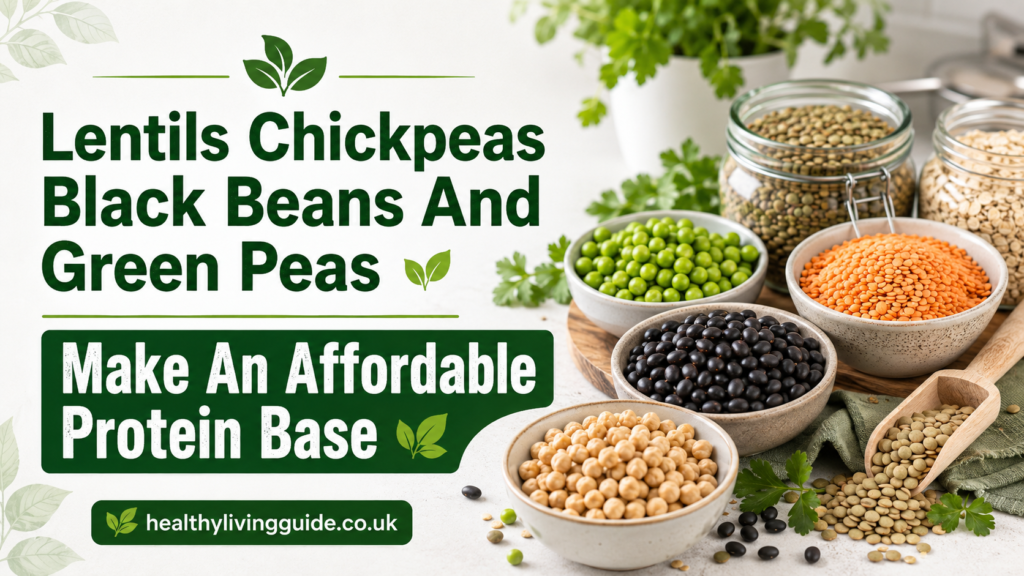
Pulses are among the most practical foods for anyone trying to increase plant protein without dramatically increasing the cost of their weekly food shop.
They are widely available in British supermarkets, can be purchased dried or tinned and work in curries, soups, stews, salads, wraps, pasta sauces and rice dishes. The British Dietetic Association identifies beans, peas and lentils as important plant-based sources of protein, fibre, iron and zinc.
1. Lentils
Lentils are one of the easiest plant proteins to build meals around. Red lentils soften during cooking, making them ideal for dhal, soup, curry and thick pasta sauces. Green and brown lentils retain more texture and work well in salads, shepherd’s pie fillings and meal-preparation bowls.
A large serving of cooked lentils provides meaningful protein as well as carbohydrate. That combination can be particularly useful for someone who trains because the protein contributes to muscle repair while the carbohydrate helps replenish energy.
Lentils also contain iron. However, iron from plant foods is generally absorbed less efficiently than iron from meat. The NHS recommends eating vitamin C-rich foods alongside plant sources of iron to improve absorption. Adding peppers, tomatoes, broccoli, citrus fruit or berries to the same meal is a simple way to do this. Tea and coffee are best kept away from iron-rich meals because they can reduce absorption.
A practical muscle-building meal might combine red lentil dhal with brown rice, vegetables and a spoonful of fortified soya yoghurt.
2. Chickpeas
Chickpeas provide protein, fibre and carbohydrate in one affordable ingredient. They can be blended into hummus, added to curry, roasted as a snack or mashed into sandwich fillings.
Hummus can contribute protein, but a thin scrape on a piece of toast is unlikely to be enough for a high-protein meal. Portion size matters. A more substantial lunch might include a generous amount of hummus, wholemeal pitta, roasted chickpeas, salad and a side of edamame.
Chickpea flour, sometimes sold as gram flour or besan, offers another useful option. It can be used to make savoury pancakes, vegetable fritters and high-protein flatbreads. Combining gram flour with tofu, peas or beans can raise the protein content further.
3. Black beans
Black beans are particularly useful in burritos, chilli, soups, salads and homemade bean burgers. Like other legumes, they contain lysine, an amino acid that tends to be limited in many cereal grains.
A black bean and rice meal is therefore a sensible combination. The beans contribute lysine, fibre and protein, while the rice supplies carbohydrate and additional amino acids.
Black beans can also help make a meal more satisfying. However, anyone who suddenly increases their intake of beans and lentils may experience bloating or wind. Increasing portions gradually, drinking sufficient fluid and rinsing tinned beans before use can make the transition more comfortable.
4. Green peas
Green peas are often treated as a minor vegetable, but they contribute more protein than many people expect. They are not as protein-dense as tofu, tempeh or seitan, yet they can make a useful contribution when eaten in a proper portion.
Frozen peas are inexpensive, convenient and easy to add to almost any meal. They work in pasta, rice, soup, curry, mashed potato and stir-fries.
Pea protein powder is more concentrated than whole peas because much of the carbohydrate and fibre has been removed. It can be useful when food alone is not meeting someone’s protein requirements, but it is not essential for everyone. A balanced diet can often supply enough protein without supplements, particularly when main meals contain substantial portions of legumes, soy foods or seitan.
The greatest advantage of pulses is not that any one of them is miraculous. It is that they are affordable, filling, versatile and easy to eat regularly. Consistency builds muscle more effectively than occasionally buying an expensive “superfood”.
Tofu Tempeh Edamame And Seitan Deliver The Biggest Protein Return
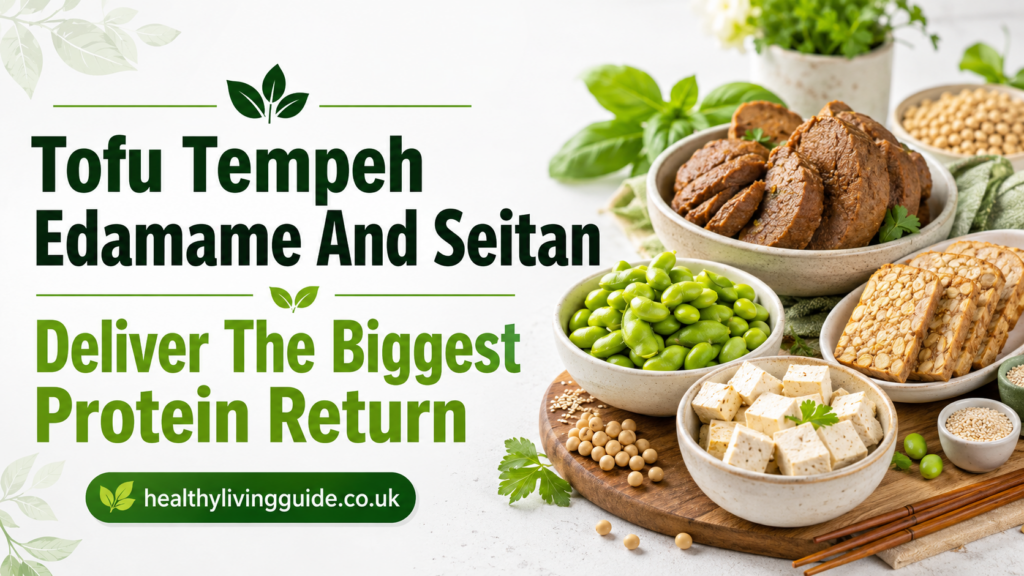
Some plant foods contain a relatively modest amount of protein compared with their calorie content. Tofu, tempeh, edamame and seitan are different. They can provide a substantial amount of protein in a normal meal, making them especially useful for people with higher requirements.
5. Tofu
Tofu is produced from soya beans and is available in several textures. Silken tofu works well in smoothies, sauces, desserts and scrambled dishes. Firm and extra-firm tofu are better suited to baking, frying, grilling and air-frying.
The protein content varies considerably between products, so checking the label is worthwhile. Firm tofu generally provides more protein per 100 grams than softer versions because it contains less water.
Tofu is sometimes criticised for being bland, but its neutral flavour is one of its strengths. Pressing it, coating it with spices and cooking it until crisp can completely change the texture. Marinades containing soy sauce, garlic, ginger, lemon, chilli or smoked paprika can add considerable flavour.
Soy protein has been studied extensively. Evidence suggests that soy supplementation can support strength and muscle development when combined with resistance training, and high-protein diets using soy have produced gains comparable with protein-matched diets using whey in controlled research.
6. Tempeh
Tempeh is made by fermenting whole soya beans into a firm block. It usually has a denser texture and stronger flavour than tofu and commonly supplies more protein per 100 grams.
Because the whole bean is retained, tempeh also provides fibre. It can be sliced into strips, crumbled into chilli, added to stir-fries or marinated and baked.
Some articles describe tempeh as a probiotic food. This should be treated cautiously because cooking and pasteurisation can destroy live microorganisms. Tempeh remains a nutritious fermented food, but it should not automatically be assumed that every shop-bought product contains live probiotic cultures.
For muscle gain, its real value is much simpler: it is an easy way to add a concentrated soy-based protein to lunch or dinner.
7. Edamame
Edamame are young green soya beans. They are normally sold frozen, either in their pods or already shelled.
They are useful as a snack, but their greatest value may be as a meal booster. Adding a generous serving of shelled edamame to rice, noodles, salads or stir-fries can significantly increase the total protein content without requiring a separate meat substitute.
They can also be blended with lemon juice, garlic and herbs to create an alternative to hummus.
Like tofu and tempeh, edamame provides all nine essential amino acids. It also retains fibre because it is eaten as the whole bean.
8. Seitan
Seitan is made mainly from wheat gluten. It has a dense, chewy texture and is among the most protein-rich meat-free foods commonly available.
It can be sliced into sandwiches, added to curry, grilled as kebabs or used in wraps and stir-fries. Its relatively neutral base makes it suitable for many different seasonings.
However, seitan has two important limitations.
First, it is unsuitable for people with coeliac disease and should also be avoided by anyone who has been medically advised to exclude gluten. Secondly, wheat protein is relatively low in lysine. Eating seitan with lentils, beans, chickpeas or edamame can provide a more balanced combination of amino acids.
Some manufactured seitan products may also contain considerable salt. Reading the nutrition label is therefore sensible, particularly for anyone managing high blood pressure or trying to reduce sodium.
Of the 20 foods in this article, tofu, tempeh, edamame and seitan are among the easiest to use as direct replacements for a conventional meat-based protein source. Rather than sprinkling them over a meal, make them the centre of it.
Quinoa Amaranth Buckwheat Farro And Oats Supply Protein And Training Fuel
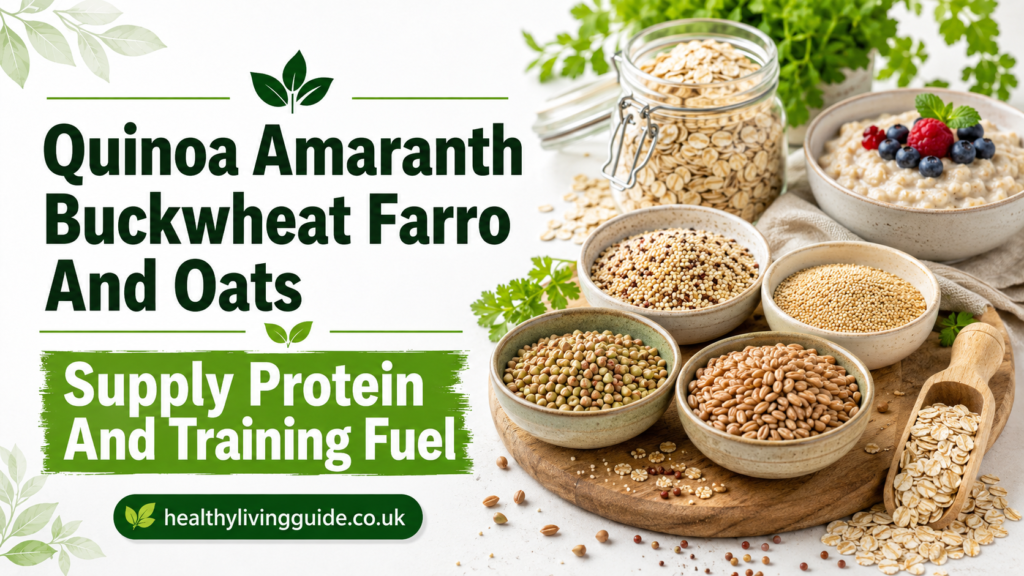
Carbohydrates are sometimes unfairly treated as an obstacle to gaining lean muscle. In reality, carbohydrate is an important fuel for demanding training.
When carbohydrate intake is too low, workouts may feel harder, performance can decline and the body may use some dietary protein for energy rather than reserving it for repair and other essential functions.
Whole grains and grain-like seeds therefore have an important place in a muscle-building diet. They may not contain as much protein as tofu or seitan, but they provide energy and increase the total protein content of a meal.
9. Quinoa
Quinoa is technically a seed, although it is cooked and served like a grain. It contains all nine essential amino acids, but calling it a “complete protein” should not create unrealistic expectations.
A normal portion of quinoa supplies less total protein than a substantial serving of tofu, tempeh or lentils. Its strength is that it combines some protein with complex carbohydrate and minerals in one convenient food.
Quinoa works well as a base for grain bowls. Combining it with chickpeas, edamame, tofu or beans creates a much stronger muscle-building meal than relying on quinoa alone.
Rinsing quinoa before cooking can remove some of its naturally bitter coating.
10. Amaranth
Amaranth is another seed commonly prepared like a grain. It can be cooked into porridge, added to soup or used as flour in baking.
It contains a broader amino acid profile than many traditional grains and contributes minerals including iron and magnesium. However, as with quinoa, the portion normally eaten means that it should be viewed as a useful supporting protein rather than the only protein source in a main meal.
Amaranth porridge can be combined with fortified soya milk, peanut butter, chia seeds and fruit to create a more balanced breakfast.
11. Buckwheat
Despite its name, buckwheat is not a form of wheat and is naturally gluten-free. It is used in buckwheat groats, flour and noodles.
People with coeliac disease should still check labels because cross-contamination can occur during manufacturing, and some soba noodles contain a mixture of buckwheat and ordinary wheat.
Buckwheat provides carbohydrate, fibre, minerals and some protein. It works particularly well with tofu, edamame and vegetables in a noodle bowl.
12. Farro
Farro is an ancient form of wheat with a chewy texture. It contributes more fibre and protein than many refined grain products and can make salads, soups and grain bowls more satisfying.
Unlike buckwheat, farro contains gluten and is unsuitable for anyone with coeliac disease.
Farro should not be presented as a high-protein substitute for meat. Its role is to provide training fuel and add a moderate amount of protein alongside legumes, soy foods or seitan.
A farro salad containing lentils, roasted vegetables, pumpkin seeds and a tahini dressing is a good example of “protein stacking”, where several moderate sources combine to produce a protein-rich meal.
13. Oats
Oats are one of the most useful muscle-building foods because they are affordable, widely available and easy to combine with other ingredients.
A plain bowl of porridge contains some protein but may not provide enough for someone with high requirements. The solution is not necessarily to abandon oats. It is to build a better bowl.
Cook oats with fortified soya milk instead of water, then add peanut butter, hemp seeds, chia seeds or a scoop of suitable protein powder. This can turn a basic carbohydrate breakfast into a much more substantial meal.
Oats also contain beta-glucan, a form of soluble fibre, and provide slower-digesting carbohydrate that can be useful before training. The exact timing does not need to be perfect. Eating a comfortable meal containing carbohydrate and protein within the hours around training is generally more practical than becoming anxious about a narrow “anabolic window”.
These five foods demonstrate why muscle building is not solely about finding the ingredient with the highest protein number. Training also requires energy. A balanced meal often combines a concentrated protein such as tofu or lentils with a carbohydrate source such as oats, quinoa, buckwheat or farro.
Hemp Chia Pumpkin Seeds Peanuts And Almonds Add Concentrated Nutrition
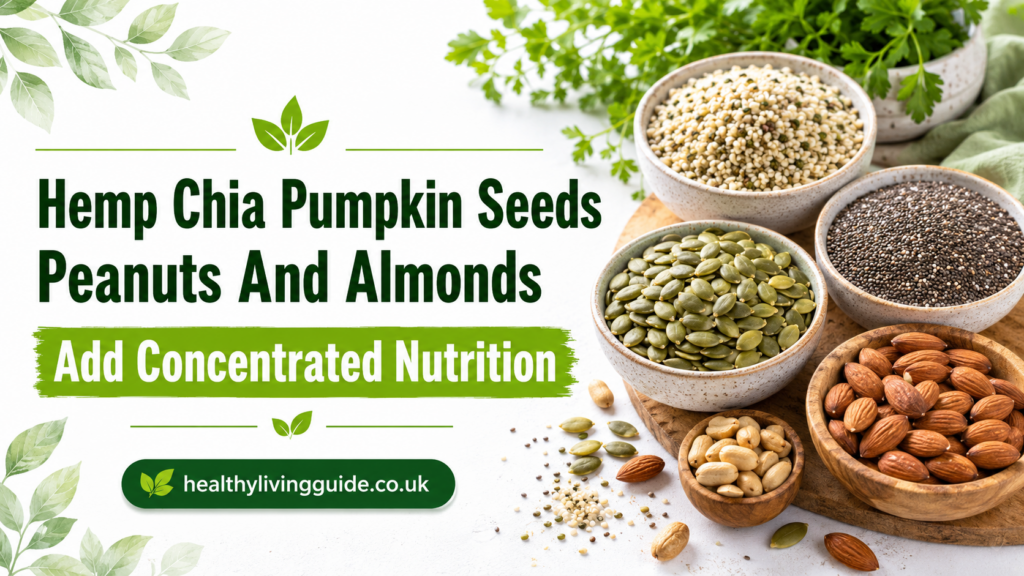
Nuts and seeds provide protein, healthy fats and important minerals. They are also calorie-dense, which can be helpful for someone struggling to eat enough to gain weight and muscle.
However, calorie density can work against someone who is trying to lose body fat. A spoonful of nut butter can fit easily into a balanced diet, but repeatedly eating directly from the jar can add far more energy than expected.
The goal is to use nuts and seeds deliberately.
14. Hemp seeds
Hemp seeds provide protein, unsaturated fats and minerals in a compact serving. They require no cooking and can be sprinkled over porridge, yoghurt alternatives, soup, salad and rice dishes.
Although hemp contains all nine essential amino acids, it is normally eaten in relatively small quantities. Three tablespoons can strengthen a meal, but hemp seeds alone are unlikely to provide the main protein portion needed after a demanding workout.
Their best role is as a protein booster.
15. Pumpkin seeds
Pumpkin seeds provide protein as well as magnesium and zinc. Magnesium contributes to normal muscle function, while zinc is involved in many processes associated with normal tissue maintenance.
They can be eaten as a snack, added to salads or blended into sauces. Pumpkin seed butter is another option for people who cannot eat peanuts, although anyone with a seed allergy should check its suitability.
A small handful can make a useful addition to a meal. Several large handfuls, however, can deliver substantial calories, so portions should reflect the person’s overall goal.
16. Chia seeds
Chia seeds provide fibre and alpha-linolenic acid, a plant-based omega-3 fat. When mixed with liquid, they absorb water and develop a gel-like texture, making them useful for overnight oats and chia pudding.
They do contain protein, but only a modest amount in an ordinary serving. Describing chia as a major muscle-building protein can therefore be misleading.
A chia pudding made only with chia and water is not equivalent to a high-protein meal. Using fortified soya milk and adding soya yoghurt, nut butter or protein powder produces a more appropriate option.
17. Peanuts
Peanuts are technically legumes rather than tree nuts. They provide protein, unsaturated fat and a large amount of energy in a small serving.
Peanut butter is one of the easiest ways to increase the calories and protein in porridge, smoothies and toast. Look for a product made primarily from peanuts, without unnecessarily large amounts of added sugar or palm oil.
Peanuts can be particularly helpful for people who struggle to consume enough calories for muscle gain. They are not suitable for anyone with a peanut allergy, and careful avoidance may be necessary where a serious allergy has been diagnosed.
18. Almonds
Almonds contribute protein, vitamin E, magnesium and unsaturated fat. They make a portable snack and can be added to cereal, porridge and salads.
Almond butter can increase the energy content of meals, although it is usually not as protein-dense as tofu, tempeh or seitan when compared calorie for calorie.
This distinction matters. Nuts are nutritious, but they should not automatically replace legumes and soy foods as the main protein foundation. A muscle-building plant diet normally works best when nuts and seeds supplement larger protein sources rather than carrying the entire load.
Spirulina And Nutritional Yeast Can Help But They Are Not Muscle Building Miracles
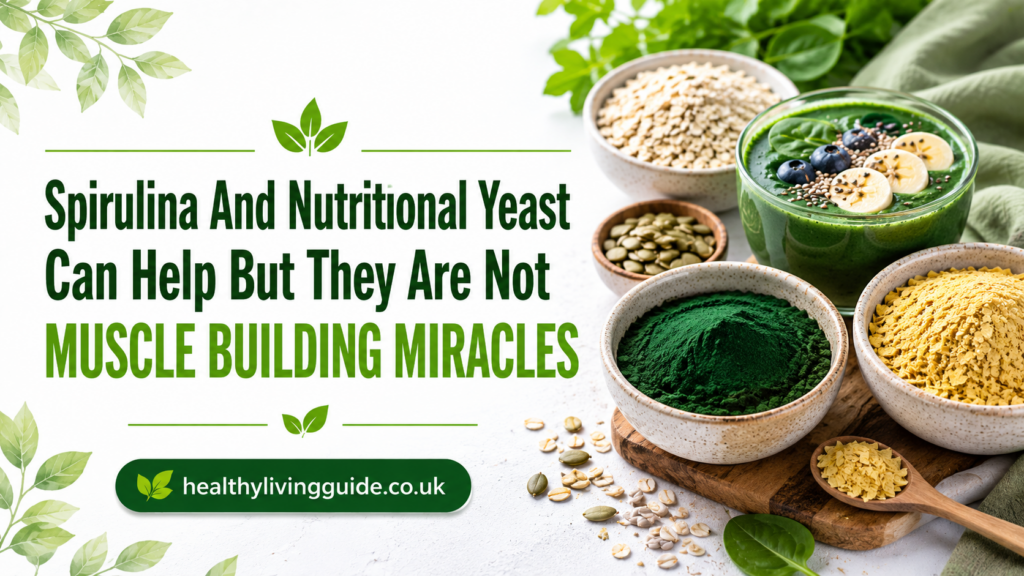
The final two foods are often marketed as superfoods. Both can contribute useful nutrients, but both are surrounded by claims that need context.
19. Spirulina
Spirulina is a type of cyanobacteria sold as powder or tablets. By dry weight, it contains a high proportion of protein. However, people usually consume only a few grams at a time.
This means that the actual amount of protein received from an ordinary spoonful is relatively small. A product can be “protein-rich” by percentage and still contribute little protein because the serving is tiny.
Spirulina should therefore be viewed as an optional supplement rather than a replacement for tofu, beans or a balanced meal.
Quality is also important. Algae-based supplements can potentially be contaminated if they are poorly produced. Choose products from reputable manufacturers that provide appropriate quality testing. People who are pregnant, breastfeeding, taking medication or managing a health condition should seek professional advice before using concentrated supplements.
Spirulina is also not a reliable source of active vitamin B12. People following a vegan diet should not depend on algae products to protect against B12 deficiency.
20. Nutritional yeast
Nutritional yeast is a deactivated yeast with a savoury, slightly cheesy flavour. It can be sprinkled over pasta, popcorn, vegetables and salads or stirred into sauces.
It contains protein, but it is generally used in small amounts. As a result, it works best as another protein booster rather than the foundation of a meal.
Some nutritional yeast is fortified with vitamin B12, but not every product is. The label must specifically show that B12 has been added.
Vitamin B12 requires particular attention in a vegan diet because unfortified plant foods are not considered reliable sources. The NHS recommends including suitable fortified foods or supplements as part of a properly planned vegan diet.
Nutritional yeast may help meet this requirement when it is fortified and eaten regularly, but the amount of B12 varies between brands. It should not be assumed that every yellow flake product offers the same protection.
These two foods can be useful, but neither deserves to be treated as a shortcut. Spirulina cannot compensate for inadequate meals, and nutritional yeast cannot replace a varied diet.
How To Turn These 20 Plant Foods Into A Practical Muscle Building Diet
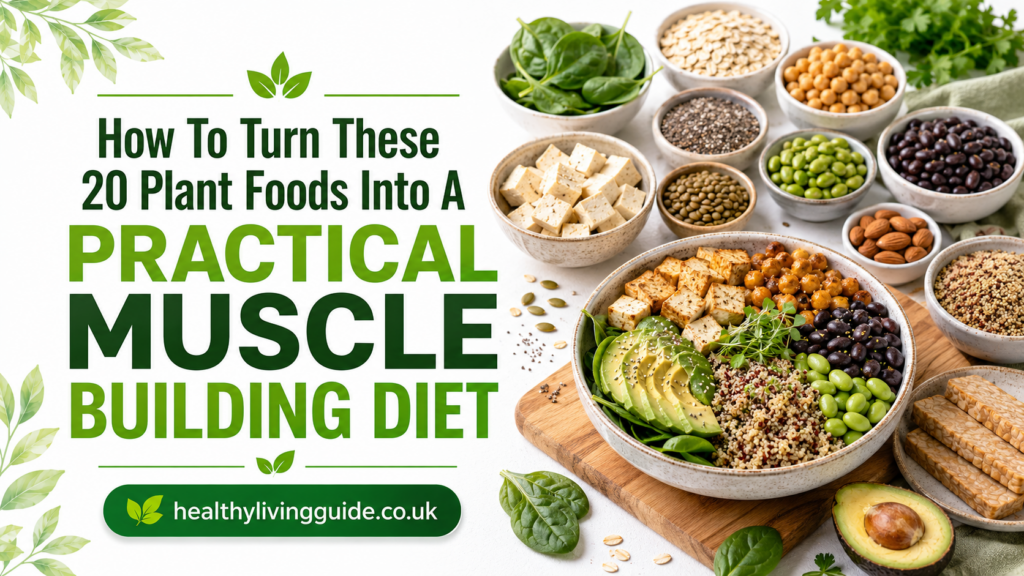
Knowing the names of 20 plant foods is not enough. Results depend on turning them into meals that provide sufficient protein, calories and overall nutrition consistently.
Begin by choosing a meaningful protein source for every main meal.
At breakfast, this might be fortified soya milk, soya yoghurt, oats, peanut butter and hemp seeds. At lunch, it could be lentils, chickpeas, tofu or seitan. At dinner, it could be tempeh, beans, edamame or another substantial soy-based meal.
Next, use protein stacking. Instead of expecting one ingredient to provide everything, combine several sources.
A tofu stir-fry might contain tofu, edamame, peas and buckwheat noodles. A chilli might contain black beans, lentils, quinoa and nutritional yeast. A breakfast bowl might combine oats, soya milk, peanut butter, chia and hemp seeds.
Here is an example of a practical meat-free day:
Breakfast: Porridge made with fortified soya milk, topped with peanut butter, hemp seeds, chia seeds and berries.
Lunch: Chickpea and quinoa salad with roasted vegetables, pumpkin seeds and a tahini dressing.
Snack: Fortified soya yoghurt with almonds, or a smoothie containing soya milk, oats and peanut butter.
Dinner: Tofu and edamame stir-fry with buckwheat noodles and mixed vegetables.
Evening option: Wholegrain toast with peanut butter, or roasted chickpeas if additional food is genuinely needed.
A second day could include a tofu scramble for breakfast, lentil soup with wholemeal bread for lunch, edamame as a snack and tempeh curry with rice for dinner.
Someone who finds it difficult to reach a higher protein target through food may benefit from a soy, pea or blended plant protein powder. This is a matter of convenience rather than necessity. Supplements do not produce muscle unless the overall training and diet are appropriate.
Calories also matter. A person cannot maximise muscle growth while consistently eating far less energy than their body needs. Those trying to gain muscle may need larger portions, additional snacks or more calorie-dense foods such as peanut butter, seeds, olive oil and avocado.
However, an uncontrolled “bulk” is unnecessary. A modest calorie surplus combined with progressive resistance training is more sensible than using muscle gain as an excuse to eat unlimited quantities of highly processed food.
Micronutrients need attention as well. The NHS warns that a poorly planned vegan diet may be low in vitamin B12, iron, calcium, iodine and selenium. Fortified plant milks, calcium-set tofu, pulses, nuts, seeds, whole grains and appropriate supplements may all have a role.
Choose a fortified plant milk rather than assuming every alternative is nutritionally equivalent to dairy milk. Soya milk is often particularly useful for muscle building because it generally contains more protein than almond, oat or coconut drinks, although labels vary between products. The British Dietetic Association notes that higher-protein plant drinks may be helpful for athletes and other people with increased protein needs.
Vitamin D is another consideration in the UK. Government advice is that everyone should consider taking 10 micrograms of vitamin D daily during autumn and winter, when sunlight is insufficient for most people to make enough through the skin. Some people at greater risk of deficiency may need supplementation throughout the year.
Iodine can be more difficult to obtain when dairy products, eggs and fish are excluded. The NHS advises strict vegans to consider iodine-fortified foods or an appropriate supplement. Taking large or unpredictable quantities of seaweed is not necessarily a safe solution because its iodine content can vary significantly.
Training must then provide a reason for the body to build muscle. Use exercises that challenge all the major muscle groups and gradually increase the difficulty. This principle is known as progressive overload. It might involve adding weight, performing more repetitions, improving technique or progressing to a more difficult variation.
Recovery completes the process. Muscles adapt between training sessions, not only while the exercise is being performed. Regular sleep, rest days and sensible management of training volume are therefore essential.
The 20 foods in this guide can support that process, but they do not replace it.
Lentils, chickpeas, beans and peas offer an affordable foundation. Tofu, tempeh, edamame and seitan make it easier to reach higher protein targets. Quinoa, amaranth, buckwheat, farro and oats provide training fuel alongside additional protein. Nuts and seeds add concentrated nutrition and calories. Spirulina and nutritional yeast may contribute small amounts, but they should remain supporting players.
The most effective muscle-building diet is not the one containing the most unusual ingredients. It is the one you can afford, enjoy, digest and follow consistently.
Meat can be part of a muscle-building diet, but it is not an essential requirement. With thoughtful meal planning, sufficient total protein, adequate calories and regular resistance training, plants can provide the nutritional building blocks needed to become stronger and more muscular.
Disclaimer
This article is provided for general informational and educational purposes only. It is not intended to diagnose, treat, cure or prevent any health condition, and it should not replace personalised advice from a doctor, registered dietitian, qualified nutrition professional or certified fitness professional.
Individual protein, calorie and exercise requirements vary depending on age, body weight, health status, activity level and personal goals. Speak to a qualified healthcare professional before making significant changes to your diet, starting a new exercise programme or using supplements, particularly if you have a medical condition, food allergy, digestive disorder, kidney problem, coeliac disease or other specific dietary needs.
Any products, foods or supplements mentioned should be assessed according to your own circumstances. Some links on this website may be affiliate links, which means Healthy Living Guide may earn a small commission if you make a purchase, at no additional cost to you. This does not influence our commitment to providing clear, balanced and honest information.