If you have ever tried to “get healthy” and felt overwhelmed within a week, you are not lazy and you are not broken. Most people fail because they chase random tips instead of building a simple foundation they can repeat.
A healthy lifestyle is not one perfect diet, one miracle supplement, or one extreme workout plan. It is a set of pillars that hold you up on good days and keep you steady on bad ones.
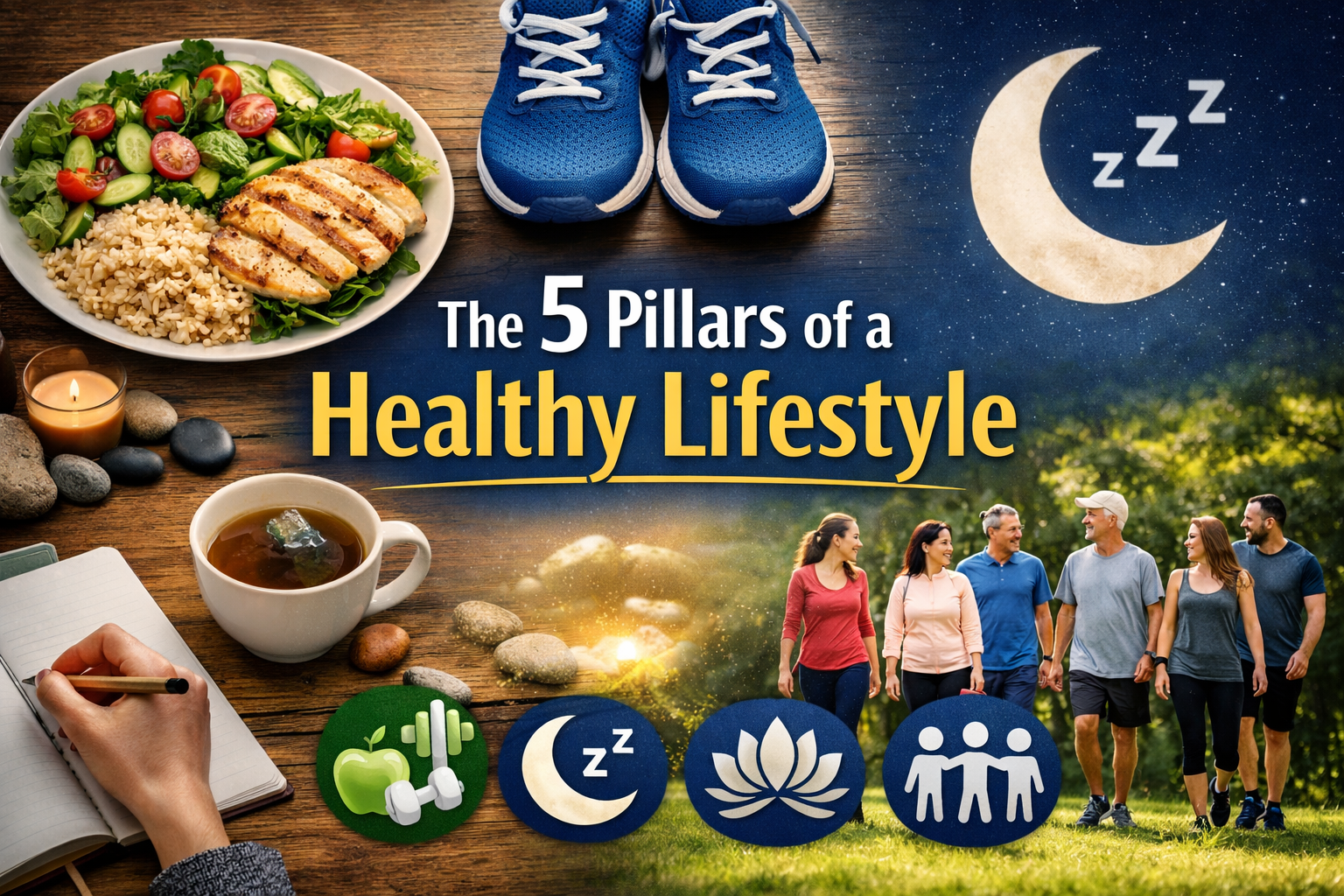
In this guide, you will learn the five pillars of a healthy lifestyle and exactly how to build each one in a realistic way that fits a busy life. You will also get a simple weekly routine you can copy, plus practical ideas that make it easier to stick with it long term.
Pillar One Nutrition That Fuels Your Body
Nutrition is the pillar most people overcomplicate. The truth is, you do not need a perfect diet. You need a repeatable way of eating that gives you energy, supports a healthy weight, protects your heart, and keeps cravings under control.
The simplest rule that works
Aim for meals built around:
- Protein for muscle, fullness, and stable energy
- Fibre for digestion, cholesterol support, and appetite control
- Colour from fruits and vegetables for vitamins and antioxidants
- Healthy fats for hormones, brain health, and satisfaction
- Smart carbs for training fuel and mood support
Think of it like building a plate, not following a strict identity diet.
A balanced plate you can use anywhere
Use this as your default:
- Half your plate non starchy vegetables or salad
- One quarter protein such as chicken, fish, eggs, Greek yogurt, tofu, lentils
- One quarter quality carbs such as rice, potatoes, oats, wholegrain bread, beans
- A thumb of fats such as olive oil, nuts, seeds, avocado
This works at home, at work, and even in restaurants.
Protein is the quiet game changer
If you want one nutrition upgrade that helps almost everyone, it is more protein at breakfast and lunch. It reduces snacking, supports muscle, and makes weight management easier.
Easy protein wins:
- Eggs with spinach and wholegrain toast
- Greek yogurt with berries and nuts
- Chicken and rice with mixed veg
- Lentil curry with extra vegetables
- Tuna sandwich with salad and fruit
Stop dieting and start planning
Most “bad eating” is not a willpower problem. It is a planning problem.
Try this weekly rhythm:
- Pick 2 breakfasts you can repeat
- Pick 2 lunches you can rotate
- Pick 3 dinners you can cook fast
- Keep 2 healthy snacks ready
When you simplify choices, consistency becomes automatic.
Hydration and caffeine without the chaos
Dehydration can feel like fatigue or hunger. A basic target is a few glasses spread through the day, more if you sweat.
For caffeine, a simple guideline:
- Use it to support your day, not to rescue it
- Try to keep caffeine earlier so sleep does not suffer
- If you crash hard in the afternoon, that is often sleep, protein, or hydration, not a “need” for more caffeine
Pillar Two Daily Movement That You Can Sustain
Movement is not just about weight loss. It is about energy, mood, strength, confidence, and staying mobile as you age.
The best exercise plan is the one you will still be doing three months from now.
The three types of movement that build a healthy body
You do not need to do everything every day, but over a week aim for:
- Daily walking or light activity
- Strength training to protect muscle and joints
- Cardio for heart and lung health
If you are busy, walking is the gateway habit. It supports fat loss, lowers stress, and makes you feel better fast.
A realistic weekly target
A simple structure that works for most people:
- Walk most days even if it is 20 minutes
- Strength train 2 to 3 times a week full body sessions
- Do 1 to 2 cardio sessions cycling, jogging, rowing, swimming, or brisk incline walks
Strength training without the gym
If the gym is not your thing, you can still get strong at home.
A simple full body session:
- Squats or sit to stands 3 sets
- Push ups on a wall or bench 3 sets
- Rows with a band or backpack 3 sets
- Hip hinges or glute bridges 3 sets
- Plank or dead bug 2 sets
Progress means doing a little more over time. More reps, slightly harder variation, or a bit more weight.
Movement snacks for busy days
If you work long shifts or sit a lot, short bursts of movement can change your whole day.
Try:
- 5 minutes walk after meals
- 10 bodyweight squats and 10 wall push ups twice a day
- Stretch hips and shoulders while the kettle boils
- Walk during phone calls
These add up and keep your body from stiffening.
Make it enjoyable or you will quit
If you like martial arts, dancing, football, hiking, or lifting, choose that. Enjoyment is not a bonus. It is the strategy.
Pillar Three Sleep And Recovery That Actually Works
You can eat well and train hard, but if sleep is poor, your body feels like it is fighting you.
Sleep affects hunger hormones, cravings, mood, energy, immune function, and how your body responds to exercise.
The two biggest sleep mistakes
- Trying to fix sleep with hacks instead of routine
- Ignoring light, stress, and timing
Sleep is a system. Fix the inputs and sleep improves.
A simple sleep routine you can copy
Try this for 7 nights:
- Choose a consistent wake time most days
- Get daylight in your eyes within the first hour of waking
- Avoid heavy meals right before bed when possible
- Reduce bright screens late at night or use night settings
- Create a short wind down routine
- warm shower
- light stretching
- reading or calm music
- write tomorrow’s plan to clear your mind
The bedroom basics that matter
- Cool, dark, quiet
- Comfortable pillow and mattress
- Phone away from your bed if possible
- Use the bed for sleep, not scrolling
Recovery is more than sleep
Recovery also includes:
- Rest days from intense training
- Gentle movement to reduce soreness
- Enough protein and calories to support your body
- Time to decompress mentally
If you always feel tired, it is often not motivation that is missing. It is recovery.
Pillar Four Stress Management And Mental Fitness
Stress is not just in your head. It changes your body. Chronic stress can push appetite up, sleep down, and energy into the floor.
You cannot eliminate stress, but you can train your nervous system to handle it better.
The difference between stress and overload
Stress in small doses can be useful. Overload is when stress has no off switch.
Signs you might be overloaded:
- You feel tired but wired
- You crave sugar late at night
- You get irritated easily
- Your sleep is broken
- You feel like you never fully relax
Daily tools that lower stress fast
You do not need an hour of meditation. You need a practice you will actually do.
Try one of these for 3 to 5 minutes:
- Slow breathing with longer exhale
- Short walk outside without headphones
- Stretch your neck, shoulders, hips
- Write down the one thing you can control today
- Put your phone away and sit quietly with tea
Boundaries are health habits
If you want a healthier lifestyle, you need healthier boundaries.
Examples that work:
- Stop checking messages during meals
- Keep your first 30 minutes after waking calm
- Schedule one real break in your day
- Say no to one thing each week that drains you
Stress management is not a vibe. It is a structure.
The mindset shift that keeps you consistent
Instead of asking “What is the perfect plan?” ask:
“What is the smallest version of the plan I can repeat even when life is messy?”
That mindset builds a healthy lifestyle that survives real life.
Pillar Five Connection Purpose And Environment
This pillar is underrated, but it is massive.
Your health is shaped by:
- The people around you
- The environment you live in
- The identity you build
- The reason you want to stay healthy
Connection changes habits
When you feel supported, you make better choices naturally. When you feel isolated, motivation drops and comfort habits rise.
Simple ways to build connection:
- Walk with a friend once a week
- Join a class or local group
- Train with a partner
- Share your goals with someone who will encourage you
- Spend time with family without screens
Purpose keeps you going when motivation fades
Motivation is a mood. Purpose is a decision.
Write one sentence and keep it visible:
- “I take care of my body so I can have energy for my family.”
- “I stay healthy so I can feel confident and calm.”
- “I build strength because I want to age well.”
Design your environment so healthy becomes easy
Environment beats willpower.
Quick upgrades:
- Keep protein and fruit visible
- Keep ultra processed snacks out of sight
- Put walking shoes by the door
- Keep a water bottle on your desk
- Prepare tomorrow’s breakfast at night
- Keep resistance bands where you will see them
If your environment supports your goals, your lifestyle changes faster.
How To Turn The 5 Pillars Into A Lifestyle You Keep
Knowing the pillars is nice. Living them is the real win. Here is a simple system that makes it stick.
The weekly checklist
Aim for this each week:
Nutrition
- 3 to 5 mostly healthy dinners cooked at home
- Protein at breakfast most days
- Fruit or veg at least twice daily
Movement
- 6,000 to 10,000 steps most days
- 2 to 3 strength sessions
- 1 to 2 cardio sessions
Sleep
- Consistent wake time most days
- Wind down routine 5 nights
- Bedroom dark and cool
Stress
- 5 minutes calm time daily
- One boundary that protects your energy
- One outdoor walk without distraction
Connection
- One social activity that fills you up
- One act of service or kindness
- One purpose reminder written down
A simple 7 day starter plan
You can start today without changing your whole life.
Day 1
Plan 3 dinners, buy the ingredients, take a 20 minute walk.
Day 2
Protein breakfast, 10 minute strength session, screen free wind down.
Day 3
Walk after meals, drink more water, tidy your kitchen environment.
Day 4
Strength session, add vegetables to lunch, call a friend or family member.
Day 5
Cardio or brisk walk, earlier bedtime, write tomorrow’s top 3 tasks.
Day 6
Cook one meal that makes leftovers, longer walk outside, relaxing evening.
Day 7
Review your week, choose one habit to improve next week, prep food basics.
Common questions people ask
How long does it take to build a healthy lifestyle
You can feel better in a week, but real change comes from months of repetition. Focus on consistency, not perfection.
What is the most important pillar
Sleep and nutrition often give the fastest results, but the best answer is the pillar you are currently ignoring.
Do I need the gym
No. You need strength training and movement. That can happen at home, outdoors, or in a gym.
What if I keep falling off
Shrink the plan. Make it so easy you cannot fail. Then build up slowly.
Disclaimer
This is general wellness information, not medical advice. If you have a medical condition or take medication, speak with a qualified healthcare professional before making big changes.