

Vitamin D is one of the most important nutrients for strong bones, healthy muscles, and overall wellbeing. In the UK, it matters even more because for much of the year the sun is too weak for your skin to make enough vitamin D. That is why official UK guidance advises most people to take a daily vitamin D supplement during autumn and winter.
Why Vitamin D Matters In The UK
Vitamin D is often called the sunshine vitamin, but in the UK it behaves more like a seasonal nutrient. Many of us do not get consistent sunlight exposure for large parts of the year, and even when we do get outside, the angle of the sun matters just as much as the weather.
That is why vitamin D keeps coming up every autumn and winter in the UK. It is not just another wellness trend. It is one of the few supplements that UK public health guidance talks about in a direct, practical way.
What vitamin D actually does
Vitamin D helps your body regulate calcium and phosphate. These minerals are essential for strong bones, healthy teeth, and normal muscle function. The NHS puts bone and muscle health right at the centre of why vitamin D matters.
When vitamin D is low for a long time, your body struggles to keep calcium in balance. In more severe cases, that can contribute to softer bones and bone pain. In adults this can lead to osteomalacia, and in children severe deficiency raises the risk of rickets.
Most people never reach that severe stage, but lower levels can still affect how you feel and function. People commonly describe tiredness, general aches, low mood, or feeling “run down” in winter. These symptoms are not proof of deficiency, but they are part of why vitamin D testing and supplementation become relevant for some people.
Why UK sunlight is different
The simplest explanation is that your skin can only produce vitamin D when UVB rays are strong enough. In the UK, the sun is often too low in the sky for meaningful vitamin D production for a large chunk of the year. Government guidance states that during autumn and winter we cannot make vitamin D from sunlight, which is why everyone is advised to consider a daily supplement during that time.
If you have ever wondered why vitamin D advice sounds so “seasonal”, that is the reason.
The goal of this guide
By the end of this article, you will know:
- The best UK aligned daily dose for autumn and winter
- Who should consider vitamin D all year round
- How to pick a supplement that actually makes sense
- How to build a simple routine
- How to avoid taking too much
- When testing might be useful
No hype, no complicated protocols, just a clear plan you can stick with.
The Best Vitamin D Dose In Autumn And Winter
If you only take one thing from this whole post, make it this:
In the UK during autumn and winter, everyone is advised to take a supplement containing 10 micrograms (400 IU) of vitamin D a day.
The NHS also states that 10 micrograms a day is enough for most people.
That single number clears up a lot of confusion, because supplements are sold in many strengths and the marketing often pushes higher doses as if more is always better.
Micrograms vs IU so you never get confused again
Vitamin D labels usually show either micrograms (mcg or µg) or IU. Here is the conversion you will actually use:
| Micrograms | IU |
|---|---|
| 10 mcg | 400 IU |
| 25 mcg | 1000 IU |
| 50 mcg | 2000 IU |
| 100 mcg | 4000 IU |
The UK public guidance you will see most often is the 10 micrograms number.
Who is this dose for
This 10 microgram daily dose is commonly referenced for adults, including pregnant and breastfeeding women, and for older children, in the context of seasonal supplementation.
If you want a straightforward “default setting” for the average UK adult in winter, this is it.
What about children and babies
Because families read these posts too, here is the simplified, UK aligned overview from the NHS:
- The NHS states that if you choose to take supplements, 10 micrograms a day will be enough for most people and it includes safety limits for different age groups.
- The NHS also sets different maximum safe daily amounts for younger children and infants, which matters if you are using drops and combining them with fortified foods or other supplements.
If you are choosing supplements for children or babies, it is especially sensible to speak with a pharmacist because dosing can be easier to get wrong.
When exactly is “autumn and winter” in the UK
Some guidance uses seasons. Some uses dates.
A UK government page describing vitamin D advice states autumn and winter, and a government migrant health guide specifically mentions October to early March as the period when we cannot make enough vitamin D from sunlight in the UK.
So if you want a simple window:
- Start around October
- Continue until early March or April depending on your lifestyle and sun exposure
Many NHS organisations also communicate it as “between October and April.”
Do you need a higher dose than 10 micrograms
For most people following public guidance, no.
Higher doses are sometimes used in clinical treatment plans for confirmed deficiency. That is different from public health supplementation. A clinical plan is usually time limited and supervised.
For an everyday routine, 10 micrograms keeps things simple and aligned with UK advice, while reducing the risk of accidentally taking too much.
Who Should Take Vitamin D All Year Round
Some people can build vitamin D naturally during late spring and summer and then top up during winter. Others are more likely to stay low all year unless they supplement consistently.
The NHS and UK government guidance highlight that some people are at higher risk of low vitamin D because they make less from sunlight.
Here are the most common real life groups.
People with darker skin tones
If you have darker skin, your body produces vitamin D less efficiently from the same amount of sunlight. UK government guidance explicitly flags higher risk of low vitamin D in people with darker skin, including many African, African Caribbean, and South Asian backgrounds.
This is one of the biggest reasons some UK readers choose a year round routine rather than stopping in spring.
People who are indoors most of the time
You can live in the UK and still barely see daylight:
- Office or warehouse work
- Night shifts
- Long commuting hours
- Caring responsibilities
- Limited mobility
- Housebound lifestyles
If you are rarely outdoors in daylight, your vitamin D production will likely remain low even in summer, which is why some guidance suggests considering supplementation beyond winter for people with limited sun exposure.
People who cover most of their skin outdoors
If you cover most of your skin for cultural, religious, or personal reasons, you may not get enough skin exposure for consistent vitamin D production. This is also flagged in UK guidance as a risk factor.
Older adults
As we age, skin production can become less efficient. Combine that with being indoors more often in winter, and you can see why older adults are frequently included in “higher risk” groups in practical health messaging.
People with higher body weight
Vitamin D is fat soluble and can be stored in fat tissue. Some studies suggest higher body weight is associated with lower circulating vitamin D levels. This does not mean everyone at a higher weight is deficient, but it is another reason some people benefit from speaking to a clinician about testing.
Anyone who wants the simplest plan
There is also a boring, practical truth: some people just prefer a consistent routine rather than remembering when to stop and start.
If you fall into any of the higher risk categories above, a year round 10 microgram routine can be an easy option, but the safest approach is still to check with a pharmacist if you take other supplements or have any medical conditions.
How To Choose A Vitamin D Supplement That Works
You do not need a fancy supplement. You need a consistent one.
Vitamin D3 vs Vitamin D2
Most supplements are either vitamin D3 (cholecalciferol) or vitamin D2 (ergocalciferol).
In everyday use, D3 is the most common form sold in the UK. D2 is often used in some plant based products. For most people, the key decision is less about the form and more about getting the right dose and taking it consistently.
If you are vegan, look for D3 sourced from lichen, or a D2 product if that suits you.
What dose should you buy for winter
If your goal is to follow UK public guidance, buy:
- 10 micrograms (400 IU)
That keeps your routine simple and aligned with UK advice for autumn and winter.
If your supplement is 25 micrograms (1000 IU), you should not automatically assume it is “better”. Many people take that dose without problems, but it is above the public guidance baseline. The more supplements you stack, the easier it becomes to exceed safe limits without noticing.
Capsules, tablets, sprays, drops, gummies
Choose what you will actually take:
- Tablets or capsules are usually cheapest and easy to store
- Drops are excellent for people who struggle swallowing pills and for families
- Gummies can be convenient but check sugar content and dose per gummy
- Sprays are popular but often cost more
The best product is the one you remember to take daily.
The label checklist that saves you money and mistakes
Before you buy, check:
- The dose per serving in micrograms or IU
- Whether the serving size is one tablet or two
- Whether it contains other nutrients (some blends add K2, magnesium, zinc)
- Whether you are already getting vitamin D from another supplement, like a multivitamin
This matters because accidental double dosing is common. People take a multivitamin, then a separate vitamin D, then a combined calcium D tablet, and suddenly they are far above what they intended.
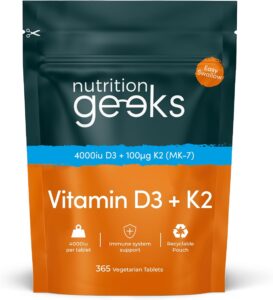
A quick note on very high dose products sold online
Online marketplaces sometimes list extremely high dose vitamin D products, which can be risky if taken daily without medical supervision. The NHS warns that taking too much vitamin D over time can cause too much calcium to build up in the body.
If you ever see mega dose products, treat them as “only with clinician guidance” rather than everyday wellness.
Food Sunlight And Lifestyle Habits That Support Healthy Levels
Even though supplements are the simplest winter solution, you still want the basics working in your favour.
Sunlight and the UK reality
The NHS guidance explains that many people can make enough vitamin D from sunlight in late spring and summer. But during autumn and winter, we cannot make enough from sunlight, which is why supplementation is advised.
The practical goal in winter is not chasing vitamin D from sunlight. It is simply getting daylight for general wellbeing, routine, and movement.
Foods that contain vitamin D
Food alone often does not provide enough vitamin D to meet recommended intakes consistently, but it still helps.
Common dietary sources include:
- Oily fish like salmon, sardines, mackerel
- Egg yolks
- Fortified foods like some cereals, plant milks, and spreads
If you want a simple “winter plate” pattern:
- Eat oily fish once or twice a week if you can
- Include eggs a few times weekly if suitable
- Use fortified milk or fortified plant milk in tea, coffee, porridge, or cereal
- Focus on overall nutrition so your bones and muscles are supported alongside vitamin D
When to take vitamin D for best results
Vitamin D is fat soluble, so many people find it easiest to take it with a meal that includes some fat. This is not a magic rule, but it is a practical habit that improves consistency.
Pick a daily anchor:
- With breakfast
- With lunch
- With your evening meal
The “best time” is the time you remember every day.
A realistic UK winter routine you can actually stick with
Here is a simple routine you can follow without overthinking:
Week 1
- Buy a 10 microgram vitamin D supplement
- Put it somewhere you will see daily
- Take it with one meal each day
Week 2
- Add two vitamin D friendly meals that week (oily fish, eggs, fortified foods)
- Get outside for 10 minutes of daylight daily if possible
Week 3
- Keep the routine consistent
- Do not double dose if you miss a day, just continue normally
Week 4
- Decide your ongoing plan
- Continue through autumn and winter as advised in UK guidance
- Consider a year round routine if you are at higher risk due to darker skin or low sunlight exposure
This is simple, safe, and effective for most people.
Safety Testing Side Effects And Interactions
Vitamin D is helpful, but it is not harmless at high doses. The main safety issue is not vitamin D itself. It is what happens when vitamin D raises calcium levels too much over time.
What happens if you take too much vitamin D
The NHS warns that taking too many vitamin D supplements over a long period can cause too much calcium to build up in the body (hypercalcaemia), which can weaken bones and damage the kidneys and heart.
The UK maximum daily amount you should not exceed
The NHS clearly states:
- Do not take more than 100 micrograms (4000 IU) of vitamin D a day as it could be harmful
- This applies to adults (including pregnant and breastfeeding women) and children aged 11 to 17
- Lower maximum amounts are listed for children aged 1 to 10 and for infants under 12 months
This is why high dose supplements are not a casual daily habit.
Who should be extra cautious
Speak with a pharmacist or GP before supplementing, especially at higher doses, if you have:
- Kidney disease
- A history of kidney stones
- Conditions linked to high calcium
- Granulomatous diseases such as sarcoidosis
- Complex medication regimes
Some NHS clinical guidance documents also note that upper limits may not apply to people with medical disorders that predispose to hypercalcaemia.
Side effects you should take seriously
Standard doses rarely cause problems. Issues are more likely with high dose use. Seek medical advice if you develop symptoms that could suggest high calcium, such as persistent nausea, confusion, unusual thirst, or frequent urination, especially if you have been taking high doses.
Should you get a vitamin D blood test
Testing can be useful if:
- You have symptoms plus risk factors
- You have a condition that affects absorption
- You have been advised to treat deficiency
- You are considering higher doses beyond public guidance
But many people can safely follow seasonal UK guidance without testing, using a standard 10 microgram supplement through autumn and winter.
Frequently Asked Questions
What dose of vitamin D should adults take in the UK during winter
UK government advice states that during autumn and winter everyone is advised to take a supplement containing 10 micrograms (400 IU) daily.
Is 10 micrograms of vitamin D enough
The NHS states that 10 micrograms a day will be enough for most people.
Can I take vitamin D all year round
Some people may benefit from year round supplementation, especially if they get little sunlight exposure or have darker skin, which UK guidance flags as higher risk for low vitamin D.
What is the maximum safe amount of vitamin D per day
The NHS advises not taking more than 100 micrograms (4000 IU) daily for adults and children aged 11 to 17, with lower limits for younger children and infants.
Should I take vitamin D in the morning or at night
There is no single perfect time. Many people take it with a meal for routine and consistency. Choose the time you will remember every day.
What foods are high in vitamin D
Oily fish, egg yolks, and fortified foods can help, but public guidance still recommends supplementation during UK autumn and winter due to limited sunlight.
Key Takeaways
- In the UK during autumn and winter, everyone is advised to take 10 micrograms (400 IU) daily.
- The NHS states 10 micrograms a day is enough for most people.
- Some people should consider vitamin D all year round due to higher risk of low levels from limited sunlight exposure or darker skin.
- Avoid high dose products unless medically advised. The NHS warns not to exceed 100 micrograms (4000 IU) daily for adults and older children.
- A simple daily routine beats complicated protocols every time.
Medical Disclaimer
This article is for general information only and is not personal medical advice. If you have a medical condition, take prescription medicines, are pregnant or breastfeeding, or you are unsure what dose is right for you, speak with a pharmacist or GP.