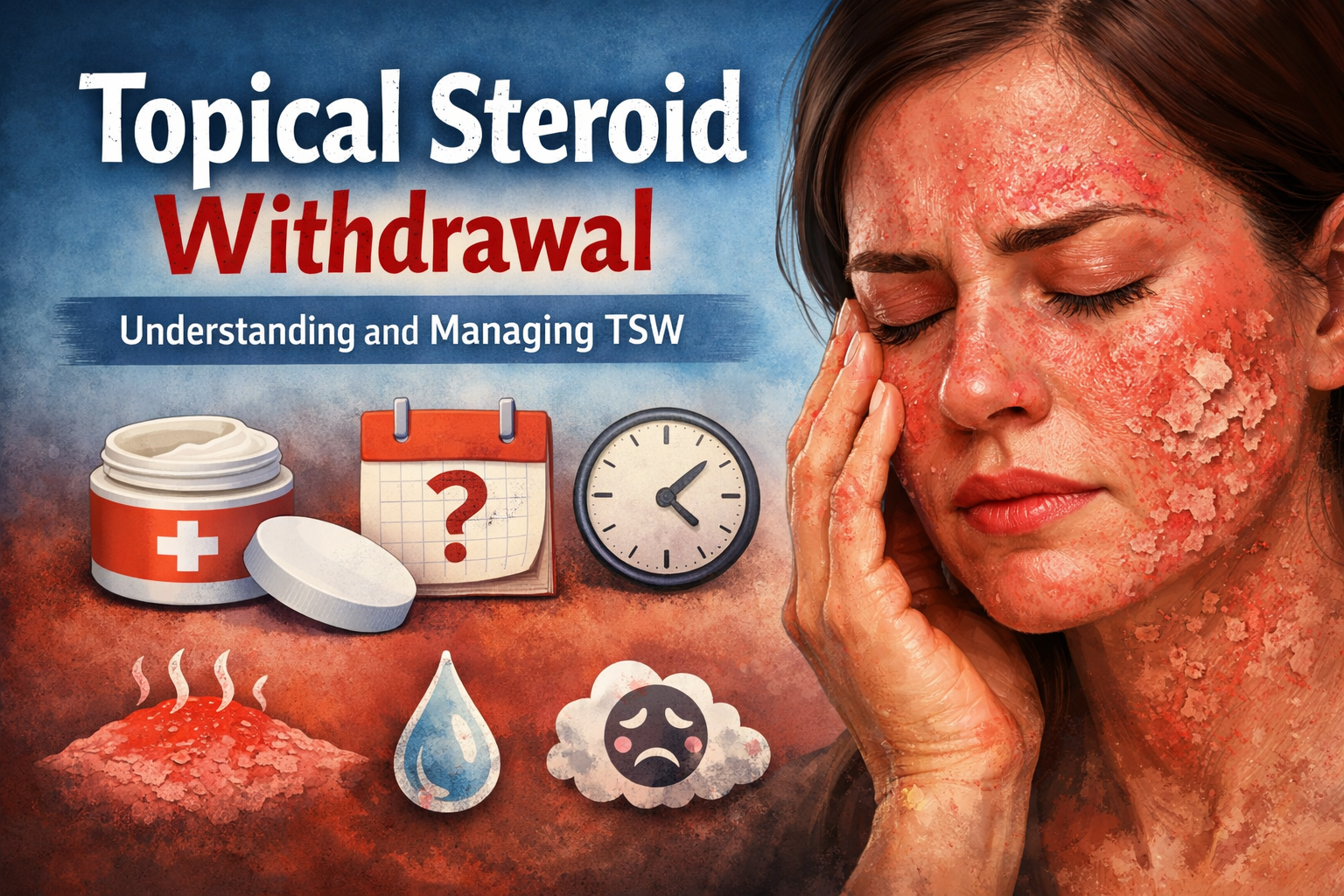
Topical Steroid Withdrawal, often shortened to TSW, is one of the most misunderstood and under-discussed health conditions affecting people with chronic skin problems. Every month, tens of thousands search online for answers after experiencing intense burning, redness, flaking, swelling, insomnia, and emotional distress that seems to appear after stopping steroid creams.
Many are told it is “just eczema coming back worse.” Others are reassured that stronger steroids will fix it. For a growing number of sufferers, neither explanation fits what they are experiencing.
This in-depth guide explains what Topical Steroid Withdrawal really is, how it develops, what symptoms look like, how long recovery may take, and how people around the world are managing life during withdrawal. This article is written for education and awareness and is designed to provide clarity where confusion often dominates.
What Is Topical Steroid Withdrawal
Topical Steroid Withdrawal is a condition that can occur after prolonged or frequent use of topical corticosteroids. These medications are commonly prescribed for eczema, psoriasis, contact dermatitis, rashes, and other inflammatory skin conditions.
Steroids suppress inflammation by narrowing blood vessels and dampening immune responses in the skin. Over time, repeated exposure can cause the skin and nervous system to become dependent on that suppression. When steroids are reduced or stopped, the body can rebound aggressively.
Instead of healing, the skin may enter a state of hyper-inflammation, resulting in symptoms far more severe than the original condition.
This reaction is not an allergy. It is not a simple flare. It is a physiological response to withdrawal.
TSW is sometimes referred to as:
- Red Skin Syndrome
- Steroid Addiction
- Steroid Dependency
While terminology differs, the lived experience is often strikingly similar.
Why Topical Steroids Are Prescribed So Widely
Topical steroids are effective in the short term. They reduce redness, itching, swelling, and discomfort quickly. For many people, short courses under medical supervision cause no long-term problems.
However, issues arise when:
- Steroids are used continuously for months or years
- Potency is increased over time
- Sensitive areas like the face, neck, or groin are treated repeatedly
- Steroids are used preventatively instead of reactively
- Clear guidance on duration is not provided
The skin can become thinner, blood vessels dilate permanently, and nerve sensitivity increases. Over time, the body may lose its ability to regulate inflammation naturally.
How Topical Steroid Withdrawal Develops
TSW does not appear overnight. It usually follows a pattern that many people recognise only in hindsight.
Stage One Reliance
Steroids work well at first. Symptoms improve quickly. Relief becomes associated with the cream rather than natural healing.
Stage Two Reduced Effectiveness
Over time, the same steroid stops working as well. Symptoms return faster after stopping. Stronger steroids may be prescribed.
Stage Three Dependency
The skin flares intensely when steroids are reduced or missed. Redness spreads beyond original problem areas. Burning replaces itching.
Stage Four Withdrawal
When steroids are stopped or tapered, the body reacts strongly. The skin becomes inflamed, swollen, and painful. New symptoms appear that were never present before treatment.
Common Symptoms Of Topical Steroid Withdrawal
Symptoms vary in severity and duration, but many sufferers report a consistent pattern.
Skin Symptoms
- Intense redness often described as “burning skin”
- Severe dryness and constant flaking
- Oozing or weeping patches
- Thickened or elephant-like skin texture
- Swelling, especially around the eyes and face
- Temperature dysregulation in affected areas
- Sensitivity to touch, water, clothing, and heat
Systemic Symptoms
- Insomnia due to pain and nerve irritation
- Chills or hot flashes
- Fatigue and weakness
- Hair shedding
- Increased sweating
- Anxiety and depression
One of the defining features of TSW is that symptoms often spread to areas that were never treated with steroids.
How TSW Is Different From Eczema
This distinction is crucial and often missed.
Eczema typically:
- Comes and goes in flares
- Responds positively to moisturising
- Improves with avoidance of triggers
- Remains limited to specific areas
Topical Steroid Withdrawal often:
- Worsens steadily over months
- Burns rather than itches
- Involves widespread redness
- Does not respond to moisturisers
- Appears shortly after steroid reduction
People who had mild eczema for years may suddenly experience full-body inflammation after stopping steroids, something that does not align with typical eczema progression.
How Long Does Topical Steroid Withdrawal Last
This is one of the most searched questions and one of the hardest to answer precisely.
Recovery is highly individual and depends on:
- Length of steroid use
- Potency of steroids used
- Areas of the body treated
- Age and general health
- Stress levels and lifestyle
Typical Timelines Reported
- First 3 to 6 months: Most intense symptoms
- 6 to 18 months: Gradual reduction in redness and oozing
- 18 to 36 months: Skin barrier slowly restores
Some people report improvement sooner. Others take several years to fully recover.
Importantly, healing is rarely linear. Good weeks may be followed by setbacks.
Mental Health Impact Of TSW
The psychological toll of Topical Steroid Withdrawal is profound and often underestimated.
Many sufferers experience:
- Isolation due to visible skin changes
- Loss of confidence and self-esteem
- Anxiety around sleep and flare cycles
- Depression linked to chronic pain
- Fear of being misunderstood by doctors or loved ones
Sleep deprivation alone can severely affect mental health. Combined with physical pain and uncertainty, it creates a heavy emotional burden.
Online support communities exist largely because many sufferers feel unheard in traditional healthcare settings.
Common Triggers That Worsen Symptoms
While TSW is not caused by lifestyle choices, certain factors can intensify symptoms.
Environmental Triggers
- Heat and sweating
- Cold dry air
- Friction from clothing
- Hard water
Internal Triggers
- Stress and anxiety
- Illness or infection
- Hormonal fluctuations
- Poor sleep
Understanding personal triggers can help manage flare intensity during recovery.
Approaches People Use During Withdrawal
There is no single accepted treatment protocol for TSW. Management strategies vary widely.
Non Steroid Symptom Management
Some people focus on:
- Gentle skin care routines
- Avoiding harsh soaps and fragrances
- Wearing breathable clothing
- Managing temperature carefully
Moisture Withdrawal
Others reduce moisturiser use entirely after noticing increased oozing and maceration. This approach is controversial and not suitable for everyone.
Supportive Care
Many prioritise:
- Rest and sleep hygiene
- Nutrient-dense diets
- Stress reduction techniques
- Mental health support
Medical supervision is important, particularly when infection or systemic symptoms occur.
Diet And Lifestyle Considerations
Although diet does not cure TSW, many people find symptom relief by supporting overall health.
Common strategies include:
- Reducing ultra-processed foods
- Ensuring adequate protein intake
- Supporting gut health
- Staying hydrated
Some experiment with eliminating potential triggers such as alcohol or excess sugar, though responses vary.
The Role of Doctors and Medical Debate
Topical Steroid Withdrawal remains controversial in some medical circles. While awareness is increasing, not all healthcare professionals recognise it as a distinct condition.
This creates challenges for sufferers seeking validation and guidance.
Encouragingly, more dermatologists are beginning to acknowledge steroid dependency and withdrawal reactions, particularly in long-term users.
Research is ongoing, and patient advocacy continues to play a major role in raising awareness.
Living With TSW Day To Day
Life during withdrawal often requires adjustment.
People may need to:
- Modify work schedules
- Reduce social commitments
- Prioritise rest over productivity
- Advocate for themselves medically
Recovery is not just physical. It requires patience, support, and resilience.
Many who reach the other side describe improved skin resilience and a deeper understanding of their body’s signals.
Hope And Recovery Stories
Despite the severity of symptoms, recovery is possible.
Thousands of people worldwide report significant improvement over time. While the journey can be long and painful, skin has an extraordinary ability to heal when underlying systems are allowed to rebalance.
For many, awareness is the turning point. Understanding what is happening removes fear and replaces confusion with clarity.
Frequently Asked Questions About Topical Steroid Withdrawal
Is Topical Steroid Withdrawal permanent
No. Most people experience gradual improvement, though recovery can take months or years.
Should steroids be stopped suddenly
This decision should always be discussed with a medical professional, particularly after long-term use.
Can children experience TSW
Yes, though presentation and recovery may differ.
Is TSW recognised medically
Recognition is growing, but acceptance varies by practitioner and region.
Final Thoughts On Topical Steroid Withdrawal
Topical Steroid Withdrawal challenges conventional thinking about skin treatment. It highlights the importance of long-term safety, informed consent, and listening to patient experiences.
If you or someone you care about is navigating this condition, know that you are not alone. Education, support, and patience are essential companions on the path to recovery.
Awareness saves years of confusion. Understanding brings hope.
Disclaimer
The information provided on healthylivingguide.co.uk is for general informational and educational purposes only and is not intended as medical, nutritional, or professional advice. Always consult a qualified healthcare professional or registered dietitian before making changes to your diet, supplement routine, or lifestyle, especially if you have a medical condition, are pregnant, or are taking medication.
While we strive to keep the information accurate and up to date, we make no representations or warranties of any kind regarding completeness, accuracy, reliability, or suitability of the information provided. Any reliance you place on this information is strictly at your own risk.
This website may display advertisements and earn revenue through platforms such as Google AdSense. Advertisements shown do not constitute endorsements or recommendations of any products or services.