
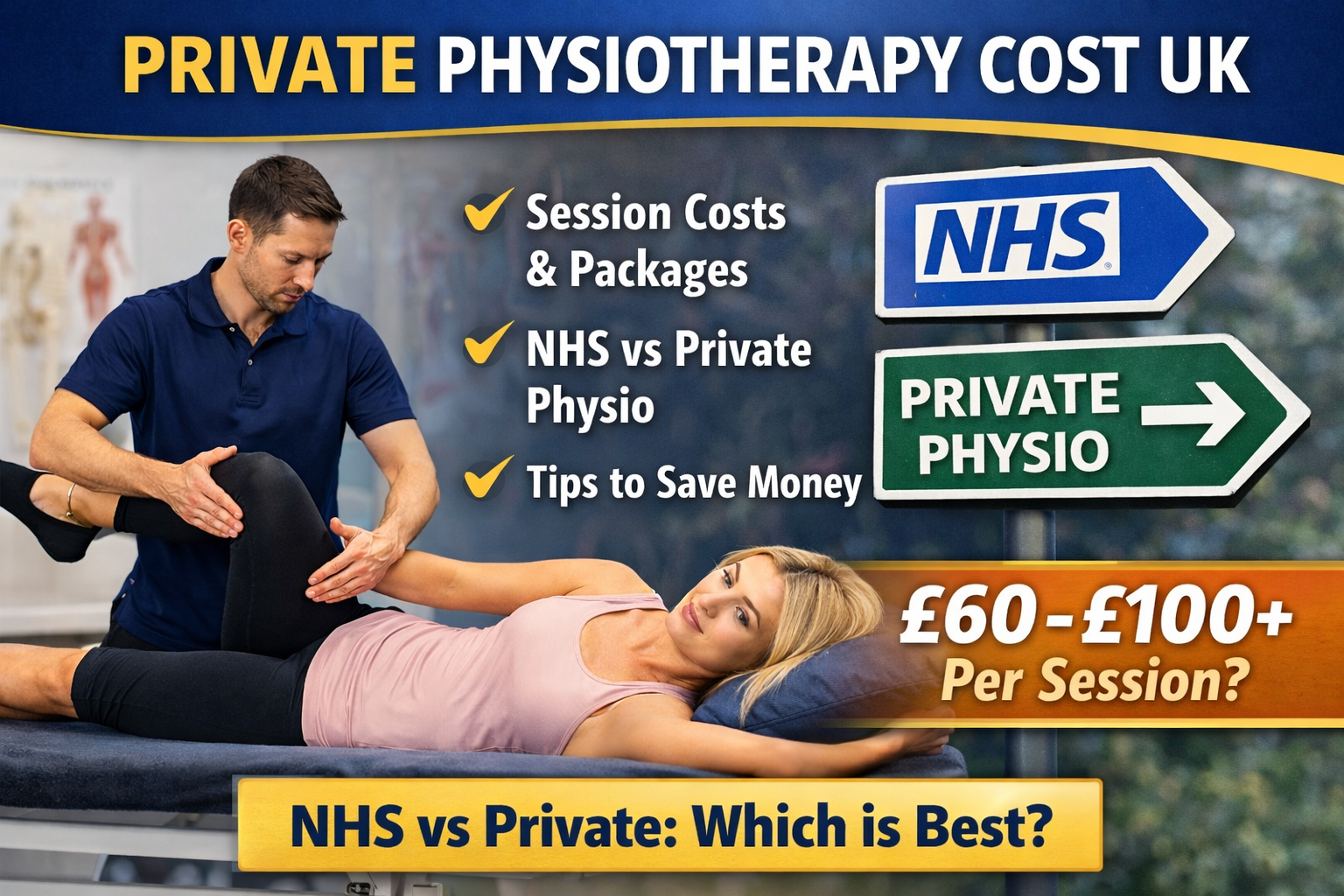
If you’re dealing with back pain, a sports injury, sciatica, shoulder problems, knee pain, or a niggling issue that will not go away, physiotherapy can be one of the fastest routes back to normal life. The big question for most people is cost.
Private physiotherapy in the UK can feel confusing because prices vary by location, appointment length, clinic reputation, and whether you need a specialist. On top of that, NHS physiotherapy is free at the point of use, but waiting times and access routes depend on where you live.
This guide breaks down typical UK private physio session prices, package deals, and the real-world difference between NHS and private care, so you can make the best decision for your body and your wallet.
Private Physiotherapy Prices UK At A Glance
Private physio prices usually depend on whether it’s an initial assessment (longer) or a follow-up session (shorter), and whether you’re in London or outside London.
A useful benchmark is Bupa’s pay-as-you-go pricing:
- Greater London: £95 initial (up to 45 mins), £72 follow-up (up to 30 mins)
- Outside Greater London: £72 initial, £55 follow-up
Typical Price Ranges You’ll See
Most UK clinics fall roughly into these ranges:
- Initial assessment (45 to 60 mins): ~£60 to £100+
- Follow-up (30 to 45 mins): ~£40 to £75+
- London and specialist clinics: often higher than the UK average
What You Actually Pay For In Private Physio
Private physiotherapy is not just “a massage.” You are paying for:
- A detailed assessment and diagnosis-style clinical reasoning
- A rehab plan tailored to your body, work, and lifestyle
- Hands-on treatment where appropriate
- Progress checks and plan adjustments
- Education that helps prevent the problem coming back
The first appointment is usually longer because the physio needs to understand your symptoms, history, and how you move. The NHS describes the first appointment as covering your symptoms, medical history, lifestyle, and an assessment of the affected area, strength, and balance.
Private Physiotherapy Session Prices UK With Real Examples
Prices vary, but it helps to see real clinic-style pricing so you can spot what is normal.
Here are examples from UK clinics (to show the market range):
- Physiotherapy Matters: £80 initial (50 mins), £55 follow-up (30 mins), 5-session package £250
- C Physio: £75 assessment (60 mins), treatment £49 (30 mins) / £75 (60 mins)
- Chartered Physiotherapy Clinic: £60 initial (45 mins), £45 follow-up (30 mins)
A Practical Pricing Table
| Appointment Type | Typical Length | Typical UK Price Range | Often Higher In |
|---|---|---|---|
| Initial assessment | 45–60 mins | £60–£100+ | London, specialist clinics |
| Follow-up session | 30–45 mins | £40–£75+ | London, specialist clinics |
| Virtual physio | 30–60 mins | £40–£70 | Less location-dependent |
| Home visit physio | 45–60 mins | £80–£130+ | London and long travel |
| Specialist physio | 45–60 mins | £80–£150+ | Women’s health, neuro, elite sport |
London can be noticeably more expensive, and some clinics cite wide ranges (for example, £75 to £150 for an initial assessment, and £60 to £120 for follow-ups).
Packages And Block Booking Deals
Packages are one of the easiest ways to reduce the cost per session. Many clinics offer:
- 3-session starter bundle
- 5-session rehab package (common)
- 6-session plan (often aligned with rehab timelines)
Bupa notes that an average treatment plan can take four to six sessions, which is why packages are so common.
When Packages Make Sense
A package can be good value if:
- Your issue is persistent (back pain, knee pain, shoulder impingement, tendinopathy)
- You want continuity with one therapist
- You know you will need progressive rehab over several weeks
When Pay-As-You-Go Is Smarter
Pay as you go can be better if:
- You want one session for advice and a home plan
- You are unsure whether physio is the right route
- You are testing a new clinic
Tip: Before buying a package, ask what happens if you recover early. Some clinics allow unused sessions to be transferred or refunded, others do not.
Why Some Physio Appointments Cost More
Price differences are usually driven by these factors:
1) Location
London and affluent areas have higher rent and staffing costs, and prices often reflect that.
2) Appointment Length
A 60-minute session usually costs more than a 30-minute session, but may offer better value if your problem is complex.
3) Specialist Expertise
Specialist services (women’s health, chronic pain, neurological rehab, high-performance sport) often cost more because of additional training and complexity.
4) Extra Therapies
Some clinics offer add-ons such as shockwave therapy, acupuncture, or dry needling, which may be priced separately.
NHS Vs Private Physiotherapy UK The Real Differences
Cost
- NHS physiotherapy: free at the point of use (you may pay for travel and time off work)
- Private physiotherapy: typically £40–£100+ per session depending on region and session type
Waiting Times
NHS waiting time standards vary by service type and pathway. For consultant-led, non-urgent treatment, the NHS states a maximum waiting time standard of 18 weeks from referral to treatment in many cases.
In practice, local MSK (musculoskeletal) physiotherapy services can have their own processes and demand levels.
Access
In many areas you can access NHS MSK physiotherapy via:
- GP referral, or
- Self-referral (depends on your local trust)
Examples of NHS trusts offering self-referral options include Guy’s and St Thomas’ and the Whittington, with eligibility based on GP registration area.
Session Length
NHS appointment lengths vary by trust, but many services use something like:
- First appointment up to 45–60 minutes
- Follow-up around 30 minutes
Choice And Continuity
Private physio usually gives you:
- Faster appointments
- More choice of therapist and clinic
- More consistent therapist continuity
- More flexible times (evenings, weekends, and virtual options)
NHS physio can still be excellent, but you may have less control over timing and continuity depending on local capacity.
Is Private Physiotherapy Worth It
Private physiotherapy is often worth it when:
- Pain is stopping you from working, sleeping, or training
- You want to return to sport quickly and safely
- You have already waited and the problem is getting worse
- You want a longer appointment and a detailed plan
- You need documentation for work or insurance (some clinics provide reports)
If the issue is mild and improving, NHS or a one-off private assessment (for a home plan) can be a cost-effective approach.
Can You Get Physiotherapy Through Health Insurance
Sometimes, yes. Many private health insurance policies include physiotherapy, but cover often depends on:
- Whether the provider requires a GP referral
- Whether you must use an approved network clinic
- Session limits (for example, a capped number per condition or year)
- Pre-authorisation requirements
Because policies differ massively, the best approach is to check your insurer’s current rules and ask:
- Do I need a GP referral
- How many sessions are covered
- What is my excess or co-pay
- Do I need to use a specific clinic network
How To Choose A Good Physio And Avoid Wasting Money
Check They Are Properly Registered
In the UK, “physiotherapist” is a regulated profession. You can verify a practitioner on the HCPC register.
Look For Chartered Physiotherapist Status
Many people also look for “Chartered Physiotherapist” and use the CSP directory to find qualified practitioners.
Ask These Questions Before Booking
- How long is the first appointment
- Do you provide a written rehab plan
- What is the expected number of sessions for my type of issue
- What will I do at home between sessions
- Do you offer packages and what is the refund policy
A good physio should explain the plan clearly, set expectations, and make you an active part of recovery.
How Many Sessions Will You Need
A common rehab timeline is four to six sessions, but it depends on:
- How long you have had the problem
- Whether it is acute or chronic
- Your activity level and goals
- Your consistency with exercises
- Your overall health and stress levels
Bupa notes that average plans can take four to six sessions, with the physio advising what you need.
When To Get Urgent Medical Help Instead Of Waiting For Physio
Some symptoms need urgent assessment. For example, certain NHS MSK services advise urgent action for red flags like new bladder or bowel control issues and numbness around the genitals or back passage.
If you have severe or sudden symptoms, or you are worried, contact NHS 111 or emergency services as appropriate.
Ways To Reduce The Cost Of Private Physiotherapy
- Choose virtual appointments for follow-ups if hands-on treatment is not essential
- Book a longer first session and ask for a detailed home plan (more value)
- Use a package only if you are confident you will need multiple sessions
- Ask about off-peak rates (some clinics discount daytime slots)
- Check workplace support (occupational health or employee benefits sometimes cover MSK care)
- Prioritise consistency with exercises so you need fewer sessions overall
FAQs About Private Physiotherapy Costs UK
Can I go straight to a private physio without seeing my GP
Yes, many private physiotherapists accept self-referrals. NHS access can also allow self-referral in some areas, depending on local trust rules.
Is private physio better than NHS physio
Not automatically. NHS physio can be excellent. The biggest differences are often speed, appointment flexibility, and choice.
Do I need a package
Not always. Packages are useful when you know you will need rehab progression, but a single session can still be valuable for assessment and a tailored home plan.
What is a fair price for private physiotherapy outside London
A common benchmark is around £72 initial and £55 follow-up in Bupa’s pay-as-you-go pricing outside Greater London, with many clinics in a similar band.
Final Takeaway
If your pain is affecting daily life, private physiotherapy can be a smart investment, especially when faster access prevents weeks or months of reduced mobility. For many people, the “best value” approach is either:
- NHS physio if you can wait, or
- A private assessment plus a home plan, then follow-ups only if needed
The key is choosing a properly registered professional, understanding the likely number of sessions, and using packages only when they genuinely save money.
Medical Disclaimer
This article is for general information only and does not replace medical advice. If you have severe symptoms, worsening pain, or red-flag symptoms, seek medical help promptly.