
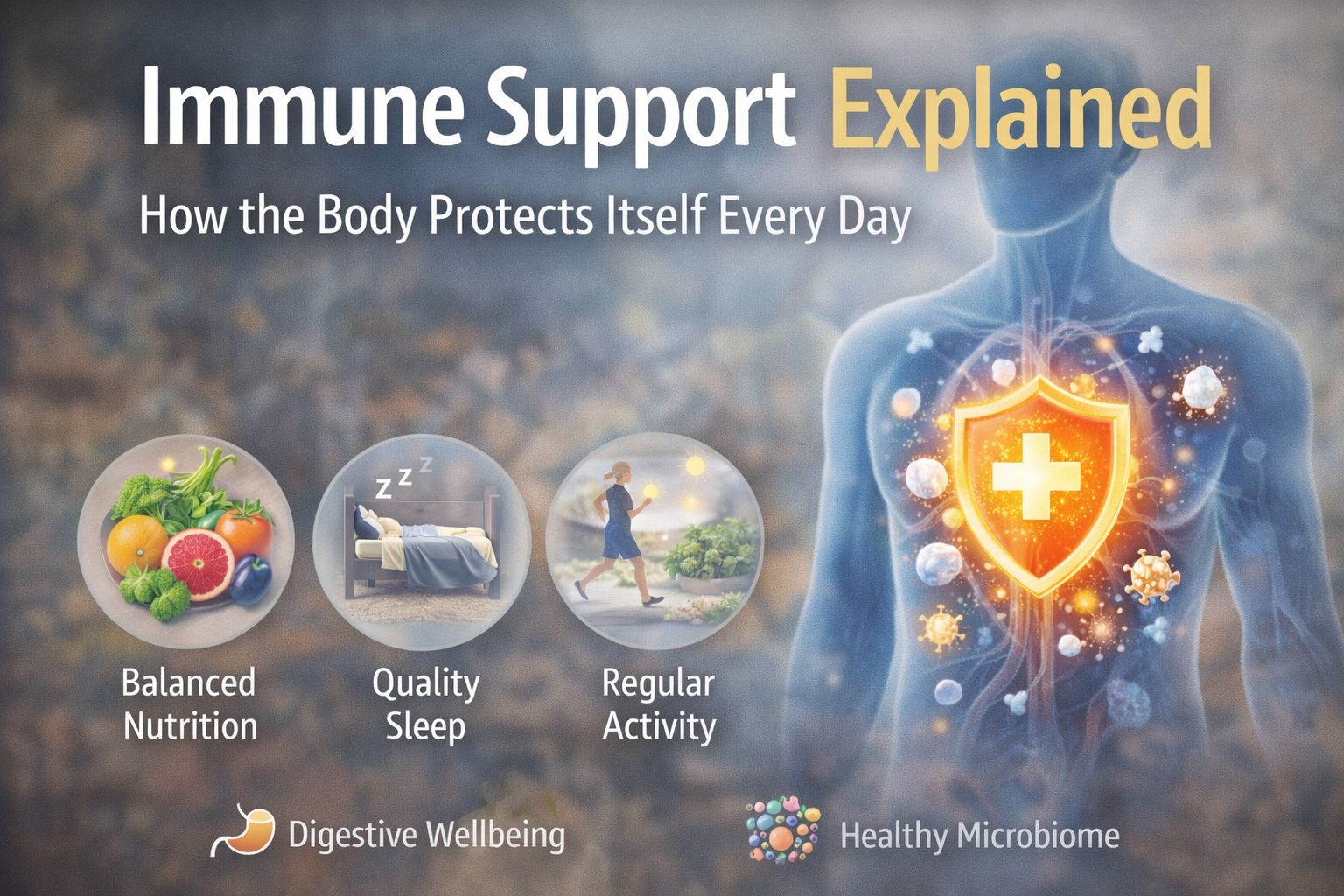
Immune support has become a widely discussed topic in health and wellbeing, particularly during times when people are more conscious of staying well. The immune system plays a central role in protecting the body from everyday challenges, yet it is often misunderstood or oversimplified.
Rather than being something that can be “boosted” overnight, immune health is influenced by a combination of lifestyle habits, environmental factors, and overall wellbeing. This article explains immune support in a clear, balanced, and practical way, focusing on how the immune system works and how everyday choices may help support its normal function.
What Is The Immune System And Why It Matters
The immune system is a complex network of cells, tissues, and organs that work together to help protect the body. Its primary role is to identify and respond to potential threats, such as bacteria and viruses, while maintaining balance within the body.
A System Working In The Background
Most of the time, the immune system works quietly without being noticed. It constantly monitors what is happening inside the body and responds when needed. This ongoing process is part of normal, healthy functioning.
The Immune System Is Not One Single Organ
The immune system includes:
- White blood cells
- The lymphatic system
- Bone marrow
- The spleen
- Parts of the digestive system
These components communicate with each other to support the body’s natural defences.
Understanding Immune Support In Everyday Terms
Immune support refers to habits and factors that help the immune system function as it should. It does not mean forcing the immune system to work harder, but rather supporting balance and resilience.
Balance Over Intensity
A well-functioning immune system needs balance. Overstimulation or chronic stress may be just as unhelpful as neglect. Supporting immune health is about consistency rather than extreme measures.
Why “Boosting” Can Be Misleading
The idea of “boosting” immunity is common in marketing but can be misleading. The immune system is highly regulated, and healthy function depends on coordination, not constant activation.
Nutrition And Its Role In Immune Support
What we eat plays a role in supporting many systems in the body, including the immune system.
Eating A Varied And Balanced Diet
A varied diet that includes fruits, vegetables, whole grains, proteins, and healthy fats provides a wide range of nutrients that support overall health.
Key dietary patterns associated with immune support include:
- Regular meals
- Adequate energy intake
- A variety of plant-based foods
Hydration And Immune Function
Water supports circulation and helps nutrients move through the body. Staying hydrated is a simple but often overlooked aspect of daily wellbeing.

The Link Between Sleep And Immune Health
Sleep is one of the most important factors influencing immune function.
Why Sleep Matters
During sleep, the body carries out maintenance processes that support immune balance. Poor or inconsistent sleep may affect how the body responds to everyday challenges.
Supporting Better Sleep Habits
Helpful sleep-supporting habits may include:
- Going to bed at consistent times
- Limiting screen exposure before sleep
- Creating a calm evening routine
Stress Management And Immune Support
Stress is a normal part of life, but long-term or unmanaged stress may influence immune function.
How Stress Affects The Body
Stress triggers hormonal responses that are useful in short bursts but may become disruptive when activated frequently. Supporting emotional wellbeing is an important part of immune support.
Gentle Ways To Manage Daily Stress
- Regular movement
- Breathing exercises
- Time outdoors
- Mindfulness or relaxation practices
These habits support overall wellbeing and may indirectly support immune health.
Physical Activity And The Immune System
Regular physical activity is associated with many health benefits, including support for immune function.
Moderate Movement And Consistency
Moderate, consistent activity such as walking, cycling, or swimming may support circulation and overall health. Balance is key, as excessive strain without recovery may have the opposite effect.
Making Activity Sustainable
Choosing activities that are enjoyable and fit easily into daily life increases the likelihood of long-term consistency.
The Gut And Immune Health Connection
A large portion of the immune system is located in the digestive tract, which is why gut health is often mentioned in discussions about immunity.
The Role Of The Gut Microbiome
The gut microbiome refers to the community of microorganisms living in the digestive system. These microorganisms interact with immune cells and contribute to immune balance.
Supporting Gut Health Naturally
- Eating fibre-rich foods
- Including fermented foods where appropriate
- Managing stress and sleep
These habits support digestive wellbeing, which in turn supports immune health.
Common Myths About Immune Support
There is a lot of misinformation surrounding immune health.
Myth One More Supplements Equal Better Immunity
Supplements are not a replacement for a healthy lifestyle. Immune support is influenced by many factors working together.
Myth Two You Can Prevent All Illness
No approach can eliminate all illness. The immune system’s role is to respond and adapt, not to provide absolute protection.
Myth Three Immune Support Is Only Needed Occasionally
Daily habits matter more than short-term actions. Consistency supports long-term wellbeing.
When To Seek Professional Advice
If someone experiences frequent illness, prolonged fatigue, or has concerns about immune health, professional guidance may be helpful.
Situations Where Support May Be Needed
- Ongoing tiredness
- Frequent infections
- Managing long-term health conditions
- Questions about supplements or diet
A healthcare professional can assess individual circumstances and provide personalised advice.
A Practical And Balanced Approach To Immune Support
Immune support is not about perfection or quick fixes. It is about creating a foundation of healthy habits that support the body’s natural ability to function.
By focusing on balanced nutrition, quality sleep, stress management, regular movement, and overall wellbeing, many people can support their immune system in a sustainable and realistic way.
Disclaimer
This article is for informational purposes only and does not constitute medical advice. It is not intended to diagnose, treat, cure, or prevent any medical condition. Always consult a qualified healthcare professional for personalised guidance regarding immune health or ongoing symptoms.