If you’ve been Googling cataract surgery costs, you’ve probably noticed two things very quickly:
- Clinics love the words from and starting at.
- Your brain immediately starts doing that “What if I choose the wrong lens and regret it forever?” loop.
This guide is here to calm the noise. I’ll show you real, published UK prices (per eye), explain lens types in normal human language, and break down what a good “package” should actually include—so you can compare properly rather than guessing.
What You Will Pay In 2026 For Private Cataract Surgery
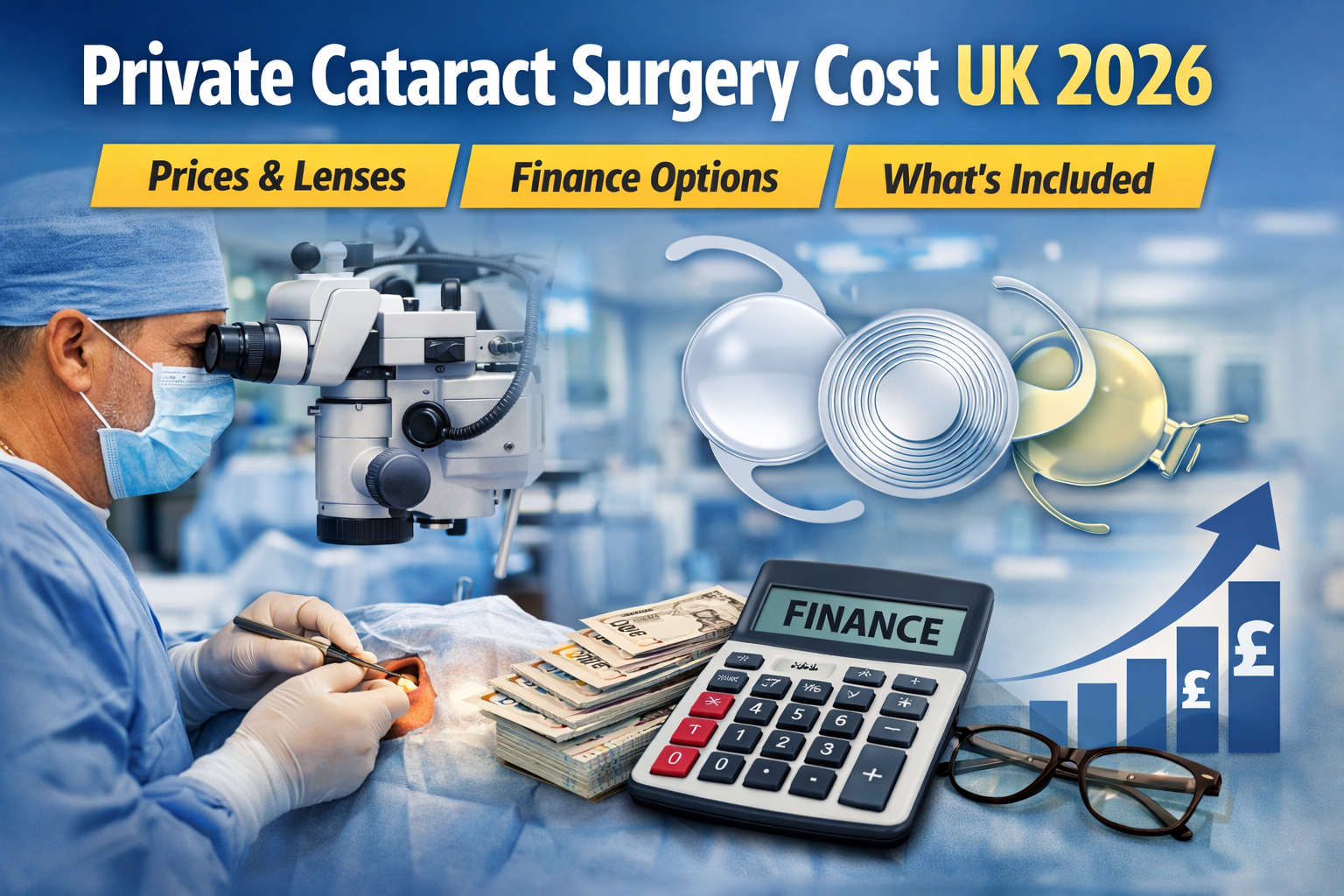
As of February 2026, most UK self-pay cataract surgery pricing still clusters into two broad tiers:
- Standard monofocal packages: commonly around £2,500 to £3,500 per eye
- Astigmatism-correcting and premium lenses (toric, multifocal, enhanced monofocal, EDOF): often £3,500 to £5,000+ per eye
But instead of vague ranges, here are examples of published per-eye prices from well-known providers, so you can see what “normal” looks like.
Published Example Prices Per Eye
| Provider | Example Published Pricing (Per Eye) | Notes |
|---|---|---|
| Moorfields Eye Hospital | £2,990 treatment + £225 initial consultation | Package includes standard lens + 1 post-op appt; sedation with anaesthetist can add £370 |
| Optegra | From £2,895 standard, £3,595 enhanced, £3,995 advanced | Tiered packages; includes follow-up aftercare and mentions YAG included within 1 year if needed |
| The London Clinic | From £2,910 | States it includes hospital price plus consultant and anaesthetist, with one follow-up |
| Optical Express | From £2,495 monofocal, £3,195 multifocal | States aftercare for 12 months + medication for first 3 months included |
| Centre for Sight | £3,497 monofocal, £3,985 toric, £4,547 multifocal, £4,988 multifocal toric | Lists package inclusions and consultation from £445 |
These figures come directly from the providers’ own pricing pages and are worth using as benchmarks when you’re comparing quotes.
A Quick Reality Check On “Per Eye” Pricing
Most people eventually have both eyes treated (either weeks apart or as advised). So your real-world budgeting usually looks like:
- Standard monofocal route: roughly £5,000 to £7,000 total for both eyes (often plus consult fees)
- Premium lens route: roughly £7,000 to £10,000+ total for both eyes
Not a rule—just a practical planning range based on published per-eye pricing.
Why Prices Vary So Much Between Clinics
Two clinics can both say “cataract surgery” and still be offering very different things. The price usually changes because of:
Lens Choice
This is the biggest driver. Standard lenses are cheaper; lenses that correct astigmatism or aim to reduce glasses-dependence cost more (and the testing and planning can be more involved).
What’s Included In The Package
One clinic might bundle almost everything. Another might quote a “surgery price” and charge separately for:
- consultation(s)
- extra scans
- additional follow-ups
- sedation / anaesthetist
- post-op medication
- YAG laser later on
For example, Moorfields clearly separates the initial consultation fee from the package price, and it also notes sedation with an anaesthetist can add an extra fee.
Technology Add Ons Such As Laser Assisted Surgery
Laser-assisted cataract surgery can cost more. And importantly, evidence summaries from Moorfields note that conventional and laser cataract surgery are as good as each other in terms of vision and safety, while laser-assisted surgery adds cost. So if someone is pushing “laser” as automatically superior, it’s fair to ask what you personally gain for the extra spend.
Aftercare Commitment
Some providers advertise longer included aftercare (for example, one-year follow-up packages are commonly mentioned), which can matter if you want peace of mind built into the price.
Lens Types Explained In Plain English
Lens talk is where most people feel the pressure. Let’s make it simple.
Standard Monofocal Lenses
- What they do: Give clear vision at one set distance (usually distance).
- What you’ll still need: Typically reading glasses (and sometimes glasses for intermediate tasks too).
- Who they suit: People who want the most straightforward option and don’t mind using glasses.
Moorfields describes standard monofocals as good for distance vision but requiring spectacles for intermediate and near.
Premium Monofocal Plus And EDOF Lenses
These are the “middle ground” choices.
- Premium monofocal-plus: Better range than standard monofocal (especially mid-distance), but you’ll still need reading glasses.
- EDOF (extended depth of focus): Stronger intermediate vision for day-to-day life; reading glasses may still be needed.
Moorfields outlines these categories clearly and notes the typical trade-offs.
Toric Lenses For Astigmatism
If you have astigmatism, toric lenses can correct it during surgery (and toric can be combined with other lens types).
- What they do: Reduce blur caused by astigmatism.
- Why they cost more: The lens itself and planning are more specific.
Again, Moorfields lists toric lenses as a premium option that can be combined with other designs.
Multifocal And Trifocal Lenses
These are designed to reduce your dependence on glasses across near, intermediate, and distance.
- The upside: Many people love the “less glasses” result.
- The trade-off: A known downside is visual phenomena like halos or glare for some patients.
Moorfields notes that trifocal/multifocal lenses aim for a full range of vision and that a minority of patients may notice halos or glare.
A Quick Note On Safety And Evidence
Lens technology evolves, and guidance evolves too. NICE has recently signalled updates around intraocular lens selection (lens design and material), reflecting ongoing evidence review rather than “one lens fits everyone.”
What A Good Cataract Surgery Package Should Include
When you’re comparing quotes, don’t ask “How much is it?” first. Ask:
“What do I get for that price, exactly?”
Here’s what strong packages commonly include, and what often gets charged separately.
Usually Included In Better Packages
- Pre-op testing and measurements (biometry and routine checks)
- Surgeon and facility fees
- The intraocular lens (standard or specified upgrade)
- Anaesthetic eye drops (and sometimes local anaesthesia options)
- Take-home medication
- Scheduled post-op follow-up(s)
Moorfields lists these inclusions explicitly for its cataract package price.
Some providers also describe included aftercare and/or included treatment if posterior capsule opacification occurs and needs YAG laser within a set time window (often up to a year in some packages).
Common Extras That Can Change Your Total
- Initial consultation fees (often separate)
- Sedation with an anaesthetist (if offered/needed)
- Premium lens upgrades (toric, multifocal, EDOF)
- Extra tests or scans (if your eyes are complex)
- Extra follow-ups beyond what’s included
- YAG laser later on (if not included)
Moorfields flags consultation as separate, mentions sedation as an additional cost, and notes that additional tests outside the routine package are rare but possible.
The One Checklist That Saves People Money
Before you book, ask the clinic to confirm these in writing:
- Total cost per eye including consultation(s)
- Lens type included (exact name, not just “premium”)
- Number of post-op visits included
- Medications included and for how long
- Who pays if extra scans are needed
- Whether YAG laser is included later, and within what timeframe
- Refund rules for deposits (if you change your mind)
Finance Options And Ways People Pay
In 2026, you generally have four common ways to pay.
Self Pay Upfront
Straightforward, sometimes with a discount if paying in full. The downside is obvious: you need the cash available.
Interest Free Or Low Interest Finance
Many clinics offer payment plans, often branded as “0% finance” for eligible patients.
For example, Moorfields states it offers interest-free payment plans up to ten months (subject to checks and terms).
Other providers also advertise 0% finance options and provide example repayment scenarios.
Smart tip: always look at:
- deposit size
- repayment length
- total amount repayable
- what happens if you miss a payment
Private Medical Insurance
NHS care is the main route for many people, but if you’re going private, you might use private insurance to cover some costs—often the standard procedure elements. Some providers explicitly mention private medical insurance as an option and provide more detail on how cover applies.
Mixed Pathways
Some people choose a mixed route: for example, paying privately for faster treatment or a specific lens option, while doing the second eye differently depending on circumstances.
Optegra’s “Right To Sight” material describes a paid per-eye option and notes the second eye may be treated via the NHS if you’re willing to wait (depending on local pathways).
How To Choose A Clinic Without Regrets
This is the part nobody tells you: most cataract “regret” isn’t about the surgery. It’s about expectations.
Start With Your Real Lifestyle
Ask yourself:
- Do I drive a lot at night?
- Do I read daily without glasses?
- Do I work on screens for hours?
- Am I bothered by halos and glare, or can I tolerate some trade-offs?
- Do I already wear varifocals and not mind them?
Then match the lens to that reality—not the sales pitch.
Don’t Compare Price Until You Compare Like For Like
A £2,600 “from” quote might become £3,400 once you add:
- consult fee
- toric upgrade
- extra follow-ups
- post-op drops
Meanwhile a £3,200 quote might include almost everything.
Questions Worth Asking Your Surgeon
- Which lens are you recommending for my eyes and why?
- What vision outcome is realistic for me (distance, intermediate, near)?
- What are the main trade-offs with that lens?
- How many follow-ups are included?
- Who do I contact if I’m worried after surgery (and is that covered)?
- If I end up needing YAG laser later, what does it cost?
A Calm Word On “Laser Assisted”
If a clinic offers laser-assisted cataract surgery at a higher price, ask:
- What’s the exact benefit for my case?
- Is it essential, optional, or mainly preference?
Moorfields notes conventional and laser cataract surgery are both as good as each other for vision and safety, while laser-assisted comes with added cost.
Quick FAQ
How much is private cataract surgery per eye in the UK in 2026
Based on published pricing from major providers, you’ll commonly see around £2,500 to £5,000+ per eye, depending mainly on lens type and package inclusions.
Is the cheapest option always risky
Not automatically. But cheap quotes can be missing important inclusions. The safest approach is comparing what’s included, not just the headline price.
Will I still need glasses after cataract surgery
Often yes—especially with standard monofocal lenses. Premium lenses can reduce reliance on glasses, but they come with trade-offs and aren’t right for everyone.
Does cataract surgery include aftercare
Sometimes fully, sometimes partially. Many providers describe included aftercare windows (for example 3 months or 12 months) and included medications for a period—always confirm in writing.
Medical And Content Disclaimer
This article is for general information only and is not medical advice. Cataract surgery, lens choice, and suitability depend on your eyes, your health, and your visual needs. Always consult a qualified eye specialist or ophthalmic surgeon before making decisions. Prices can change—confirm current costs and package details directly with the provider before booking.n change.