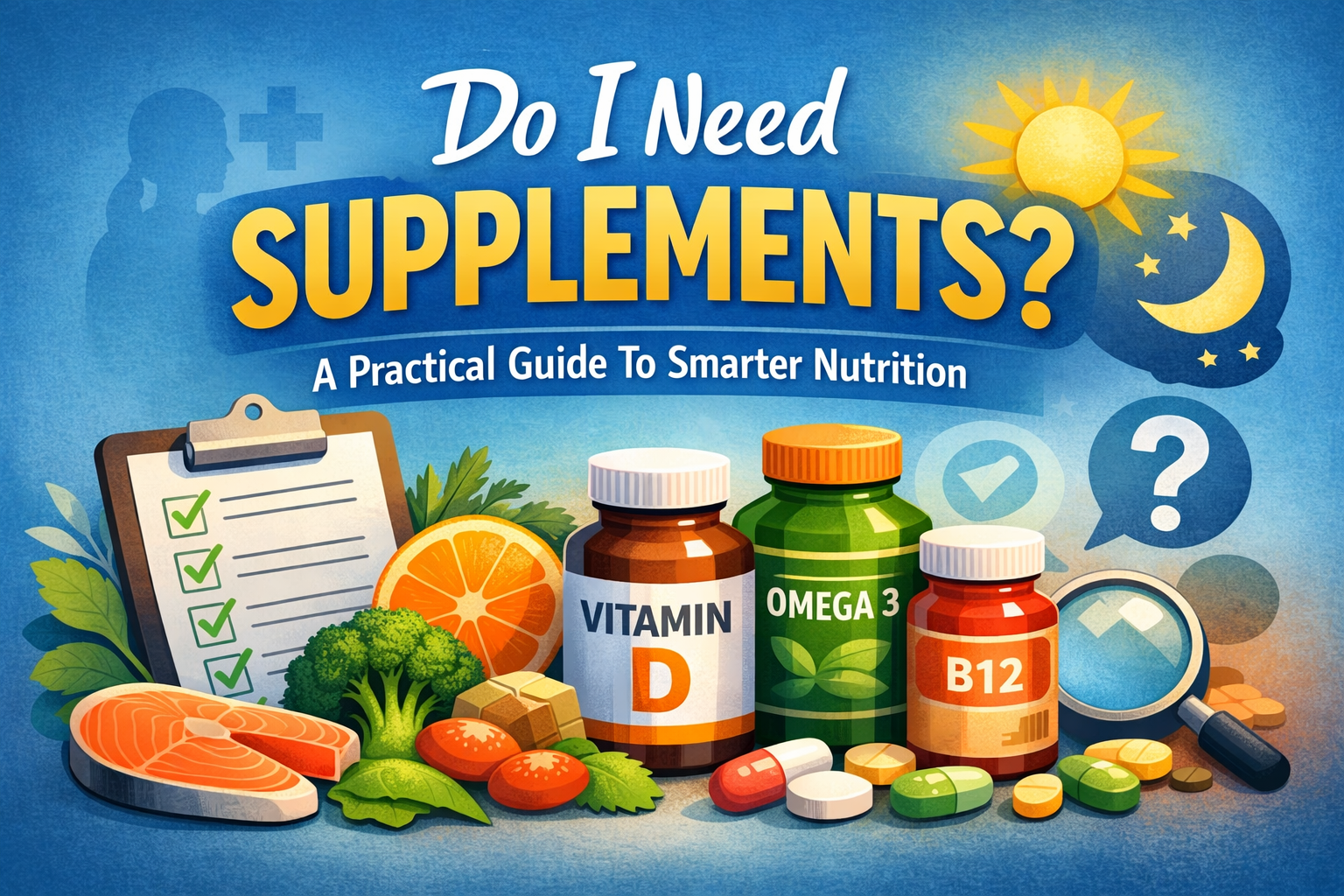
Most people don’t need supplements to be healthy. But some people genuinely do benefit from targeted supplements, at certain life stages, with certain diets, health conditions, or lifestyles. The tricky part is this: the supplement world is loud, expensive, and full of big promises, while the truth is usually quiet and simple.
This guide will help you decide, without guilt or hype, whether supplements make sense for you, which ones are worth considering, and how to avoid wasting money or taking something risky.
What Supplements Are And Why People Take Them
A supplement is anything you take to add nutrients (like vitamins and minerals) or other compounds (like creatine, omega 3, probiotics, collagen, herbal extracts) to your diet. In the UK, many supplements are regulated as foods rather than medicines, which matters because they’re not meant to replace a balanced diet and they should not be marketed as curing or treating medical conditions.
People take supplements for a few common reasons:
1) Insurance Against A “Not Perfect” Diet
Life happens. Busy weeks, shift work, travel, stress eating, low appetite, picky eating. A basic supplement can feel like a safety net.
2) Specific Goals
Energy, sleep, gym performance, muscle gain, fat loss, hair and skin, immunity, focus. Some of these goals have real evidence behind certain supplements. Many don’t.
3) Low Sunlight And Modern Lifestyles
Vitamin D is the classic example in the UK. Many people spend most of their time indoors, and sunshine is seasonal.
4) Dietary Choices
Vegan or plant-based diets can be fantastic, but some nutrients (like vitamin B12) can be hard to get without fortified foods or supplements.
5) Life Stages
Pregnancy planning, pregnancy, breastfeeding, older age, childhood, or certain health conditions can change your nutrient needs.
Here’s the key idea that keeps you safe and saves you money:
Supplements work best when they are specific, not random.
If you’re taking 6 things “just in case,” you’re more likely to waste money, miss the real problem, or accidentally overdo something.
Start With Food And Basics That Beat Pills
Before you buy anything, check your foundations. This isn’t a lecture. It’s simply that these basics deliver a bigger health return than almost any supplement.
Food First Still Wins For Most People
The NHS is clear that most people should be able to get the nutrients they need from a varied, balanced diet, though some groups may need extra supplements.
Why food matters so much:
- Nutrients in food arrive with fibre, protein, fats, and thousands of helpful compounds.
- Foods “bundle” nutrients in a way your body is used to.
- Supplements can fill gaps, but they rarely fix a diet built on ultra-processed convenience.
The “Big 4” Nutrition Habits That Reduce Supplement Need
If you want a simple checklist:
- Protein at most meals (eggs, fish, chicken, lentils, Greek yogurt, tofu)
- Fruit and veg daily (aim for variety, not perfection)
- Whole grains and legumes for fibre and minerals
- Healthy fats (olive oil, nuts, seeds, oily fish)
If these are consistently missing, a supplement might help a little, but improving the pattern helps a lot more.
Sleep, Stress, And Movement Often Look Like Deficiency
This is the part people miss. Many “low vitamin” symptoms overlap with life issues:
- Tiredness
- Low mood
- Brain fog
- Poor workouts
- Cravings
- Poor sleep
Sometimes a blood test shows a deficiency. Sometimes the “deficiency” is 5 hours of sleep, night shifts, dehydration, and high stress.
A practical approach is: fix the basics and use supplements as targeted support, not as the plan.
Who Might Truly Need Supplements
This is where supplements can be genuinely useful, even essential.
People With Limited Sun Exposure
In the UK, many people consider vitamin D during the darker months. The NHS notes that if you choose to take vitamin D, 10 micrograms a day is enough for most people, and also warns against taking too much.
(If you’re indoors most days, work nights, cover most of your skin outdoors, or have darker skin, this becomes more relevant.)
Pregnancy Planning And Pregnancy
If there’s any category where “it’s optional” turns into “please do this properly,” it’s early pregnancy.
- The NHS recommends 400 micrograms of folic acid daily while trying to get pregnant and during the first 12 weeks.
- The NHS also warns to avoid cod liver oil or supplements containing vitamin A (retinol) during pregnancy because too much vitamin A can be harmful to the baby.
Vegans And Some Vegetarians
Vitamin B12 is the big one. The NHS states that vegan sources are limited and a vitamin B12 supplement may be needed.
This is not a “maybe for vibes” supplement. Long-term low B12 can be serious.
Depending on diet quality, vegans may also want to think about iodine, iron, omega 3, vitamin D, and sometimes calcium, but B12 is the non-negotiable headline.
Children Under 5
In the UK, the government recommends daily vitamins A, C and D for children aged 6 months to 5 years (with some exceptions for babies getting enough formula).
People With Diagnosed Deficiencies Or Medical Conditions
If a clinician has told you your iron is low, your vitamin D is low, you have absorption issues, or you’re on a medication that affects nutrients, supplements can be part of proper treatment. This is where you stop guessing and follow professional advice.
Older Adults And Bone Health Risk
Vitamin D and calcium can matter more when fracture risk is higher. NHS osteoporosis treatment guidance talks about vitamin D helping the body absorb calcium, and notes adult vitamin D needs.
This doesn’t mean everyone should mega-dose calcium. It means bone health deserves a targeted plan.
The Shortlist Of Supplements With Strong Evidence
Let’s keep this real. There are hundreds of supplements. Only a handful have consistently strong evidence for specific situations.
Vitamin D
Why people take it: bone health, muscle function, immune support, low sunlight seasons.
- NHS guidance includes that 10 micrograms daily is enough for most people who choose to supplement, and warns not to exceed upper limits.
- UK care home guidance has also used 10 micrograms (400 IU) as a daily amount in specific vulnerable settings.
When it’s most likely helpful: autumn and winter, low sun exposure, darker skin, covered skin, indoor lifestyle, shift work, or if you’ve been found deficient.
Common mistake: taking huge doses “because TikTok said so.” More is not better.
Folic Acid
Why people take it: reduces risk of certain early development problems in pregnancy.
NHS recommends 400 micrograms daily when trying and through the first 12 weeks.
When it’s most likely helpful: if pregnancy is possible or planned.
Vitamin B12
Why people take it: red blood cells and nervous system health.
NHS notes that vegan sources are limited and a B12 supplement may be needed.
When it’s most likely helpful: vegans, some vegetarians, and some people with absorption issues.
Iron
Iron can be life-changing when you’re genuinely low, and a headache when you’re not.
Good approach: don’t self-prescribe high-dose iron just because you’re tired. Low iron has many causes and should be properly assessed, especially if symptoms are significant. Food sources (red meat, lentils, spinach, fortified cereals) are a solid starting point, and vitamin C helps absorption.
Creatine Monohydrate
This one is mainly for performance and strength, not general health. It’s one of the most researched sports supplements.
When it’s most likely helpful: strength training, muscle gain goals, improving repeated high-intensity performance, older adults doing resistance training.
Tip: it’s not a pre-workout “rush” supplement. It’s a consistency supplement.
Omega 3
If you rarely eat oily fish, omega 3 can be worth considering for general health. For halal-friendly choices, many people look at fish oil or algae-based omega 3.
When it’s most likely helpful: low fish intake, heart-health focused diets, people who prefer an algae source.
Fibre Supplements
Not glamorous, but effective. If your digestion is poor and your fibre intake is low, a fibre supplement can help, especially while you improve your overall diet.
How To Choose Safe Effective Supplements
If you take one lesson from this whole post, make it this:
The supplement that helps is the one that matches your actual gap.
1) Decide The Job Of The Supplement
Ask: What problem am I solving?
- “I never see sunlight” → vitamin D consideration
- “I’m vegan and not eating fortified foods daily” → B12
- “Trying for a baby” → folic acid
- “My blood test says I’m low” → follow your clinician’s plan
- “I want better workouts” → creatine, protein, sleep, training plan
If you can’t clearly describe the job in one sentence, don’t buy it yet.
2) Watch Out For Vitamin A And Mega Doses
Vitamin A is a perfect example of “danger is in the dose.” The NHS advises you can usually get what you need from diet and warns not to take too much from supplements, and to be mindful of liver intake because it’s very high in vitamin A.
Pregnancy is especially sensitive, and the NHS specifically warns against vitamin A (retinol) supplements and cod liver oil.
3) Be Careful With Stacks And Multi Products
Multivitamins can look convenient, but they can also:
- duplicate ingredients across products
- push you over safe levels
- include things you don’t need
- distract you from fixing the core issue
A targeted single supplement is often a cleaner strategy.
4) Buy From Reputable Brands
Because supplements are not medicines, quality can vary. Choose brands that:
- provide clear dosing labels
- avoid “proprietary blends” that hide amounts
- have third-party testing where possible (especially for sports supplements)
If you’re drug-tested for sport or work, look for certified testing programmes.
5) Avoid Miracle Claims
If a supplement claims to “cure,” “treat,” or “replace medication,” that’s a red flag. In the UK, food supplements should not be sold with claims that they can prevent, treat, or cure medical conditions.
Simple Decision Framework And Next Steps
Here’s a no-drama framework you can actually use today.
Step 1 Ask These Four Questions
- Is my diet consistently missing key foods?
- Am I in a higher-need group? (pregnancy planning, vegan, child under 5, low sunlight exposure, older adult bone-risk, diagnosed deficiency)
- Do I have symptoms that need checking rather than guessing?
- Can I name the exact reason I’m taking this supplement?
If you answered “yes” to #2 or you have confirmed deficiency, supplementation is more likely to be useful.
Step 2 Choose The Simplest Option That Solves The Problem
Common “simple wins”:
- Vitamin D during low-sun months if you’re mostly indoors
- B12 if you’re vegan and not reliably getting fortified sources
- Folic acid if pregnancy is possible or planned
- Child vitamin drops A, C, D if under 5 (where applicable)
Step 3 Review After 8 To 12 Weeks
Supplements aren’t tattoos. Reassess:
- Do you feel better?
- Did you improve diet and lifestyle at the same time?
- Did you get blood work if needed?
- Are you still taking duplicates?
If nothing changes, don’t just add another pill. Change the plan.
Quick FAQ
Should I take a multivitamin every day?
If your diet is decent, you probably don’t need it. Many people do better with one or two targeted supplements instead of a broad multivitamin.
Can supplements replace healthy eating?
No. Supplements are designed to supplement, not replace a balanced diet.
Is “natural” always safer?
No. Dose matters, interactions matter, and some vitamins can be harmful in excess, like vitamin A or very high-dose vitamin D.
Should I test before I supplement?
For some nutrients (like iron or B12), testing is a smart move if symptoms are significant. For others (like basic vitamin D in winter), many people follow general guidance. If you’re unsure, your pharmacist or GP can advise.
Medical Disclaimer
This article is for educational purposes only and does not provide medical advice. Supplements can interact with medications and may not be suitable for everyone. Speak with your GP, pharmacist, or a qualified healthcare professional for personal advice, especially if you are pregnant, breastfeeding, have a medical condition, or take prescription medicines.