
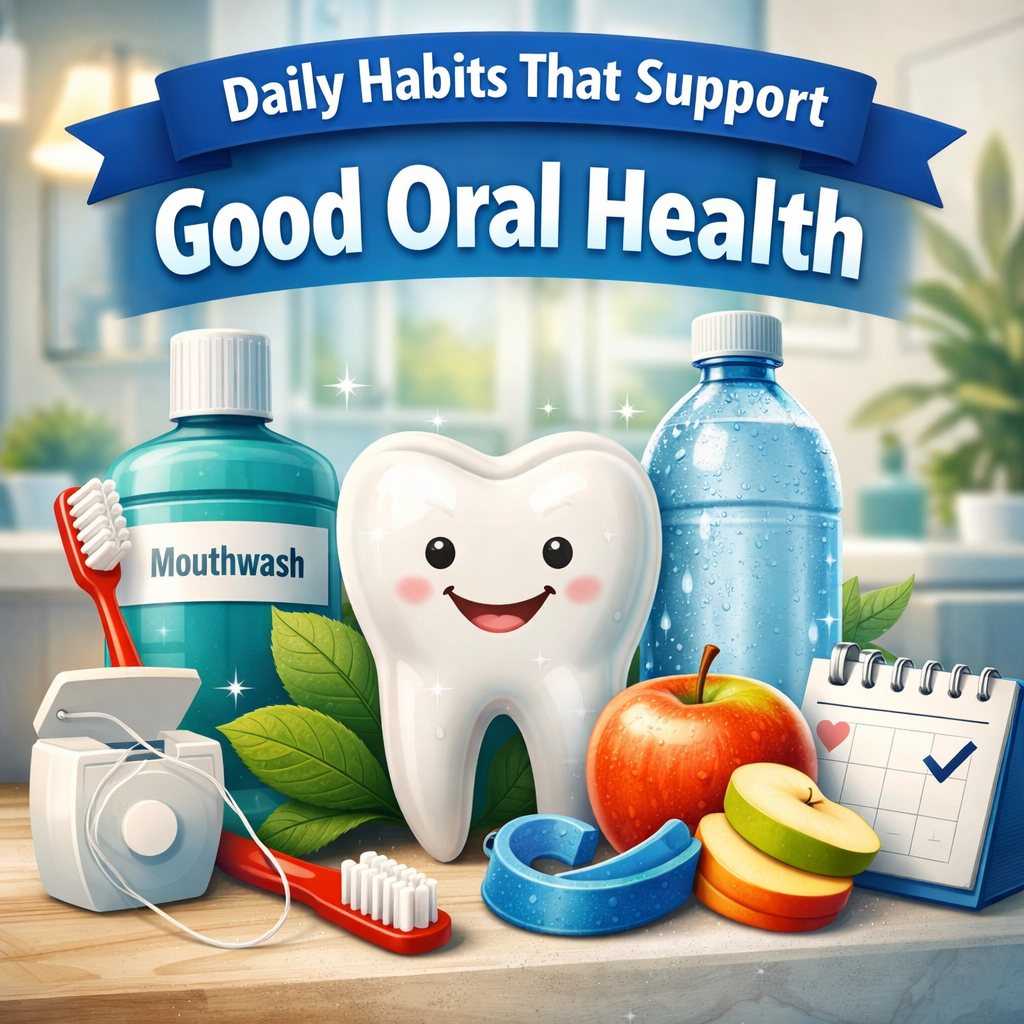
Good oral health is not built in a dentist’s chair alone. It is shaped every single day by small, repeatable habits that protect your teeth, gums, and overall wellbeing. When practiced consistently, these habits help prevent cavities, gum disease, bad breath, tooth loss, and even health issues linked to poor oral hygiene such as heart disease and diabetes.
This guide breaks down the most effective daily habits that support good oral health in a practical, realistic way. Whether you are starting from scratch or refining your routine, these habits can help you maintain a healthier smile for life.
Why Daily Oral Health Habits Matter
Your mouth is home to millions of bacteria. Some are harmless, but others feed on sugars and produce acids that attack tooth enamel and inflame gums. Without daily care, plaque builds up, hardens into tartar, and leads to decay and gum disease.
Daily habits matter because they:
- Remove plaque before it causes damage
- Strengthen tooth enamel
- Protect gums from inflammation and infection
- Maintain fresh breath
- Reduce the need for expensive dental treatments
Consistency is far more important than perfection. A simple routine followed every day beats an advanced routine done occasionally.
Brushing Your Teeth Properly Twice a Day
Brushing is the foundation of good oral health. Done correctly, it removes plaque, food particles, and bacteria that cause decay and gum disease.
Best brushing habits
- Brush twice daily, once in the morning and once before bed
- Brush for two full minutes each time
- Use a soft-bristled toothbrush to protect enamel and gums
- Replace your toothbrush or brush head every three months
- Use fluoride toothpaste to strengthen enamel
Technique matters
Hold your toothbrush at a slight angle toward the gums and use small circular motions rather than aggressive back-and-forth scrubbing. Brushing too hard can wear down enamel and cause gum recession.
Night-time brushing is especially important because saliva flow drops during sleep, making teeth more vulnerable to acid attack.
Flossing Daily To Protect Gums And Teeth
Flossing is often skipped, but it is just as important as brushing. A toothbrush cannot reach between teeth where plaque and food debris collect.
Why flossing matters
- Prevents cavities between teeth
- Reduces gum inflammation and bleeding
- Helps prevent bad breath
- Lowers the risk of gum disease
How to make flossing a habit
- Floss once a day, ideally before bedtime
- Use dental floss, floss picks, or interdental brushes
- Be gentle and curve the floss around each tooth
If traditional floss feels difficult, interdental brushes or water flossers can be effective alternatives.
Rinsing With Mouthwash Wisely
Mouthwash is not a replacement for brushing or flossing, but it can support your daily routine.
Benefits of mouthwash
- Reduces bacteria in the mouth
- Freshens breath
- Strengthens enamel if fluoride-based
- Helps protect against gum disease
Smart mouthwash habits
- Choose an alcohol-free mouthwash to avoid dry mouth
- Use once or twice daily as directed
- Avoid rinsing with water immediately after fluoride mouthwash
Using mouthwash at a different time from brushing can help extend fluoride protection.
Drinking Enough Water Throughout The Day
Water plays a powerful role in oral health that many people overlook.
How water helps your teeth
- Washes away food particles and bacteria
- Dilutes acids produced by plaque bacteria
- Stimulates saliva production
- Helps prevent dry mouth
Sipping water regularly, especially after meals, supports your mouth’s natural cleansing process. Fluoridated tap water offers added protection for tooth enamel.
Limiting Sugar And Acidic Foods
What you eat directly affects your oral health. Sugars feed harmful bacteria, while acidic foods weaken enamel.
Foods to limit
- Sugary snacks and drinks
- Fizzy drinks and energy drinks
- Fruit juices consumed frequently
- Sticky sweets that cling to teeth
Healthier alternatives
- Fresh vegetables and crunchy fruits
- Cheese and yoghurt
- Nuts and seeds
- Water, milk, and unsweetened tea
If you consume sugary or acidic foods, try to do so with meals rather than grazing throughout the day. Rinse with water afterwards to reduce acid exposure.
Chewing Sugar-Free Gum After Meals
Chewing sugar-free gum can be a helpful habit when brushing is not possible.
Benefits of sugar-free gum
- Stimulates saliva production
- Helps neutralise acids
- Reduces food debris between teeth
- Supports enamel remineralisation
Choose gum sweetened with xylitol, which may help reduce cavity-causing bacteria.
Avoiding Tobacco And Limiting Alcohol
Smoking and tobacco use are among the biggest risk factors for poor oral health.
Effects of tobacco on oral health
- Stained teeth
- Bad breath
- Gum disease
- Tooth loss
- Increased risk of oral cancer
Alcohol can also dry out the mouth, reducing saliva and increasing the risk of decay. Limiting alcohol and avoiding tobacco entirely can dramatically improve long-term oral health.
Cleaning Your Tongue Daily
Bacteria build up on the tongue just as they do on teeth.
Why tongue cleaning matters
- Reduces bad breath
- Lowers overall bacterial load
- Improves taste sensation
You can gently brush your tongue with your toothbrush or use a tongue scraper once a day.
Maintaining Consistent Dental Checkups
Daily habits work best when combined with professional care.
Why regular dental visits matter
- Early detection of cavities and gum disease
- Professional plaque and tartar removal
- Monitoring of oral health changes
- Advice tailored to your needs
Most people benefit from dental checkups every six months, though your dentist may recommend a different schedule based on your oral health.
Protecting Teeth During Sleep And Sports
Certain habits protect teeth from damage that brushing alone cannot prevent.
Helpful protective habits
- Wear a night guard if you grind your teeth
- Use a mouthguard during contact sports
- Avoid chewing ice or hard objects
Grinding and impact injuries can cause long-term damage that is preventable with simple protective measures.
Building A Sustainable Oral Health Routine
The key to good oral health is sustainability. Your routine should be simple enough to follow every day, even when life gets busy.
A realistic daily oral health checklist
- Brush twice daily for two minutes
- Floss once a day
- Drink water regularly
- Limit sugary snacks and drinks
- Clean your tongue
- Avoid tobacco
Start with the basics and build gradually. Consistency over time leads to stronger teeth, healthier gums, and fewer dental problems.
The Bigger Picture Of Oral Health
Good oral health supports more than just a nice smile. Research increasingly links oral health to overall wellbeing, including heart health, diabetes management, and reduced inflammation in the body.
By committing to healthy daily habits, you are investing in both your oral health and your long-term quality of life.
A healthy mouth is not achieved overnight, but with small daily actions, it is absolutely within reach.
Disclaimer
The information provided in this article, Daily Habits That Support Good Oral Health, is for general informational and educational purposes only and does not constitute medical or dental advice. While every effort has been made to ensure accuracy, this content should not be used as a substitute for professional diagnosis, treatment, or advice from a qualified dentist, dental hygienist, or healthcare professional.
Oral health needs can vary from person to person based on individual conditions, medical history, and lifestyle factors. Always seek the guidance of a licensed dental professional regarding any questions or concerns you may have about your oral health, dental symptoms, or treatment options. Never disregard professional advice or delay seeking treatment because of information you have read in this article.
The author and publisher assume no responsibility for any adverse effects resulting from the use or application of the information contained in this post.