
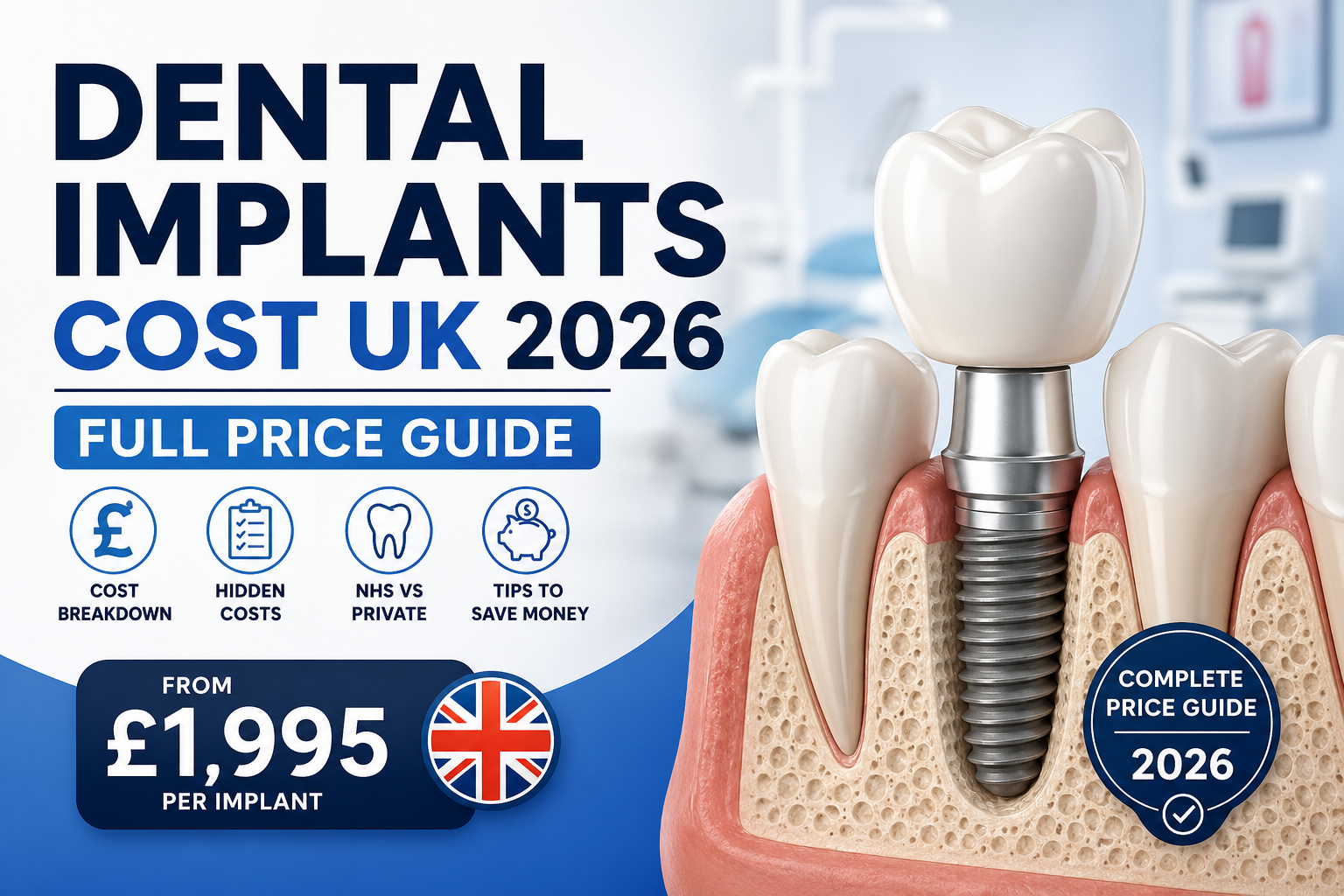
Dental implants have become one of the most sought-after solutions for missing teeth in the UK. In 2026, more people than ever are choosing implants over dentures and bridges due to their durability, natural appearance, and long-term benefits.
However, one of the biggest concerns remains the cost.
If you have searched for dental implants recently, you may have noticed a huge variation in prices. Some clinics advertise implants for as little as £1,995, while others quote £3,000 to £5,000 per tooth or more. This can make it confusing to understand what you are actually paying for.
This comprehensive guide breaks down everything you need to know about dental implant costs in the UK in 2026. From average prices and hidden fees to NHS availability and ways to save money, this article will help you make an informed decision.
What Are Dental Implants And Why They Cost So Much
Dental implants are artificial tooth roots made from titanium or zirconia that are surgically placed into your jawbone. They act as a foundation for replacement teeth such as crowns, bridges, or dentures.
A complete dental implant typically consists of three parts:
- The implant screw placed into the jawbone
- The abutment that connects the implant to the crown
- The crown which looks like a natural tooth
The reason implants are expensive comes down to several factors:
First, the procedure is highly specialised. It requires surgical precision, advanced imaging, and experienced dental professionals.
Second, the materials used are high quality and designed to last decades. Titanium implants integrate with the bone through a process called osseointegration, making them incredibly durable.
Third, the treatment often involves multiple stages over several months, including consultations, surgery, healing time, and final restoration.
Finally, clinics invest heavily in technology such as 3D scanning, digital planning, and sterile surgical environments.
All of this contributes to the overall cost.
Average Dental Implant Costs In The UK 2026
In 2026, the average cost of a single dental implant in the UK ranges between:
- £2,000 to £3,500 per tooth (standard cases)
- £3,500 to £5,000+ for complex cases
Here is a typical price breakdown:
Single Tooth Implant
- Implant placement: £1,200 to £2,000
- Abutment: £300 to £500
- Crown: £800 to £1,500
Total: £2,300 to £4,000
Multiple Implants
If you need several implants, the cost increases but may be slightly discounted per unit.
- Two implants: £4,500 to £7,000
- Four implants: £8,000 to £14,000
Full Mouth Implants
For patients needing a full set of teeth, options include:
- All-on-4 implants: £12,000 to £20,000 per arch
- Full mouth (upper and lower): £25,000 to £40,000
These prices vary depending on the clinic, materials used, and complexity of the case.
Hidden Costs You Need To Be Aware Of
One of the biggest mistakes patients make is focusing only on the advertised price.
Many clinics promote low-cost implants but exclude essential treatments.
Here are the most common additional costs:
Consultation Fees
Initial consultations can cost between £50 and £250, although some clinics offer free assessments.
3D Scans And X Rays
Advanced imaging is required for planning.
- X-rays: £20 to £100
- CBCT scans: £100 to £300
Bone Grafting
If you do not have enough bone density, you may need a bone graft.
- Cost: £300 to £2,500
Sinus Lift
For upper jaw implants, a sinus lift may be necessary.
- Cost: £1,000 to £3,000
Temporary Teeth
Some clinics charge extra for temporary crowns or dentures.
- Cost: £200 to £1,000
Aftercare And Maintenance
Follow-up visits and hygiene appointments can add to long-term costs.
NHS Dental Implants In The UK
Many people assume dental implants are available on the NHS.
In reality, implants are rarely provided under NHS treatment.
They are only offered in exceptional circumstances such as:
- Severe facial trauma
- Oral cancer reconstruction
- Congenital conditions affecting teeth
For most patients, implants are considered a cosmetic or elective procedure and must be paid for privately.
NHS alternatives include:
- Dentures
- Bridges
These are significantly cheaper but do not offer the same durability or natural feel as implants.
Private Vs Overseas Dental Implants
Some UK patients consider travelling abroad to save money on implants.
Popular destinations include:
- Turkey
- Hungary
- Poland
Cost Comparison
- UK: £2,500 to £4,000 per implant
- Abroad: £800 to £2,000 per implant
While the upfront savings can be attractive, there are risks to consider:
- Lack of aftercare once you return home
- Additional travel costs
- Language barriers
- Differences in regulation and standards
Many UK dentists report cases where patients needed corrective treatment after overseas procedures, which can end up costing more in the long run.
Factors That Affect Dental Implant Prices
Not all implant treatments are the same.
Several factors influence how much you will pay:
Location
Clinics in London and the South East tend to charge higher prices compared to other regions.
Dentist Experience
Highly experienced implant surgeons often charge more due to their expertise and success rates.
Materials Used
Premium implant brands and ceramic crowns cost more but may last longer.
Complexity Of The Case
Simple cases with strong bone structure are cheaper than complex cases requiring grafts or multiple procedures.
Technology And Equipment
Clinics using advanced digital planning and guided surgery may charge higher fees.
Are Dental Implants Worth The Cost
Dental implants are one of the most expensive dental treatments available, but they also offer significant benefits.
Long Term Value
Unlike dentures or bridges, implants can last 15 to 25 years or longer with proper care.
Improved Confidence
Implants look and feel like natural teeth, improving self-esteem and social confidence.
Better Oral Health
They prevent bone loss and help maintain facial structure.
No Impact On Other Teeth
Unlike bridges, implants do not require adjacent teeth to be altered.
When viewed as a long-term investment, implants can be more cost-effective than repeatedly replacing dentures or bridges.
Ways To Save Money On Dental Implants
If the cost seems overwhelming, there are several ways to reduce expenses:
Payment Plans
Many clinics offer interest-free or low-interest finance options, allowing you to spread the cost over 12 to 60 months.
Dental Insurance
Most standard policies do not fully cover implants, but some offer partial contributions.
Dental Schools
University dental clinics may provide discounted treatments performed by supervised students.
Compare Clinics
Prices vary significantly, so getting multiple quotes can save you thousands.
Seasonal Offers
Some clinics run promotions or discounts throughout the year.
Dental Implant Procedure Step By Step
Understanding the process can help justify the cost.
Step 1 Consultation
Your dentist assesses your oral health and suitability for implants.
Step 2 Planning
Scans and impressions are taken to design your treatment.
Step 3 Implant Placement
The implant is surgically inserted into the jawbone.
Step 4 Healing Period
Osseointegration occurs over 3 to 6 months.
Step 5 Abutment Placement
The connector is attached to the implant.
Step 6 Crown Placement
A custom-made crown is fitted for a natural finish.
Risks And Considerations
While implants are highly successful, there are potential risks:
- Infection
- Implant failure
- Nerve damage
- Sinus complications
Success rates are typically above 95 percent when performed by experienced professionals.
Maintaining good oral hygiene and attending regular check-ups is essential.
Dental Implants Vs Other Options
Dentures
- Cost: £300 to £2,000
- Pros: Affordable
- Cons: Less stable, may slip
Bridges
- Cost: £800 to £2,500
- Pros: Fixed solution
- Cons: Requires altering adjacent teeth
Implants
- Cost: £2,000 to £4,000+
- Pros: Permanent, natural look
- Cons: High upfront cost
How Long Do Dental Implants Last
With proper care, implants can last decades.
- Implant screw: 20+ years
- Crown: 10 to 15 years
Longevity depends on:
- Oral hygiene
- Lifestyle habits
- Regular dental visits
Avoiding smoking and maintaining good health significantly improves lifespan.
Choosing The Right Dental Implant Clinic
Selecting the right clinic is crucial.
Look for:
- Experienced implant specialists
- Positive patient reviews
- Transparent pricing
- Advanced technology
- Clear aftercare plans
Do not choose based on price alone. Quality and expertise are far more important.
Final Thoughts
Dental implants remain one of the most effective solutions for replacing missing teeth in the UK in 2026. While the cost can be significant, the long-term benefits often outweigh the initial investment.
Understanding the full price breakdown, including hidden costs and treatment stages, allows you to make a more informed decision.
If you are considering dental implants, take your time to research clinics, compare prices, and explore financing options. The right choice can transform not only your smile but your overall quality of life.
Disclaimer
The information provided in this article is for general informational and educational purposes only and does not constitute medical or dental advice. While every effort has been made to ensure accuracy, dental implant costs in the UK can vary significantly depending on individual circumstances, clinic pricing, location, and treatment complexity.
Prices mentioned in this guide are estimates based on typical UK market rates in 2026 and should not be considered as fixed or guaranteed. Always consult with a qualified dental professional or implant specialist for a personalised assessment, diagnosis, and treatment plan tailored to your specific needs.
This content does not replace professional consultation, and you should not delay or avoid seeking dental advice based on information found here. The author and publisher are not responsible for any decisions made based on this content or for any outcomes resulting from dental treatments.
If you are considering dental implants or any other dental procedure, ensure you carry out your own research and verify all details directly with a licensed dental provider.