Understanding the cost and process of getting an autism assessment in the UK has become increasingly important in recent years. Demand for diagnostic services has surged, awareness has grown, and unfortunately, waiting times have stretched significantly. Many individuals and families now face a difficult choice between waiting for an NHS assessment or paying privately to access a faster diagnosis.
This guide explores everything you need to know about autism assessment costs in the UK in 2026. It compares NHS and private routes, explains what you actually pay, and helps you decide which option fits your situation. If you are looking to make an informed decision while balancing time, cost, and quality of care, this article will give you clarity.
What Is An Autism Assessment And Why It Matters
An autism assessment is a structured diagnostic process used to determine whether a person meets the criteria for Autism Spectrum Disorder. It is not a single test but a detailed evaluation involving clinical interviews, behavioural observations, developmental history, and sometimes input from schools or workplaces.
For children, diagnosis can unlock access to support in education, including tailored learning plans and additional resources. For adults, it can provide long-awaited clarity, validation, and access to workplace adjustments under UK equality laws.
In practical terms, an official diagnosis can lead to:
- Educational support such as EHCP plans
- Workplace adjustments under the Equality Act 2010
- Access to therapy and specialist services
- Better understanding of personal challenges and strengths
Without a diagnosis, many people struggle to access these forms of support, which is why the pathway to assessment is so critical.
NHS Autism Assessment Cost And Waiting Times In 2026
One of the most appealing aspects of going through the National Health Service is that it is free at the point of use. You do not pay for the assessment itself, consultations, or follow-up appointments.
However, the main challenge is time.
NHS Waiting Times
In 2026, NHS waiting times for autism assessments have become a major concern across the UK. While official targets aim for assessments within 13 weeks, the reality is often very different.
Typical waiting times now range from:
- 12 to 24 months in many areas
- 24 to 36 months in high-demand regions
- Some cases exceeding 3 years
This backlog has been driven by increased awareness, higher referral rates, and limited specialist resources.
NHS Assessment Process
The NHS pathway typically involves:
- Visit to your GP for referral
- Initial screening or triage
- Placement on a waiting list
- Full diagnostic assessment with specialists
The assessment itself is thorough and follows NICE guidelines, ensuring high clinical standards. However, delays can significantly impact individuals who need immediate support.
Private Autism Assessment Cost UK 2026
Private assessments offer a faster alternative, but they come with a significant financial cost.
Typical Private Costs
In 2026, the average cost of a private autism assessment in the UK is:
- £1,200 to £2,500 for children
- £1,000 to £2,000 for adults
Premium clinics or complex cases may exceed £3,000.
What’s Included In The Cost
A full private assessment usually includes:
- Initial consultation
- Diagnostic interviews
- Standardised assessment tools such as ADOS-2
- Detailed written report
- Feedback session
Some clinics also include post-diagnosis support, but others charge separately.
Additional Costs To Consider
Even after paying for the assessment, there may be further expenses:
- Therapy or coaching sessions
- Occupational therapy
- Speech and language therapy
- Follow-up consultations
These can add hundreds or even thousands of pounds annually.
Private Vs NHS Autism Assessment Key Differences
When deciding between NHS and private options, it comes down to a trade-off between cost and speed.
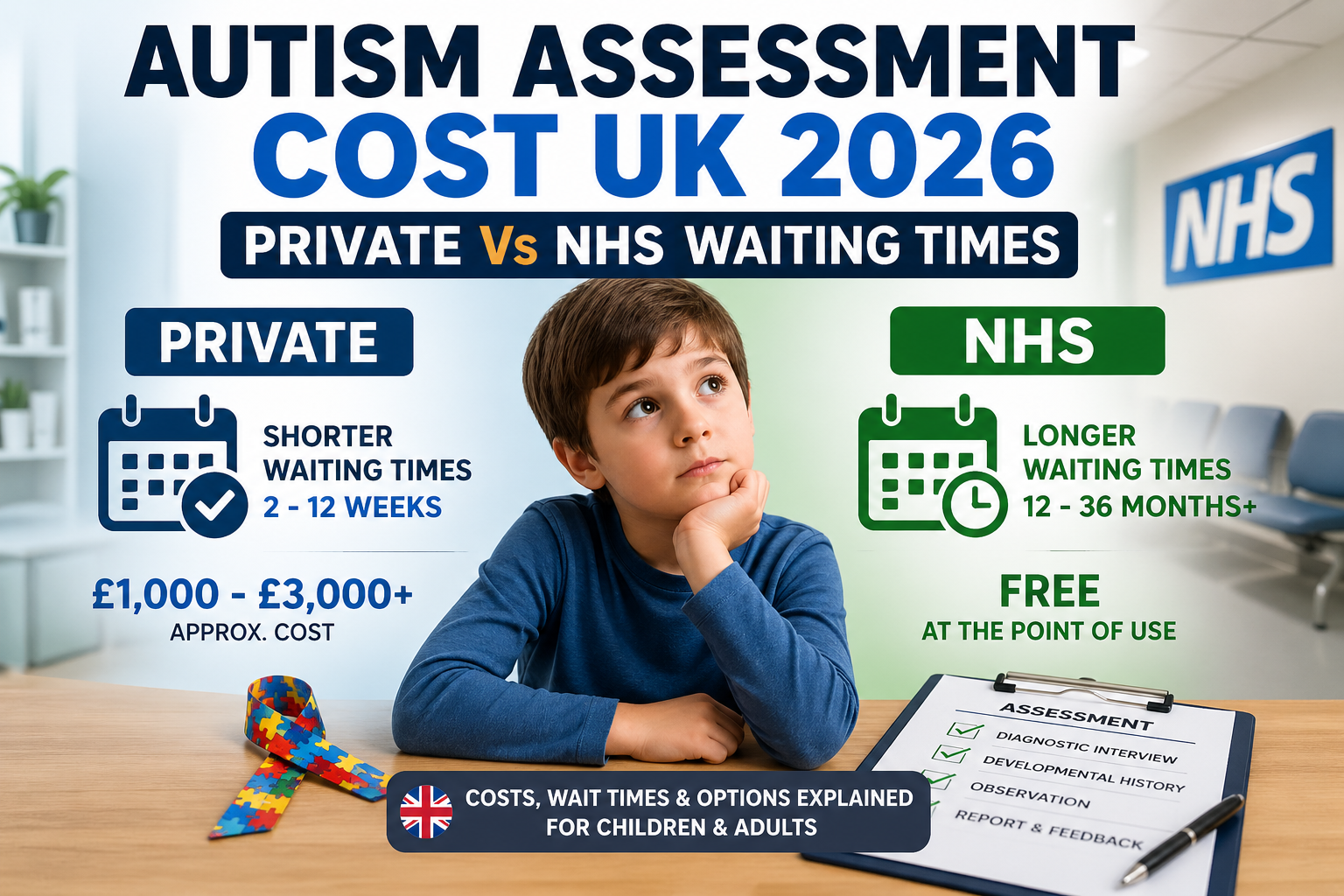
Speed
- NHS: Often 1 to 3 years waiting time
- Private: Usually 2 to 12 weeks
Cost
- NHS: Free
- Private: £1,000 to £3,000+
Flexibility
Private providers often offer more flexible appointment times, including evenings and weekends, which can be helpful for working adults or families.
Recognition Of Diagnosis
A key concern is whether private diagnoses are accepted.
Most reputable private assessments are recognised by:
- Schools
- Employers
- Local authorities
However, some NHS services may review or repeat private diagnoses before providing ongoing care.
Is A Private Autism Diagnosis Worth It
The decision to go private often depends on urgency.
For families with children struggling in school, waiting years may not be practical. Early intervention can significantly improve outcomes, making the cost worthwhile.
For adults, the choice is often about clarity and mental wellbeing. Many adults seek diagnosis after years of uncertainty, and the value of a quicker answer can be substantial.
However, the cost can be a barrier. Spending £1,500 or more is not feasible for everyone, especially during a cost of living crisis.
Ways To Reduce Autism Assessment Costs In The UK
There are a few strategies that can help reduce or manage the cost of private assessments.
Right To Choose Pathway
In England, the NHS offers a scheme called Right to Choose, allowing patients to select an approved private provider while still receiving NHS funding.
This can dramatically reduce waiting times without paying out of pocket.
Payment Plans
Many private clinics now offer:
- Interest-free instalments
- Monthly payment options
This spreads the cost over time.
Employer Support
Some employers may contribute towards diagnostic assessments, especially if it impacts workplace performance.
Charities And Grants
Certain charities provide financial assistance for autism assessments, particularly for children.
What Happens After An Autism Diagnosis
Getting a diagnosis is not the end of the journey. It is often the beginning of accessing support and making adjustments.
After diagnosis, individuals may:
- Apply for support at school or university
- Request workplace adjustments
- Access therapy services
- Join support groups
For children, local authorities may assess eligibility for additional educational support.
For adults, diagnosis can lead to reasonable adjustments such as flexible working arrangements or sensory accommodations.
NHS Vs Private Autism Assessment Which One Should You Choose
Choosing between NHS and private assessment depends on your circumstances.
If time is not critical and finances are limited, the NHS remains a high-quality option.
If you need answers quickly and can afford it, private assessment provides speed and convenience.
For many people, the ideal route is using Right to Choose, combining faster access with NHS funding.
Final Thoughts On Autism Assessment Costs UK 2026
The reality in 2026 is that autism assessments in the UK are defined by a clear trade-off. The NHS offers free, high-quality care but with long waiting times. Private assessments offer speed but at a cost that can be significant.
Understanding your options, planning ahead, and exploring funding routes can make a major difference. Whether you choose NHS or private care, the most important outcome is gaining access to the support and understanding that a diagnosis can provide.
Mental Health And Neurodiversity
- ADHD Medication Cost UK Private Prescriptions Explained 2026
- Mental Health Assessment Cost UK Private Vs NHS Full Guide 2026
- Private Psychiatrist Cost UK 2026 Full Guide
- CBT Therapy Cost UK 2026 What You Should Expect To Pay
- Private Therapy Cost UK 2026 Sessions Prices And Options
- Autism Assessment Cost UK 2026 Private Vs NHS Waiting Times
Disclaimer
This article is for informational purposes only and does not constitute medical, clinical, or financial advice. Costs, waiting times, and services for autism assessments in the UK may vary depending on location, provider, and individual circumstances. Information is accurate at the time of writing for 2026 but may change over time.
Always consult a qualified healthcare professional, your GP, or a specialist provider before making decisions regarding autism assessment or treatment. The mention of any services or pathways, including private providers or NHS options, does not represent a recommendation or endorsement.