
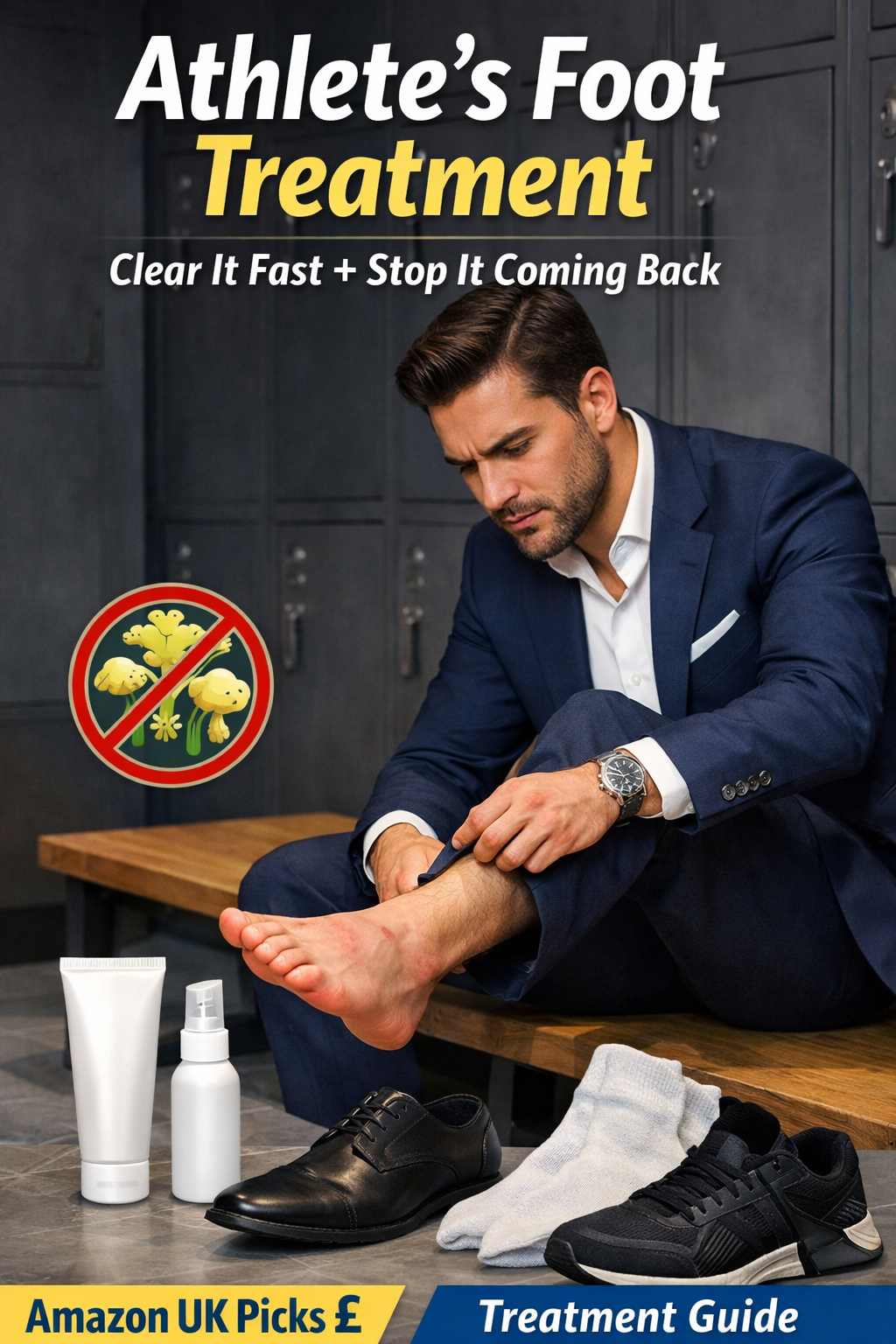
Athlete’s foot is one of those annoying problems that can start small then take over your whole week. A bit of itching between the toes turns into flaky skin, cracking, and that burning feeling every time you put socks on. The good news is it’s usually very treatable at home if you tackle it properly and early. In this guide, you’ll learn exactly how to get rid of athlete’s foot, what actually works, and the simple daily habits that stop it coming back.
We’ll break down the best athlete’s foot treatment options like creams, sprays, and powders, plus the hygiene steps that make a real difference. I’ll also recommend a few trusted Amazon UK picks that people commonly use so you can choose the right product for your symptoms and routine. Whether you’ve got a mild case or a stubborn recurring flare up, you’ll leave with a clear plan to clear it fast and keep your feet comfortable long term.
Understanding Athletes Foot And Why It Keeps Coming Back
Athlete’s foot (also called tinea pedis) is a fungal skin infection that loves warm, damp places. Think sweaty socks, tight shoes, and the space between your toes after a long day. The annoying part is not just getting it, it is how easily it returns if you treat the rash but ignore the environment that helped it grow in the first place.
Here is what is happening under the surface:
- Fungus thrives in moisture. Wet skin and trapped heat make it easier for fungus to multiply.
- It spreads through shared floors and direct contact. Communal showers and changing rooms are classic hotspots because fungal skin flakes can be left behind.
- Shoes can keep reinfecting you. If your footwear stays damp inside, it can keep “seeding” your feet even after the skin looks better.
The good news is that athlete’s foot is usually very treatable with the right over the counter antifungal plus a few simple habits that cut off the fungus’s favourite conditions.
Signs That It Really Is Athletes Foot
A lot of people treat the wrong thing for weeks because several foot problems look similar at first glance. Athlete’s foot has a few “usual suspects” that show up again and again.
Common signs include:
- Itchy white patches between the toes (often the first giveaway)
- Sore, flaky, or cracked skin, sometimes with peeling
- Redness (which can be less noticeable on brown or black skin)
- Cracks that can bleed if the skin becomes very dry or damaged
- Fluid filled blisters in some cases
It can also spread to the soles and sides of the feet, and if you ignore it long enough it can spread to toenails.
When It Might Be Something Else
This is where being honest saves time:
- Eczema or contact dermatitis can itch and flake, but it often appears in a more symmetrical pattern and may not be concentrated between toes.
- Psoriasis can cause thick scaling and cracks, often with other patches elsewhere on the body.
- Bacterial infection can happen after skin cracks. If your foot or leg is hot, painful, and red, that is a reason to seek medical help rather than just switching creams.
When You Should Not Self Treat
The NHS recommends seeing a GP if pharmacy treatments do not work, if you are in a lot of pain, if the area is hot painful and red, if it spreads, or if you have diabetes or a weakened immune system.
The Fastest Way To Clear It At Home
If you want the fastest results, think of treatment as a two part plan:
- Kill the fungus on your skin
- Stop your feet and footwear from becoming a fungal nursery again
Step By Step Daily Routine
Use this as your simple daily checklist:
Morning
- Wash feet with soap and water.
- Dry thoroughly, especially between toes (this matters more than most people realise).
- Apply antifungal treatment exactly as directed on the pack.
- Put on clean socks.
During the day
- If your feet sweat a lot, consider changing socks once more.
- Choose breathable footwear when possible.
Evening
- Wash and dry again.
- Apply treatment again if the product instructions say so.
- Let your feet air out at home if you can.
The Hygiene Rules That Make Treatment Work
These are the unglamorous habits that stop the rebound infection:
- Dry your feet after washing, especially between toes. Dab dry rather than rubbing.
- Use a separate towel for feet and wash it regularly.
- Wear clean socks every day. Cotton is often recommended for breathability.
- Do not scratch. It can spread fungus to other areas.
- Do not go barefoot in changing rooms or showers. Wear flip flops.
- Do not share socks, shoes, or towels.
- Do not wear the same shoes day after day. Giving shoes time to dry helps reduce recurrence.
How Long Does It Take To Heal
Most pharmacy treatments take a few weeks to fully do their job, and it is common to need a bit of trial and error to find what works best for you.
One of the biggest mistakes is stopping too early just because the itching calms down.
- Guidance from Guy’s and St Thomas’ NHS Foundation Trust suggests continuing antifungal treatment until symptoms have gone and for 2 weeks afterwards to reduce the chance of it coming back.
- Patient.info also notes you may need to apply treatment for 1 to 2 weeks after the rash has gone, depending on the product instructions.
So yes, the “looks fine now” stage is not the finish line. It is the trap.
Choosing The Right Treatment Cream Spray Or Powder
Walk into a pharmacy aisle and it is easy to overthink. Here is a practical way to choose without turning it into a research project.
Creams
Best for: dry, scaly areas, and patches on the sole or side of the foot.
Why people like them: they stay on the skin and soak in well.
Common active ingredients you will see include terbinafine, clotrimazole, and miconazole.
Sprays
Best for: hard to reach areas (especially between toes), or if you want a touch free option.
Why people like them: quick, less messy, good if your skin is tender and you do not want to rub.
Powders
Best for: reducing moisture, helping keep shoes and socks less fungus friendly, and supporting treatment.
Why people like them: they help with dampness and can be used as a prevention tool alongside a cream or spray.
Which One Is “Best”
In real life, the “best athlete’s foot treatment” is usually the one you will actually use consistently. There are various effective antifungal options and different formats can suit different people and different types of affected skin.
If you are unsure, ask a pharmacist, especially if treatment is for someone under 16, or if you are pregnant or breastfeeding.
Amazon UK Product Picks That People Actually Use
Below are popular, recognisable options you can find on Amazon UK. I am not claiming these are the only good choices, but they are widely used and cover the main treatment types so you can match the format to your situation.
Fast Acting Terbinafine Options
These target the fungus directly and are often chosen when people want a straightforward “get on with it” treatment.
- Lamisil AT 1% Cream (terbinafine)
- Typical use case: between toes and general athlete’s foot symptoms
- Why it is popular: simple cream format, commonly chosen as a first try
- Typical use case: touch free application, especially between toes
- Why it is popular: easy coverage in awkward spots
- Typical use case: people who prefer a single application style product
- Why it is popular: convenience (still follow the label carefully)
Reliable Clotrimazole Cream Option
Clotrimazole is one of the most common antifungals you will see for athlete’s foot.
- Canesten Athlete’s Foot 1% Cream (clotrimazole)
- Typical use case: classic itchy, sore, scaling athlete’s foot
- Why it is popular: widely recognised option with a long track record
Miconazole Cream And Powder Options
Miconazole can be useful when you want antifungal treatment and the format fits your skin.
- Daktarin Aktiv Cream (miconazole nitrate)
- Typical use case: athlete’s foot with itchy, cracked skin
- Why it is popular: cream plus soothing feel for damaged skin
- Daktarin Spray Powder (miconazole nitrate)
- Typical use case: supporting treatment, reducing dampness, and helping protect feet
- Why it is popular: powder format can be helpful if your feet sweat easily
Foot Sprays And Shoe Disinfection
If athlete’s foot keeps returning, treating shoes and keeping feet dry is often the missing piece.
- Scholl Athlete’s Foot Spray (tolnaftate)
- Typical use case: spray format for relief and prevention style routine
- Why it is popular: quick application and commonly used alongside shoe care
- Typical use case: disinfecting footwear to reduce reinfection risk
- Why it is popular: focuses on the shoe problem that many people ignore
A Smart Way To Combine Products
If you want a simple combo that makes sense for most people, think:
- One main treatment for skin (cream or spray)
- One support product for moisture and footwear (powder and or shoe spray)
Example approach:
- Cream at night and after morning wash
- Powder in socks or shoes (if suitable for you)
- Shoe spray regularly, especially for the pair you wear most
Always follow the label instructions, and if symptoms are not improving, move on to pharmacist or GP advice rather than endlessly rotating products.
Preventing Recurrence And Knowing When To See A GP
Clearing athlete’s foot is one win. Keeping it away is the real victory, especially if you work long shifts in safety boots, do gym sessions, or spend hours in trainers.
The Recurrence Proof Routine
Use these as your “non negotiables” for at least a few weeks after symptoms clear:
- Keep feet clean and dry.
- Continue hygiene habits after finishing treatment to reduce recurrence.
- Rotate shoes so they dry fully between wears.
- Keep using antifungal treatment for the extra period advised (often 1 to 2 weeks, or 2 weeks, depending on guidance and product).
A handy extra tip from Guy’s and St Thomas is to wash socks and bed sheets at 60C until symptoms have gone and for 2 weeks afterwards, to help stop spreading or recurrence.
When To Stop Guessing And Get Help
Self care is great, but do not push through warning signs.
See a GP if:
- pharmacy treatment does not work
- you are in a lot of pain
- your foot or leg is hot, painful, and red
- the infection spreads to hands or elsewhere
- you have diabetes
- you have a weakened immune system
Quick FAQ
Can I go to work or the gym with athlete’s foot?
Usually yes, you do not need to stay off work or school, but keep feet covered in communal areas and focus on hygiene and treatment.
Why does athlete’s foot keep coming back even after cream works?
The most common reasons are stopping treatment too early and reinfection from damp shoes, unwashed towels, or shared floors. Continuing treatment after symptoms and fixing the moisture problem helps a lot.
Do I need a spray, a cream, or a powder?
Creams are often better for dry scaly patches, sprays can be easier between toes, and powders help with moisture control. Many people do best with one main treatment plus a shoe or moisture routine.
Disclaimer
This article is for general information, not a diagnosis or personalised medical advice. If you have diabetes, a weakened immune system, severe pain, spreading redness, or pharmacy treatment is not working, contact a GP or pharmacist.