
You know the feeling. You wake up, grab your phone, scroll for “just a minute,” and suddenly you’re running behind. Breakfast becomes whatever you can find. Your brain feels foggy. By mid morning you’re leaning on caffeine, and by mid afternoon you’re wondering why your energy crashed again.
A solid morning routine can fix a lot of that. But here’s the part most people miss: the “perfect” routine you see online isn’t the goal. The goal is a routine that matches your body, your schedule, your responsibilities, and your personality. Something you can repeat on a normal Tuesday, not just on your best day.
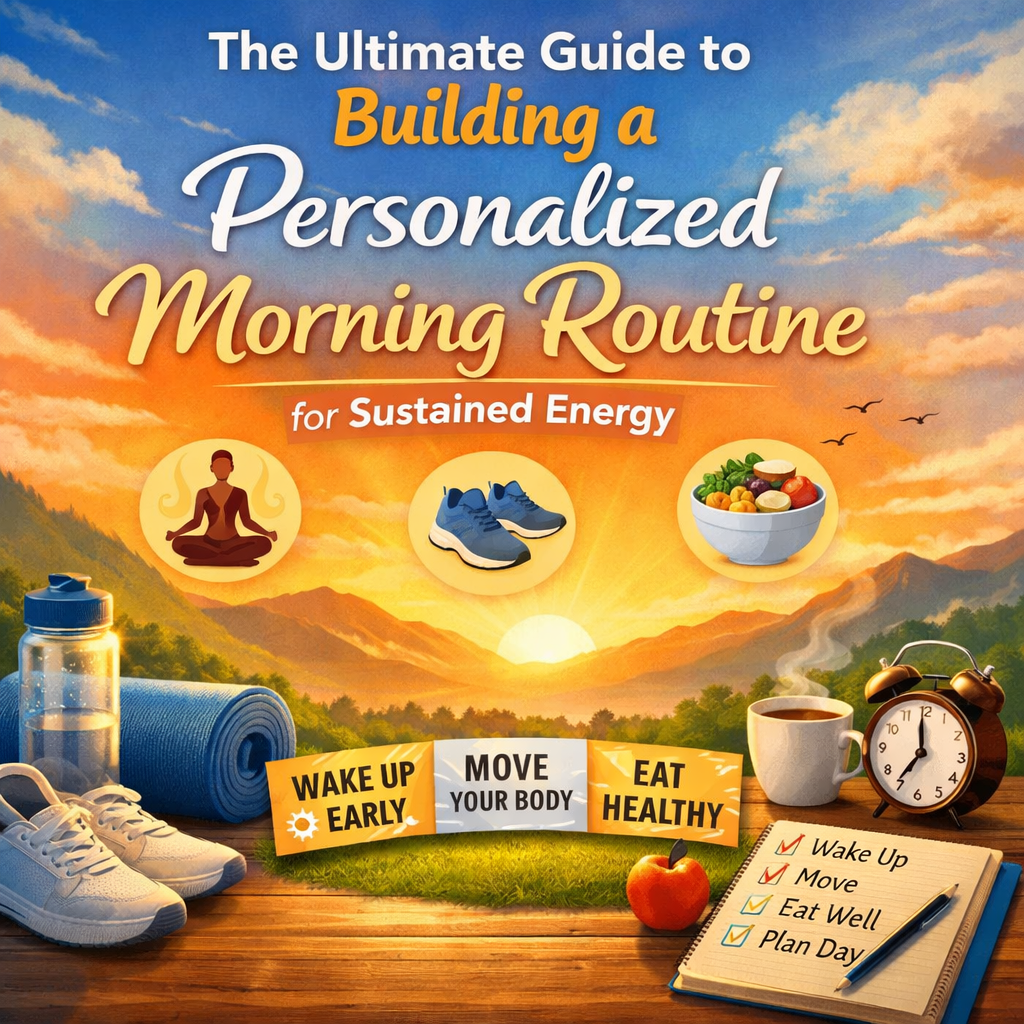
This guide will help you build a personalized morning routine for sustained energy that feels natural, realistic, and flexible. You’ll learn the building blocks, how to tailor them to your needs, and how to stay consistent without forcing yourself into a lifestyle that doesn’t fit.
Quick health note: If you have medical conditions, sleep disorders, or you’re dealing with extreme fatigue, speak to a qualified healthcare professional. Energy problems can sometimes have underlying causes that need proper support.
Why Mornings Decide Your Energy
Your morning doesn’t just start your day. It sets the tone for your energy rhythm.
Think of your energy like a bank account. The first hour after waking is when you either:
- make a few smart deposits (hydration, light movement, steady fuel, calm focus), or
- start taking withdrawals (stress scrolling, rushing, skipping food, spiking caffeine).
A strong morning routine helps because it:
It reduces decision fatigue
If you wake up and have to “figure it out” every day, your brain burns energy early. A routine makes the first part of the day automatic.
It supports stable blood sugar and mood
When mornings are chaotic, people often end up with the classic cycle: no breakfast → big coffee → sugar snack → crash → more caffeine. A better routine smooths that rollercoaster.
It improves focus and motivation
A predictable start sends your brain a message: “We’re in control today.” That feeling matters more than you think.
It builds confidence through small wins
Even a 10-minute routine creates momentum. You start the day with proof that you can keep promises to yourself.
Here’s the truth: you don’t need a long routine. You need a consistent one.
The Four Building Blocks Of A High Energy Routine
Most high energy morning habits fall into four categories. Your routine doesn’t need all of them every day, but these are the tools you’ll use to build something that works.
1) Wake Up And Light
Light is one of the strongest cues for your body clock. Getting natural light early can help you feel more awake and improve sleep quality later.
Simple options:
- Open curtains immediately.
- Step outside for 2 to 5 minutes.
- If it’s dark in the morning where you live, use bright indoor lighting until daylight.
2) Hydration And Nervous System Reset
After hours of sleep, you’re naturally dehydrated. Dehydration can feel like fatigue, headaches, or brain fog.
Easy habit:
- Drink a glass of water shortly after waking.
Add a nervous system reset if your mornings feel anxious:
- slow breathing for 60 seconds
- a quick stretch
- a calm “start the engine” moment before the world hits you
3) Movement That Matches Your Body
You don’t have to smash a workout at 6am. Movement is about circulation, mood, and waking the body up.
Options by intensity:
- Gentle: mobility, stretching, walking
- Moderate: bodyweight circuit, brisk walk, light jog
- Strong: strength training, intervals, a proper gym session
If you’re someone who feels stiff or sluggish in the morning, movement is often the fastest way to shift your energy.
4) Fuel That Keeps Energy Steady
Sustained energy comes from stable fuel, not spikes.
A good breakfast (or first meal) usually includes:
- protein (eggs, yogurt, tofu, protein smoothie)
- fibre (fruit, oats, whole grains)
- healthy fats (nuts, seeds, olive oil, avocado)
If you don’t like breakfast early, that’s fine. But have a plan for your first meal so you don’t end up relying on snacks and caffeine.
Personalize First Find Your Energy Profile
This is where your routine becomes yours, not a copy of someone else’s.
Step 1 Notice Your Real Life Constraints
Answer these honestly:
- What time do you actually need to leave the house or start work?
- Do you have kids to prepare?
- Are you on shifts or irregular hours?
- Do you wake up easily or hit snooze ten times?
- Do you have 10 minutes or 60 minutes?
Your routine should fit your real mornings, not your fantasy mornings.
Step 2 Identify Your Biggest Energy Leaks
Most people have 1 or 2 habits that quietly drain them every morning.
Common culprits:
- scrolling social media in bed
- skipping water
- starting the day rushed
- too much caffeine too early
- sugary breakfast
- no movement at all
- checking stressful emails immediately
Pick the top two that apply to you. Fixing those first creates a big energy jump.
Step 3 Choose Your Routine Style
Different types of routines work for different people. Here are a few proven “styles” you can mix and match.
Mindfulness based routine
Best if you wake up anxious, overthink, or feel stressed early.
- breathing
- journaling
- prayer or meditation
- quiet planning
Exercise based routine
Best if you feel sluggish or low mood in the morning.
- walk outside
- strength training
- short circuit at home
- mobility work
Nutrition based routine
Best if you crash mid morning or feel hungry and unfocused.
- planned breakfast
- protein first
- hydration
- caffeine strategy
Productivity based routine
Best if your day gets chaotic fast.
- day plan
- top 3 tasks
- time blocking
- quick tidy
You don’t need to pick one forever. You can rotate depending on your season of life.
Step 4 Pick Your Non Negotiables
A routine isn’t a routine if it changes every day. Choose two non negotiables that you can do even on bad mornings.
Examples:
- water + daylight
- 5-minute walk + protein breakfast
- stretch + plan top 3 tasks
Two is enough. You can add more later.
Build Your Routine Step By Step
Now we’ll build your personalized morning routine in a way that’s simple and repeatable.
Step 1 Choose A Routine Length
Pick one of these time brackets:
10 minutes
Perfect if you’re busy or building consistency.
- water
- light
- quick movement
- simple plan
20 to 30 minutes
A balanced routine for most people.
- water + light
- movement
- breakfast or planned meal
- mindset reset
45 to 60 minutes
Best if mornings are your only quiet time.
- exercise session
- proper breakfast
- journaling
- deep planning
Start smaller than you think. Consistency beats intensity.
Step 2 Use A Simple Morning Routine Checklist
Here’s a practical checklist you can copy into your notes app:
Personalized Morning Routine Checklist
- Drink water
- Get light
- Move your body
- Wash and dress
- Eat a steady fuel meal or plan your first meal
- Plan the day in 2 minutes
- Avoid phone scrolling until after the essentials
You don’t have to do every item every day. The checklist is a menu.
Step 3 Build Your Routine In This Order
The order matters because early wins make the rest easier.
1) Wake
Keep it simple: alarm, sit up, feet on the floor.
2) Water
One glass. No drama.
3) Light
Open curtains or step outside.
4) Movement
Even 2 minutes counts.
5) Fuel
Breakfast or a planned first meal.
6) Focus
One short planning moment: “What are my top three today?”
Step 4 Pick A Caffeine Strategy That Doesn’t Backfire
Caffeine can be great, but the timing matters for many people.
Try this:
- drink water first
- if possible, wait 60–90 minutes after waking for your first coffee
- keep caffeine earlier in the day to protect sleep
If you love coffee immediately, don’t panic. Just pair it with water and food so you don’t spike and crash.
Step 5 Try These Sample Routines
Use these as templates, not rules.
The Calm And Clear Routine (15 minutes)
- 2 minutes water and light
- 5 minutes stretching
- 5 minutes journaling or prayer
- 3 minutes plan top 3 tasks
The Energy Builder Routine (25 minutes)
- water + light
- 10 minutes brisk walk
- protein breakfast
- quick shower and go
The Busy Parent Routine (10 minutes)
- water while preparing the house
- light at the window or outside for 1 minute
- 1 minute breathing while kettle boils
- grab a protein option (yogurt, eggs, smoothie) or pack it
The Gym Morning Routine (45 minutes)
- water + light
- workout
- protein + carbs breakfast
- 5 minutes planning
The best routine is the one you can repeat without needing motivation.
Make It Stick Without Willpower
This is the part people don’t talk about enough. You can have the best routine in the world, but if it relies on willpower, it won’t last.
Make It Easier Than Your Bad Habits
If your phone is your weakness, make it annoying to access in the morning.
- charge it away from the bed
- use a basic alarm clock
- keep social apps off your home screen
Prepare The Night Before
Your future self is a different person at 6am. Help them out.
Do one of these:
- set clothes out
- prep breakfast ingredients
- write your top 3 tasks on paper
- fill your water bottle
Tiny prep creates huge consistency.
Use Habit Pairing
Attach a new habit to something you already do.
Examples:
- After brushing teeth → drink water
- While coffee brews → stretch
- After getting dressed → step outside for light
Aim For The Minimum Routine On Hard Days
Create a “bad day version” of your routine that takes 3 to 5 minutes.
Example:
- water
- open curtains
- 10 deep breaths
That’s it. You kept the chain alive.
Track Consistency In A Simple Way
Don’t overcomplicate it. Use:
- a calendar tick
- a notes app streak
- a habit tracker
Your brain likes visible progress.
Expect Routine Seasons
Your routine will change when life changes.
New job. New baby. Shift work. Ramadan. Winter. Summer. Travel.
Instead of quitting, adjust.
Same goal, new method.
FAQs And Troubleshooting For Real Life
What If I Am Not A Morning Person
You don’t need to become one. You just need a routine that helps you wake up gently.
Start with:
- water
- light
- 2 minutes of movement
Do that for a week. Most people feel a difference quickly.
What If I Have Zero Time
Then build a 5 to 10 minute routine and call it a win.
A realistic 7-minute routine:
- drink water (1 minute)
- open curtains and breathe (1 minute)
- move (2 minutes)
- wash and dress (3 minutes)
That’s enough to change how you feel.
What If I Work Night Shifts Or Rotating Shifts
Treat “morning routine” as wake routine. The concept stays the same.
When you wake:
- light exposure (or bright indoor light if it’s dark)
- water
- movement
- steady meal
- quick plan
The goal is to signal “it’s my daytime now,” even if it starts at 3pm.
How Long Until It Feels Natural
Usually:
- 3 to 7 days to feel easier
- 2 to 4 weeks to feel automatic
The real trick is not stopping when you miss a day. Just restart the next day with the minimum routine.
What Are The Best Morning Routine Habits For Sustained Energy
If you want the highest return habits, start here:
- consistent wake time most days
- water early
- morning light
- movement, even short
- protein and fibre in your first meal
- delay stressful inputs (emails, news) until after your basics
What If My Energy Is Still Low
If you’ve improved sleep, hydration, food, and movement and you’re still exhausted regularly, consider speaking to a healthcare professional. Ongoing fatigue can have many causes, and it’s worth checking properly.
A Simple Plan To Start Tomorrow
If you want a clear starting point, do this tomorrow morning:
- Drink a glass of water
- Open the curtains or step outside for 2 minutes
- Do 2 minutes of stretching or a short walk
- Eat a steady breakfast or plan your first meal
- Write your top 3 tasks for the day
That’s your foundation. Do it for 7 days before you add anything else.
Disclaimer
This article is for general informational and educational purposes only and is not medical advice. Morning routines, nutrition, exercise, and sleep needs vary from person to person, and what works for one individual may not be suitable for another. Always consult a qualified healthcare professional before making significant changes to your diet, exercise routine, supplements, or sleep habits, especially if you are pregnant, have an underlying medical condition, take prescription medication, or experience ongoing fatigue, dizziness, or other concerning symptoms. The author and publisher are not responsible for any adverse effects or outcomes resulting from the use of the information in this post. Use the suggestions at your own discretion and modify them to suit your personal circumstances.