Most of us don’t want to run to the pharmacy for every little ache, sniffle, or stomach wobble. When a headache hits after a long day, a cold starts creeping in, or your digestion feels off, it’s natural to look for simple, affordable ways to feel better at home. The good news is that a few time-tested natural remedies can genuinely support comfort and recovery, especially for mild, short-term symptoms.
This guide covers practical natural options for common issues like headaches, colds, sore throats, nausea, bloating, indigestion, and constipation. You’ll also find clear safety tips and guidance on when it’s best to speak to a pharmacist, GP, or another healthcare professional—because the smartest remedy is always the one that’s safe for your situation.
Start With Safety And Know When To Get Medical Advice
Natural remedies can be brilliant for comfort, but they’re not a “cure-all.” Think of them as supportive tools—especially for mild, short-lived symptoms.
Call a healthcare professional urgently if you notice red flags
These are examples where it’s safer to get help quickly:
- Headache red flags: sudden “worst headache of your life,” weakness or numbness, confusion, fainting, severe neck stiffness, new headache after a head injury, or headache with a high fever.
- Cold or flu red flags: trouble breathing, chest pain, lips turning blue/grey, dehydration, or symptoms that rapidly worsen.
- Digestive red flags: blood in vomit or stool, severe belly pain, signs of dehydration (very dark urine, dizziness, unusually sleepy), persistent vomiting, or diarrhoea lasting more than a few days.
If symptoms are mild but not improving, it’s still wise to check in with a pharmacist or GP—especially for children, older adults, and anyone with a weakened immune system.
Headaches And Migraines With Gentle Relief That Actually Helps
Most everyday headaches are linked to tension, stress, dehydration, poor sleep, eye strain, or missed meals. The goal is simple: calm the nervous system, ease muscle tightness, and rehydrate.
1) Water and a small snack
A surprising number of headaches improve after:
- A big glass of water
- A light snack (especially if you skipped a meal)
Even mild dehydration can trigger head pain, and low blood sugar can make it worse.
2) Heat or cold packs
For tension headaches, heat or cold can relax neck/shoulder muscles and reduce pain. The NHS specifically suggests using heat or cold packs if you have neck pain with headaches.
Tip: Wrap the pack in a cloth and use it for 10–15 minutes.
3) Reduce screen strain and loosen your neck
- Dim your screen, lower brightness, and take a 2–5 minute break.
- Try gentle shoulder rolls and slow neck stretches (no forcing).
A simple reset often beats powering through.
4) Relaxation that doesn’t feel like “relaxation”
If meditation isn’t your thing, try:
- A short walk outside
- Light stretching
- A warm shower
- A quick massage of the temples and jaw
The NHS lists relaxation activities like exercise, yoga, and massage as helpful for tension headaches.
5) Peppermint oil topically (a “maybe,” not a miracle)
There’s limited evidence that peppermint oil applied topically may help tension headaches, but it’s not a guaranteed fix.
Safety notes:
- Do not ingest essential oils unless a qualified professional advises it.
- Avoid around eyes and broken skin.
- If you have reflux, peppermint can sometimes aggravate symptoms.
Colds Coughs And Sore Throats Comfort Measures That Make A Difference
Colds are usually viral, which means the focus is symptom relief and recovery, not “knocking it out in 24 hours.”
1) Rest and fluids
This sounds basic because it works. The NHS recommends supportive care such as pain relief and hydration for common cold symptoms.
2) Saline nasal drops or rinses for a blocked nose
Saline can ease congestion and may reduce symptom severity for upper respiratory infections, though evidence varies.
Safety tip: If you do nasal irrigation, follow product instructions carefully. Use clean/sterile water where required and keep devices clean.
3) Honey for cough (for adults and children over 1)
Honey has evidence for improving upper respiratory symptoms—particularly cough—compared with usual care.
Critical safety rule: Do not give honey to babies under 12 months due to the risk of infant botulism.
How to use (simple): 1–2 teaspoons of honey in warm water or tea, especially before bed.
4) Saltwater gargle for sore throat
Saltwater gargles can soothe a sore throat. Mayo Clinic suggests mixing 1/4 to 1/2 teaspoon of salt in 4 to 8 ounces of warm water for older children and adults who can gargle safely.
NICE also mentions saltwater gargling may help relieve sore throat and congestion in colds.
5) Warm drinks and humid air
Warm tea, broth, or lemon water can feel comforting and help you keep fluids up. If your throat is dry, a humidifier (or a warm shower) can make breathing feel easier.
Digestive Troubles Nausea Bloating Indigestion Constipation And Diarrhoea
Digestive symptoms are common, annoying, and often very fixable with gentle changes—but persistent or severe symptoms should be checked.
Indigestion and acid reflux
If your symptoms feel like burning in the chest or discomfort after meals, start with these NHS-backed basics:
- Avoid trigger foods and late eating
- Don’t eat within 3–4 hours before bed
- Consider looser clothing around the waist
- Speak to a pharmacist about antacids or other options if needed
Note: Peppermint may worsen reflux for some people, so test carefully (or avoid if reflux is a regular problem).
Nausea and mild stomach upset
Ginger is one of the best-studied natural options for nausea, including pregnancy-related nausea (with medical guidance).
Easy ways to try it:
- Ginger tea (fresh ginger steeped in hot water)
- Ginger biscuits (not too sugary)
- Cooking with ginger
Safety notes: If you’re pregnant, have gallstones, bleeding disorders, or take blood thinners, check with a clinician first.
Bloating and cramps including IBS
For IBS-type symptoms (bloating, cramps, wind), the NHS suggests practical diet steps like oats and small amounts of linseeds—and notes that a pharmacist may recommend options including peppermint oil.
And NCCIH notes there is some evidence that enteric-coated peppermint oil capsules can reduce IBS symptoms in the short term.
Important: Use peppermint oil products as directed and check with a pharmacist if you take regular medication or have reflux. The NHS also provides guidance on peppermint oil as a medicine for cramps/bloating.
Constipation
The NHS advice is straightforward and effective:
- Drink plenty of water and fluids
- Gradually increase fibre
- Include fruits that contain sorbitol (like apples, grapes/raisins, raspberries, strawberries)
- Add oats, wheat bran, or linseed gradually
If constipation is new, severe, persistent, or accompanied by weight loss, bleeding, or significant pain—get it checked.
Diarrhoea and vomiting
The biggest risk is dehydration. The NHS recommends oral rehydration powders you mix with water and pharmacist guidance when needed.
For children, NHS guidance often warns against fruit juices and fizzy drinks during rehydration, because they can worsen diarrhoea.
Probiotics: Evidence is mixed depending on the situation and the strains used. Mayo Clinic notes research is mixed for antibiotic-associated diarrhoea and advises caution for people with weakened immune systems. A large review suggests probiotics can reduce the risk of antibiotic-associated diarrhoea in adults, but it’s still smart to ask a pharmacist which product makes sense for you.
Simple Home Remedy Kit And How To Use It Wisely
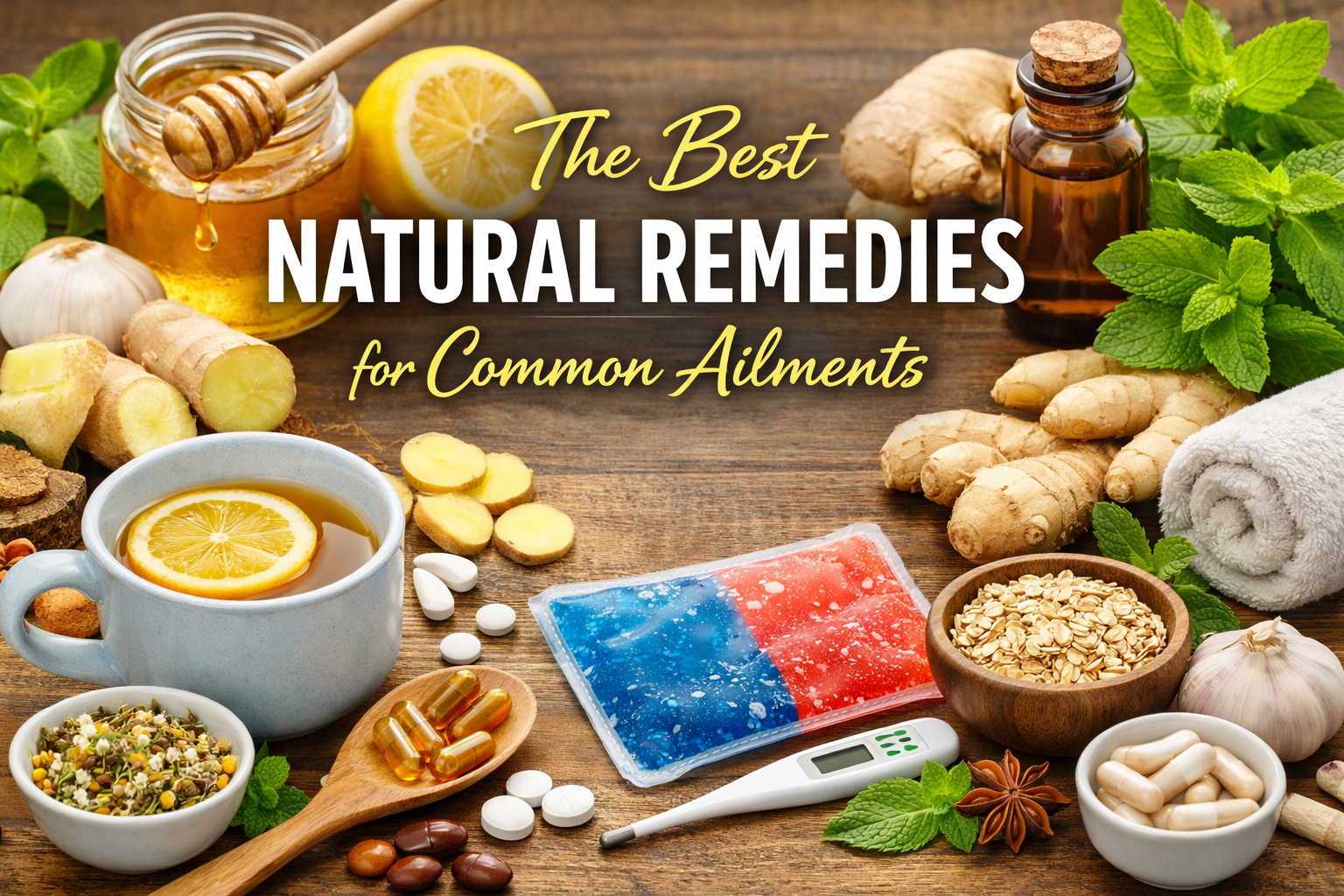
If you like being prepared (and saving money), keep a small “comfort kit” at home:
- Saline spray or drops
- Honey (if no babies under 12 months in the household)
- Ginger tea or ginger root
- Peppermint tea or pharmacist-approved peppermint oil capsules (if suitable)
- Oral rehydration sachets
- A reusable heat pack and cold pack
- Thermometer
Golden rules for safe natural remedies
- Start small (especially with herbs and supplements).
- One change at a time so you know what helps.
- Check interactions if you’re on regular medication.
- Children, pregnancy, long-term conditions = ask a professional first.
Quick FAQs
Are natural remedies safe for everyone?
Not always. “Natural” can still interact with medications or worsen certain conditions. If you’re unsure, ask a pharmacist or GP.
Can I treat a cold without medicine?
Many people can manage with rest, fluids, saline, honey (over age 1), and saltwater gargles.
How long should I wait before getting checked?
If symptoms are severe, getting worse, or not improving after a reasonable period (a few days for stomach bugs, around a week for many colds, sooner for red flags), speak to a healthcare professional.
Disclaimer
This article is for general information and self-care support only. It’s not a substitute for medical advice, diagnosis, or treatment. If you’re unsure, pregnant, managing a long-term condition, taking regular medication, or symptoms are severe, speak to a healthcare professional.