
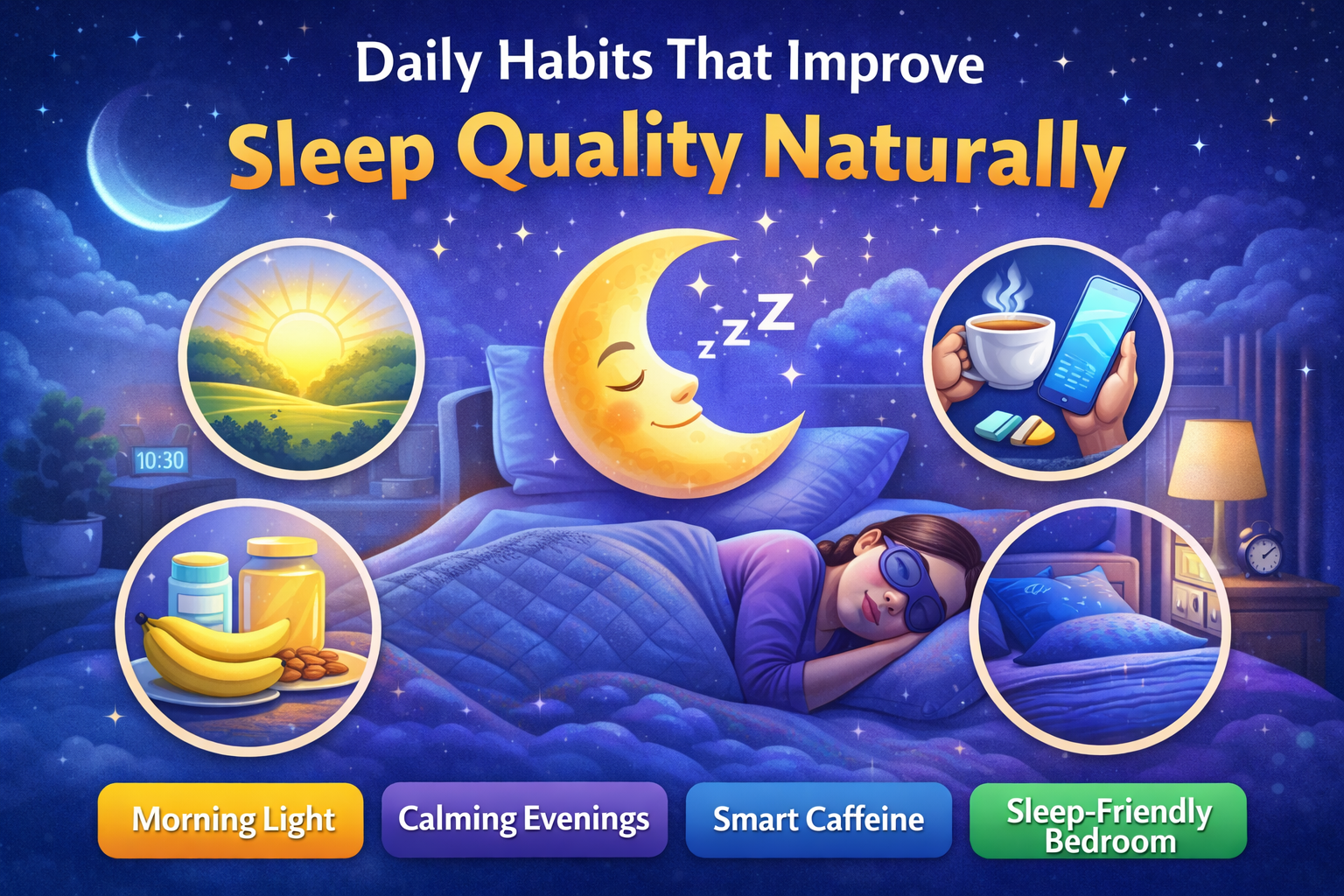
Sleep is not just “rest.” It’s the daily reset that helps your brain think clearly, your body recover, your hormones stay balanced, and your mood stay steady. The problem is, modern life quietly attacks sleep from every angle: late night scrolling, irregular schedules, caffeine timing, bright lights, stress, heavy meals, and rooms that are too warm or noisy.
The good news is you do not need expensive gadgets to sleep better. Most people can improve sleep quality by doing a few simple things every day, consistently. This post breaks down practical daily habits that support deeper sleep naturally, without gimmicks, and in a way you can actually stick to.
Understand What Good Sleep Really Means
Many people judge sleep by hours alone, but quality matters just as much. You can sleep for 8 hours and still wake up tired if your sleep is light, broken, or mistimed.
Good sleep quality usually means:
- Falling asleep within a reasonable time
- Staying asleep with minimal waking
- Getting enough deep sleep and REM sleep
- Waking up feeling refreshed and mentally clear
- Feeling steady energy through the day without needing constant caffeine
Sleep is driven by two powerful systems:
- Sleep pressure: builds up the longer you stay awake
- Circadian rhythm: your body clock, influenced by light, meals, activity, and routine
Daily habits work because they strengthen these systems. Your body loves patterns. When you give it predictable signals, it learns when to be awake and when to sleep.
Morning Habits That Set Up Better Sleep Tonight
Sleep starts in the morning. What you do in the first few hours of the day can make it easier to fall asleep later.
Get Bright Light Early
Natural daylight soon after waking helps set your body clock and supports healthier melatonin timing at night. Even 10 to 20 minutes outside can make a noticeable difference.
Simple habit: Step outside after waking, even if it’s cloudy. Daylight still counts.
Wake Up At A Consistent Time
A stable wake time is one of the strongest habits for improving sleep quality. It trains your circadian rhythm and reduces that “wired at night, tired in the morning” pattern.
Simple habit: Keep your wake time consistent most days, including weekends.
Move Your Body Every Day
Daily movement improves sleep pressure and reduces restlessness at night. It does not have to be intense. Walking, cycling, light strength training, or even stretching can help.
Simple habit: Aim for a 20 to 30 minute walk daily, ideally earlier in the day.
Eat A Balanced Breakfast Or First Meal
Regular meal timing supports circadian rhythm. Protein in your first meal can help steady energy and reduce late-day cravings that lead to heavy night eating.
Simple habit: Include protein and fibre early, like eggs, Greek yogurt, oats, or beans.
Daytime Habits That Keep Your Energy Stable
When your daytime habits create energy crashes, your evenings often become messy. That leads to late naps, late snacks, and late screens, which can ruin sleep.
Time Caffeine Smartly
Caffeine can stay in your system for hours. Late caffeine is a common cause of light sleep and night waking.
Simple habit: Keep caffeine to the morning. If you are sensitive, stop after lunch.
Get Strategic Sunlight And Fresh Air
Short daylight breaks can improve alertness and help your body stay in sync. This also supports mood, which improves sleep quality indirectly.
Simple habit: Take a quick outdoor break midday if possible.
Avoid Long Or Late Naps
Naps can be helpful, but long naps or late naps reduce sleep pressure at night.
Simple habit: If you nap, keep it 10 to 20 minutes, and avoid late afternoon naps.
Hydrate Without Overdoing It Late
Hydration supports energy and focus, but too much fluid late can cause night-time bathroom trips.
Simple habit: Drink most of your water earlier in the day and reduce it in the last 2 hours before bed.
Evening Habits That Help You Fall Asleep Faster
Your evenings should gently “power down” your nervous system. If your night is full of stimulation, your brain stays in problem-solving mode.
Create A Wind Down Window
A 30 to 60 minute wind-down routine tells your body that sleep is coming. It does not need to be complicated.
Wind-down ideas:
- Shower or warm bath
- Reading (paper book is ideal)
- Light stretching
- Journaling or brain dump list
- Calm music or guided breathing
Simple habit: Pick 2 calming actions and repeat them nightly.
Reduce Bright Light And Screens
Bright light and phone use late can delay melatonin and keep your brain alert. It also triggers “just one more scroll” behaviour.
Simple habit: Dim lights 1 to 2 hours before bed, and keep screens out of bed.
Manage Stress Before It Hits The Pillow
Many people only notice stress when they finally lie down. Then the mind starts replaying everything.
Simple habit: Write down:
- 3 things you need to do tomorrow
- 1 small next step for each
This tells the brain “it’s handled,” reducing rumination.
Keep A Consistent Bedtime Target
Bedtime matters, but the biggest win is a consistent wake time. Still, having a bedtime range helps the body prepare.
Simple habit: Aim for the same bedtime range most nights, within 30 to 60 minutes.
Food And Drink Habits That Support Deep Sleep
What you eat and when you eat it can either calm the body or keep it alert and uncomfortable.
Avoid Heavy Meals Late
Large meals close to bedtime can cause reflux, bloating, and lighter sleep.
Simple habit: Try to finish your last big meal 2 to 3 hours before bed.
Watch Sugar And Alcohol In The Evening
Sugar spikes can disrupt sleep, and alcohol often causes night waking and poor sleep quality, even if it makes you drowsy initially.
Simple habit: Keep sweets and alcohol occasional, and avoid them close to bedtime.
Choose A Light Sleep-Friendly Snack If Needed
If you get hungry at night, a small snack is better than lying awake starving.
Good options:
- Greek yogurt
- Banana
- Oats
- Warm milk
- A small handful of nuts
Simple habit: Keep the snack small and simple.
Consider Sleep Support Nutrients From Food
Certain nutrients are linked to sleep support: magnesium, calcium, and tryptophan. Foods like leafy greens, legumes, nuts, dairy, and turkey can help support overall sleep health through diet.
Bedroom Habits That Make Sleep Easier
Your bedroom is either a sleep trigger or a stress trigger. The environment matters more than people think.
Keep The Room Cool And Dark
Many people sleep better in a cooler room. Darkness supports natural melatonin.
Simple habit: Use blackout curtains or an eye mask, and slightly reduce room temperature.
Make The Bed A Sleep Zone
If you scroll, work, argue, or stress in bed, your brain stops associating it with sleep.
Simple habit: Use the bed for sleep and intimacy, not for work and long scrolling sessions.
Reduce Noise And Distractions
Noise can cause micro-awakenings even if you do not fully wake up.
Simple habit: Try earplugs, a fan, or white noise if your environment is noisy.
Get Morning Light Into Your Routine
This is worth repeating. Consistent morning light is one of the most effective “free” sleep tools.
A Simple Daily Sleep Routine You Can Actually Follow
If you want better sleep, make it easy. Here is a realistic routine you can build from.
Morning
- Get outside light for 10 to 20 minutes
- Move your body for at least 10 minutes
- Have caffeine earlier rather than late
Afternoon
- Short daylight break if possible
- Keep naps short and early
- Drink most water before evening
Evening
- Finish heavy meals 2 to 3 hours before bed
- Dim lights and reduce screens 1 to 2 hours before bed
- Do a 30 minute wind down routine
Night
- Keep bedroom cool and dark
- No phone in bed if possible
- Wake up at a consistent time
If you do nothing else, start with:
- consistent wake time
- morning daylight
- screen-free wind down
Those three alone can improve sleep quality significantly over time.
Disclaimer
This article is for informational and educational purposes only and does not constitute medical advice. Sleep issues can have many causes, including medical and mental health conditions. If you have ongoing insomnia, loud snoring, breathing pauses, severe daytime sleepiness, or any concerning symptoms, consult a qualified healthcare professional for personalised advice and treatment.