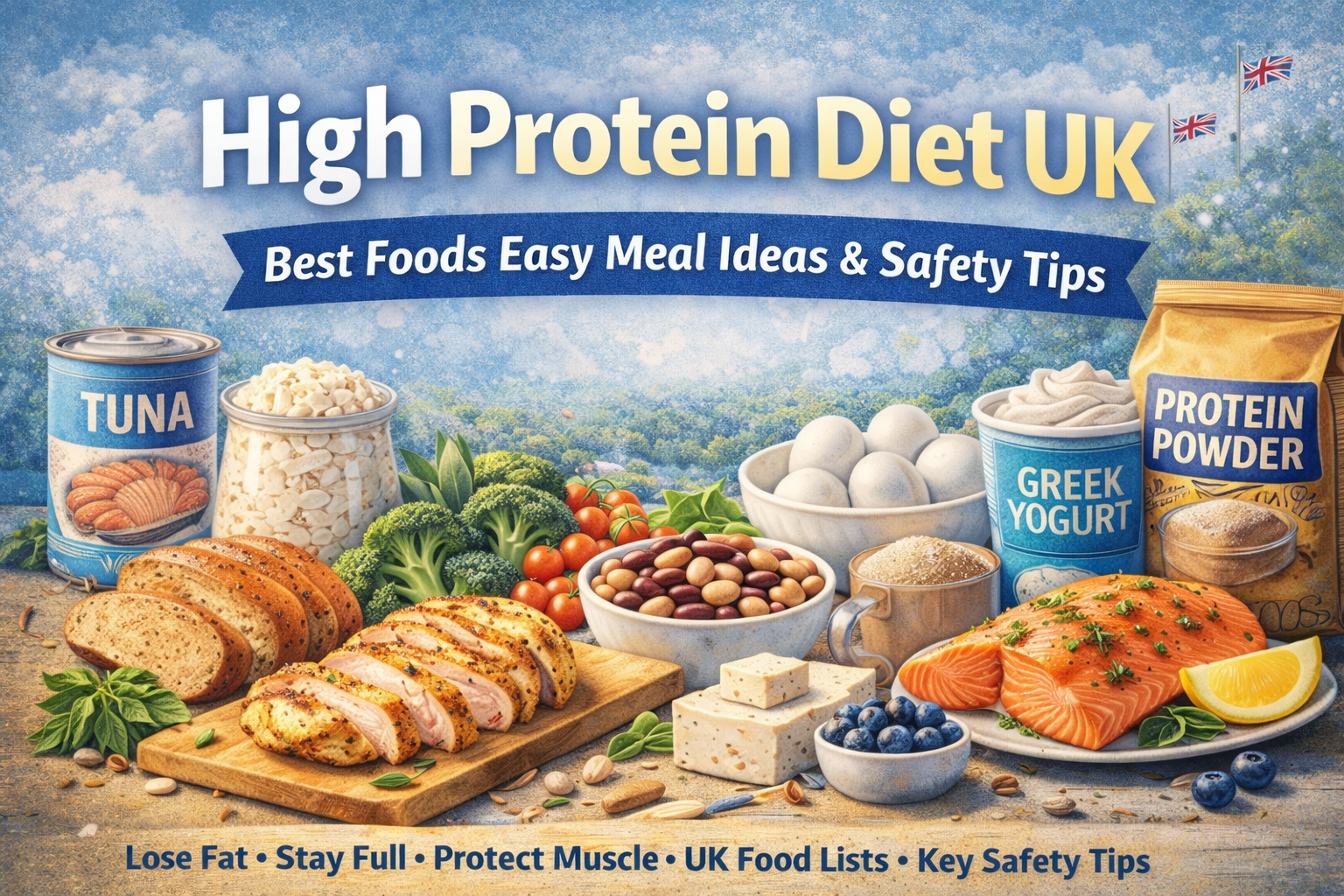
UK high protein diet guide with the best protein foods, practical daily targets, and easy meal ideas you can repeat at breakfast, lunch, and dinner. Learn how protein supports fat loss, keeps you fuller for longer, reduces cravings, and helps protect muscle while dieting, training, or getting older. Includes UK friendly shopping lists, simple portion cheatsheets, high protein snacks that actually help weight loss, and smart ways to pair protein with fibre for better digestion. Also covers safety tips, common mistakes, and who should speak to a GP or dietitian before going high protein.
What A High Protein Diet Means In The UK
A “high protein diet” can mean very different things depending on who is talking. In the UK, most people already get enough protein for basic health, but many do not spread it evenly through the day, and many rely on processed foods that are low in fibre and micronutrients.
A sensible high protein approach is not about living on chicken and shakes. It is simply a way of building meals around protein so you stay fuller, reduce snacking, and support muscle, especially when you are trying to lose weight or you are getting older.
Protein does three big things that matter for everyday life:
- It supports muscle repair and maintenance
- It helps you feel full after meals
- It makes meals more balanced when paired with fibre and vegetables
The key is quality and consistency, not extremes.
High Protein Does Not Mean Low Carb
A common mistake is thinking high protein automatically means cutting carbs. You can build a high protein diet with normal UK foods like oats, potatoes, rice, wholemeal bread, beans, fruit, and veg. The goal is to make protein the anchor, not to ban food groups.
Who This Post Is For
This guide is ideal if you:
- Feel hungry soon after eating
- Want fat loss without feeling miserable
- Want to protect muscle while dieting
- Want easy meal ideas you can repeat
- Want a simple protein target that makes sense in the UK
How Much Protein You Need Per Day
Protein needs depend on your body weight, age, and goals. UK nutrition guidance often references 0.75g of protein per kilogram of body weight per day as a recommended amount for many adults.
That number is useful as a baseline, but if you are dieting, training, or older, you may benefit from aiming higher, because maintaining muscle becomes more important and appetite control matters more.
The Simple UK Baseline
A widely referenced UK guideline is:
- 0.75g per kg per day
The British Heart Foundation gives clear examples:
- About 45g per day for a 60kg woman
- About 55g per day for a 75kg man
A Practical Target For Fat Loss And Fitness
Many people aiming for weight loss or strength training find it easier to stick to their plan when protein is higher than the baseline. A common practical range many dietitians use in everyday coaching for active adults is:
- 1.2g to 1.6g per kg per day (general fitness and fat loss context)
This is not a strict UK government target, and it is not medical advice. It is simply a useful “working range” that many people find effective.
If you want an even simpler approach, use this:
- Protein target for fat loss: 25 to 35g protein per meal, 2 to 4 meals per day
- That usually lands you between 80g and 140g depending on your size
The Easiest Way To Work Out Your Daily Protein
Pick your goal:
Option A Basic health
- Body weight in kg × 0.75
Option B Fat loss and appetite control
- Body weight in kg × 1.2 (simple starting point)
Option C Muscle building and heavy training
- Body weight in kg × 1.6 (common upper practical target for many gym-goers)
You do not need to hit the exact number daily. Your weekly average matters most.
Spread Protein Across The Day
Spreading protein across meals tends to work better than eating most of it at dinner. The British Heart Foundation notes that spreading protein evenly across meals can help your body use it effectively.
A simple pattern:
- Breakfast 25g
- Lunch 30g
- Dinner 35g
- Optional snack 15 to 25g
This is how people “accidentally” hit high protein without feeling like they are forcing it.
Best High Protein Foods In The UK
A great high protein diet is built from normal foods, not expensive powders. Use this list as your main shopping guide.
Lean Animal Protein Options
These are high protein with good nutrient density:
- Chicken breast and turkey
- Fish and seafood
- Eggs
- Lean beef or lamb in moderation
The NHS Eatwell guidance includes meat, fish and eggs as protein sources and advises limiting red and processed meat like bacon and sausages.
Dairy And High Protein Dairy
Dairy is a UK staple and can be an easy protein win:
- Greek yoghurt
- Cottage cheese
- Skyr
- Milk
The Nutrition Foundation highlights dairy foods like milk, yoghurt, and cheese as protein sources, alongside nutrients like calcium and iodine.
Plant Based High Protein Foods
You can absolutely do high protein without meat:
- Beans, lentils, chickpeas
- Tofu and tempeh
- Edamame
- Nuts and seeds
- Soya drinks and yoghurts
NHS resources and UK nutrition guidance regularly list beans and pulses as protein sources and as alternatives to meat.
High Protein Foods That Also Boost Fibre
If your goal is fat loss and gut health, prioritise protein foods that also bring fibre:
- Lentils and beans
- Chickpeas
- Edamame
- Mixed seeds
- Wholegrains paired with protein
This works perfectly with your earlier post on fibre, because high protein diets can sometimes reduce fibre if people overdo meat and protein bars. Pairing protein with fibre fixes that.
The Protein Portion Cheat Sheet
Use this to build meals fast:
- Chicken breast (medium): often around 25 to 35g protein
- Tin of tuna: around 25g protein
- 2 eggs: around 12g protein
- Greek yoghurt pot: around 15 to 25g protein depending on size
- Lentils or beans (1 cup cooked): around 15 to 18g protein
Exact numbers vary by brand and portion size, but the pattern stays the same.
Easy High Protein Meal Ideas You Can Repeat
High protein only works if it is easy. Here are repeatable UK-friendly meals that do not feel like bodybuilding food.
High Protein Breakfast Ideas
Option 1 Protein porridge
- Oats + milk or soya drink + Greek yoghurt stirred in
- Add berries and a spoon of seeds
Option 2 Eggs and toast
- 2 to 3 eggs
- Wholemeal toast
- Add spinach or tomatoes
Option 3 Yoghurt bowl
- Greek yoghurt or skyr
- Fruit
- Nuts or granola (watch sugar)
Option 4 High protein smoothie
- Milk or soya
- Greek yoghurt
- Banana and frozen berries
- Optional scoop of whey or plant protein
High Protein Lunch Ideas
Option 1 Tuna and bean salad
- Tuna
- Mixed beans
- Salad leaves
- Olive oil and lemon
Option 2 Chicken wrap
- Wholemeal wrap
- Chicken
- Salad
- Hummus
Option 3 Lentil soup and bread
- Lentil soup
- Wholemeal bread
- Optional cheese topping
High Protein Dinner Ideas
Option 1 Chilli that hits protein and fibre
- Lean mince or turkey mince
- Kidney beans
- Veg
- Serve with brown rice
Option 2 Salmon tray bake
- Salmon
- Potatoes
- Broccoli
- Olive oil and herbs
Option 3 Tofu stir fry
- Tofu
- Mixed veg
- Rice or noodles
- Soy sauce and ginger
The NHS recommends aiming for two portions of fish a week including one oily fish, and fish is also a strong protein option.
High Protein Snack Ideas That Help Fat Loss
Snacks are where most people lose control. Use protein snacks to reduce cravings:
- Greek yoghurt pot
- Cottage cheese and fruit
- Boiled eggs
- Protein shake
- Edamame
- Hummus and veg
A Simple 3 Day High Protein Menu
Day 1
- Breakfast: yoghurt bowl
- Lunch: tuna and bean salad
- Dinner: salmon tray bake
- Snack: cottage cheese
Day 2
- Breakfast: eggs on toast
- Lunch: chicken wrap
- Dinner: chilli with beans
- Snack: yoghurt or shake
Day 3
- Breakfast: protein porridge
- Lunch: lentil soup + wholemeal bread
- Dinner: tofu stir fry
- Snack: boiled eggs or edamame
This is how you make high protein feel normal.
High Protein Diet For Fat Loss Muscle And Healthy Ageing
Protein is not magic, but it makes fat loss easier because it supports fullness and helps you keep muscle while dieting.
Protein Helps You Stay Full
When people diet, hunger is the biggest reason they quit. Building meals around protein reduces that “never satisfied” feeling.
A simple rule:
- Start meals with protein and vegetables
- Then add carbs and fats around them
Protein Protects Muscle During Weight Loss
If you lose weight too fast without enough protein, you risk losing muscle as well as fat. That makes your metabolism less efficient and your body less “toned.”
To protect muscle:
- Hit a consistent protein target
- Do some resistance training, even if it is light
- Avoid crash diets
Protein Is More Important As You Get Older
As people age, maintaining muscle becomes more important for mobility, balance, and independence. UK nutrition guidance has discussed protein intakes in older adults and notes that some older age groups can fall below recommended intake levels.
So if you are 40+, protein becomes less about aesthetics and more about quality of life.
High Protein For Busy People
If you are busy, you need meals that take 10 minutes:
- Tin of tuna + bag salad + wholemeal bread
- Eggs + microwavable rice + mixed veg
- Greek yoghurt + fruit + nuts
- Rotisserie chicken + frozen veg + potatoes
Consistency beats complexity.
Safety Tips Side Effects And Who Should Be Cautious
Most healthy people can increase protein safely, but there are important exceptions.
If You Have Kidney Disease
If you have chronic kidney disease, protein needs can be different, and eating a lot of protein may put extra strain on the kidneys depending on your stage and treatment plan. UK NHS leaflets for kidney disease commonly advise that high protein may not be recommended for some people with kidney problems and that intake should be guided professionally.
If you have any kidney condition, do not follow high protein advice from social media. Speak to your GP or renal team.
Constipation And Digestive Issues
High protein diets can cause constipation if people reduce fibre without noticing. Fix this by pairing protein with fibre:
- Beans and lentils
- Oats
- Wholegrains
- Vegetables
- Fruit
- Plenty of fluids
You already have a fibre post on your site, and this is exactly where it ties in.
Processed Protein Traps
Some “high protein” foods are basically desserts with a fitness label. Watch out for:
- Protein bars with lots of sugar alcohols
- Ultra-processed deli meats
- High salt “protein snacks”
The NHS advises limiting processed meats like bacon and sausages, which also helps heart health. nhs.uk
A Sensible Upper Range
If your protein intake becomes extreme and your diet loses balance, problems can appear like thirst, bloating, low fibre intake, and fatigue from low carbs. It is another reason to keep your approach food-based and balanced.
Who Should Speak To A Professional Before Going High Protein
- Anyone with kidney disease or reduced kidney function
- People with gout or a history of gout
- People with liver disease
- Pregnant women with complex medical history
- Anyone on multiple medicines or specialist diets
The Best Safety Rule
If you want high protein to be safe and sustainable, do these three things:
- Use mostly real foods
- Keep fibre high
- Keep your plate balanced
Frequently Asked Questions
How much protein do I need per day in the UK
A commonly referenced UK recommendation for many adults is 0.75g per kg of body weight per day.
People who are dieting, older, or training may choose higher targets for practical reasons, but individual needs vary.
Is a high protein diet good for weight loss
It can help because protein supports fullness and helps preserve muscle during weight loss, making dieting easier to stick to long term.
Can I do a high protein diet without meat
Yes. Beans, lentils, tofu, tempeh, soya, and high protein dairy alternatives can build a high protein diet.
Can high protein harm your kidneys
For people with existing kidney disease, protein needs may need careful management and high protein may put extra strain on the kidneys. Always follow medical guidance if you have kidney problems.
What is the easiest way to eat more protein
Add one protein anchor to each meal:
- Breakfast yoghurt or eggs
- Lunch tuna, chicken, or beans
- Dinner fish, lean meat, tofu, or lentils
Key Takeaways
- A practical UK baseline is 0.75g protein per kg per day for many adults.
- For fat loss and fitness, many people do well with higher protein, spread across meals.
- Build meals around simple protein anchors like eggs, fish, poultry, yoghurt, beans, lentils, and tofu.
- Keep fibre high to avoid constipation and make the diet sustainable.
- If you have kidney disease, get professional advice before increasing protein.
Medical Disclaimer
This article is for general information only and is not personal medical advice. If you have kidney disease, gout, liver disease, are pregnant, or take prescribed medicines, speak to a GP or dietitian before going high protein.