
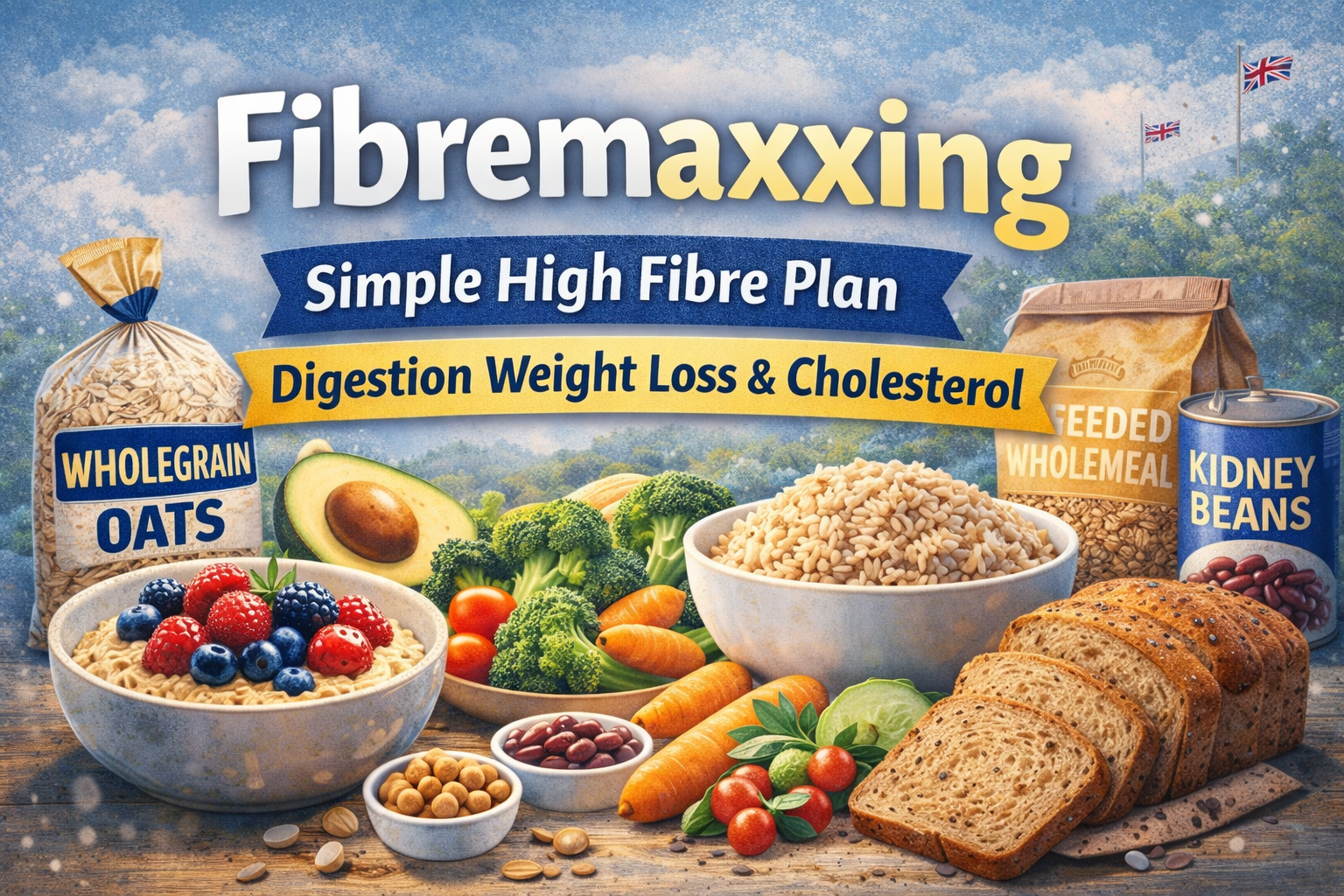
Fibremaxxing is a simple way to eat more fibre without overthinking your diet. In this guide, you will learn how fibre supports digestion, helps you feel fuller for longer, and can support healthier cholesterol levels. You will also get a realistic 7 day starter plan, easy UK food swaps, and tips to boost fibre without bloating.
Why Fibremaxxing Works For Gut Health And Weight Control
“Fibremaxxing” is simply a modern name for an old truth: when you eat more fibre, many parts of your health get easier. You feel fuller after meals, your digestion becomes more regular, cravings calm down, and your diet naturally becomes more nutrient dense without you having to “diet” all day.
The NHS explains that eating plenty of fibre is linked with a lower risk of heart disease, stroke, type 2 diabetes and bowel cancer, and it can also help digestion and prevent constipation.
But here’s the problem in the UK. Most people know fibre is “good,” yet most people still do not get enough.
The UK fibre target and why most people miss it
UK guidance recommends adults aim for 30g of fibre per day. This comes from the Scientific Advisory Committee on Nutrition (SACN) recommendations and is widely repeated across reputable UK health sources.
The British Heart Foundation notes that while the recommendation is 30g, average intake is closer to around 20g, which means many people are running a fibre gap every single day.
That gap is exactly what Fibremaxxing fixes.
What fibre actually does inside your body
Fibre is the part of plant foods that your body cannot fully digest. It travels through your digestive system doing useful jobs along the way, including:
- Helping keep bowel movements regular
- Supporting a healthy gut environment
- Slowing digestion so you feel fuller for longer
- Supporting healthier blood sugar patterns after meals
- Helping reduce cholesterol absorption in the gut when you include soluble fibres
This is not about becoming a health saint. It is about making your diet work for you rather than against you.
The biggest mistake people make with fibre
They go from low fibre to “bran everything” overnight, then wonder why they feel bloated and uncomfortable.
Fibre works best when you:
- Increase it gradually
- Drink enough fluids
- Balance different fibre types rather than focusing on one “superfood”
The NHS constipation guidance explicitly recommends gradually increasing fibre and drinking plenty of fluids.
That is the tone of this whole post: smart and steady.
The 30g A Day Target And How To Hit It Without Trying Hard
Let’s make this practical, not theoretical.
The simple fibre target you should remember
- Adults in the UK: 30g per day
If you do not want to count grams forever, good. You don’t need to. But counting for a week or two helps you learn what “high fibre” actually looks like.
The easiest way to estimate your current intake
Most low fibre days look like this:
- White bread or cereal
- A sandwich with minimal veg
- A ready meal or takeaway
- A couple of snacks like crisps or biscuits
- Not many beans, lentils, oats, fruit, seeds, or wholegrains
Most high fibre days look like this:
- Oats or wholegrain breakfast
- 2 portions of fruit
- A bean or lentil portion
- Wholegrain carbs or potatoes with skin
- Vegetables at lunch and dinner
- One high fibre snack like nuts, popcorn, fruit, or hummus
A realistic day that reaches 30g
Here’s a UK-friendly example day that doesn’t require a food scale obsession.
Breakfast
- Porridge oats + berries + a spoon of chia or ground flax
Lunch - Wholemeal wrap + chicken/tuna + salad + hummus
Snack - An apple + a handful of nuts
Dinner - Chilli with kidney beans + vegetables + brown rice
Optional - A yoghurt with a spoon of mixed seeds
You can reach 30g without “rabbit food.” You just need a few fibre anchors.
The Fibre Ladder approach
If you currently get around 15 to 20g, jumping straight to 30g can feel rough. This ladder makes it easy:
- Days 1 to 3: aim for 20g
- Days 4 to 7: aim for 25g
- Week 2 onward: aim for 30g
This matches the common medical advice to increase gradually to reduce discomfort.
Soluble Insoluble And Resistant Starch Made Simple
You don’t need a nutrition degree, but knowing the three fibre types helps you choose the right foods for your goal.
Soluble fibre
Soluble fibre mixes with water and forms a gel-like texture in your gut. It can help slow digestion and supports cholesterol management by reducing absorption of cholesterol in the gut.
A clear example is beta glucan in oats and barley. The British Heart Foundation explains beta glucans form a gel in the gut that helps stop cholesterol being absorbed, and notes 3g a day of beta glucans can help maintain healthy cholesterol levels.
Best soluble fibre foods
- Oats and barley
- Beans and lentils
- Apples, citrus, berries
- Psyllium husk (often used for constipation support)
- Carrots and sweet potatoes
Insoluble fibre
Insoluble fibre adds bulk and helps move things through the gut. This is often useful for constipation, especially when paired with fluids.
Best insoluble fibre foods
- Wholegrain bread and cereals
- Wheat bran
- Brown rice
- Nuts and seeds
- Vegetables like broccoli, green beans, leafy greens
- Potato skins
Resistant starch
Resistant starch acts a bit like fibre because it “resists” digestion in the small intestine and reaches the large intestine where it supports gut processes.
Easy resistant starch sources
- Cooked and cooled potatoes or rice
- Slightly green bananas
- Lentils and beans
- Whole grains
The Fibre Balance rule
For most people, the sweet spot is:
- 1 or 2 soluble fibre anchors daily (oats, beans, fruit)
- 1 insoluble fibre anchor daily (wholegrain, veg, nuts)
- Resistant starch a few times weekly (cooled potatoes/rice, legumes)
This avoids the classic mistake of eating only one type and upsetting your gut.
The Fibremaxxing Plan A 7 Day Starter You Can Stick With
This is the simple plan. It is designed to:
- Get you close to 30g
- Reduce bloating risk
- Improve regularity
- Keep meals normal and satisfying
The three rules that make this work
- Increase fibre gradually
- Drink enough fluids (fibre needs water to do its job)
- Use fibre anchors instead of trying to “add fibre” randomly
Your fibre anchors
Pick 2 daily anchors and 1 optional anchor.
Daily anchor options
- Porridge oats or high fibre cereal
- Beans or lentils with lunch or dinner
- Two fruits per day
- Two big servings of vegetables per day
- Wholegrain carb choice once per day
Optional anchor
- 1 tablespoon chia or ground flax
- A handful of nuts
- Hummus with veg
- Popcorn (air-popped)
7 day Fibremaxxing checklist
Day 1
- Swap white bread for wholemeal
- Add one fruit
- Add one extra veg serving at dinner
Day 2
- Add oats at breakfast OR add beans at lunch
- Drink an extra glass of water
Day 3
- Add a tablespoon of seeds to breakfast or yoghurt
- Keep caffeine reasonable if it affects your gut
Day 4
- Add a bean-based meal (chilli, curry, lentil soup)
- Add fruit number two
Day 5
- Swap white rice/pasta for brown or wholegrain once
- Keep hydration steady
Day 6
- Add cooked and cooled potatoes or rice once (resistant starch)
- Add a vegetable snack with hummus
Day 7
- Repeat your best 3 fibre upgrades
- Notice what improved (regularity, cravings, energy, fullness)
You do not have to do everything forever. But by day 7 you’ll know what gives you the biggest benefit.
The easiest high fibre swaps in the UK
These swaps feel small but add up fast.
- White bread → wholemeal or seeded bread
- Cornflakes → porridge oats or a higher fibre cereal
- Crisps → nuts, popcorn, fruit, yoghurt + seeds
- White rice → brown rice or a mixed grain pack
- One veg side → two veg sides
- Meat-only chilli → chilli with beans and veg
A quick fibre friendly shopping list
Breakfast
- Oats
- Berries (fresh or frozen)
- Chia or ground flax
Lunch
- Wholemeal wraps or bread
- Hummus
- Mixed salad
- Beans or lentils (tinned is fine)
Dinner
- Frozen mixed veg
- Brown rice or wholegrain pasta
- Kidney beans, chickpeas, lentils
- Tinned tomatoes
Snacks
- Apples, bananas, oranges
- Nuts
- Popcorn kernels
Tinned and frozen foods make Fibremaxxing cheaper, not more expensive.
Bloating Constipation And IBS What To Do When Fibre Feels Worse
This is the part that makes or breaks fibre success.
Why fibre can cause bloating at first
When you increase fibre quickly, your gut bacteria and digestion need time to adjust. You can experience:
- Gas
- Bloating
- Changes in stool frequency
- A feeling of heaviness
This is why the NHS and other UK guidance emphasise increasing fibre gradually.
The fix is simple
- Increase fibre slowly
- Drink enough fluids
- Choose easier fibres first (oats, cooked veg, berries, lentils)
- Avoid starting with massive bran servings if your gut is sensitive
If constipation is the issue
NHS constipation advice includes:
- Drink plenty of fluids
- Gradually increase fibre
- Add wheat bran, oats, or linseed to your diet
Constipation often improves when fibre and fluids increase together. Fibre without fluids can backfire.
A practical constipation support trio:
- Oats at breakfast
- Fruit with sorbitol like apples, grapes/raisins, berries (mentioned in NHS guidance)
- A daily walk
If you have IBS or a sensitive gut
Some high fibre foods can worsen symptoms for some people, especially certain beans, onions, wheat, and some fruits.
If your gut is sensitive:
- Start with oats, chia, cooked carrots, potatoes with skin, berries
- Use smaller portions of beans, and rinse tinned beans well
- Consider splitting fibre across meals rather than one giant hit
- Speak with a professional if symptoms are persistent or severe
Some NHS hospital leaflets highlight that fibre changes can be individual and may involve trial and error, especially for bowel conditions.
If you have diarrhoea or loose stools
This sounds odd, but fibre can still help. The key is the type.
Soluble fibre can help firm stool in some people by absorbing water. Some NHS patient leaflets discuss adjusting soluble vs insoluble fibre depending on stool consistency.
Try:
- Oats
- Bananas
- Rice or potatoes
- Smaller portions of raw veg at first
Red flags to take seriously
Speak to a GP if you have:
- Blood in your stool
- Persistent change in bowel habit
- Unexplained weight loss
- Persistent pain
- Fatigue plus bowel symptoms
Fibre is powerful, but it is not a substitute for medical checks when symptoms are concerning.
Fibre For Cholesterol Blood Sugar And Long Term Health
Fibre is not just “a gut thing.” It’s a long game health tool.
Fibre and heart health
The NHS highlights strong evidence linking higher fibre intake with lower risk of heart disease and stroke.
Soluble fibre is especially useful for cholesterol support. Oats and barley contain beta glucans, and the British Heart Foundation explains that beta glucans form a gel in the gut which helps reduce cholesterol absorption, with 3g/day as a meaningful intake.
Heart UK also lists beta glucans from oats and barley as one of the proven food compounds that can actively lower cholesterol levels when consumed in sufficient daily amounts.
Practical takeaway
- Two to three servings of oat or barley foods per day can help you reach that beta glucan target, alongside an overall heart-healthy diet.
Fibre and blood sugar stability
Fibre slows digestion and reduces sharp spikes after meals. This can help:
- Reduce cravings
- Support steady energy
- Make weight management easier
Even if you do nothing else, higher fibre meals tend to be more filling for fewer calories, which can support fat loss without constant hunger.
Fibre and bowel health
The NHS associates high fibre diets with reduced risk of bowel cancer and better digestive health.
Again, this is not a scare tactic. It is a reminder that fibre is a basic health habit that pays off quietly.
FAQs
How much fibre should I eat per day in the UK
UK guidance recommends adults aim for 30g of fibre per day.
Why do I get bloated when I eat more fibre
Bloating is common if you increase fibre too quickly. Gradually increase fibre and drink enough fluids to reduce symptoms.
What are the best foods to increase fibre fast
Oats, beans and lentils, wholegrain bread, berries, apples, chia or flax, and lots of vegetables are some of the easiest wins.
Does fibre help constipation
Yes, fibre can help constipation, especially when increased gradually and paired with fluids. NHS constipation advice recommends gradually increasing fibre and drinking plenty of water.
Can fibre help lower cholesterol
Soluble fibres like beta glucans in oats and barley can help reduce cholesterol absorption. The British Heart Foundation notes that 3g/day of beta glucans can help maintain healthy cholesterol levels.
Medical Disclaimer
This article is for general information only and is not personal medical advice. If you have IBS, IBD, coeliac disease, unexplained weight loss, blood in your stool, persistent pain, or long-term constipation or diarrhoea, speak with a GP or pharmacist before making major diet changes.