
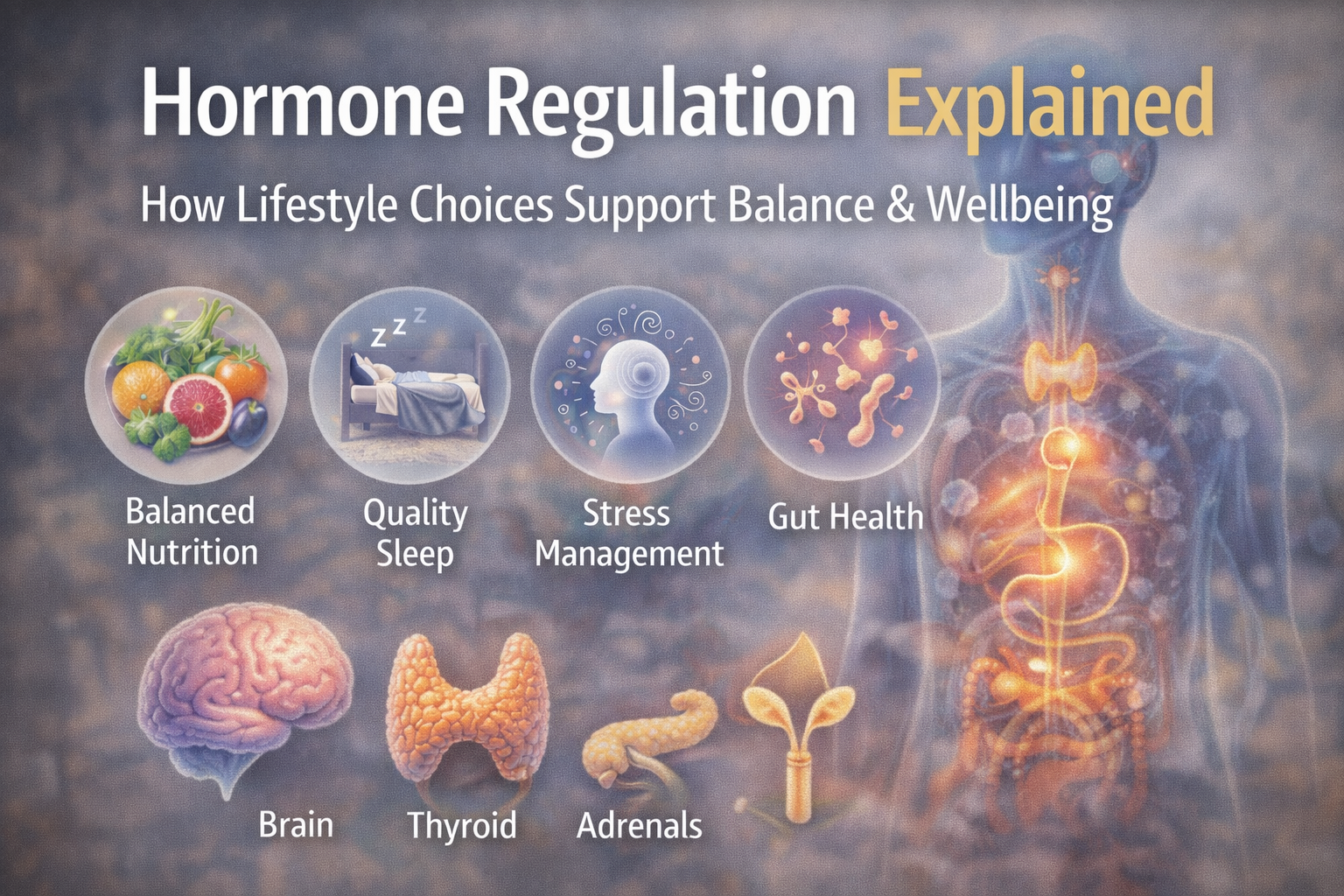
Hormone regulation plays a central role in almost every function of the human body, yet it is often misunderstood. Hormones influence energy levels, mood, metabolism, sleep, appetite, reproductive health, and even how the body responds to stress. When hormones are working in balance, many systems operate smoothly. When that balance is disrupted, the effects can be felt across both physical and mental wellbeing.
In recent years, hormone health has become a popular topic online. Social media, wellness blogs, and lifestyle trends frequently discuss “hormonal imbalance”, often oversimplifying a complex system. This can lead to confusion, unnecessary worry, and unrealistic expectations. In reality, hormone regulation is not about perfection or quick fixes. It is about supporting the body’s natural processes through sustainable, everyday habits.
This comprehensive guide explains hormone regulation in clear, practical terms. It explores how hormones work, what influences hormonal balance, and how lifestyle choices can support healthy regulation over time. The focus is educational, balanced, and designed to help readers understand their bodies without fear or misinformation.
What Hormones Are And Why They Matter
Hormones are chemical messengers produced by glands in the endocrine system. They travel through the bloodstream, delivering signals that help regulate how organs and tissues function. Even small changes in hormone levels can have noticeable effects.
The Endocrine System Explained Simply
The endocrine system includes several key glands, such as:
- The hypothalamus
- The pituitary gland
- The thyroid
- The adrenal glands
- The pancreas
- Reproductive glands
These glands communicate with each other to maintain balance, often responding to internal and external changes.
Hormones Affect The Whole Body
Hormones influence:
- Energy production and fatigue
- Appetite and digestion
- Mood and emotional regulation
- Sleep and wake cycles
- Growth and repair processes
Because hormones interact with many systems at once, changes in one area can affect others.
Understanding Hormone Regulation And Balance
Hormone regulation refers to the body’s ability to produce, release, and adjust hormone levels based on its needs. This process is dynamic and constantly changing.
Balance Does Not Mean Fixed Levels
Hormone levels naturally fluctuate throughout the day, across the menstrual cycle, and during different life stages. Balance means appropriate responses, not static numbers.
Why Hormonal Changes Are Normal
Life events such as puberty, pregnancy, ageing, stress, illness, and lifestyle changes all influence hormone activity. These changes are part of normal human biology.
Key Hormones That Influence Everyday Health
Several hormones play particularly important roles in daily wellbeing.
Cortisol And Stress Response
Cortisol helps the body respond to stress and maintain energy. It follows a daily rhythm, rising in the morning and falling at night. Disruption to this rhythm may affect sleep, mood, and energy levels.
Insulin And Blood Sugar Regulation
Insulin helps regulate blood sugar by allowing glucose to enter cells for energy. Balanced insulin activity supports steady energy and metabolic health.
Thyroid Hormones And Metabolism
Thyroid hormones influence metabolism, body temperature, and energy use. They help regulate how efficiently the body converts food into usable energy.
Sex Hormones And Overall Wellbeing
Oestrogen, progesterone, and testosterone influence reproductive health, bone density, muscle mass, mood, and energy. These hormones change naturally across life stages.
Lifestyle Factors That Influence Hormone Regulation
Sleep and stress are two of the biggest drivers of hormone balance. Consistent, good quality sleep supports hormones that control appetite, blood sugar, and the stress response. When sleep is short or irregular, cortisol can run higher and hunger signals can shift toward cravings. Chronic stress can keep the body in “fight or flight,” which may affect energy, mood, digestion, and weight regulation.
Food and movement send daily signals to your endocrine system. Regular strength training and moderate cardio improve insulin sensitivity and support steadier energy. Meals built around protein, fibre, and healthy fats help keep blood sugar stable, while lots of ultra processed foods, sugary snacks, and late night heavy eating can push it in the opposite direction. Alcohol, smoking, and too much caffeine, especially later in the day, can also disrupt sleep and stress hormones.
Nutrition And Hormonal Health
Diet plays a foundational role in hormone regulation by providing the building blocks needed for hormone production and metabolism.
Balanced Nutrition Over Restriction
Extreme dieting can disrupt hormonal signals related to hunger, fullness, and stress. Consistent, balanced nutrition supports stability.
Healthy Fats And Hormone Production
Hormones are made from cholesterol and fats. Including sources of healthy fats such as:
- Olive oil
- Nuts and seeds
- Avocados
- Oily fish
may support hormone production as part of a balanced diet.
Fibre And Hormone Metabolism
Fibre supports digestion and helps the body process and eliminate excess hormones. Fibre-rich foods include vegetables, fruits, legumes, and whole grains.
Blood Sugar Balance And Hormones
Blood sugar stability influences hormones such as insulin and cortisol.
Regular Meals And Energy Balance
Skipping meals or consuming large amounts of refined carbohydrates may lead to energy crashes and increased stress responses.
Pairing Carbohydrates With Protein
Combining carbohydrates with protein and fats can support steadier energy levels throughout the day.
Physical Activity And Hormone Regulation
Movement influences hormone signalling, stress response, and metabolic health.
Moderate Exercise And Balance
Regular moderate activity supports hormone regulation without overstimulating stress pathways.
Overtraining And Hormonal Stress
Excessive exercise without adequate recovery may contribute to fatigue and disrupted hormonal signals.
Sleep And Hormonal Rhythm
Sleep is one of the most important factors influencing hormone balance.
Circadian Rhythm And Hormone Release
Many hormones follow a circadian rhythm, meaning they are released at specific times of day. Poor sleep may disrupt these patterns.
Sleep Quality Over Sleep Quantity
Consistent sleep routines and good sleep quality often matter more than occasional long nights.
Stress And Hormonal Health
Stress affects nearly every hormone system in the body.
Acute Versus Chronic Stress
Short-term stress responses are normal. Ongoing stress without recovery may influence cortisol, insulin, and sex hormone balance.
Stress Management As Hormone Support
Relaxation, boundaries, rest, and recovery are essential parts of hormone regulation.
Gut Health And Hormone Balance
The digestive system plays a role in hormone metabolism and elimination.
The Gut Microbiome Connection
Gut bacteria interact with hormones such as oestrogen, influencing how they are processed and removed from the body.
Supporting Gut Health Naturally
- Fibre-rich foods
- Fermented foods
- Stress management
- Adequate sleep
support both gut and hormonal health.
Hormonal Changes Across Life Stages
Hormone regulation shifts naturally throughout life.
Hormones In Early Adulthood
Stress, lifestyle, and dietary habits can influence energy and reproductive hormones.
Midlife Hormonal Changes
Hormonal transitions may affect sleep, mood, and metabolism. Supporting overall health becomes increasingly important.
Hormones And Ageing
Age-related hormonal changes are normal. Lifestyle habits can support comfort and wellbeing during these transitions.
Common Myths About Hormone Regulation
Myth One Hormones Can Be “Fixed” Quickly
Hormonal balance reflects long-term patterns, not instant solutions.
Myth Two Supplements Alone Regulate Hormones
Supplements cannot replace foundational habits such as nutrition, sleep, and stress management.
Myth Three Hormone Issues Affect Only Women
Hormone regulation is important for everyone, regardless of gender.
When To Seek Professional Guidance
Hormonal symptoms can have many causes. Professional advice may be helpful when symptoms are persistent or disruptive.
Situations Where Support May Help
- Ongoing fatigue
- Significant mood changes
- Sleep disruption
- Unexplained weight changes
A healthcare professional can assess symptoms in context and provide personalised guidance.
A Balanced Approach To Hormone Regulation
Hormone regulation is not about achieving perfect balance at all times. It is about supporting the body’s ability to adapt and respond to change.
By focusing on consistent nutrition, quality sleep, stress management, regular movement, and gut health, many people can support hormonal wellbeing naturally and sustainably.
Disclaimer
This article is for informational purposes only and does not constitute medical advice. It is not intended to diagnose, treat, cure, or prevent any medical condition. Always consult a qualified healthcare professional for personalised guidance regarding hormonal health.