Seasonal allergies, commonly known as hay fever, affect millions of people in the UK each year. For some, symptoms appear as soon as spring arrives, while for others they peak during summer or early autumn. Although hay fever is often spoken about casually, its impact on daily comfort, sleep, concentration, and overall wellbeing can be significant.
This article explains seasonal allergies in a clear and practical way. It explores what hay fever is, what commonly triggers it, how the body reacts, and how everyday lifestyle habits may help people manage symptoms more comfortably. The focus is informational and designed to support understanding rather than provide medical treatment.
What Are Seasonal Allergies And Hay Fever
Hay fever is a type of allergic reaction that occurs when the immune system responds to substances in the air that are usually harmless. These substances are known as allergens.
Seasonal allergies are most often triggered by pollen released from trees, grasses, and weeds at different times of the year. This is why symptoms tend to follow predictable seasonal patterns.
Why The Term “Hay Fever” Can Be Misleading
Despite the name, hay fever does not involve hay and does not cause a fever. The term is commonly used to describe allergic rhinitis, which refers to inflammation of the nasal passages caused by allergens.
How The Body Reacts To Allergens
When someone with hay fever comes into contact with pollen, their immune system mistakenly identifies it as a threat. This triggers a chain reaction within the body.
The Immune Response Explained Simply
The immune system releases chemicals, including histamine, to defend against the perceived threat. These chemicals cause many of the familiar allergy symptoms.
Common responses include:
- Sneezing
- A runny or blocked nose
- Itchy eyes, nose, or throat
- Watery or red eyes
These reactions are part of the body’s defence mechanism, even though the trigger itself is not harmful.
Common Triggers Of Seasonal Allergies
Different allergens are more common at different times of the year.
Tree Pollen In Spring
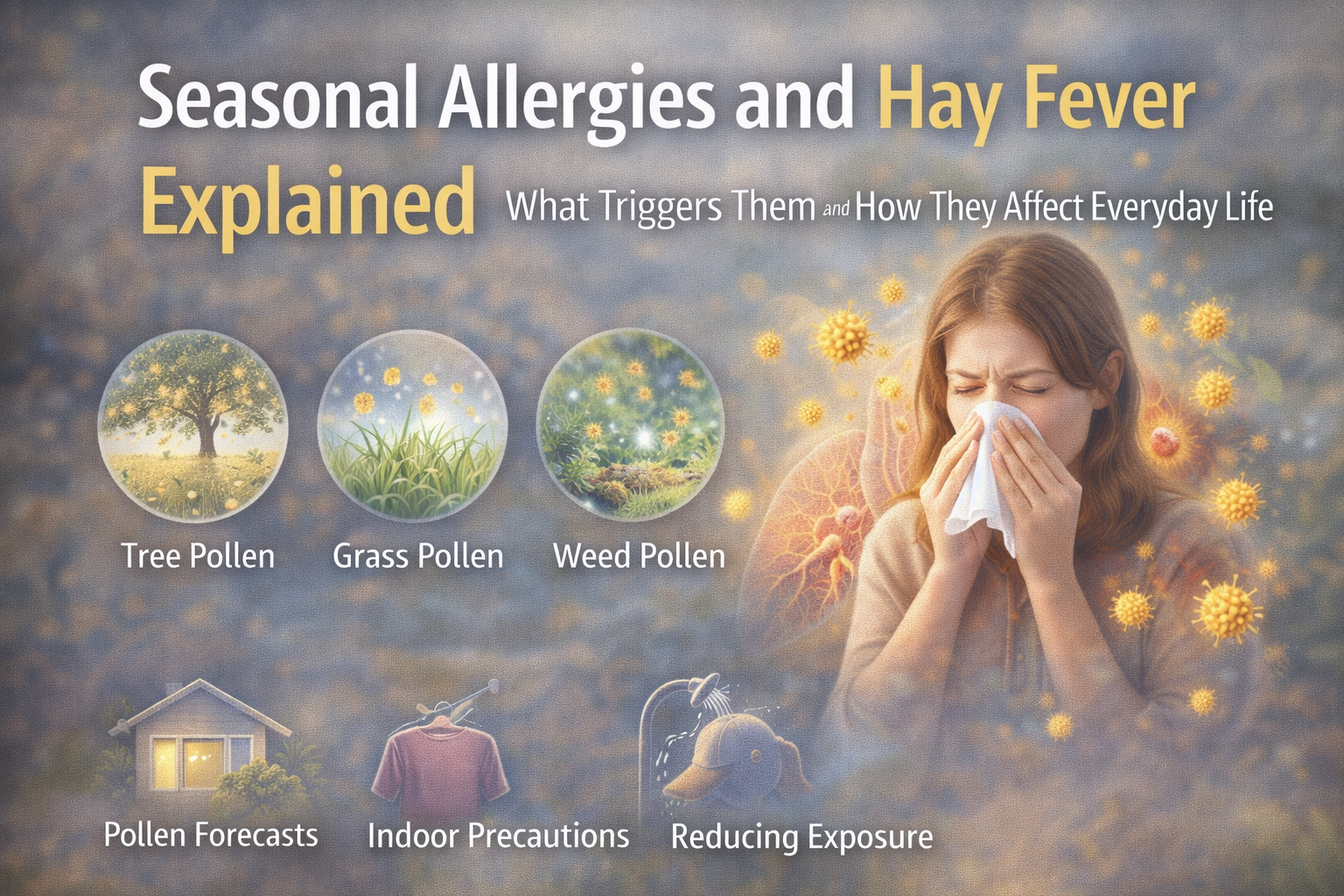
Tree pollen is often the first trigger of the allergy season. Trees such as birch, oak, and ash release pollen in early to mid-spring.
Grass Pollen In Summer
Grass pollen is one of the most common hay fever triggers in the UK. It typically peaks from late spring through summer and affects a large number of people.
Weed Pollen In Late Summer And Autumn
Certain weeds release pollen later in the year, extending allergy symptoms into autumn for some individuals.
Environmental Factors That Can Worsen Symptoms
Allergy symptoms are influenced not only by pollen levels but also by environmental conditions.
Weather And Pollen Levels
Warm, dry, and windy days tend to increase pollen spread. Rain may temporarily reduce pollen in the air, although levels can rise again afterwards.
Air Pollution And Allergies
Air pollution may irritate the airways and make allergy symptoms feel more intense. Urban environments can sometimes amplify discomfort during high pollen periods.
How Seasonal Allergies Can Affect Daily Life
Hay fever is often viewed as a minor inconvenience, but symptoms can interfere with everyday activities.
Impact On Sleep And Energy
Blocked noses, itching, and discomfort may disrupt sleep. Poor sleep can then affect daytime energy, focus, and mood.
Concentration And Productivity
Ongoing symptoms may make it harder to concentrate at work, school, or during daily tasks, particularly during peak pollen seasons.
Outdoor Activities And Enjoyment
People with hay fever may find outdoor activities less enjoyable during high pollen days, especially when symptoms are poorly managed.
Lifestyle Habits That May Help Reduce Exposure
While pollen cannot be avoided completely, some practical habits may help limit exposure.
Reducing Pollen Indoors
- Keeping windows closed during high pollen times
- Showering and changing clothes after being outdoors
- Avoiding drying clothes outside during peak pollen days
Planning Outdoor Activities
Checking daily pollen forecasts can help people plan outdoor activities when levels are lower, such as after rainfall or later in the day.
The Link Between Allergies And Overall Wellbeing
Seasonal allergies do not occur in isolation. They can interact with sleep quality, stress levels, and general wellbeing.
Allergies And Fatigue
Ongoing immune responses and disrupted sleep may contribute to feelings of tiredness during allergy season.
Stress And Symptom Perception
Stress does not cause allergies, but it may influence how strongly symptoms are felt. Managing stress may help some people cope more comfortably.
Common Myths About Hay Fever
There are several misconceptions about seasonal allergies.
Myth One Hay Fever Only Affects Children
Hay fever can develop at any age. Some people experience symptoms for the first time in adulthood.
Myth Two Rain Always Clears Pollen
Rain may temporarily reduce pollen levels, but they often rise again once conditions dry.
Myth Three Hay Fever Is Harmless
While not usually serious, hay fever can significantly affect quality of life and should not be dismissed.
When To Seek Professional Advice
If allergy symptoms are persistent, severe, or interfering with daily life, professional guidance may be helpful.
Situations Where Support May Be Needed
- Symptoms lasting throughout most of the year
- Difficulty sleeping due to allergy discomfort
- Symptoms affecting work or daily functioning
- Concerns about managing allergies safely
A healthcare professional can provide personalised advice and discuss appropriate options.
A Balanced Understanding Of Seasonal Allergies
Seasonal allergies are a common part of life for many people in the UK. Understanding what triggers hay fever and how the body responds can help individuals feel more in control during allergy season.
By combining awareness, practical habits, and realistic expectations, many people can reduce discomfort and maintain better day-to-day wellbeing during times of high pollen.
Disclaimer
This article is for informational purposes only and does not constitute medical advice. It is not intended to diagnose, treat, cure, or prevent any medical condition. Always consult a qualified healthcare professional for personalised guidance regarding allergies or ongoing symptoms.