
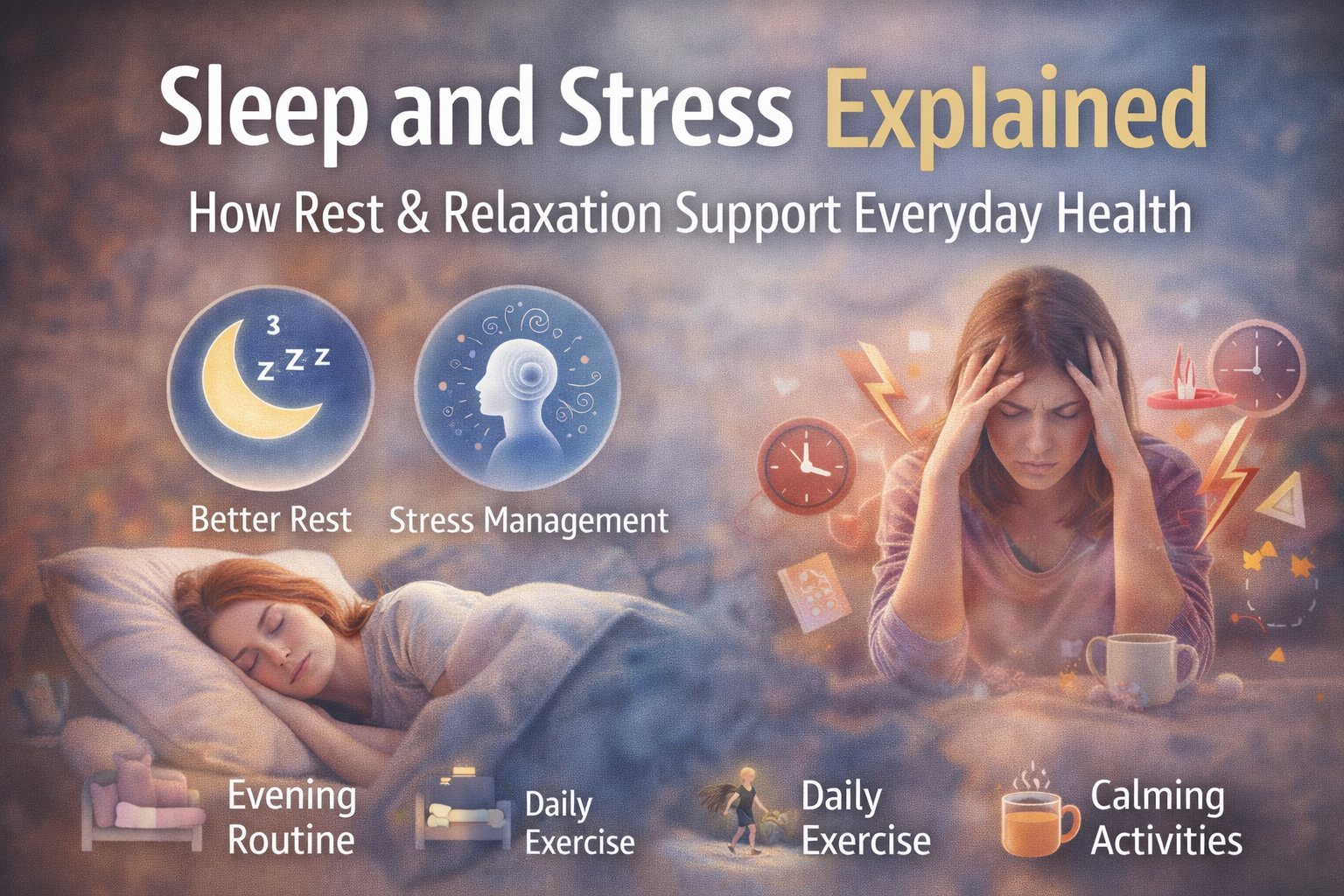
Sleep and stress are closely connected, yet they are often treated as separate issues. In reality, how well a person sleeps can influence how they cope with stress, and ongoing stress can make quality sleep harder to achieve. In the UK, busy schedules, long workdays, screen use, and constant digital stimulation have made both poor sleep and stress increasingly common.
This article explains the relationship between sleep and stress in clear, practical terms. It explores how they affect the body, why balance matters, and how simple daily habits may support better rest and calmer days. The focus is informational and designed to help readers understand how sleep and stress interact in everyday life.
Understanding The Connection Between Sleep And Stress
Sleep and stress influence many of the same systems in the body. Hormones, the nervous system, and daily energy levels are all affected by both how much rest a person gets and how often they experience stress.
Why Stress Can Disrupt Sleep
Stress activates the body’s alert systems. When the mind feels under pressure, it can be difficult for the body to fully relax, even at night. Racing thoughts, tension, and worry may interfere with falling asleep or staying asleep.
How Poor Sleep Can Increase Stress
Lack of sleep may reduce the body’s ability to cope with daily challenges. When someone is tired, small problems can feel more overwhelming, and emotional responses may feel stronger than usual.
What Happens In The Body During Sleep
Sleep is an active process. While the body appears to be resting, many important functions are taking place behind the scenes.
Physical Restoration And Recovery
During sleep, the body carries out maintenance tasks such as tissue repair and energy restoration. These processes help prepare the body for the demands of the following day.
Brain Activity And Mental Processing
The brain remains active during sleep, organising information and supporting memory. This mental processing plays a role in emotional balance and focus.
Stress And The Body’s Natural Response
Stress is not always harmful. Short-term stress responses are part of normal human biology and can be helpful in certain situations.
The Purpose Of Stress Responses
Stress hormones help the body respond to challenges by increasing alertness and readiness. This response is designed to be temporary.
When Stress Becomes Ongoing
Modern life can create long-term stress through work pressure, financial concerns, family responsibilities, and constant connectivity. When stress responses are activated too often, the body may struggle to return to a relaxed state.
How Sleep Quality Influences Emotional Wellbeing
Quality sleep supports emotional regulation. When sleep is disrupted, emotions may feel harder to manage.
Mood And Sleep Patterns
People who do not sleep well often report irritability, low mood, or difficulty concentrating. While these experiences have many causes, sleep quality plays a meaningful role.
Sleep And Mental Resilience
Rest helps the brain process emotions and experiences. Over time, consistent sleep may support greater emotional resilience in daily life.
Lifestyle Factors That Affect Sleep And Stress
Daily habits influence both sleep quality and stress levels. Small changes can make a noticeable difference when practised consistently.
Evening Routines And Wind-Down Time
Creating a calm evening routine signals to the body that it is time to slow down. This may include:
- Reducing screen time before bed
- Dimming lights in the evening
- Engaging in relaxing activities
Caffeine And Stimulation
Caffeine can increase alertness and may interfere with sleep if consumed late in the day. Sensitivity varies between individuals.
Physical Activity And Rest
Regular movement during the day may support better sleep at night. However, intense activity close to bedtime may be stimulating for some people.
Practical Ways To Support Better Sleep
Improving sleep often involves consistency rather than drastic changes.
Establishing A Regular Sleep Schedule
Going to bed and waking up at similar times each day helps reinforce the body’s internal clock.
Creating A Sleep-Friendly Environment
A comfortable, quiet, and dark sleep environment can support better rest. Temperature, noise, and light exposure all play a role.
Managing Night-Time Thoughts
Some people find it helpful to write down concerns earlier in the evening or practise relaxation techniques before bed.
Managing Daily Stress In Realistic Ways
Stress management does not require eliminating stress entirely. Instead, it focuses on how stress is handled.
Simple Stress-Reducing Habits
- Short walks or movement breaks
- Deep breathing exercises
- Spending time outdoors
- Setting boundaries around work and rest
The Role Of Breaks And Downtime
Regular breaks during the day allow the nervous system to reset. Even brief pauses can help reduce accumulated tension.
The Impact Of Sleep And Stress On Long-Term Wellbeing
Over time, sleep and stress patterns can influence overall health and quality of life.
Consistency Over Perfection
Occasional poor sleep or stressful days are part of life. What matters most is overall pattern rather than isolated experiences.
Building Sustainable Habits
Habits that support rest and relaxation are more likely to stick when they fit naturally into daily routines.
Common Myths About Sleep And Stress
There are many misconceptions surrounding sleep and stress.
Myth One You Can Catch Up On Sleep Easily
While extra rest can help, consistent sleep patterns are generally more supportive than irregular catch-up sleep.
Myth Two Stress Is Always Negative
Stress responses are part of normal functioning. It is ongoing, unmanaged stress that may become problematic.
Myth Three Sleep Problems Are Always Severe
Sleep quality can fluctuate for many reasons. Occasional disruption does not always indicate a serious issue.
When To Seek Professional Advice
If sleep problems or stress feel persistent or overwhelming, professional support may be helpful.
Situations Where Guidance May Be Useful
- Long-term sleep difficulties
- Ongoing feelings of stress or overwhelm
- Daytime fatigue affecting daily life
- Concerns about mental wellbeing
A qualified healthcare professional can provide personalised advice and support.
A Balanced Approach To Sleep And Stress
Sleep and stress influence each other in powerful ways. Supporting one often helps support the other. By focusing on gentle routines, realistic expectations, and consistent habits, many people can improve both rest and resilience over time.
Rather than aiming for perfection, a balanced approach encourages awareness, flexibility, and self-care as part of everyday life.
Disclaimer
This article is for informational purposes only and does not constitute medical advice. It is not intended to diagnose, treat, cure, or prevent any medical condition. Always consult a qualified healthcare professional if you have concerns about sleep, stress, or overall wellbeing.