
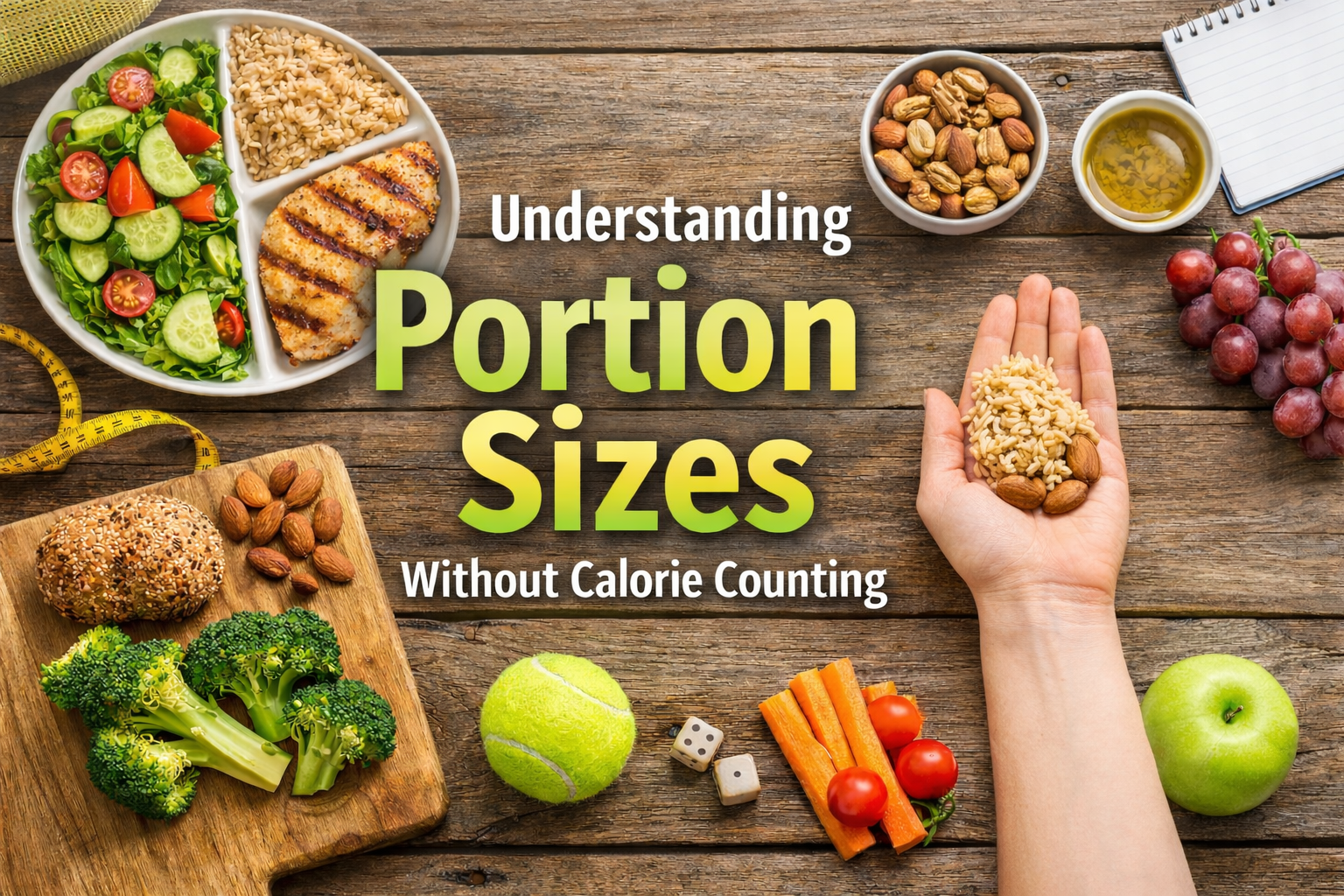
Eating well does not have to involve tracking every calorie, weighing food, or following strict rules. For many people, calorie counting can feel overwhelming, unsustainable, or even stressful. An alternative approach that is gaining attention is learning to understand portion sizes without focusing on numbers.
Portion awareness helps people reconnect with their body’s natural signals, develop healthier relationships with food, and make balanced choices without constant calculation. This article explores how portion sizes work, why they matter, and how you can manage them practically in everyday life without relying on calorie counting.
What Portion Sizes Really Mean
Portion size refers to the amount of food you choose to eat at one time. It is different from a serving size, which is often defined by manufacturers or dietary guidelines.
Understanding this difference is essential. A serving size might be listed on food packaging, but a portion size is what ends up on your plate. Over time, portion sizes have gradually increased, making it harder for people to recognise what feels appropriate for their own needs.
Portion Size Versus Serving Size
Serving sizes are standardised measurements used for reference. They are often displayed on food labels and are intended to guide consumers. However, they do not always reflect how people eat in real life.
Portion sizes are personal and influenced by many factors, including appetite, routine, environment, and habits. Learning to manage portion sizes means paying attention to how much food feels right for you rather than following fixed numbers.
Why Portion Awareness Matters
Consistently eating portions that are much larger than needed can contribute to discomfort, low energy levels, and difficulty maintaining balance in eating habits. On the other hand, portions that are too small may leave people feeling unsatisfied.
Portion awareness encourages mindful eating, helping individuals notice hunger and fullness cues rather than relying on external rules.
Why Calorie Counting Is Not Always Sustainable
While calorie counting works for some people, it is not the only way to approach eating. For others, it can become time-consuming, restrictive, or mentally exhausting.
The Mental Load Of Tracking Numbers
Tracking calories often requires logging every meal, snack, and drink. This can take time and may shift focus away from enjoyment and nourishment.
For some individuals, constant tracking can lead to stress or feelings of guilt around food choices, especially when daily targets are missed.
When Numbers Override Body Signals
Calorie counting can sometimes encourage people to ignore hunger or fullness cues. Eating according to a preset number rather than physical signals may disconnect individuals from their natural appetite regulation.
Learning portion sizes without calorie counting allows people to tune into how food makes them feel rather than focusing solely on numbers.
A More Flexible Approach To Eating
Portion-based eating emphasises balance and consistency rather than precision. This flexibility can make healthy habits easier to maintain over the long term, especially in social situations or busy lifestyles.
Using Visual Cues To Estimate Portions
One of the simplest ways to manage portion sizes is by using visual cues instead of scales or apps. These cues provide rough guides that can be applied anywhere, including at home or when eating out.
Hand-Based Portion Guides
Your hands can be a useful reference because they are proportional to your body size.
- A palm-sized portion often represents protein foods such as chicken, fish, or tofu
- A cupped hand can be used for carbohydrates like rice, pasta, or potatoes
- A fist may represent a portion of vegetables
- A thumb can be used to estimate fats such as oils or spreads
These guides are not strict rules but helpful starting points.
Plate Method For Balanced Meals
The plate method is another visual approach that focuses on balance rather than measurement.
A typical plate might include:
- Half filled with vegetables or salad
- One quarter with a source of protein
- One quarter with carbohydrates
This method supports variety and helps prevent any one food group from dominating the meal.
Packaging And Everyday Objects
Some people find it helpful to compare food portions to familiar objects. For example, a portion of cheese might be similar in size to a small matchbox, while a serving of fruit could resemble a tennis ball.
These comparisons can help build awareness without needing exact measurements.
Listening To Hunger And Fullness Signals
Understanding portion sizes also involves learning to recognise internal cues. Hunger and fullness signals are the body’s way of communicating its needs.
Recognising Different Types Of Hunger
Hunger is not always physical. Sometimes it is driven by habit, emotion, or environment. Physical hunger often builds gradually and may be accompanied by physical sensations such as stomach rumbling or low energy.
Emotional or habitual eating may occur suddenly and be linked to boredom, stress, or routine rather than genuine hunger.
Eating At A Comfortable Pace
Eating slowly allows the body time to register fullness. When meals are rushed, it is easier to overeat before noticing satisfaction.
Pausing during meals and checking in with how you feel can help guide portion sizes naturally.
Knowing When To Stop Eating
Stopping when comfortably full rather than overly full is a skill that develops with practice. This does not mean leaving food unfinished every time, but becoming more aware of satisfaction signals.
Over time, this awareness can help regulate portion sizes without conscious restriction.
How Environment Influences Portion Sizes
The environment plays a significant role in how much people eat. Factors such as plate size, distractions, and social settings can all affect portion awareness.
Plate And Bowl Size
Larger plates and bowls can make portions appear smaller, leading people to serve more food. Using slightly smaller dishware can help portions feel more appropriate without reducing satisfaction.
Eating With Distractions
Eating while watching television, working, or scrolling on a phone can reduce awareness of portion size and fullness. Minimising distractions allows greater focus on the meal.
Social And Cultural Influences
Social gatherings often involve larger portions or multiple courses. Being mindful in these situations does not mean avoiding them but approaching them with awareness and flexibility.
Building Balanced Meals Without Measuring
Balanced meals naturally support appropriate portion sizes by including a variety of nutrients.
Including Protein For Satisfaction
Protein contributes to feelings of fullness and can help meals feel more satisfying. Including a source of protein at each meal may reduce the urge to overeat later.
Prioritising Fibre-Rich Foods
Fibre-rich foods such as vegetables, fruits, whole grains, and legumes add volume to meals and support digestion. These foods often allow for larger portions without excess energy intake.
Using Fats Mindfully
Fats add flavour and satisfaction but are more energy-dense. Using them thoughtfully rather than excessively can support balanced portion sizes.
Portion Sizes When Eating Out
Eating out can make portion awareness more challenging due to larger servings and limited control over preparation.
Sharing And Saving
Sharing dishes or saving part of a meal for later can help manage portions without feeling deprived.
Ordering With Balance In Mind
Choosing meals that include vegetables, protein, and carbohydrates can support balance even when portions are generous.
Tuning Into Fullness Cues
Stopping when satisfied rather than finishing everything on the plate can be helpful when restaurant portions are larger than usual.
Developing Long-Term Portion Awareness
Learning portion sizes without calorie counting is a gradual process. It involves practice, patience, and self-compassion.
Letting Go Of Perfection
There is no single correct portion size for every situation. Appetite and needs vary from day to day. Flexibility allows eating habits to adapt naturally.
Building Consistency Over Time
Consistency matters more than precision. Making balanced choices most of the time supports long-term wellbeing without rigid rules.
Reflecting On How Food Feels
Noticing how different portion sizes affect energy, comfort, and satisfaction can guide future choices. This feedback loop supports intuitive portion management.
Common Myths About Portion Control
Many misconceptions exist around portion sizes and eating habits.
Myth One Smaller Portions Always Mean Healthier Eating
Health is influenced by food quality, balance, and overall patterns, not just portion size. Extremely small portions may lead to hunger and imbalance.
Myth Two Portion Awareness Is The Same As Restriction
Portion awareness focuses on understanding needs rather than limiting intake. It encourages adequate nourishment.
Myth Three Everyone Needs The Same Portions
Individual needs vary based on lifestyle, activity, and personal factors. Portion sizes are not one-size-fits-all.
Practical Tips For Everyday Portion Awareness
- Serve meals on plates rather than eating from packages
- Pause halfway through meals to assess hunger
- Include vegetables at most meals
- Eat without distractions when possible
- Allow flexibility for social occasions
These habits support awareness without requiring tracking or calculation.
When To Seek Additional Guidance
Some individuals may benefit from personalised advice, particularly if they have specific dietary needs or concerns. A qualified nutrition professional can provide tailored guidance that aligns with personal goals and circumstances.
Final Thoughts On Portion Sizes Without Counting
Understanding portion sizes without calorie counting is about building trust in your body and developing sustainable habits. By focusing on balance, awareness, and enjoyment, it is possible to eat well without relying on numbers.
This approach encourages long-term consistency and supports a healthier relationship with food, making it a practical option for many people.
Disclaimer
This article is for informational purposes only and does not constitute medical, nutritional, or dietary advice. Always consult a qualified healthcare professional or registered dietitian for personalised guidance related to diet, health, or wellbeing.