Starting a fitness journey can feel intimidating, especially if you are new to exercise or returning after a long break. Many people believe that getting fit requires a gym membership, expensive equipment, or personal trainers. In reality, some of the most effective workouts in the world require no equipment at all and can be done entirely at home.
For beginners in the UK, home workouts are one of the most practical and sustainable ways to improve health and fitness. Whether you live in a small flat, work long hours, struggle with motivation, or simply want to avoid gym culture, exercising at home removes many of the barriers that stop people from starting.
This in-depth guide is designed specifically for beginners. It explains how bodyweight workouts work, how to exercise safely, and how to build a long-term routine without spending money on equipment. By the end of this article, you will have a clear understanding of how to get fitter, stronger, and healthier using only your own body.
Why Home Workouts Are Ideal For Beginners
Home workouts are particularly well suited to beginners because they prioritise simplicity, comfort, and consistency. For many people in the UK, time and confidence are the biggest obstacles to exercise. Home workouts address both.
One of the main benefits is convenience. You do not need to travel, wait for equipment, or adjust your schedule around gym opening times. You can exercise early in the morning, late at night, or during short breaks throughout the day. This flexibility makes it far easier to maintain consistency, which is the most important factor in long-term fitness success.
Another major advantage is privacy. Many beginners feel self-conscious exercising around others. At home, you can move at your own pace without worrying about judgement. This helps build confidence and encourages people to keep going even when progress feels slow.
Home workouts are also cost-effective. With rising living costs across the UK, many people are looking for ways to improve their health without additional expenses. Bodyweight workouts remove the need for gym memberships, fitness classes, or equipment purchases.
Most importantly, home workouts work. Research consistently shows that bodyweight training can improve strength, cardiovascular fitness, flexibility, balance, and mental wellbeing. When performed regularly, these workouts deliver real, measurable results.
Understanding Bodyweight Training For Beginners
Bodyweight training uses your own body as resistance. Exercises such as squats, lunges, push-ups, and planks engage multiple muscle groups at once, making them highly efficient and functional.
For beginners, bodyweight exercises are safer than weight training because they reduce strain on joints and allow natural movement patterns. This is particularly important for people who may be overweight, older, or returning from inactivity.
Bodyweight training improves functional strength, which is the ability to perform everyday tasks with ease. Standing up, climbing stairs, lifting shopping bags, and maintaining good posture all become easier with consistent bodyweight exercise.
Another key benefit is adaptability. Bodyweight exercises can be modified to suit any fitness level. For example, a push-up can be done against a wall, on the knees, or on the floor depending on strength and confidence.
Beginners often experience rapid progress with bodyweight training. Early improvements in strength, balance, and endurance can be very motivating and help reinforce healthy habits.
Preparing Your Body And Mind Before Starting
Before beginning any workout routine, it is important to prepare both physically and mentally. This preparation helps reduce injury risk and increases the likelihood of sticking with exercise long term.
Start by setting realistic expectations. Fitness is a gradual process. Results come from consistency rather than intensity. Aim to build a habit rather than chasing quick transformations.
Choose a comfortable space in your home where you can move freely. You do not need a large area. A clear patch of floor in your living room or bedroom is sufficient.
Wear comfortable clothing that allows you to move easily. Proper footwear is optional for many bodyweight exercises, but supportive trainers may help if you are new to movement.
Mentally, focus on progress rather than perfection. Some days will feel harder than others. What matters is showing up consistently.
Essential Warm-Up Exercises Before Any Home Workout
Warming up is essential, especially for beginners. A proper warm-up prepares your muscles, joints, and nervous system for exercise, reducing the risk of injury.
Begin with light movement to raise your heart rate. Marching on the spot for two to three minutes is ideal. Swing your arms naturally and gradually increase your pace.
Next, perform shoulder rolls. Lift your shoulders towards your ears, roll them back, and then down. This loosens tension in the neck and upper back.
Arm circles are effective for warming the shoulders. Start with small circles and gradually increase their size. Reverse direction after 20 to 30 seconds.
Hip mobility is important for lower body exercises. Place your hands on your hips and gently rotate them in circles. This prepares your hips and lower back.
Finish with gentle bodyweight squats and shallow lunges to activate your legs. Keep movements slow and controlled.
Best Full Body Home Workouts For Beginners With No Equipment
Full body workouts are ideal for beginners because they train all major muscle groups in a single session. This approach maximises efficiency and helps build a balanced foundation.
A basic beginner full body workout might include the following exercises:
Bodyweight squats strengthen the legs and glutes. Stand with your feet shoulder-width apart, push your hips back, and lower yourself slowly. Keep your chest up and knees tracking over your toes.
Wall push-ups target the chest, shoulders, and arms. Place your hands on a wall at chest height and lean forward slightly. Bend your elbows and push back.
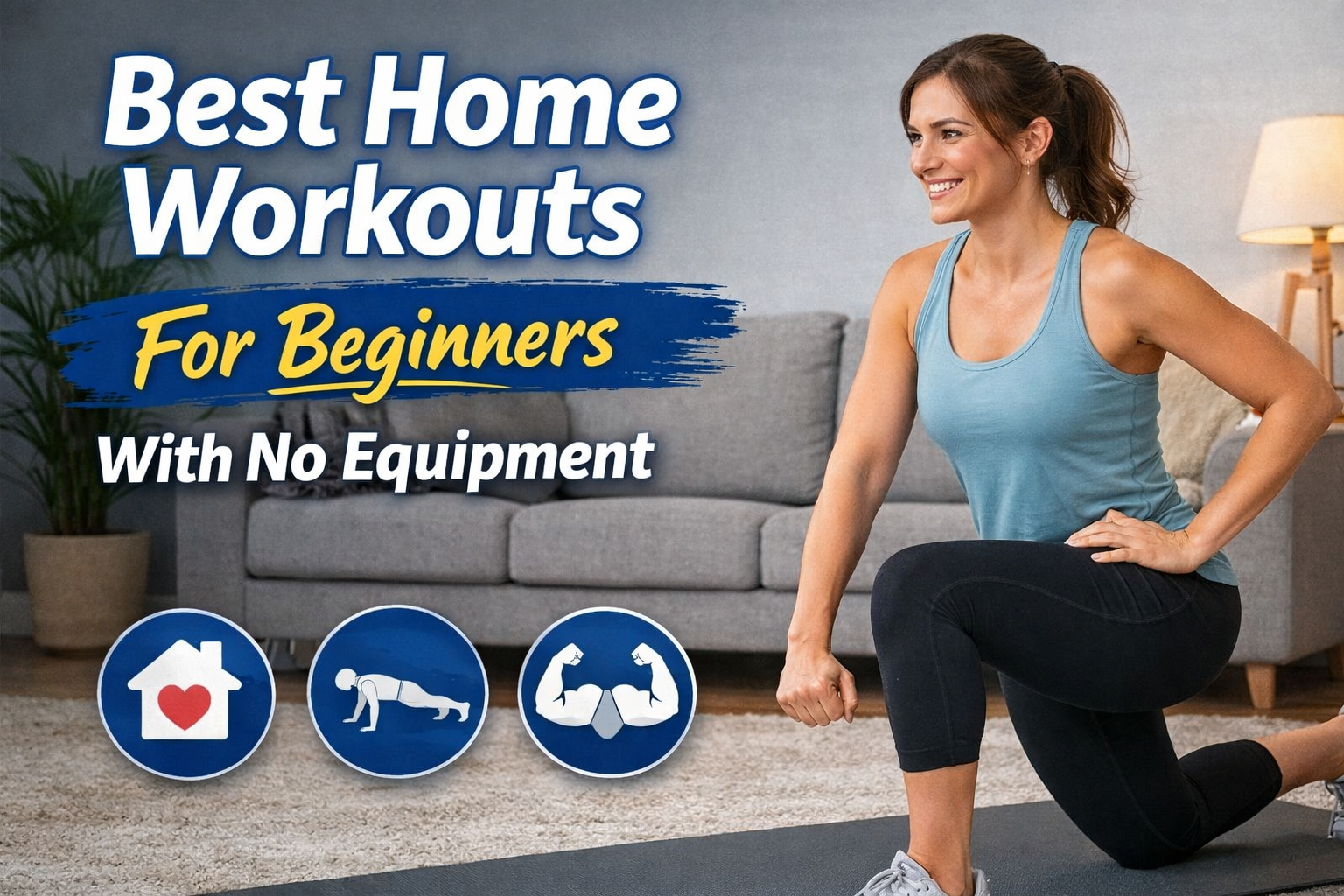
Standing lunges improve leg strength and balance. Step one foot forward, lower your back knee gently, then return to standing.
Glute bridges strengthen the hips and lower back. Lie on your back with knees bent and feet flat on the floor. Lift your hips towards the ceiling and squeeze your glutes.
Planks strengthen the core. Beginners can start on their knees or use an elevated surface like a sofa.
Perform each exercise for 10 to 15 repetitions or hold planks for 15 to 30 seconds. Rest briefly between exercises and repeat the circuit two to three times.
Beginner Cardio Workouts At Home Without Equipment
Cardiovascular exercise improves heart health, lung capacity, and endurance. Beginners often believe cardio requires running or machines, but this is not true.
Marching on the spot is one of the simplest cardio exercises. Lift your knees slightly and swing your arms to increase intensity.
Step-back lunges raise the heart rate while strengthening the legs. Step back into a lunge and alternate sides.
Low-impact jumping jacks are beginner-friendly. Instead of jumping, step one foot out at a time while raising your arms.
Stair climbing, if available, is an excellent cardio option. Walking up and down stairs for short intervals can significantly increase fitness.
Cardio workouts can last anywhere from 10 to 30 minutes depending on fitness level. Beginners should start with shorter sessions and gradually increase duration.
Core Strength And Abdominal Workouts For Beginners
Core strength is essential for posture, balance, and injury prevention. Beginners should focus on gentle, controlled movements.
Seated knee lifts are an effective starting point. Sit on a chair, lean back slightly, and lift one knee at a time.
Dead bugs are another beginner-friendly core exercise. Lie on your back with arms and legs raised, then slowly lower opposite arm and leg.
Bird dogs improve core stability and coordination. Start on hands and knees, extend one arm and the opposite leg, hold briefly, then switch.
Modified planks can be performed on knees or against a sofa to reduce intensity.
Consistency is more important than intensity when training the core.
Stretching And Cool Down After Home Workouts
Cooling down helps the body recover and reduces muscle stiffness. Stretching also improves flexibility and relaxation.
After exercise, walk slowly for a few minutes to lower your heart rate.
Stretch the hamstrings by gently reaching towards your toes while seated or standing.
Stretch the calves by pressing your heel into the floor or wall.
Open the chest by clasping your hands behind your back and lifting your arms slightly.
Hold each stretch for 20 to 30 seconds and breathe deeply.
How Often Beginners Should Work Out At Home
Beginners often worry about doing too much or too little. A balanced approach is key.
Three to four workouts per week is ideal for most beginners. This allows time for recovery while building consistency.
Alternate workout types throughout the week. For example, combine full body workouts, cardio sessions, and mobility days.
Rest days are essential. Muscles grow and adapt during recovery, not during exercise itself.
Listening to your body is crucial. Mild soreness is normal, but pain is not.
Common Beginner Mistakes And How To Avoid Them
One of the most common mistakes beginners make is pushing too hard too soon. This often leads to burnout or injury.
Another mistake is poor form. Focus on technique rather than speed or repetitions.
Skipping warm-ups and cool-downs increases injury risk and slows recovery.
Comparing yourself to others can be discouraging. Progress is individual and personal.
Nutrition Basics To Support Home Workouts
Exercise alone is not enough. Nutrition plays a major role in energy levels, recovery, and results.
Beginners should focus on balanced meals rather than restrictive diets. Include protein, carbohydrates, healthy fats, and vegetables.
Hydration is important. Drinking enough water supports performance and recovery.
Avoid skipping meals, especially on workout days. Fueling your body helps maintain consistency.
Mental Health Benefits Of Home Workouts
Exercise is not only about physical health. Regular movement has powerful mental health benefits.
Home workouts can reduce stress, anxiety, and symptoms of depression. Exercise releases endorphins, which improve mood.
Having a routine provides structure and a sense of achievement.
For beginners, the confidence gained from completing workouts often carries over into other areas of life.
Staying Motivated And Building Long-Term Habits
Motivation comes and goes. Habits are what keep you going.
Set small, achievable goals. Focus on consistency rather than perfection.
Track your progress. Even simple notes about how you feel can be motivating.
Create a routine that fits your lifestyle. Short workouts done consistently are more effective than long workouts done rarely.
Remember why you started. Improved health, energy, and confidence are powerful motivators.
Final Thoughts On Home Workouts For Beginners With No Equipment
Home workouts with no equipment are one of the most accessible and effective ways to improve fitness, especially for beginners in the UK.
They remove barriers, save money, and allow you to exercise on your own terms. With patience, consistency, and the right approach, you can build strength, improve health, and boost confidence from the comfort of your own home.
Fitness is not about perfection. It is about showing up, one day at a time.
Disclaimer
The information provided in this article is for general informational and educational purposes only and is not intended as medical, health, or professional fitness advice.
Before starting any new exercise or workout programme, especially if you are a beginner, pregnant, over the age of 40, or have any existing medical conditions, injuries, or health concerns, you should consult a qualified healthcare professional or GP.
All exercises described are performed at your own risk. The author and publisher of this website accept no responsibility or liability for any injury, loss, or damage that may occur as a result of following the workouts, advice, or recommendations outlined in this article.
Individual results may vary depending on fitness level, consistency, and overall health. Always listen to your body and stop exercising immediately if you experience pain, dizziness, or discomfort.