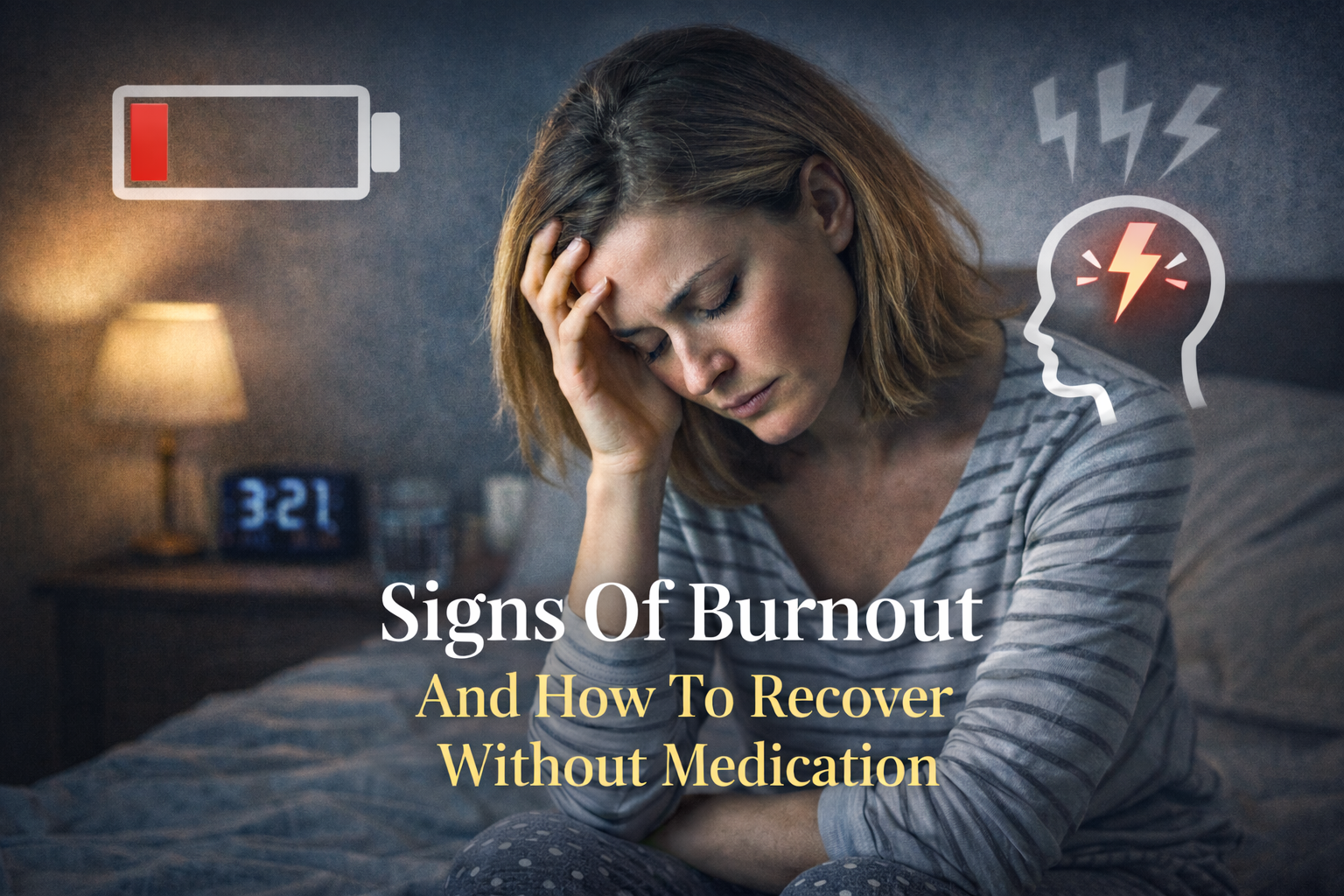
Burnout is no longer a niche workplace problem or something that only affects high-powered executives. In the UK today, burnout is quietly impacting office workers, NHS staff, night-shift employees, parents, carers, students, and self-employed individuals alike. Many people live with burnout for months or even years without realising what is happening to them. They often describe feeling constantly exhausted, emotionally numb, irritable, or disconnected from life, yet medical tests come back “normal”.
Unlike short-term stress, burnout develops slowly. It creeps in through relentless pressure, lack of rest, emotional overload, and the feeling of having no control. The good news is that burnout can be reversed, and in many cases, it can be done without medication, using practical lifestyle changes that support the nervous system, mental health, and physical recovery.
This guide explores the clear warning signs of burnout, how it affects the body and mind, and most importantly, how to recover naturally and sustainably, without relying on medication.
Understanding Burnout And Why It Is So Common Today
Burnout is a state of physical, mental, and emotional exhaustion caused by prolonged stress and overload. It is not simply “being tired” or “having a bad week”. It is a chronic condition that affects motivation, cognitive function, mood, immunity, and overall quality of life.
What Burnout Really Is
Burnout develops when stress outweighs recovery for too long. The body is designed to handle stress in short bursts. However, when pressure becomes constant and rest becomes inadequate, the nervous system remains stuck in a heightened state of alert.
This leads to:
- Elevated stress hormones
- Disrupted sleep cycles
- Reduced emotional resilience
- Impaired decision-making
- Weakened immune response
Burnout is increasingly recognised by health professionals as a legitimate health concern, though it does not always fit neatly into traditional medical diagnoses.
Why Burnout Is Increasing In The UK
Several modern lifestyle factors contribute to rising burnout levels across the UK:
Long Working Hours And Shift Work
Many people work extended hours, rotating shifts, or night shifts. This disrupts circadian rhythms and reduces quality sleep, a key factor in burnout recovery.
Cost Of Living Pressure
Financial stress plays a major role. Worrying about rent, mortgages, energy bills, and food costs keeps the stress response active even outside work hours.
Digital Overload
Emails, messages, notifications, and constant online availability prevent mental rest. The brain rarely switches off.
Emotional Labour
Jobs involving care, customer service, teaching, security, healthcare, or management require emotional regulation, which can be deeply draining over time.
Lack Of Boundaries
Working from home has blurred the line between personal time and work time for many people.
Understanding these root causes helps remove self-blame. Burnout is not a personal failure. It is often a predictable response to unsustainable conditions.
Physical Signs Of Burnout You Should Not Ignore
Burnout often shows itself through the body before the mind fully recognises what is happening. Many people first seek help for physical symptoms, not realising stress is the underlying cause.
Persistent Fatigue That Rest Does Not Fix
This is one of the most common and confusing symptoms. You may sleep for eight hours or more and still wake up exhausted. Naps do not feel refreshing, and weekends no longer restore energy.
This fatigue feels different from normal tiredness. It is heavy, lingering, and often accompanied by low motivation.
Frequent Headaches And Muscle Tension
Chronic stress causes muscles to remain slightly contracted for long periods. This often results in:
- Tension headaches
- Neck and shoulder pain
- Jaw clenching
- Lower back discomfort
Many people assume this is posture-related, but stress is often a major contributor.
Weakened Immune System
Burnout suppresses immune function. You may notice:
- Frequent colds or infections
- Slow recovery from illness
- Feeling run down more often than usual
This happens because prolonged stress hormones reduce the body’s ability to fight pathogens.
Digestive Problems
The gut and nervous system are closely connected. Burnout can lead to:
- Bloating
- Constipation or diarrhoea
- Acid reflux
- Appetite changes
Stress diverts blood away from digestion, impairing gut function over time.
Sleep Disturbances
Burnout often disrupts sleep patterns. Common issues include:
- Difficulty falling asleep
- Waking frequently during the night
- Early morning waking with racing thoughts
- Non-restorative sleep
Sleep issues worsen burnout, creating a self-reinforcing cycle.
Emotional And Mental Signs Of Burnout
Burnout does not only affect the body. It profoundly impacts emotional health, mindset, and how a person experiences daily life.
Emotional Numbness Or Detachment
Many people with burnout describe feeling emotionally flat. Things that once brought joy no longer do. Relationships may feel distant, and even positive events fail to generate excitement.
This emotional shutdown is a protective response. The brain reduces emotional sensitivity when overwhelmed.
Increased Irritability And Low Patience
Small inconveniences may trigger disproportionate reactions. You might notice:
- Short temper
- Frustration with colleagues or family
- Feeling constantly on edge
This happens because emotional regulation requires energy, which burnout depletes.
Loss Of Motivation And Purpose
Tasks that once felt manageable may now feel overwhelming or meaningless. Procrastination increases, and even simple responsibilities feel heavy.
This is often misinterpreted as laziness, but it is a sign of nervous system overload.
Anxiety And Racing Thoughts
Burnout can coexist with anxiety. Common experiences include:
- Constant worrying
- Overthinking conversations
- Fear of making mistakes
- Feeling unable to relax
The mind remains in a problem-solving mode even when there is nothing urgent to solve.
Reduced Concentration And Memory Issues
Burnout affects cognitive function. You may notice:
- Difficulty focusing
- Forgetting appointments or details
- Mental fog
- Slower decision-making
Stress hormones impair the brain areas responsible for memory and executive function.
Behavioural And Lifestyle Warning Signs Of Burnout
Behavioural changes often occur gradually and may be noticed by others before the individual becomes aware.
Withdrawal From Social Activities
People experiencing burnout often cancel plans, avoid social events, or isolate themselves. Social interaction feels draining rather than energising.
This is not a lack of interest in others, but a lack of emotional capacity.
Increased Reliance On Stimulants Or Comfort Behaviours
To cope with exhaustion, some people increase:
- Caffeine intake
- Sugar consumption
- Alcohol use
- Screen time
These provide temporary relief but worsen burnout long-term by disrupting sleep and recovery.
Decline In Self-Care
Basic self-care may slip:
- Skipping meals
- Neglecting exercise
- Poor sleep hygiene
- Ignoring personal needs
This further depletes energy reserves.
Reduced Productivity Despite Working Longer Hours
Burnout often leads to working more but achieving less. Efficiency drops, mistakes increase, and tasks take longer to complete.
This creates a cycle of self-criticism and further stress.
Why Burnout Should Not Be Ignored
Ignoring burnout does not make it go away. In fact, pushing through often worsens the condition and increases the risk of more serious health issues.
Long-Term Health Consequences
Chronic burnout has been linked to:
- Cardiovascular problems
- High blood pressure
- Depression
- Anxiety disorders
- Chronic fatigue
- Hormonal imbalances
Impact On Relationships And Work
Burnout affects communication, empathy, and emotional availability. Relationships may suffer, and work performance may decline, leading to further stress.
Risk Of Complete Breakdown
Many people only address burnout after a physical or emotional collapse that forces them to stop working entirely. Early intervention prevents this.
Recognising burnout early is an act of self-preservation, not weakness.
How To Recover From Burnout Without Medication
Recovery from burnout requires a whole-life approach. There is no single quick fix, but consistent, supportive changes can restore energy, clarity, and emotional balance over time.
Prioritising Nervous System Recovery
Burnout is fundamentally a nervous system issue. Recovery begins with signalling safety and rest to the body.
Reducing Constant Stimulation
Limit exposure to:
- Continuous news consumption
- Excessive social media
- Work emails outside working hours
Creating mental quiet allows the nervous system to downshift.
Incorporating Daily Calm Practices
Simple practices such as:
- Deep breathing
- Gentle stretching
- Quiet walks
- Mindfulness exercises
Even ten minutes a day can make a noticeable difference.
Rebuilding Healthy Sleep Patterns
Sleep is essential for burnout recovery.
Creating A Consistent Sleep Routine
Aim to:
- Go to bed and wake up at similar times
- Avoid screens at least one hour before sleep
- Keep the bedroom dark and cool
Supporting Natural Sleep Signals
Daylight exposure in the morning and reduced light at night help regulate circadian rhythms.
Nourishing The Body Properly
Burnout depletes nutritional reserves.
Eating Regular Balanced Meals
Focus on:
- Whole foods
- Lean protein
- Healthy fats
- Complex carbohydrates
Avoid skipping meals, as this increases stress hormone release.
Staying Hydrated
Even mild dehydration worsens fatigue and brain fog.
Gentle Movement Instead Of Intense Exercise
High-intensity exercise can worsen burnout initially.
Better options include:
- Walking
- Yoga
- Stretching
- Swimming
Movement should feel restorative, not exhausting.
Setting Boundaries And Reducing Load
Recovery requires reducing the sources of stress.
Learning To Say No
Over-commitment is a common burnout driver. Protecting energy is essential.
Adjusting Work Expectations
This may involve:
- Delegating tasks
- Discussing workload adjustments
- Taking scheduled breaks seriously
Reconnecting With Meaning And Pleasure
Burnout disconnects people from joy.
Reintroducing Enjoyable Activities
Even small pleasures matter:
- Reading
- Music
- Nature
- Creative hobbies
Pleasure supports emotional healing.
Rebuilding Purpose Gradually
Avoid pressuring yourself to “feel motivated”. Purpose often returns naturally as energy recovers.
Creating A Sustainable Life After Burnout
Recovery is not just about returning to how things were. It is about building a life that prevents burnout from returning.
Identifying Burnout Triggers
Reflect on:
- Work patterns
- Relationship dynamics
- Financial stressors
- Perfectionism or people-pleasing tendencies
Awareness allows for long-term change.
Building In Regular Recovery Time
Rest should not be earned only after exhaustion. It should be part of daily life.
Maintaining Healthy Boundaries
Protecting time, energy, and emotional wellbeing is essential for long-term health.
Seeking Support When Needed
Talking to a GP, therapist, or counsellor can provide valuable guidance. Support is a strength, not a failure.
Frequently Asked Questions About Burnout
How Long Does Burnout Recovery Take?
Recovery time varies. Some people feel improvement within weeks, while others may need several months. Consistency matters more than speed.
Can Burnout Happen Without A Stressful Job?
Yes. Caregiving, financial stress, relationship strain, and chronic health issues can all lead to burnout.
Is Burnout The Same As Depression?
They share symptoms but are not identical. Burnout is often situational and improves with lifestyle changes, while depression may require additional treatment.
Should I Take Time Off Work?
If possible, time off can significantly accelerate recovery. Even short breaks help reset stress levels.
Final Note On Burnout Recovery
Burnout is a signal, not a personal flaw. It is the body and mind asking for change. With patience, compassion, and supportive habits, recovery is not only possible but often life-transforming.
Learning to live sustainably, rather than constantly pushing, is one of the most valuable health lessons burnout can teach.